

U.S. Rep. Evans tells Polis small businesses are feeling strain from state regulations
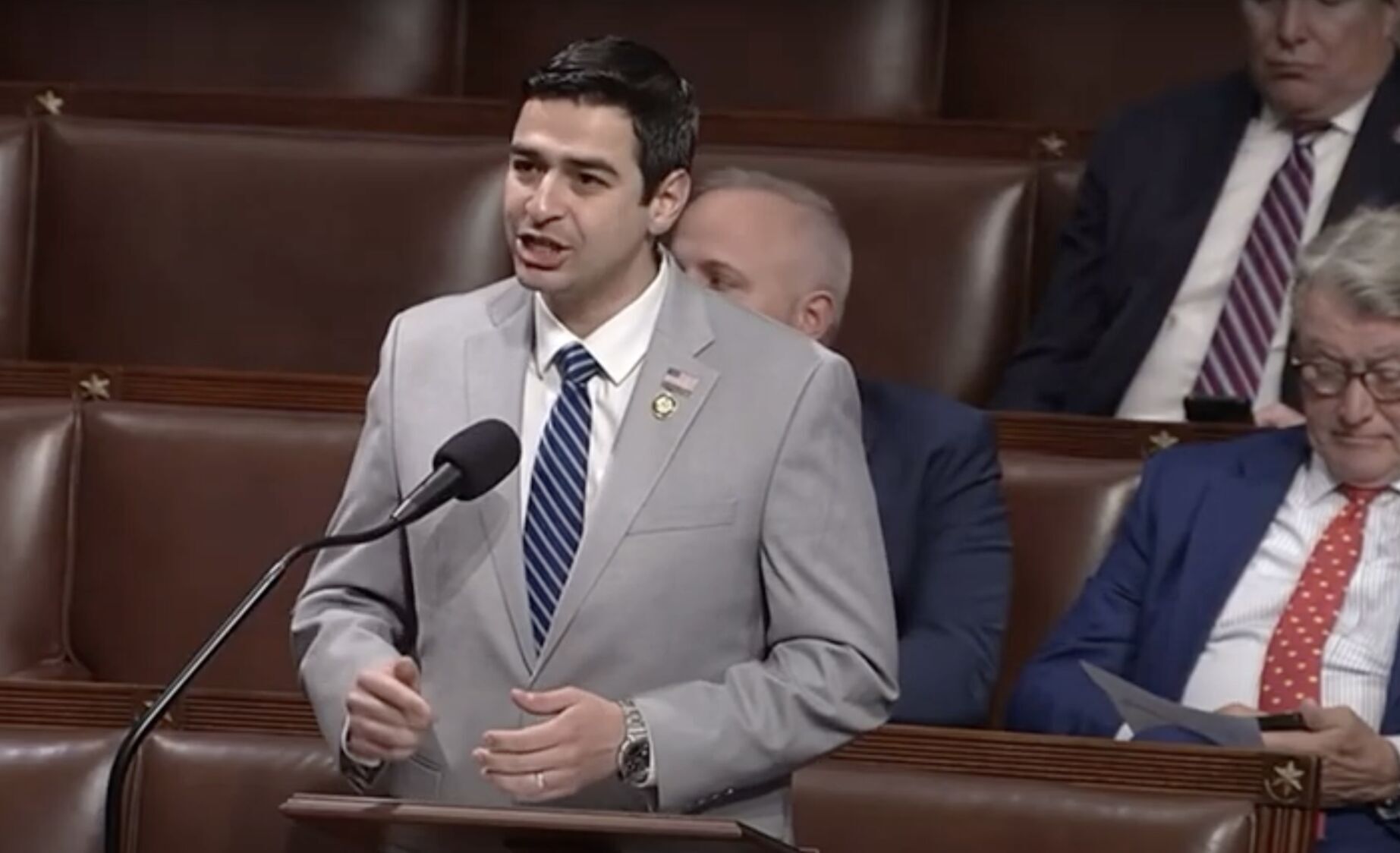
In a letter to Colorado Gov. Jared Polis on Tuesday afternoon, U.S. Rep. Gabe Evans raised concerns he says he’s hearing from small-business owners about the effects of the continued increase in state regulations.
Evans wrote in the letter, which Colorado Politics obtained an advanced copy of, that small‑business owners and local chambers of commerce in his district describe “ever‑growing hardships” they attribute to legislation passed by the Democratic‑led legislature and signed by Polis in recent years.
“Under the direction of your administration and Denver’s Democrats, Colorado has become the sixth most heavily regulated state in the country, and small business owners and their employees in my district are feeling it every day,” Evans wrote, listing several bills Polis has signed in recent years that he believes have negatively impacted the business climate.
Among them are House Bill 25-1296, which imposes state taxes on overtime, Senate Bill 21-260, which establishes new fees on diesel fuel, deliveries and transportation services, and SB 21-1162, which imposes a statewide 10-cent plastic bag fee.
“These laws have harmed small-business owners and prevented regional economic growth,” Evans wrote. “Many employers are now being forced to operate with smaller staff and tighter margins because they simply cannot keep up with the rising costs imposed by your state government.”
Evans represents the 8th Congressional District, stretching from Thornton to Greeley. He won the seat in 2024 in a close race against former Democratic U.S. Rep. Yadira Caraveo.
Evans faces Democratic state Rep. Manny Rutinel in November. The 8th District is again expected to be highly competitive and is widely viewed as a district that could influence the balance of power in Washington.
Rutinel did not immediately respond to a request for comment on regulations tied to small businesses.
With Democrats leading both chambers of the legislature, they have often been criticized by business organizations for increased regulations deemed duplicative and costly. Proponents argue that these regulations are necessary to ensure safe workplaces.
One business owner told Colorado Politics last year that the growing number of regulations passed each session is like a “death by a thousand cuts.”
“While I am working hard in Washington to pass legislation to help small-business owners in my district, you are partnering with ruling Democrats in the State Legislature to overwhelm those same businesses with higher fees, rising labor costs, increased compliance mandates and endless red tape that make it harder to hire workers, expand operations, and keep their doors open,” Evans said.
At times, Polis has worked to slow the rise in regulations by vetoing bills or threatening Democratic-led chambers.
In May, Polis signed SB 137 into law, a measure sponsored by bipartisan leadership in the House and Senate that aims to reduce “administrative burdens” through additional reviews of agency rules.
“Colorado is the best state to live, work, play, and do business,” Polis said after signing the bill into law. “This bipartisan effort will help lower the cost of doing business in Colorado by cutting through burdensome regulations, and will attract more businesses to Colorado.”
Evans argued Republican members of Congress are “trying to make it easier for small businesses to thrive” through the passage of laws like H.R. 1, or the “Working Families Tax Cuts Act,” which eliminated federal income taxes on tips and overtime, increased the Child Tax Credit, and made the 20% small-business tax deduction permanent. The bill also provides over $4.5 trillion in tax breaks for billionaires and large corporations through cuts and deductions.
According to the letter, small businesses make up 99.5% of all Colorado firms and employ 48.6% of the state’s employees. Evans cited a 2025 survey conducted by the Colorado Chamber of Commerce that found that 65% of businesses with fewer than 100 employees listed regulations as one of their top three challenges.
A spokesperson for Polis issued the following statement regarding the letter: “Gabe Evans cares more about hiding from his votes to gut healthcare than actually strengthening Colorado’s economy. Governor Polis is glad to hear Congressman Evans is concerned by bureaucratic paperwork and red tape and hopes that means he will repeal the mountains of bureaucracy he added to healthcare with his vote to pass H.R. 1, which created more government and will kick Coloradans off healthcare.”
Polis’ office noted his work on incentive programs for businesses, including the Job Growth Incentive Tax Credit, Strategic Fund Job Growth Incentive, and Rural Jump-Start Program. Since 2020, the programs have supported over 115 businesses and nearly 24,000 jobs.


‘All in Good Taste:’ A delicious way to raise money for a good cause | NONPROFIT REGISTER
Joanne Davidson Special to Colorado Politics
joanne-davidson-special-to-colorado-politics@coloradopolitics.com
Updated 2 days ago
JUNIOR ACHIEVEMENT-ROCKY MOUNTAIN Greenwood Village News: Fundraising dinners abound in these parts, and the one that’s hard to beat is All in Good Taste. This benefit for Junior Achievement-Rocky Mountain is presented by Huntington Bank and held at the Orchard...

Trump reaches deal to halt tariffs on beef for 90 days in bid to lower prices
Rena Rowe
rena.rowe@washingtonexaminer.com
Updated 2 days ago
President Donald Trump announced Friday that he had reached a deal to temporarily ease tariffs on beef imports, saying the move would help lower prices for families as the United States faces a severe cattle shortage and record-high beef prices....
Budget red ink threatens to spike inflation and unemployment
Zach Halaschak
zach-halaschak@coloradopolitics.com
Updated 2 days ago
The ticking time bomb that is the national debt just crossed the $40 trillion mark and could spark a fiscal crisis that could throw the economy into disarray, spiking unemployment and exploding inflation. Republicans and some centrist Democrats have long...

Healthcare Freefall: Longer drives, fewer options for maternity care in Colorado
Thelma Grimes
thelma.grimes@coloradopolitics.com
Updated 2 days ago
Editor’s Note: Colorado’s healthcare system is entering a period of accelerating instability — a “tsunami,” as multiple leaders describe it — driven by collapsing hospital finances, shrinking Medicaid reimbursements, disappearing services and a political fight over who is responsible for...

Aurora grapples with affordable housing needs, deficits
Kyla Pearce
kyla.pearce@gazette.com
Updated 4 days ago
Aurora is grappling with affordable housing needs as demand for project funding increases and the state cuts grant money. Currently, the city needs about 12,000 affordable housing units, Martin Petrov at Aurora Housing Authority told members of the Housing, Neighborhood...

Douglas County unveils plan to cut red tape, speed business approvals
Nicholas Fogleman
nicholas.fogleman@denvergazette.com
Updated 4 days ago
Douglas County officials on Monday unveiled a Red Tape Reduction Action Plan aimed at streamlining permitting and development reviews to position the county as “the best place in America to invest.” The plan, developed through a partnership between the Douglas...

Celebratory spirit isn’t dampened as rain forces a garden party to move indoors | NONPROFIT REGISTER
Joanne Davidson Special to Colorado Politics
joanne-davidson-special-to-colorado-politics@coloradopolitics.com
Updated 2 days ago
WARREN VILLAGE Denver News: The popularity of the Warren Village Summer Garden Party can without a doubt be credited to this: The chance to enjoy delicious food and refreshing beverages in the splendor of Dr. Jody Mathie’s exquisitely landscaped backyard. ...

Second affordable housing project on church land opens in Colorado Springs
DEBBIE KELLEY
debbie-kelley@coloradopolitics.com
Updated 5 days ago
Greccio Housing doesn’t just do business deals. The nonprofit residential developer and property manager aligns its projects with a mission of providing stable, safe and affordable housing that helps struggling residents achieve stability, according to Executive Director Lee Patke. The...

‘Art of Hope’ celebration will mark TGP’s 40th anniversary | NONPROFIT REGISTER
Joanne Davidson
joanne-davidson@coloradopolitics.com
Updated 6 days ago
THE GATHERING PLACE Denver News: Forty years ago, two University of Denver social work students saw a need that couldn’t be ignored: Women and children experiencing homelessness had to exit overnight shelters seemingly at the crack of dawn, leaving them with nowhere safe to go during...

French court blocks Macron’s social media ban for children under 15
Emily Hallas
emily-hallas@coloradopolitics.com
Updated 1 week ago
France’s top court struck down on Friday a law championed by President Emmanuel Macron that would have made it illegal for children to have social media accounts. The law, approved by lawmakers in July, was set to take effect at...
PREV
PREVIOUS

AI is already reshaping US politics at every level
Artificial intelligence is barging into the workplace and transforming the battlefield. Now, it’s coming to the ballot box, promising to rewrite the DNA of politics. Driven by a flood of Silicon Valley money, AI has emerged as one of the biggest financial forces in this year’s U.S. elections, fueled by hundreds of millions of dollars […]

How close is Aspen Acres fire to ADX Florence Supermax prison?
As the Aspen Acres fire blazes in Pueblo and Custer counties, burning through over 90,000 acres of land, evacuation orders border the “Alcatraz of the Rockies.” The ADX Florence Supermax prison in Fremont County is considered the most secure prison in the United States and houses some of the world’s most notorious criminals, including Mexican […]