

Colorado Democrats bank on flipping some US House seats in next year’s midterm election | TRAIL MIX

(Colorado Politics file photos)
Colorado Democrats have their eyes on flipping Republican-held congressional seats in next year’s midterms, but although recent history suggests that the deed is doable, it’s also rare and typically requires an unusual confluence of factors.
In the Democrats’ favor, many of those elements could be in place by the 2026 election, though there’s also evidence the playing field has tightened in the last decade, taking once-flippable seats off the table, even under ideal conditions.
There’s nearly universal agreement that the newest Colorado congressional district is also the seat most in danger of falling to the opposition. Just last week, nonpartisan election analysts at National Journal’s Hotline newsletter ranked Republican Gabe Evans as the most vulnerable House incumbent in the country.
Evans won the ultra-competitive 8th Congressional District last year by unseating Democrat Yadira Caraveo, posting an advantage nearly as fragile as Caraveo’s 2022 margin when the district was newly established. Caraveo is one of seven Democrats — at last count — vying for the chance to try to flip the seat next year, though Hotline noted that the prospect of a crowded, messy primary could help Evans keep his job.
Even though Evans’ district boasts the best odds of changing colors in Colorado’s 2026 election, at least some election forecasters have pegged each of the state’s three other Republican-held districts as potentially in play. That stands in contrast to the safe ratings enjoyed by the state’s four Democratic House incumbents, none of whom have yet drawn formidable Republican challengers.
Democrats, for their part, have been flocking to take on members of the state’s Republican delegation, with several candidates smashing fundraising records out of the gate.
The stakes are high. With their slim majority — the narrowest for either party in nearly a century — House Republicans can only afford to lose three seats without handing over control of the chamber and introducing a crack in the GOP’s complete control of the federal government.
More than a year out from the 2026 election, both sides are claiming their party stands to benefit from the kind of routs that used to be common in midterms, though in all but a handful of cases it’s been the party that doesn’t hold the White House that increases its strength in the House of Representatives.
That’s what Democratic strategist James Carville predicted will happen in an interview this week on CNN. Suggesting voters could reward Democrats with a more than 40-seat gain in response to the Republicans’ recently passed massive tax and spending bill, Carville called the legislation a “mass extinction event” for the opposition.
Across the aisle, Republican Speaker Mike Johnson predicted that the House GOP will “defy history” by picking up seats next year, something he acknowledged the sitting president’s party has only accomplished twice in the last 90 years in a midterm election.
He could get a boost from Texas Republicans, who are busy performing an unusual mid-decade redistricting — at President Donald Trump’s direction — with a stated aim of erasing five Democrats out of the House. Meanwhile, Democratic governors in California, New York and Illinois say they’ll attempt to counter what they characterize as brazen gerrymandering.
Hemmed in by a voter-passed amendment to the state constitution that created a once-a-decade independent redistricting commission, along with a court ruling that prevented Republican legislators from a similar mid-decade move in the early 2000s, Colorado’s ruling Democrats can’t reconfigure congressional district boundaries before next year’s election, though Caraveo called this week for doing just that.
“I’m sick of Democrats who sit idly by and wring their hands when Trump and MAGA continue their effort to steal power and erode our democracy with their redistricting power grab in Texas and (elsewhere),” Caraveo tweeted. “I fully support Colorado throwing out its independent commission and redrawing the congressional map in response. Our Democracy is on the line.”
Since the turn of the century, half of the state’s eight U.S. House seats have changed hands from one party to the other, with two of them swapping partisan representation twice. Over the years, only a single Colorado congressional district has been represented by members of the same political party for its entire existence, though a couple of others flipped so long ago that their political hue appears to be permanent.
Republicans have held the El Paso County-based 5th Congressional District after every election since its creation in 1972, with first-termer Jeff Crank being the latest. He’s facing a challenge from Democrat Jessica Killin, an Army veteran and former chief of staff to second gentleman Doug Emhoff, who raised more than $750,000 in the first 24 hours of her campaign — more than Crank has raised all year.
Pollster Andrew Baumann, who works for Killin’s campaign, told Colorado Politics that the once-ruby red district could be primed to flip, citing its steady shift toward Democratic candidates in the last decade and a massive influx of college-educated voters over the same stretch. That demographic, he noted, has spelled trouble for Trump-aligned Republicans across the country.
The state’s two most heavily Democratic seats, on the other hand, have between them been sending that party’s lawmakers to Washington for almost as long as the 5th CD has been electing Republicans.
Democrat Pat Schroeder flipped the Denver-based 1st Congressional District in 1972 by dislodging Republican Mike McKevitt, who won the seat two years earlier in the wake of a rift among Democrats fueled by the Vietnam War. After Schroeder, the first woman elected to Congress by Colorado voters, retired in 1996, Democrat Diana DeGette won the seat and is seeking reelection next year to a 16th term.
The Boulder-based 2nd Congressional District flipped between parties a few times from the late 1950s through the early 1970s, but after Democrat Tim Wirth ousted Republican Don Brotzman in the 1974 Watergate wave, it’s been represented by Democrats ever since. Joe Neguse, the assistant House minority leader, is seeking a fifth term from the district next year.
In addition to the back-and-forth 8th CD, candidates from both parties have traded wins in the state’s four other House districts since 2000.
Covering the Western Slope and much of Southern Colorado, the 3rd Congressional District has routinely changed direction since the 1980s. In 2004, Democrat John Salazar took over from Republican Scott McInnis, who didn’t seek reelection, and held the seat until 2010, when Republican Scott Tipton flipped it back to the GOP column in the first Obama midterm. Republican Jeff Hurd, seeking reelection next year to a second term, is facing a challenge from Democrat Alex Kelloff, a former investment banker and co-founder of Armada Skis. Hurd out-raised Kelloff in the last quarter, but the Democrat’s deep roots in the district and ability to at least partially self-fund could turn it into a race.
Once Democrat Ed Perlmutter flipped the suburban 7th Congressional District in 2006, when two-term incumbent Republican Bob Beauprez stepped aside to run for governor, it’s been a Democratic seat ever since. Brittany Pettersen is seeking a third term there and has yet to draw a serious challenger.
The same year Barack Obama became the first Democrat to carry Colorado in a generation in 2008, Democrat Betsy Markey unseated Republican Marilyn Musgrave in the Eastern Colorado-based 4th Congressional District. Republican Cory Gardner, however, moved the seat back into the GOP column in the 2010 midterms, amid a wave of dissatisfaction with the Democratic president. Republican Lauren Boebert is defending the district, which is considered solidly Republican, from a crop of Democratic challengers, including first-time candidate Eileen Laubacher, a retired rear admiral and former National Security Council staffer, who raised a record-setting $1.9 million in the last quarter.
Before Evans took the 8th CD in last year’s election, the last Colorado seat to flip was the Aurora-based 6th Congressional District, where Democrat Jason Crow denied Republican Mike Coffman a sixth term in 2018 — in the first Trump midterms. Republicans had held the seat for a solid 36 years, since the its creation in 1982, but Crow’s 12-point win amounted to a stunning 20-point shift from results in the previous election, when Coffman won by 8 points.
Although political experts caution that voters are more hardened in their partisan silos than they once were, the same 20-point move away from Republicans next year in Trump’s second midterms would be enough to retire all four of Colorado’s GOP House incumbents, underlying state Democrats’ optimism about flipping some seats.


Ain’t Polis’ Peters commutation a pity? | Hal Bidlack
Hal Bidlack
hal-bidlack@coloradopolitics.com
Updated 6 hours ago
I am hoping that, yet again, my long-suffering and very forgiving editor will pardon my rambling thoughts today, as there are too many open tabs on my computer that deal with issues I want to talk about (Ed: pretty used...

Judicial performance evaluations released, Montezuma County judge disciplined | COURT CRAWL
Michael Karlik
michael.karlik@coloradopolitics.com
Updated 10 hours ago
Welcome to Court Crawl, Colorado Politics’ roundup of news from the third branch of government. Colorado’s citizen-led judicial performance commissions released their voter narratives for the judges standing for retention in November, plus a disciplinary panel imposed consequences on a...
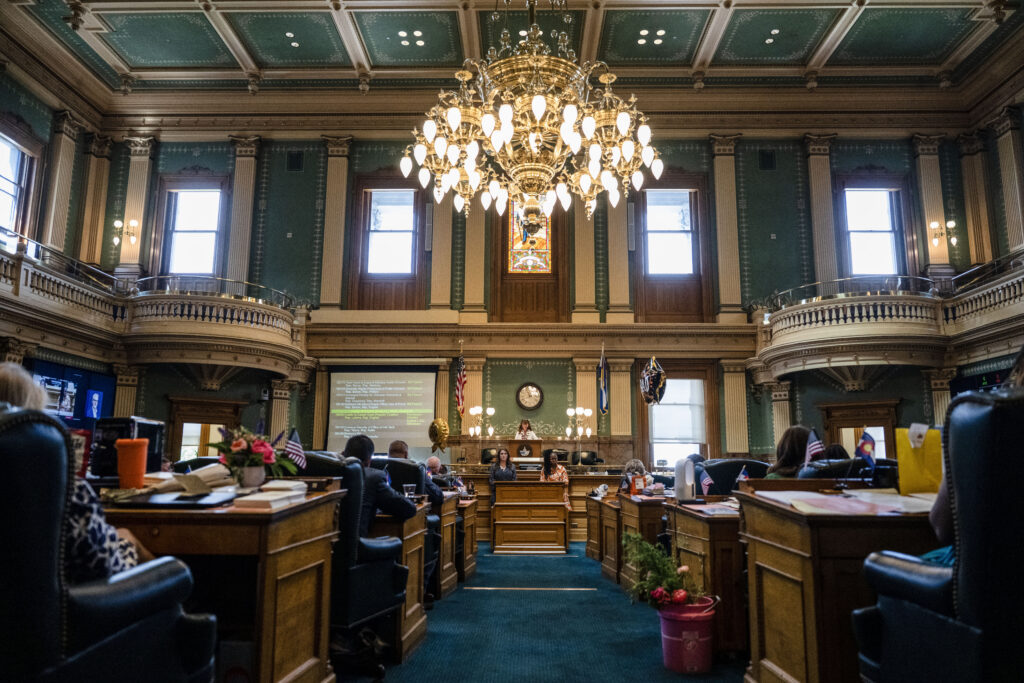
Colorado House Democrats’ caucus finances under scrutiny as ethics case against leader advances
Marianne Goodland
marianne.goodland@coloradopolitics.com
Updated 10 hours ago
Democratic lawmakers told a legislative ethics panel that a leader’s management of caucus finances left them with unanswered questions, disputed reimbursements and a breakdown in communication that ultimately triggered a formal complaint. The House Ethics Committee is examining a complaint...
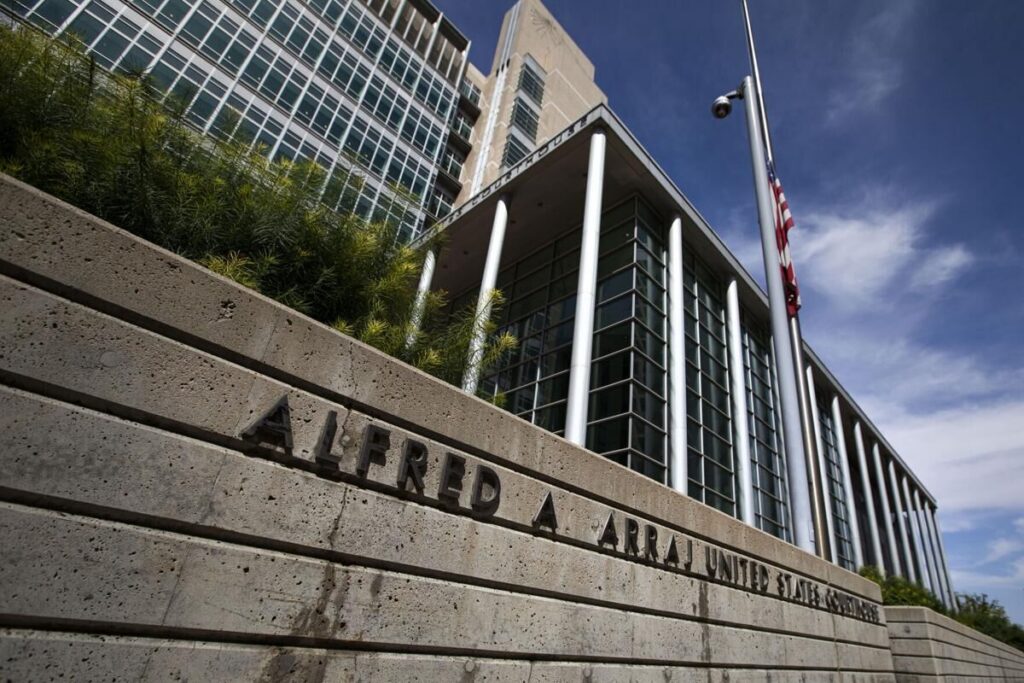
Federal judge holds off on dismissing formerly bankrupt medical contractor from Jeffco jail death lawsuit
Michael Karlik
michael.karlik@coloradopolitics.com
Updated 13 hours ago
A federal judge declined on Monday to dismiss the formerly bankrupt medical contractor from a lawsuit over a detainee’s death in Jefferson County jail, but indicated she would do so if the plaintiffs’ attorneys go through the process to ensure...

‘Art of Hope’ celebration will mark TGP’s 40th anniversary | NONPROFIT REGISTER
Joanne Davidson
joanne-davidson@coloradopolitics.com
Updated 14 hours ago
THE GATHERING PLACE Denver News: Forty years ago, two University of Denver social work students saw a need that couldn’t be ignored: Women and children experiencing homelessness had to exit overnight shelters seemingly at the crack of dawn, leaving them with nowhere safe to go during...
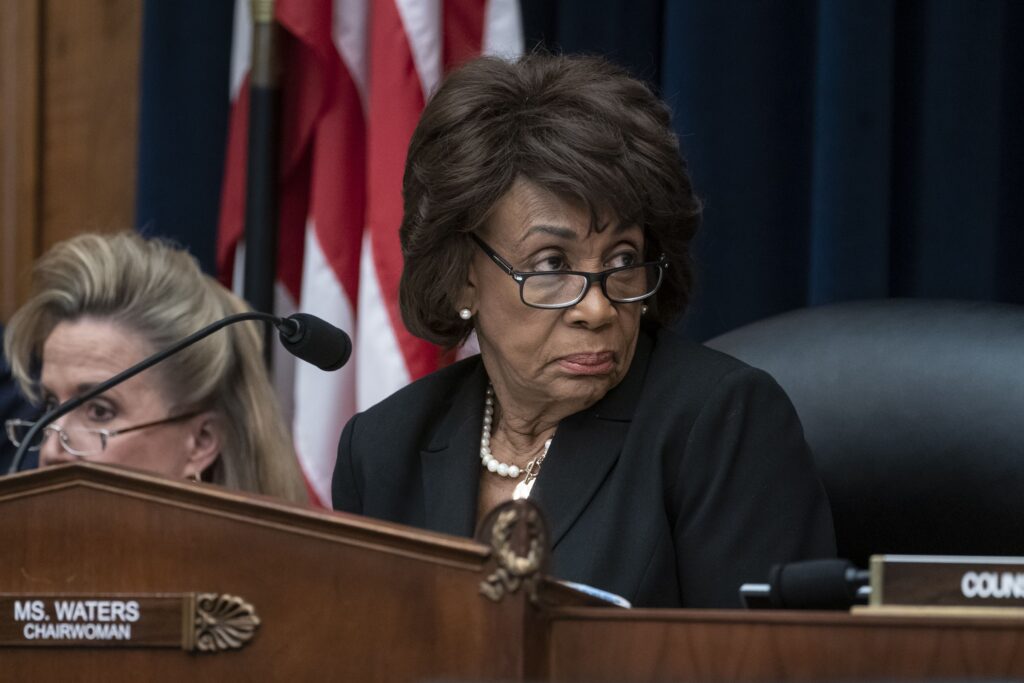
Here are the 10 oldest members of Congress running for reelection
Lauren Green
lauren-green@coloradopolitics.com
Updated 13 hours ago
Capitol Hill has long been called a “retirement home,” as well over 100 House members and half the Senate are over the age of 65. That reputation doesn’t look due to change anytime soon — there are currently more than...

Trump orders Hegseth to ‘substantially reduce’ joint military operations with South Korea
Carter Schroppe
carter.schroppe@washingtonexaminer.com
Updated 15 hours ago
President Donald Trump directed War Secretary Pete Hegseth on Sunday to “substantially reduce” joint military operations the U.S. military conducts with South Korea. “Based on my very good relationship with Kim Jong Un, of North Korea,” Trump said, “I am...

Fauci ignored reports of COVID vaccine side effects, new documents show
Gabrielle M. Etzel
gabrielle-m-etzel@coloradopolitics.com
Updated 15 hours ago
Dr. Anthony Fauci was made aware of possible COVID-19 vaccine complications by other senior-level public health officials in early 2021, according to new emails and text messages released by Senate Republicans on Sunday. Documents released by Sens. Rand Paul (R-KY)...

Majority of Americans say they’re worse off financially since Trump took office again: Poll
Emily Hallas
emily-hallas@coloradopolitics.com
Updated 15 hours ago
The majority of the public believes they are worse off financially than when President Donald Trump won a second term nearly two years ago, according to a new poll that painted an ominous picture of Republicans’ electability in the 2026...

Colorado River crisis: Lake Mead, Lake Powell inch closer to ‘dead pool’
Marianne Goodland
marianne.goodland@coloradopolitics.com
Updated 10 hours ago
In the past 10 days, both Lake Mead on the Arizona-Nevada border and Lake Powell roughly 300 miles northeast on the Utah-Arizona line have recorded their lowest water levels since the reservoirs were first filled. Lake Mead, the nation’s largest...