

Colorado Supreme Court orders Denver County Court to let man pay for eviction appeal
The Colorado Supreme Court on Thursday ordered the Denver County Court to let a tenant use his rental assistance checks to pay for the appeal of his eviction.
In an unsigned order, the justices noted a trial judge incorrectly denied Justin Soliz’s motion to halt his imminent eviction after the clerk’s office refused to accept Soliz’s payment that would enable him to appeal.
On April 10, Soliz represented himself in an eviction trial and lost. By that time, Soliz had qualified for the Colorado Emergency Rental Assistance program and received approval for $10,000 to cover the amount he owed his landlord.
In order to appeal, Soliz needed to pay $7,300, plus his monthly rent of $1,300 directly to the court. Now represented by counsel, Soliz attempted to deposit the assistance check with the clerk’s office. The need to act was urgent because Soliz had received notice from the sheriff’s department that he should vacate his unit “immediately.”
However, according to Soliz’s lawyers, the clerk’s office for the court rejected the payment, saying the appeal bond and the monthly rent needed to be paid separately. The office allegedly clarified afterward that it would also not accept separate payments if they were in the form of a cashier’s check.
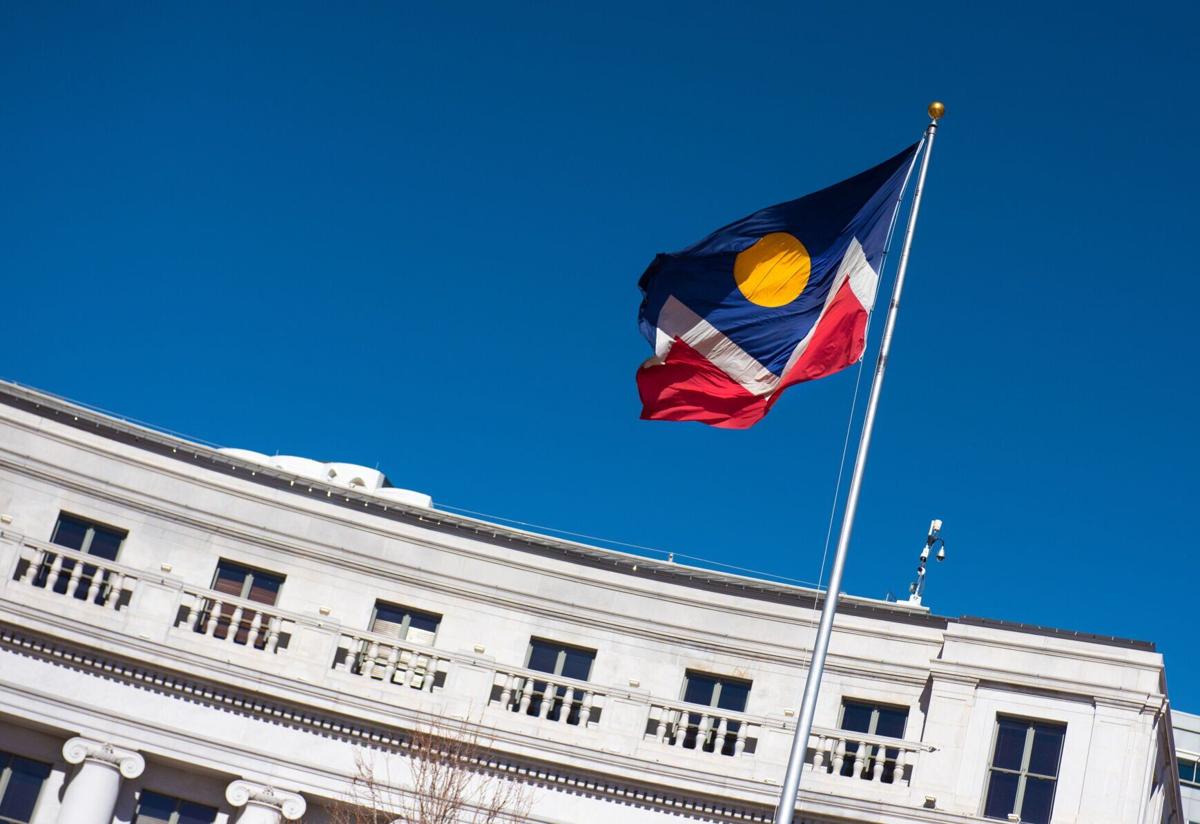
The Denver city flag flies over the City and County Building on March 3, 2025
Deborah Grigsby

Soliz’s attorneys, seeking to halt, or stay, their client’s eviction until it could be appealed, filed an emergency motion for the clerk’s office to accept the $10,000 check.
“Only due to unexpected and arbitrary administrative barriers is Mr. Soliz being prevented from obtaining a stay,” wrote lawyer Spencer Bailey.
On April 23, County Court Judge Brian C. Williamson denied the motion. He later added there was a “payment structure and accuracy issue,” not a problem with the form the payment took.
Soliz quickly sought review in Denver District Court, but Judge Karen L. Brody also rejected the motion because she concluded it was the county court’s role to halt the proceedings once the appeal bond was paid.
Finally, Soliz turned to the Supreme Court, arguing “unwritten or nonpublic internal administrative policies” may cause Soliz to lose his home.
The Denver City Attorney’s Office responded by acknowledging the clerk could accept cashier’s checks. But it blamed Soliz for trying to pay with checks that were slightly more than the amount of the appeal bond, which city policy required the clerk to reject.
“In no sense could the county court have acted manifestly arbitrary, unreasonable, or unfair in complying with required Fiscal Accountability Rules when it declined to accept a check in excess of the amount required to be paid,” wrote the office.
“Rather than ensure Mr. Soliz had access to the courts and a meaningful right to appeal,” countered Bailey, “the county court failed to exercise its discretion and left Mr. Soliz to be evicted from his home despite his good faith efforts to obtain a stay pending appeal.”
Without elaboration, the Supreme Court concluded Williamson incorrectly denied the motion to halt Soliz’s eviction after his lawyers were “informed in error that the clerk’s office would not accept two separate cashier’s checks as payment.” It ordered the county court to give Soliz “the opportunity to tender payment in the correct amounts of the appeal bond and the rent payment by two separate cashier’s checks or other acceptable form of payment.”
Soliz told Colorado Politics he has since relocated so that he can avoid the “constant fear of being thrown out” of his home, but said he would still pursue an appeal so the eviction will not be on his rental record. He also characterized his landlord’s eviction as retaliatory.
“Thankful that the Supreme Court came to this determination, I just wish that it would have led to them looking into my case and seeing that Denver County Court allowing the eviction to proceed in the first place was also wrong,” Soliz said.
The case is Shockcor Inc. v. Soliz.


Colorado’s unprecedented AI law can’t be enforced yet, court says
Marianne Goodland
marianne.goodland@coloradopolitics.com
Updated 36 minutes ago
A federal judge on Monday issued a delay on enforcing Colorado’s artificial intelligence law, Senate Bill 24-205. The lawsuit was filed by Elon Musk on behalf of his xAI company. The U.S. Justice Department joined in on that lawsuit last...
Lawsuit from men wrongly arrested for Denver shooting dismissed by federal appeals court
Michael Karlik
michael.karlik@coloradopolitics.com
Updated 4 hours ago
The Colorado-based federal appeals court dismissed a lawsuit last week from two men who were arrested as suspects in a downtown Denver shooting when they instead appeared to be the targets. Trevor Puller and Deandre Hutchinson alleged that they were...
Colorado Supreme Court narrows consumer protection law for insurance claims
Michael Karlik
michael.karlik@coloradopolitics.com
Updated 20 hours ago
The Colorado Supreme Court ruled on Monday that the legislature’s consumer protections requiring insurance companies to take certain steps before they allege a policyholder failed to cooperate do not apply to any obligation specifically laid out in the policy. In...
Car rental companies are not ‘insurers,’ Colorado Supreme Court rules
Michael Karlik
michael.karlik@coloradopolitics.com
Updated 19 hours ago
The Colorado Supreme Court decided on Monday that car rental companies offering insurance policies are not also “insurers” under state law, who may be sued for their failure to pay out benefits on claims. By 4-3, the justices further concluded...

Lifetime sex offender registration not ‘punishment,’ Colorado justices say
Michael Karlik
michael.karlik@coloradopolitics.com
Updated 19 hours ago
The Colorado Supreme Court concluded on Monday that lifetime sex offender registration is not cruel and unusual punishment because it is not “punishment.” At the same time, two members urged lawmakers to heed the advice of the Sex Offender Management...

Colorado Supreme Court oral arguments, chief appeals judge to retire | COURT CRAWL
Michael Karlik
michael.karlik@coloradopolitics.com
Updated 20 hours ago
Welcome to Court Crawl, Colorado Politics’ roundup of news from the third branch of government. The state Supreme Court held oral arguments in multiple cases and traveled to the Eastern Plains to visit with students, plus the chief judge of...
Federal judge tosses class-action lawsuit over poor Vail Resorts experience during strike
Michael Karlik
michael.karlik@coloradopolitics.com
Updated 4 days ago
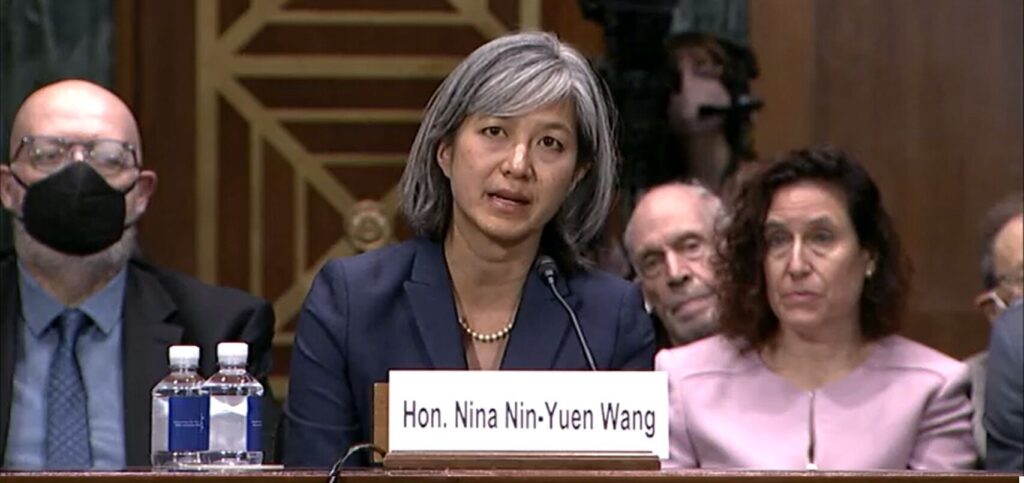
A federal judge dismissed a plaintiff’s proposed class-action lawsuit last month that sought compensation from Vail Resorts after a ski patrol strike turned a family vacation into a “colossal disaster.” U.S. District Court Judge Nina Y. Wang concluded plaintiff Christopher...
Federal judge allows disabled woman’s lawsuit to proceed against Elbert County sheriff
Michael Karlik
michael.karlik@coloradopolitics.com
Updated 4 days ago
A federal judge rejected the Elbert County Sheriff’s Office’s attempt to dismiss a disability rights lawsuit against it on Tuesday, in which the plaintiff alleges she sustained further injuries after being forced to walk home 8.8 miles from the jail...
Appeals court reverses conviction after judge blocked questioning about witness’s criminal charges
Michael Karlik
michael.karlik@coloradopolitics.com
Updated 5 days ago
An Arapahoe County judge violated a defendant’s constitutional right to confront the witnesses against him by blocking the defense from asking a witness about her own pending criminal charges in the same jurisdiction, Colorado’s second-highest court ruled last week. Prosecutors...

10th Circuit orders second look at challenge to Colorado ‘ghost gun’ law
Michael Karlik
michael.karlik@coloradopolitics.com
Updated 3 days ago
The Denver-based federal appeals court issued a mixed decision on Thursday, finding that a group of plaintiffs could not challenge certain aspects of Colorado’s “ghost gun” prohibition, could challenge others, and ordered further analysis of the law’s constitutionality. To address the...