

Child abuse, neglect still happen in Colorado amid decrease in calls to hotlines during summer break
Colorado’s Child Abuse and Neglect hotline always receives fewer calls over summer break, which concerns adults who work in the field of child protection.
“This happens every year — during the summer months we see calls drop 20% to 25% in June, July and part of August,” said Joe Homlar, director of the Child Welfare Division in the Office of Children, Youth & Families at the Colorado Department of Human Services.
The likely reason, he said, is that since most schools are not in session, the state’s largest group of mandatory reporters of suspicion of child maltreatment — teachers, administrators and school staff — aren’t in regular contact with kids.
“It’s not necessarily because there’s a drop in child abuse or neglect but because school is out, so we don’t hear from school staff, but we hear from other mandatory reporters, including physicians and law enforcement officials,” Homlar said.
The state hotline, 1-844-CO-4-KIDS, received about 10,500 referrals per month in 2024, which decreased to about 7,000 during summer months, according to statistics.
Under the state-supervised, locally administered program, county departments of human services follow up to determine if they need to do a home assessment and talk to all involved about what’s going on.
El Paso County, the state’s largest, consistently has had more calls of referral and subsequent assessments than any other county in Colorado, the data shows.
From 2015 through 2024, El Paso County had 161,135 referral calls. Of those, 59,590 were further assessed for abuse and neglect.
‘A community of dads’: Unique Center on Fathering going strong after 30 years in Colorado Springs
Homlar said in 95% of assessments, children remain in the home, which is nearly the best in state history.
In April, Colorado had 3,502 minors in foster homes and kinship care, compared with 4,044 in April 2021, statistics show.
New state legislative changes that make it easier for relatives and friends to care for children have helped improve the foster care system, Homlar said.
Kinship care, where children live with family or friends comprises more than 40% of cases now, when it used to be just 10%-15%, he said.
It’s the same story about a summer dive at Safe2Tell, a statewide hotline for students, parents and the public to report concerns about possible suicide attempts, school shooting plans, bullying or other unsafe situations among teens and young adults.
Over the past school year, the anonymous line received 2,500 to 3,000 reports in a typical month, which dropped to fewer to 1,000 reports per month during the summer, said Stacey Scardino, Safe2Tell director, via email.
“This is a typical annual pattern, as students are spending less time around peers and have reduced awareness of any challenges their friends might experience,” she said. “Our main message about this trend is simple: While the school calendar affects the number of reports, students experience safety concerns year-round.”
That’s why it’s critical to remind families, educators and communities that Safe2Tell is always open, 24/7, 365 days a year, Scardino said, so anyone can “anonymously share concerns and help prevent tragedies.”
As school resumes in August, the workload for Court-Appointed Special Advocates spikes, said Executive Director Angela Rose.
The organization, known as CASA of the Pikes Peak Region, trains volunteers who advocate for displaced children ages newborn to 18. The children have been removed from their homes due to abuse or neglect and are going through the court system for determination of dependency and other issues.
CASA is unable to keep up with the demand, Rose said.
The organization served 572 children last year using 470 volunteer advocates, she said. But El Paso County and Teller counties have at least 800 children who need special advocates appointed by judges to help youngsters navigate the judicial system and their new lives, Rose said.
‘Superhero’ foster dad in Colorado Springs recognized for dedication to helping at-risk youth
“We really want to provide every child who’s in this situation a CASA,” she said. “And it’s always important if someone sees or suspects abuse or hears something that doesn’t sound right to them, that they make the call to the hotline.”
Calls can be anonymous.
Even if you’re not sure about a certain nagging suspicion, the hotline can help you talk things through with someone who’s familiar with such scenarios and concerns, Homlar said.
“We believe parents and caregivers are responsible for the safety and well-being of children in their care, and we also recognize parenting is stressful at times for anyone,” he said.
All Coloradans can help if a parent or caregiver is having a bad day, Homlar said. Take a meal to a neighboring family, volunteer to babysit for a friend or relative for a few hours to give the parent a break, step in for carpooling, or simply listen to parents let off steam and let them know you’re there for them, he recommends.
“Caseworkers listen very carefully to children and parents and do their best to make sure parents have what they need and avoid unnecessary out-of-home care,” Homlar said.


Trump announces 50% tariffs on Canadian cars, auto parts, and steel
Naomi Lim
naomi-lim@coloradopolitics.com
Updated 39 minutes ago
President Donald Trump escalated the trade war with Canada after talks collapsed last week, announcing Monday that the United States would impose 50% tariffs on cars, trucks, automotive components, and steel starting Jan. 1, 2027. “Canada has been ripping off...

Trump opens ‘economic D-Day’ offensive against Iran as war nears six-month mark
Christian Datoc
christian-datoc@coloradopolitics.com
Updated 42 minutes ago
President Donald Trump is seeking to increase the financial pressure on Iran with new secondary sanctions on nations and foreign actors propping up the regime’s economy as the war between the United States and Tehran nears the six-month mark. Treasury...

Iran puts out propaganda video tracking Barron Trump’s location, offering $10 million for his assassination
Timothy Nerozzi
timothy-nerozzi@coloradopolitics.com
Updated 1 hour ago
The Islamic Revolutionary Guard Corps is putting a hit out on President Donald Trump’s son, Barron Trump, with an inflammatory video claiming to track his location. State-run television in Iran is broadcasting a propaganda video claiming to show the locations...
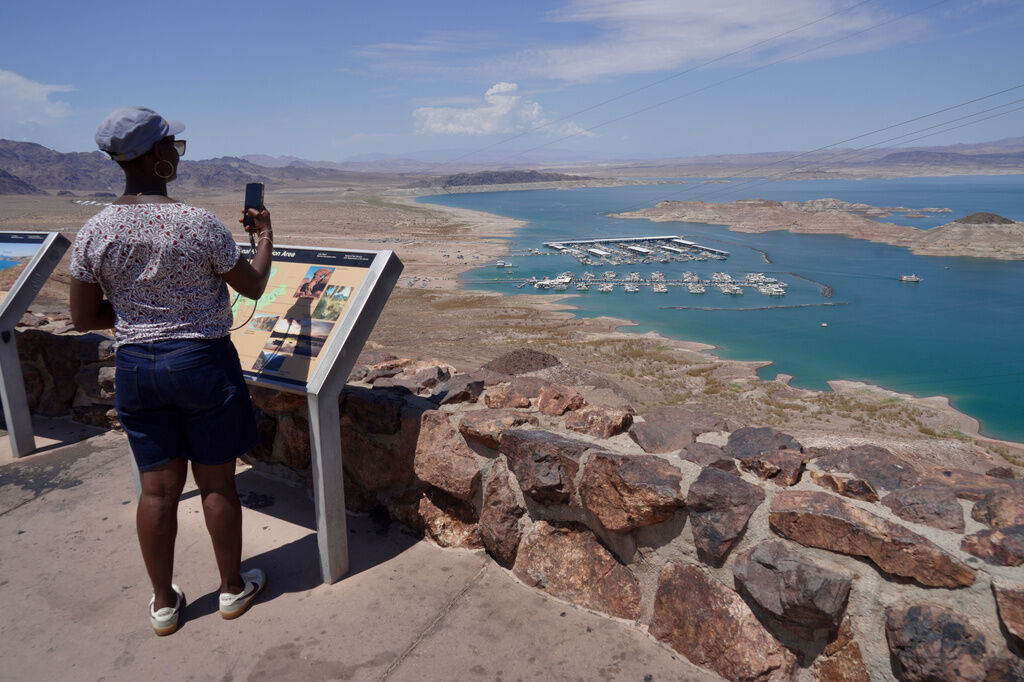
Nevada sues Trump administration over Colorado River cuts
Marianne Goodland
marianne.goodland@coloradopolitics.com
Updated 2 hours ago
The state of Nevada on Monday filed a lawsuit against the Trump administration and Interior Secretary Doug Burgum, seeking to block the Colorado River management plan. On Friday, Burgum released a “record of decision” that would reduce water allocations to...

Healthcare Freefall: Longer drives, fewer options for maternity care in Colorado
Thelma Grimes
thelma.grimes@coloradopolitics.com
Updated 3 hours ago
Editor’s Note: Colorado’s healthcare system is entering a period of accelerating instability — a “tsunami,” as multiple leaders describe it — driven by collapsing hospital finances, shrinking Medicaid reimbursements, disappearing services and a political fight over who is responsible for...
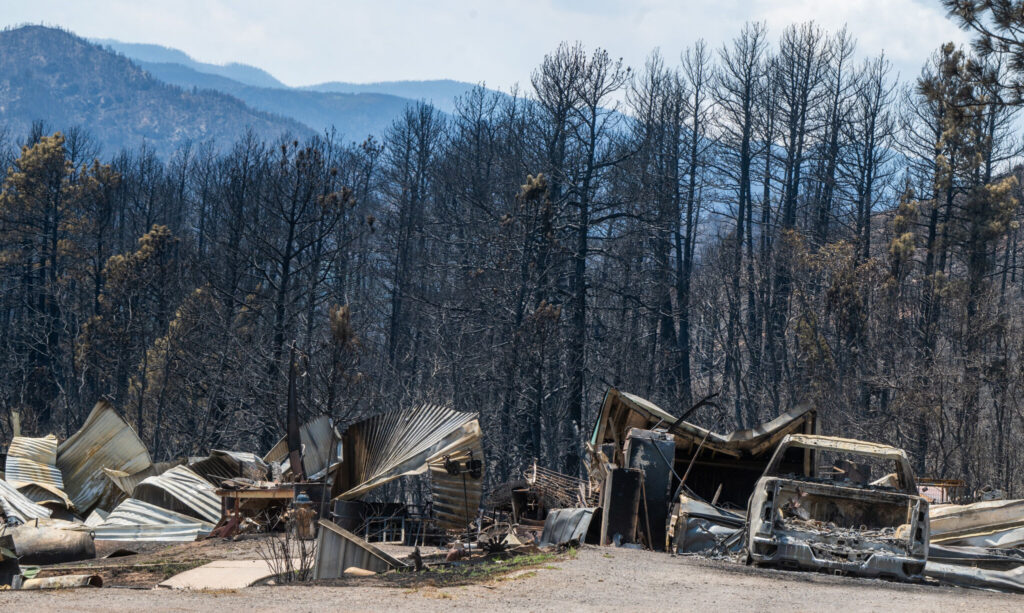
Polis officially requests federal disaster declaration for Colorado wildfires and floods
9News
9news@coloradopolitics.com
Updated 5 hours ago
Gov. Jared Polis has requested a Major Disaster Declaration to aid recovery from the Aspen Acres and Gold Mountain fires and subsequent flooding in the burn scars. COLORADO, USA — On Sunday, Gov. Jared Polis officially requested a Major Disaster Declaration from...

US strikes another boat in eastern Pacific, killing two, Pentagon says
The Associated Press
the-associated-press@coloradopolitics.com
Updated 4 hours ago
U.S. forces have struck another vessel in the eastern Pacific, killing two people the Pentagon says were trafficking drugs. The U.S. Southern Command announced the strike in a social media post early Monday. The death toll from the Trump administration’s...

Fishing closures are becoming routine as record heat warms rivers in the US West | OUT WEST ROUNDUP
Ernest Luning
ernest.luning@coloradopolitics.com
Updated 3 days ago
MONTANA Fishing restricted as rivers warm LIVINGSTON — Trout need cool water to survive, but record heat this summer has driven water temperatures to lethal levels for fish. Wildlife officials are banning fishing during certain hours on rivers and streams...
Colorado measure redirects sales tax revenue from sporting goods, equipment to conservation programs
The Denver Gazette
the-denver-gazette@coloradopolitics.com
Updated 5 hours ago
A proposal to redirect sales tax revenues from sporting goods and equipment toward wildfire and conservation programs will appear on the ballot this November, election officials in Colorado confirmed. The measure, if approved by voters, would reduce the amount available...
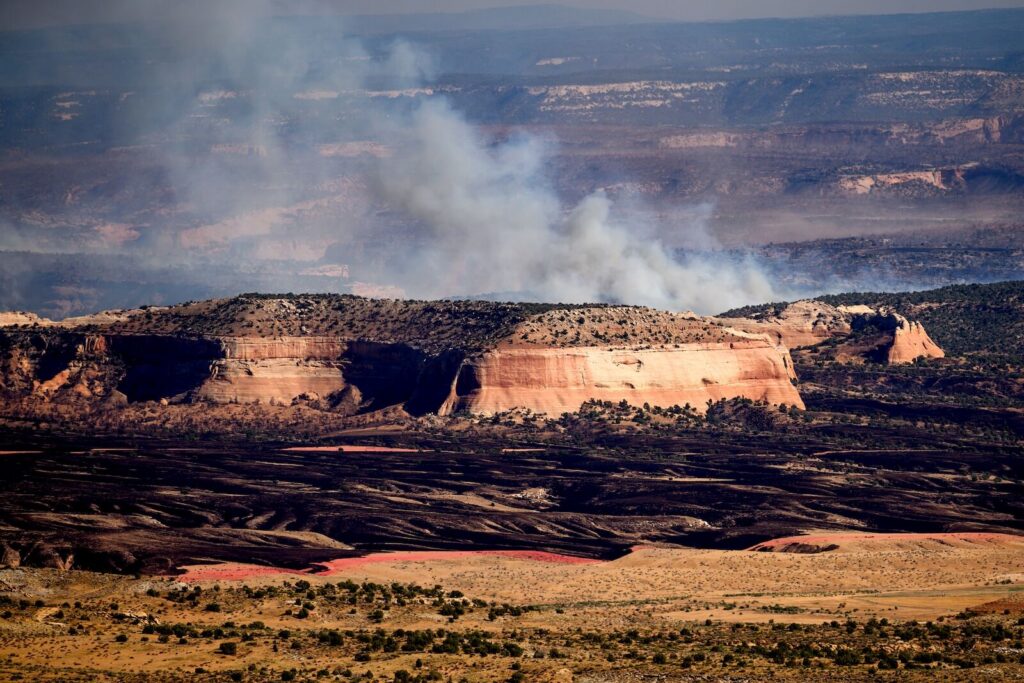
Firefighters’ deaths prompt debate over 100% suppression wildfire strategy
Rachael Wright, Special to Colorado Politics
rachael.wright@coloradopolitics.com
Updated 19 hours ago
On July 22, 2026, the chief of the U.S. Forest Service testified before a House Agriculture subcommittee that his agency pursues a “full suppression” strategy to contain all fires while they are still small, rather than allowing them to burn...