

The Salvation Army facing up to $1 million budget shortfall, asks for help
Facing a projected budget shortfall between $800,000 and $1 million for the fiscal year that begins Oct. 1, The Salvation Army Corps of El Paso County’s leader appealed to Colorado Springs City Council for help on Monday.
“We have a short time window,” Maj. Steve Ball, county coordinator and corps officer, told members during a regular work session. The budget proposal for the 2025-2026 budget is due July 31, he said.
The city has not yet paid The Salvation Army its allocation of $150,000 for the annual funding cycle that began April 1, said Aimee Cox, chief housing and homelessness response officer for the city of Colorado Springs.
Springs Rescue Mission cuts staff, reorganizes to balance budget
The city was considering giving the organization $200,000 in total this year, she said, most of which would come as pass-through funds from the federal Community Development Block Grant program. But the city doesn’t have the money to allocate to organizations that include The Salvation Army due to federal government delays, Cox said.
The Salvation Army, a Christian-based church and nonprofit, is formulating alternative budget plans if additional funds don’t come through, Ball said. The worst-case scenario, he said, would be less availability of the 31 units at its Family Hope Center, the city’s only emergency shelter for families who are homeless.
“We haven’t rehired a few key positions through attrition, we’re operating leaner than in the past. It’s a challenge but nothing’s been cut so far. We’re taking time to figure it out. A million dollar gap would impact all our programs to some degree,” he said after the meeting.
Ball said he’s also appealing to other local governments and organizations, such as COSILoveYou.
And on Aug. 1, the organization will launch a community awareness and fundraising campaign called “Hope Needs Help” to help fill the anticipated deficit.
It costs about $1.5 million annually to run the shelter, Ball said. In total, the local organization runs a yearly budget of about $9 million. Because of decreasing funding from various sources, The Salvation Army used a $1 million Transformational Homelessness Response Grant from the state Department of Local Affairs faster than was intended, he said.
Adults with children who have sustained job loss, medical emergencies, housing discrepancies, family discord and other crises can stay temporarily at the shelter for up to 90 days in individual family rooms, Ball said.
Clients also receive case management, meals and assistance with obtaining vital documents, transportation, hygiene, employment, clothing, education and other needs.
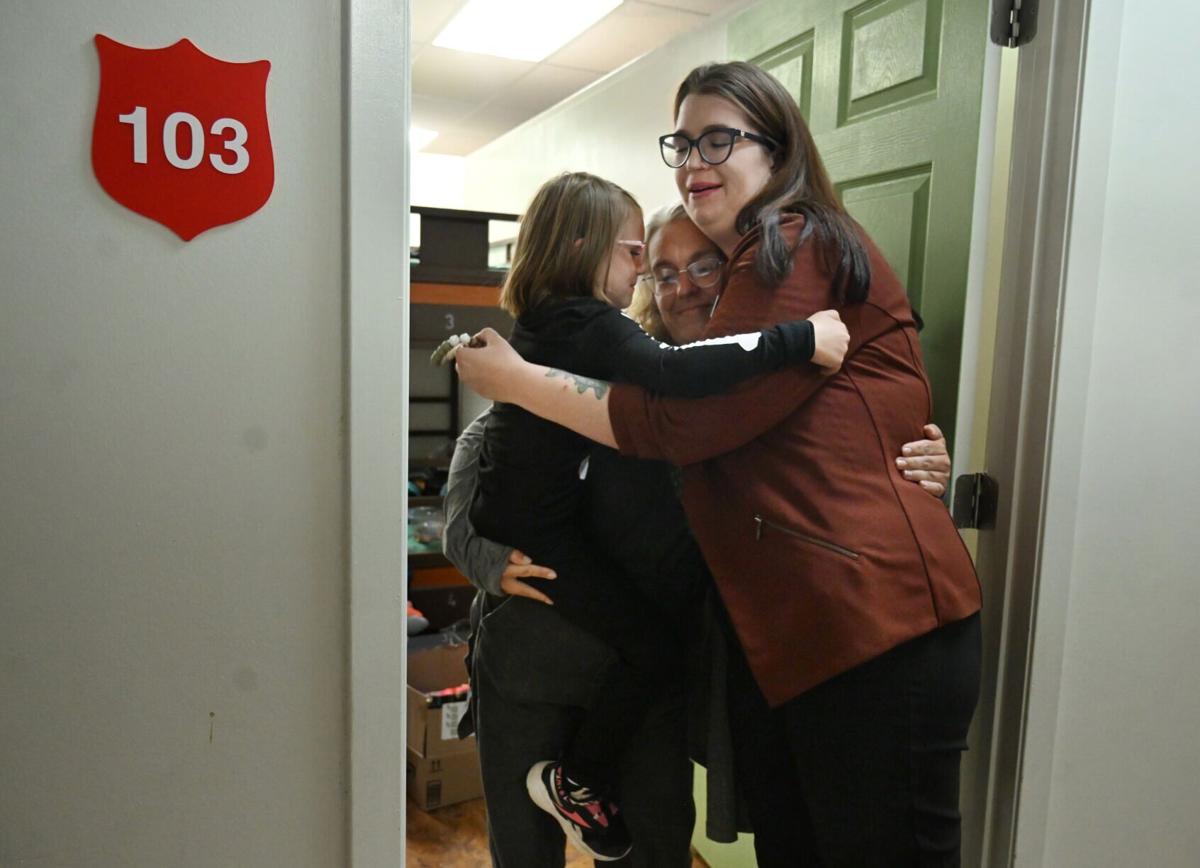
Salvation Army Case Manager Sandra Haley gives Rae Dicken and her daughter, Olivia, a hug at the Salvation Army Family Hope Center on Monday. She said she is so happy that the mother and daughter are transitioning from the center to their own apartment on Tuesday.
Jerilee Bennett, The Gazette

Rae Dicken and her 6-year-old daughter, Olivia, have been living at the shelter since mid-May and this week got a call that there’s a transitional apartment available for them.
The shelter, which has a capacity of 100 people, takes some getting used to, Dicken said on Monday, as she and her daughter packed their belongings. But it’s been a positive leap to remove themselves from an abusive situation, Dicken said.
Lights on and lights off time, having to leave during the day, using public transportation and securing a job have been difficult, she said.
“Once you get used to the routine, they’re great,” Dicken said. “They feed us, and we’re safe.”
Assistance League of Colorado Springs goes solo, rebrands as B-COS We Care For Our Community
Olivia attended The Salvation Army’s summer day camp, received donations of clothes in her favorite color of pink, went roller skating and played with friends in the shelter’s common areas. But she said she’s excited for her new home.
From July 1, 2024, to June 30 of this year, the Family Hope Center housed 277 families, which included 434 adults and 528 children, according to Sandra Haley, lead case manager at the shelter.
Of those, 176 families, or 64%, returned to stable housing, she said. Since February, the rate of families leaving the shelter for stable housing has increased to an average of 83%, Haley said.
“This is a sobering need you’re presenting to us,” said Nancy Henjum, city councilmember.
Ball said he’s hopeful that things will work out and individuals and entities will come through with support.
Other agencies that provide programs for the homeless population also are struggling.
Springs Rescue Mission, the city’s sole emergency shelter for individual adults who are homeless, was looking at a $1.5 million budget shortfall before cutting staff and streamlining operations for the fiscal year that began July 1, its CEO told The Gazette on July 7.
The Place, the region’s only emergency shelter for teens and young adults, also is doing “a deep dive” into its budget and “looking at all our options,” in terms of how federal funding reductions will affect the organization, said Mimi Brown.
She became interim director after CEO Becky Treece left the job earlier this month. The Place also is preparing to post the opening for the head position in August.
“At this point, we honestly don’t have any specifics to share other than we are working with our staff and community partners to come up with smart solutions that enable us to continue serving our youth as we have for the past 25 years,” Brown said in an email.
To donate, go to https://coloradosprings.salvationarmy.org/colorado_springs_corps/ways-to-give/.
New survey asks residents what they want for future of El Paso, Teller counties


Trump announces 50% tariffs on Canadian cars, auto parts, and steel
Naomi Lim
naomi-lim@coloradopolitics.com
Updated 46 minutes ago
President Donald Trump escalated the trade war with Canada after talks collapsed last week, announcing Monday that the United States would impose 50% tariffs on cars, trucks, automotive components, and steel starting Jan. 1, 2027. “Canada has been ripping off...

Trump opens ‘economic D-Day’ offensive against Iran as war nears six-month mark
Christian Datoc
christian-datoc@coloradopolitics.com
Updated 50 minutes ago
President Donald Trump is seeking to increase the financial pressure on Iran with new secondary sanctions on nations and foreign actors propping up the regime’s economy as the war between the United States and Tehran nears the six-month mark. Treasury...

Iran puts out propaganda video tracking Barron Trump’s location, offering $10 million for his assassination
Timothy Nerozzi
timothy-nerozzi@coloradopolitics.com
Updated 1 hour ago
The Islamic Revolutionary Guard Corps is putting a hit out on President Donald Trump’s son, Barron Trump, with an inflammatory video claiming to track his location. State-run television in Iran is broadcasting a propaganda video claiming to show the locations...

Nevada sues Trump administration over Colorado River cuts
Marianne Goodland
marianne.goodland@coloradopolitics.com
Updated 5 minutes ago
On Monday, the state of Nevada filed a lawsuit against the Trump administration and Interior Secretary Doug Burgum, seeking to block the Colorado River management plan. On Friday, Burgum released a “record of decision” that would reduce water allocations to...

Healthcare Freefall: Longer drives, fewer options for maternity care in Colorado
Thelma Grimes
thelma.grimes@coloradopolitics.com
Updated 3 hours ago
Editor’s Note: Colorado’s healthcare system is entering a period of accelerating instability — a “tsunami,” as multiple leaders describe it — driven by collapsing hospital finances, shrinking Medicaid reimbursements, disappearing services and a political fight over who is responsible for...
Polis officially requests federal disaster declaration for Colorado wildfires and floods
9News
9news@coloradopolitics.com
Updated 5 hours ago
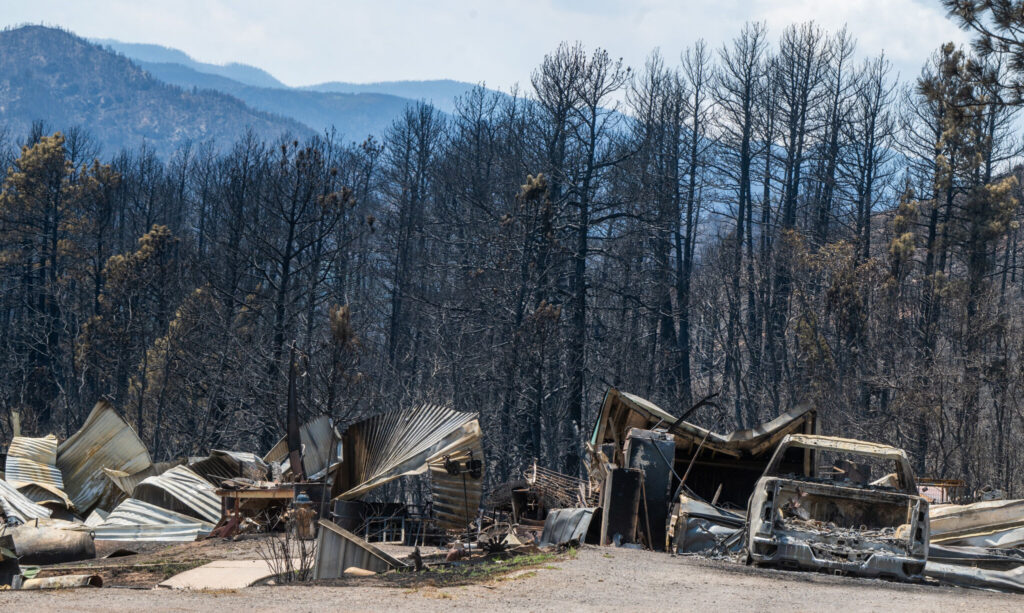
Gov. Jared Polis has requested a Major Disaster Declaration to aid recovery from the Aspen Acres and Gold Mountain fires and subsequent flooding in the burn scars. COLORADO, USA — On Sunday, Gov. Jared Polis officially requested a Major Disaster Declaration from...

US strikes another boat in eastern Pacific, killing two, Pentagon says
The Associated Press
the-associated-press@coloradopolitics.com
Updated 4 hours ago
U.S. forces have struck another vessel in the eastern Pacific, killing two people the Pentagon says were trafficking drugs. The U.S. Southern Command announced the strike in a social media post early Monday. The death toll from the Trump administration’s...

Fishing closures are becoming routine as record heat warms rivers in the US West | OUT WEST ROUNDUP
Ernest Luning
ernest.luning@coloradopolitics.com
Updated 3 days ago
MONTANA Fishing restricted as rivers warm LIVINGSTON — Trout need cool water to survive, but record heat this summer has driven water temperatures to lethal levels for fish. Wildlife officials are banning fishing during certain hours on rivers and streams...

Jena Griswold’s record: corruption, incompetence | Dick Wadhams
Dick Wadhams
dick-wadhams@coloradopolitics.com
Updated 3 days ago
There is no statewide elected official going back decades who is as breathtakingly corrupt and incompetent as Secretary of State Jena Griswold, who is now running for attorney general of all things. And compliant ruling Democrats know it. Their silence...

Kiros exudes why Colorado’s political times are a-changin’ at annual Denver Dems gala | Miller Hudson
Miller Hudson
miller-hudson@coloradopolitics.com
Updated 3 days ago
Among Colorado’s few remaining bipartisan rituals are county and state party dinners. I was particularly intrigued by last week’s Denver Democratic Party’s 2026 Annual Gala, a “New Deal for a New Era.” Their glossy program featured an artist’s Technicolor rendering...