

Discipline panel censures ex-Northeast Colorado judge for misconduct
A three-member disciplinary panel issued a public censure on Thursday of a former trial judge from northeastern Colorado, the first such punishment handed down after voters amended the state constitution last year to reform judicial discipline.
The July 18 order was notable not for the sanction it imposed on former District Court Judge Justin B. Haenlein, which judicial discipline authorities and Haenlein had both agreed to prior to his resignation. Rather, the panel took time to defend its independent authority to order consequences.
“The Panel notes that while it accepts the parties’ stipulation in this instance, such acceptance does not constitute a limitation on the Panel’s constitutional authority to impose any sanction within its jurisdiction, including but not limited to removal, retirement, suspension, censure, reprimand, or other discipline as provided by the Colorado Constitution,” wrote the panel.
Its members included Weld County District Court Judge Vincente G. Vigil, attorney Tyrone Glover and non-lawyer Jeff Swanty.
Amendment H, which voters enacted last year, redesigned the judicial discipline process to minimize the involvement of the Colorado Supreme Court. It created an adjudicative board to hear formal disciplinary proceedings, consisting of a pool of judges, attorneys and non-lawyers appointed by various entities. The amendment also established a rule-making body, which is currently working to establish emergency disciplinary rules.
The first case to proceed publicly through the new system was that of Haenlein, who presided in the 13th Judicial District of Morgan, Logan, Sedgwick, Phillips, Washington, Yuma and Kit Carson counties. He had been off the bench since the Colorado Supreme Court suspended him in November 2024, pending a disciplinary investigation.
In an April 29 filing at the time of his resignation, Haenlein argued the adjudicative panel “is operating without any clearly articulated rules or procedures. The absence of rules and procedures may deny Judge Haenlein his constitutional right to due process of law,” wrote attorney David M. Beller.
Beller, in a separate document, also argued the panel only had the authority to hand down “the public censure provided for in the parties’ stipulation.”
Although a censure was the harshest possible punishment for Haenlein given his status as a former judge, the panel’s order reiterated that Amendment H gave it “authority beyond the sanctions agreed upon by the parties,” including to order counseling, docket supervision and judicial education for sitting judges.

The Ralph L. Carr Colorado Judicial Center in downtown Denver houses the Colorado Supreme Court and Court of Appeals. (Michael Karlik/Colorado Politics)
Michael Karlik/Colorado Politics

“The Panel retains full discretion to determine appropriate sanctions in all matters before it, and parties cannot through stipulation limit the Panel’s constitutional remedial authority,” the members wrote. “Future stipulations shall be evaluated on their individual merits, and the Panel reserves the right to reject any stipulation it deems insufficient to serve the public interest or maintain the integrity of the judiciary.”
Haenlein became a judge in January 2022 after practicing in criminal defense and child welfare cases. He represented a client, identified as “Jane Doe,” in multiple criminal cases and allegedly exchanged “sexual and flirtatious text messages.” Haenlein would also help Doe with certain living expenses.
At the time of Haenlein’s appointment, he represented Doe in a domestic relations case. Although he withdrew as her lawyer, Haenlein allegedly used the Judicial Department’s case management system to give legal advice — “interspersed with explicit sexts” — to Doe about the case.
In July 2022, Doe appeared before Haenlein as a defendant in a felony drug case. Haenlein disclosed Doe was his prior client but did not raise their intimate relationship. Neither the defense nor the prosecution asked Haenlein to recuse and he presided over Doe’s case for two years, which resolved in a guilty plea. He made multiple procedural rulings and ultimately sentenced her.
While Doe was a defendant in the criminal case Haenlein was handling, she texted him that her boyfriend would also be appearing as a defendant in Haenlein’s courtroom. She asked for his release. The boyfriend was accused of a drug felony in Colorado and an aggravated assault felony out of Kansas. Judges previously set bond at $7,500 and $10,000, respectively.
The defendant’s attorney asked Haenlein to release him pending trial on a personal recognizance bond. The district attorney’s office objected, but Haenlein granted the defense’s request. He did not disclose his personal connection to the case.
The adjudicative panel agreed Haenlein committed four violations by failing to comply with judicial rules, failing to promote public confidence in the judiciary, failing to recuse himself and for practicing law as a judge.

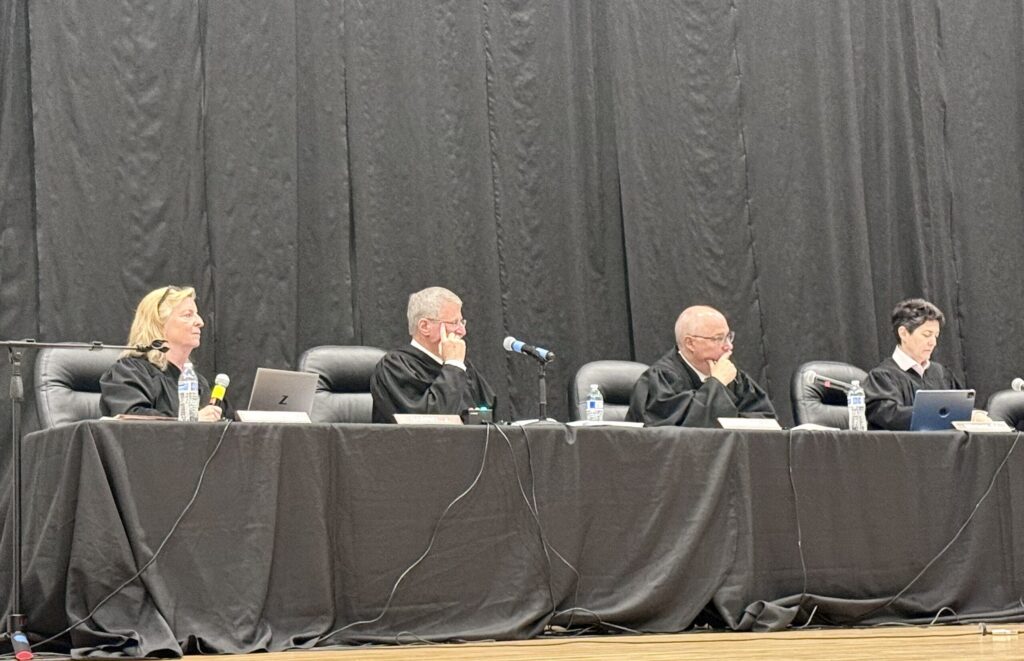
Colorado justices discuss solution to confusion from prior criminal ruling
Michael Karlik
michael.karlik@coloradopolitics.com
Updated 2 hours ago
The Colorado Supreme Court pondered the fallout on Tuesday from its nearly six-year-old decision interpreting the state’s impaired driving laws, with the justices now addressing how defendants affected by the legal change must seek postconviction relief. In contrast to other...
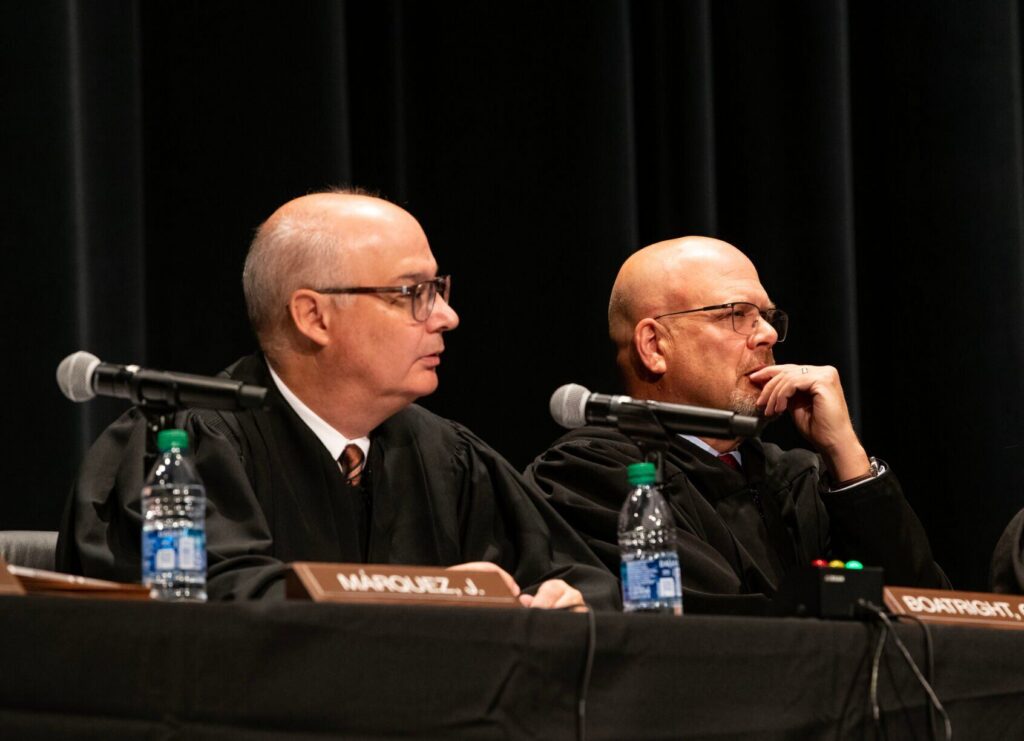
Colorado justices suggest father entitled to appeal of custody decision
Michael Karlik
michael.karlik@coloradopolitics.com
Updated 23 hours ago
Members of the Colorado Supreme Court signaled strongly on Tuesday that a father deserved some avenue for challenging a temporary child custody order that no lower court believed it could review due to the unusual circumstances of the case. Because...

Court snuffs out challenge to Denver’s flavored tobacco ban
Deborah Grigsby
deborah.smith@denvergazette.com
Updated 2 hours ago
The smoke finally cleared in Denver’s battle over a citywide ban on flavored tobacco products when a Denver court dismissed a challenge from local vape shop owners seeking to declare the ordinance unconstitutional and block its enforcement. On Wednesday, Denver...
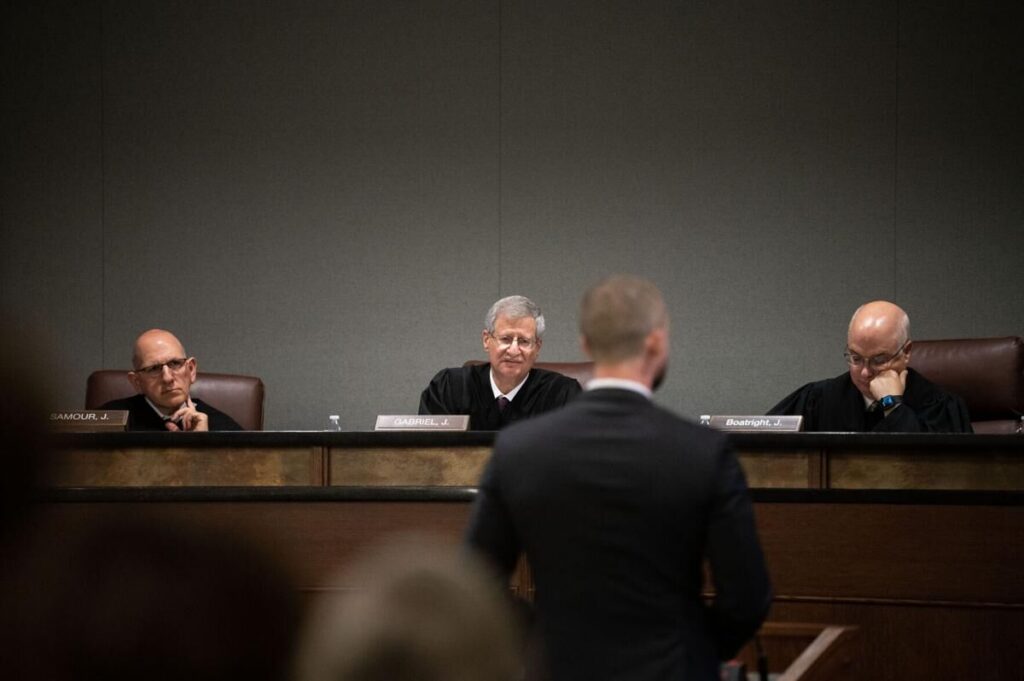
Colorado justices agree fraud claims belong in corporate dispute
Michael Karlik
michael.karlik@coloradopolitics.com
Updated 1 day ago
The Colorado Supreme Court decided on Tuesday that a corporate plaintiff validly pursued fraud claims over conduct that was not covered by a contract or by a set of interrelated business agreements leading up to the contract. Previously, the Court...
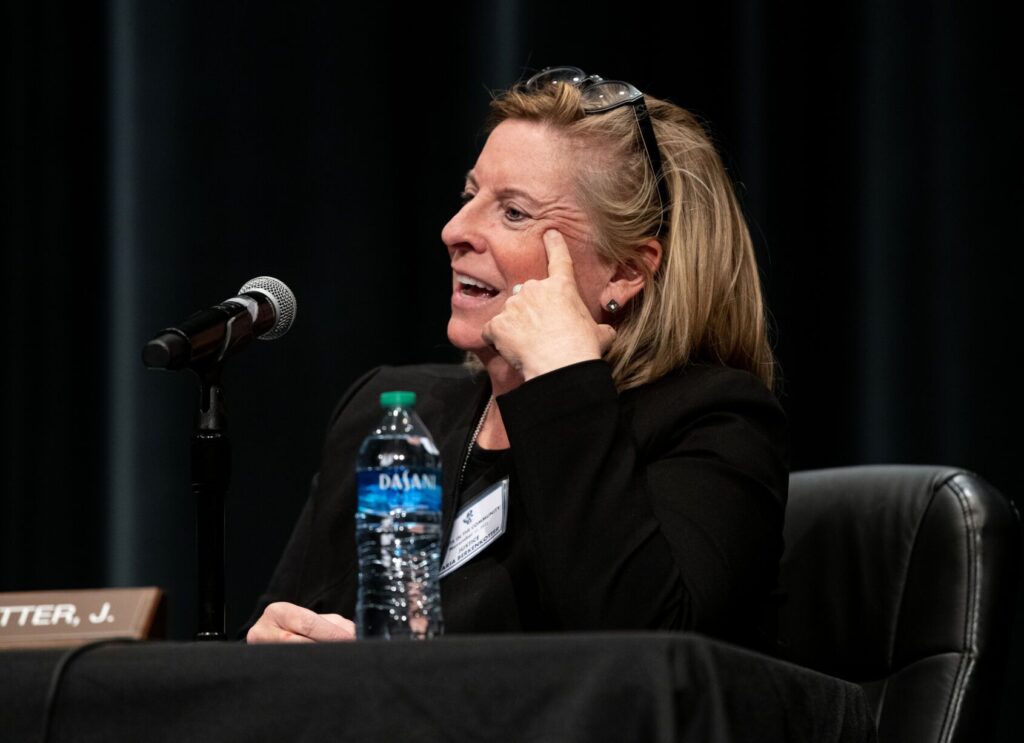
Colorado Supreme Court says intimate messages irrelevant to assault case
Michael Karlik
michael.karlik@coloradopolitics.com
Updated 1 day ago
The Colorado Supreme Court decided on Tuesday that a Douglas County judge acted reasonably by blocking evidence of a defendant’s BDSM-related conversations with the victim in his trial for assault and false imprisonment. While the Court of Appeals believed that...
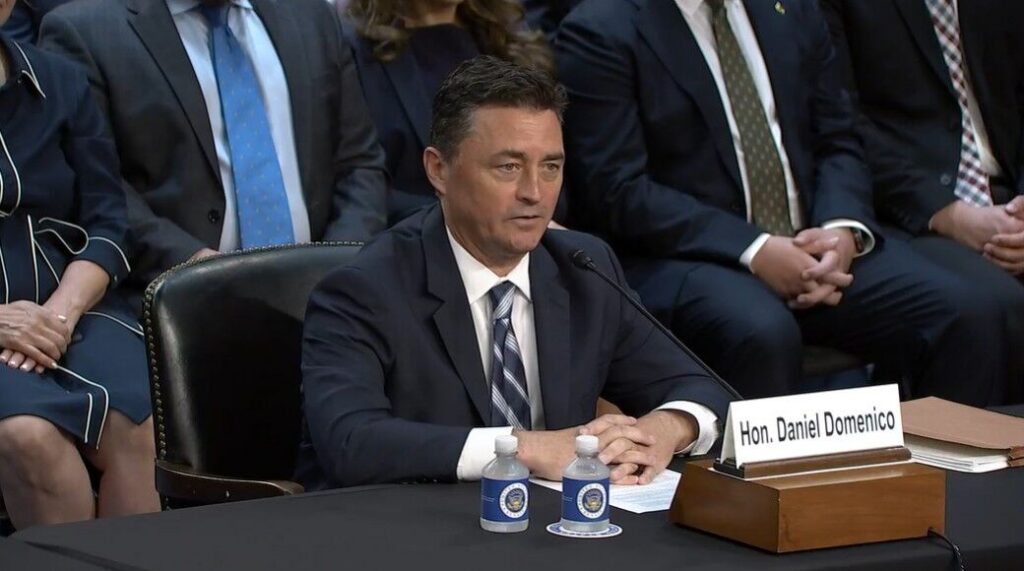
Trump’s 10th Circuit nominee declines to name 2020 election winner, defends immigration decisions
Michael Karlik
michael.karlik@coloradopolitics.com
Updated 1 day ago
President Donald Trump’s nominee to the Denver-based federal appeals court declined to say who won the 2020 presidential election during his appearance before the U.S. Senate Judiciary Committee on Wednesday, and defended his recent rulings in immigration detention cases. U.S....

Colorado law allowing lawsuits against ‘conversion therapy’ providers takes effect July 1
Marissa Ventrelli
marissa.ventrelli@coloradopolitics.com
Updated 20 hours ago
With a new law taking effect July 1, Colorado is creating a legal pathway for people to sue licensed providers of “conversion therapy,” even as debate over the practice’s constitutionality continues in the wake of a recent U.S. Supreme Court...
Colorado justices expand ability for civil defendants to avoid participating, win after trial
Michael Karlik
michael.karlik@coloradopolitics.com
Updated 1 day ago
The Colorado Supreme Court decided on Tuesday that a civil defendant, whose non-participation in the case meant that he legally admitted to the sexual assault allegations against him, could nonetheless prevail after he showed up to testify at trial. A...
Colorado justices find ability to extend appeal deadline applies equally to prosecutors, defendants
Michael Karlik
michael.karlik@coloradopolitics.com
Updated 2 days ago
The Colorado Supreme Court decided on Tuesday that prosecutors have the same ability as criminal defendants to freeze their deadline to appeal a trial judge’s ruling when they ask for reconsideration, even though the rules do not explicitly say so....
Colorado justices confirm leaving-the-scene prosecutions require no proof of driver’s knowledge
Michael Karlik
michael.karlik@coloradopolitics.com
Updated 19 hours ago
The Colorado Supreme Court confirmed on Tuesday that its 20-year-old decision involving drivers who leave the scene of an accident remains good law and prosecutors do not have to prove that such defendants knew they were involved in an accident....