

Supreme Court clears way for temporary nuclear waste storage in New Mexico, Texas | OUT WEST ROUNDUP
Supreme Court OK’s nuclear storage plans
WASHINGTON — The Supreme Court on June 18 restarted plans to temporarily store nuclear waste at sites in rural Texas and New Mexico, even as the nation is at an impasse over a permanent solution.
The justices, by a 6-3 vote, reversed a federal appeals court ruling that invalidated the license granted by the Nuclear Regulatory Commission to a private company for the facility in southwest Texas. The outcome should also reinvigorate plans for a similar facility in New Mexico roughly 40 miles away.
The federal appeals court in New Orleans had ruled in favor of the opponents of the facilities.
The licenses would allow the companies to operate the facilities for 40 years, with the possibility of a 40-year renewal.
The court’s decision is not a final ruling in favor of the licenses, but it removes a major roadblock. Justice Brett Kavanaugh’s majority opinion focused on technical procedural rules in concluding that Texas and a major landowner in southwest Texas forfeited their right to challenge the NRC licensing decision in federal court.
Nuclear waste site near Rifle gets water seepage mitigation
The justices did not rule on a more substantive issue: whether federal law allows the commission to license temporary storage sites. But Kavanaugh wrote that “history and precedent offer significant support for the commission’s longstanding interpretation” that it can do so.
Justice Neil Gorsuch wrote in dissent that the NRC’s “decision was unlawful” because spent nuclear fuel can be temporarily stored in only two places under federal law, at a nuclear reactor or at a federally owned facility. Justices Samuel Alito and Clarence Thomas signed on to the dissenting opinion.
Roughly 100,000 tons of spent fuel, some of it dating from the 1980s, is piling up at current and former nuclear plant sites nationwide and growing by more than 2,000 tons a year. The waste was meant to be kept there temporarily before being deposited deep underground.
Plans for a permanent underground storage facility at Yucca Mountain, northwest of Las Vegas, are stalled because of staunch opposition from most Nevada residents and officials.
MONTANA
Governor vetoes community solar bill
Gov. Greg Gianforte on June 13 vetoed a bill that sought to establish a legal framework for community solar projects in Montana.
Bill sponsor Chris Pope, D-Bozeman, argued before fellow lawmakers that his proposal would expand access to locally generated, emissions-free power that would lower power bills for participants. He also argued that the bill would address utility companies’ cries for additional power sources to meet growing demand and improve the grid’s resilience to extreme weather events.
The community solar projects envisioned by Pope would have created a voluntary framework for participants to own a “share” of a solar array that feeds power into a monopoly utility-owned transmission system. Power generated by the project reduces the participants’ monthly bills.
The bill passed the Legislature with 100 of Montana’s 150 representatives and senators in support of the measure.
Hot energy: Colorado explores geothermal power
In his veto letter, Gianforte zeroed in on the bill’s mechanism for establishing a credit to offset a solar share purchaser’s monthly utility bill. The bill would have given the Montana Public Service Commission the ability to create a credit structure for subscribers to a community solar project. The PSC is the state’s elected utility board tasked with balancing monopoly utilities’ financial health with the needs of their captive customer bases.
Pope, along with a variety of renewable energy advocates, expressed dismay with Gianforte’s decision, arguing that customers are eager to secure relief from rising utility bills. Montana is turning down economic development opportunities, they said.
The Montana Renewable Energy Association issued a joint statement June 16 with the Coalition for Community Solar Access, saying they’re “confounded” by the veto and disappointed that Gianforte “chose to disregard the industry’s direct commitments to responsible program implementation.”
UTAH
Bank is first Black-owned in Rockies
Redemption Holding Co. has completed its acquisition of Utah-based Holladay Bank & Trust, making it the first time a bank has been owned by a Black-led investment group in the Western U.S.
The newly formed Redemption Bank will be the first Black-owned bank in U.S. history not physically located within an economically vulnerable community, the first in the Rockies, and the only one located in the Black-banking desert that stretches from Houston to Los Angeles.
Bill would curb tax breaks for insurers, software and enterprise-zone investment
The bank, with roughly $65 million in assets, will focus primarily on doing commercial lending and creating a dedicated team for small business loans.
Ashley Bell, CEO and chairman of Redemption Holding, told The Associated Press the company will launch a fully digital platform at the end of summer, enabling it to service small businesses across the country. The company will remain headquartered in Salt Lake City, a city with a Black population of under 3%.
The company will be the 24th Black-owned bank in the nation, which are known as Minority Depository Institutions, or MDI. The last created MDI, a federal designation for banks and unions that are owned or directed by minority groups, was Adelphi Bank in 2023.
MDIs began in the 19th century when Black Americans, who could not get loans from mainstream banks, organized their banks and associations. They also provided financial services and economic opportunities in low-income neighborhoods.
ARIZONA
Ex-lawmaker charged with petition forgery
PHOENIX — A former Republican lawmaker in Arizona has been indicted on charges that he forged signatures on his nominating petitions for his 2024 reelection campaign.
Austin Smith represented an Arizona House district in the suburbs northwest of Phoenix for one term before dropping his reelection bid in April 2024 when questions arose about signatures on his nominating petitions. He also resigned at the time as a leader of the conservative group Turning Point Action.
Petition circulator says she forged signatures, group calls for expanded probe
In campaign literature, Smith voiced support for a Republican-backed review of the 2020 presidential election in Maricopa County that ultimately ended without producing proof to support President Donald Trump’s false claims of a stolen election.
The indictment released on June 10 by Democratic Attorney General Kris Mayes’ office charges Smith with four felonies, including one count of fraudulent schemes, and 10 misdemeanor counts of illegally signing election petitions.
Last year, Smith cast the allegations as a coordinated attack by Democrats that was “silly on its face,” but said he would drop out to avoid racking up legal bills.
Nebraska is latest state to ban transgender students from girls' sports | OUT WEST ROUNDUP
Trump fast-tracks Utah uranium mine, but revival could depend on higher prices | OUT WEST ROUNDUP
Arizona governor signs 'Emily's Law' to alert when Native Americans go missing | OUT WEST ROUNDUP


For Vance, Iran deal presents opportunity and risk
W. James Antle III Washington Examiner
wjamesantleiiiwashingtonexaminer@wpstage.coloradopolitics.com
Updated 7 minutes ago
Vice President JD Vance has a lot riding on the deal to end the war in Iran. The memorandum of understanding between the United States and Iran came together at the outset of Vance’s book tour, but that’s not the...
10th Circuit dismisses Tina Peters’ challenge to confinement as moot
Michael Karlik
michael.karlik@coloradopolitics.com
Updated 17 hours ago
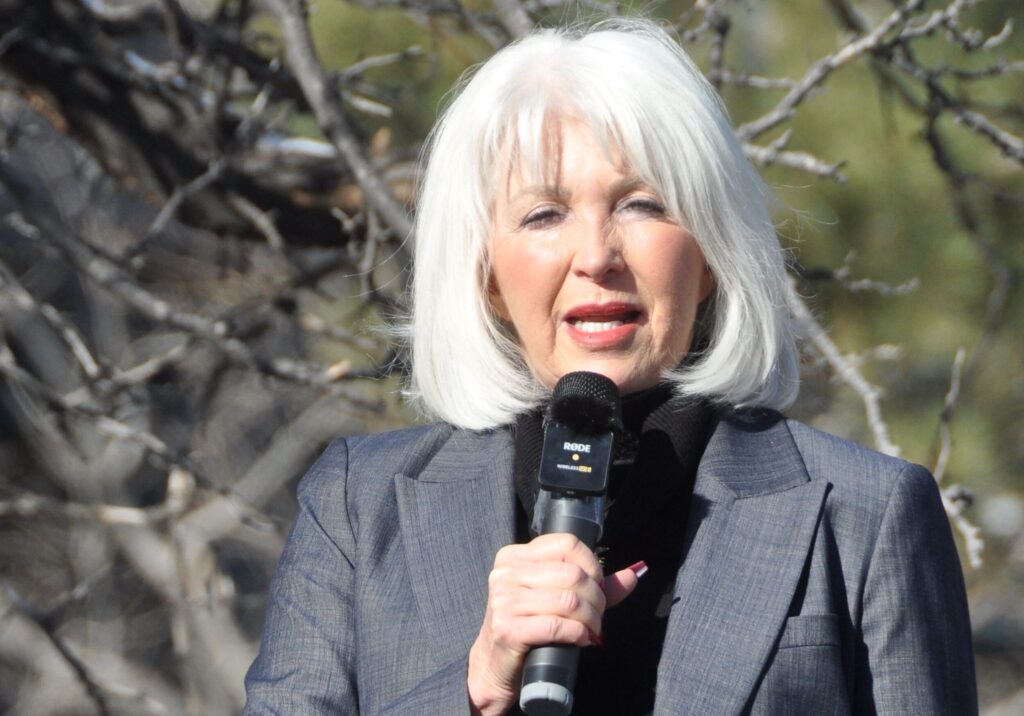
The Denver-based federal appeals court granted the state’s unopposed request on Wednesday to dismiss former Mesa County clerk Tina Peters’ challenge to her confinement as moot. Although Peters received a commutation of her prison sentence last month from Gov. Jared...
Federal judge declines to recuse from death penalty case after Supermax visit
Michael Karlik
michael.karlik@coloradopolitics.com
Updated 18 hours ago
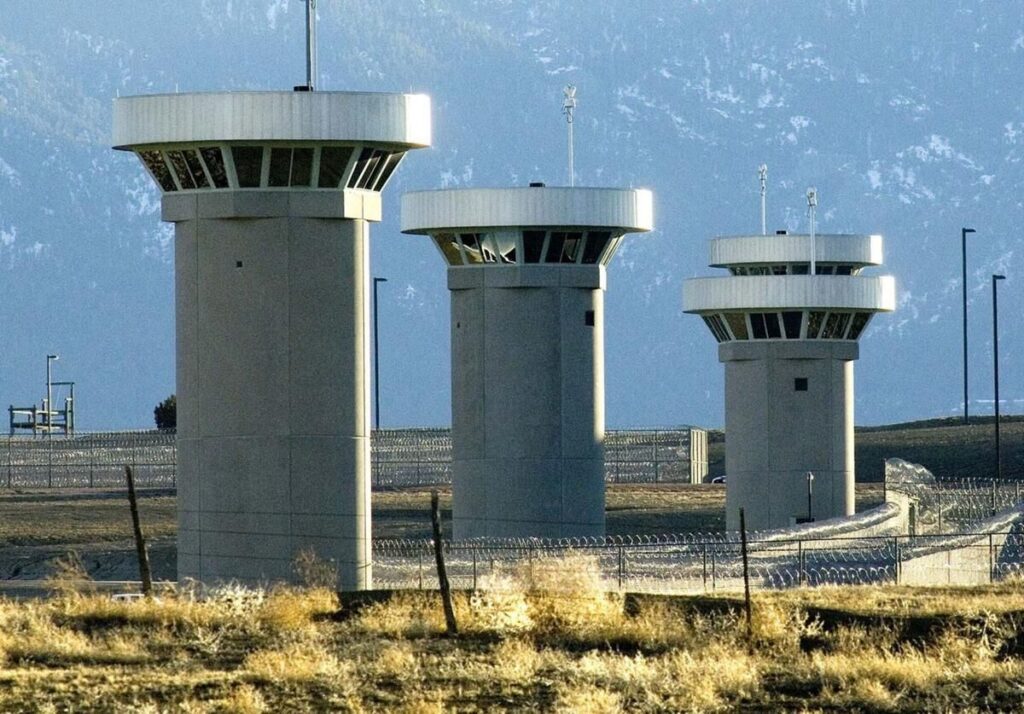
A federal judge declined to recuse herself last month from a death penalty case arising out of Colorado’s “Supermax” prison, finding that her tour of the facility earlier this year did not bias her decision-making. U.S. District Court Judge Charlotte...

Colorado legislators, candidates differ over social media regulations for minors
Bethany Johnson
bethany.johnson@denvergazette.com
Updated 17 hours ago
Following the 2020 accidental overdose of her daughter, Colorado’s Patti Lujan is still pursuing a lawsuit against Snapchat, the social media platform she claims connected her daughter with a drug dealer, police said. Lujan, like many parents, is looking for...
Colorado state Senate: Meet the primary election candidates
Marianne Goodland
marianne.goodland@coloradopolitics.com
Updated 16 hours ago
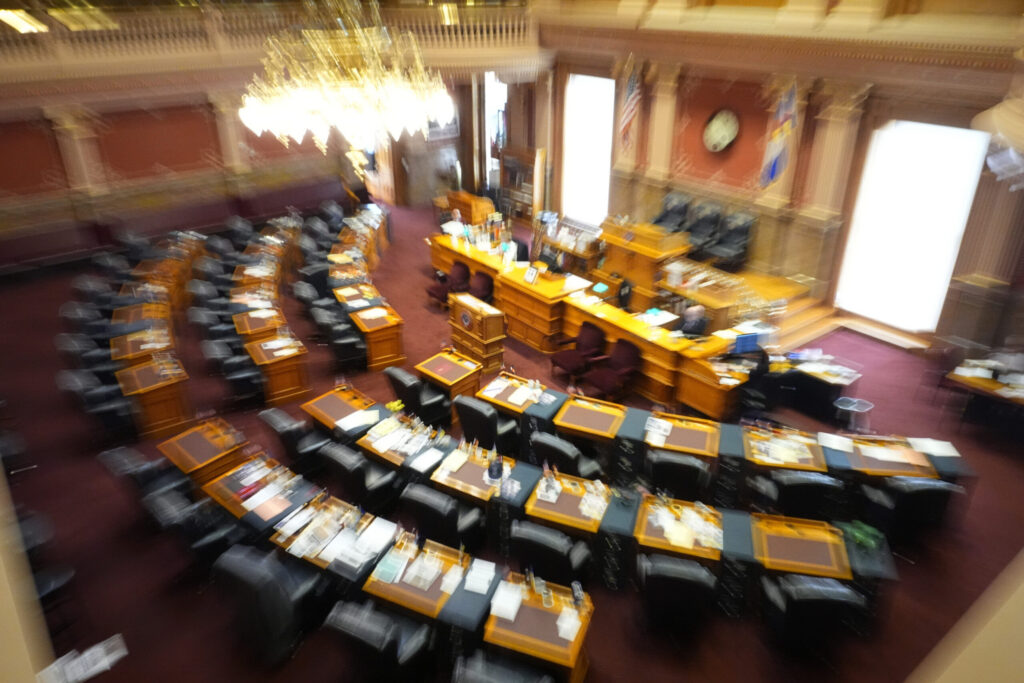
Colorado’s June 30 primary features a slate of state Senate contests, with several incumbents stepping aside and competitive fields emerging in both parties. These are some of the races to watch as voters begin to submit ballots. Senate District 3:...

Top five hot mic moments from world leaders at G7 Summit
David Zimmermann Washington Examiner
davidzimmermannwashingtonexaminer@wpstage.coloradopolitics.com
Updated 19 hours ago
As the 52nd annual G7 Summit came to a close on Wednesday in France, world leaders not only discussed diplomacy front and center, but also engaged in lighter conversations on the sidelines. There were many hot-mic moments in which President Donald...
Appeals court clarifies offense of impersonating a peace officer
Michael Karlik
michael.karlik@coloradopolitics.com
Updated 23 hours ago
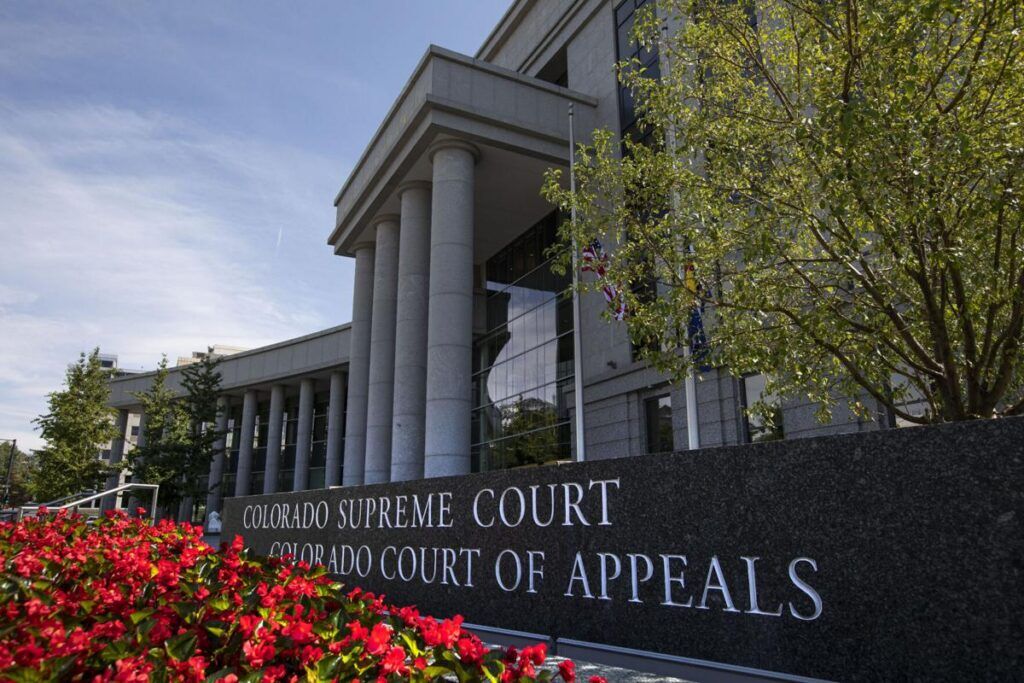
Colorado’s second-highest court clarified this month that a person commits the offense of impersonating a peace officer if they engage in “any conduct” while pretending to be law enforcement. In a case out of El Paso County, Richard James Coulier...
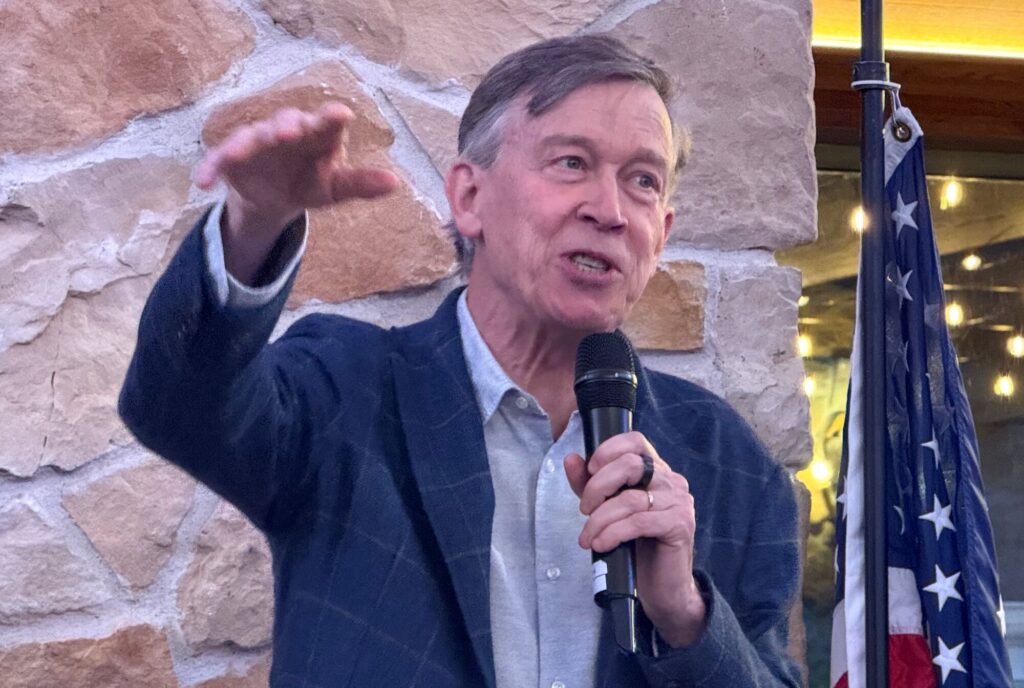
Hickenlooper raises $900K since April, heads into primary with almost $3 million on hand
Ernest Luning
ernest.luning@coloradopolitics.com
Updated 18 hours ago
U.S. Sen. John Hickenlooper raised just over $900,000 for his reelection bid in the 10-week pre-primary reporting period, the Colorado Democrat’s campaign said Wednesday. The campaign finished the period with almost $3 million in the bank, with more than 80%...
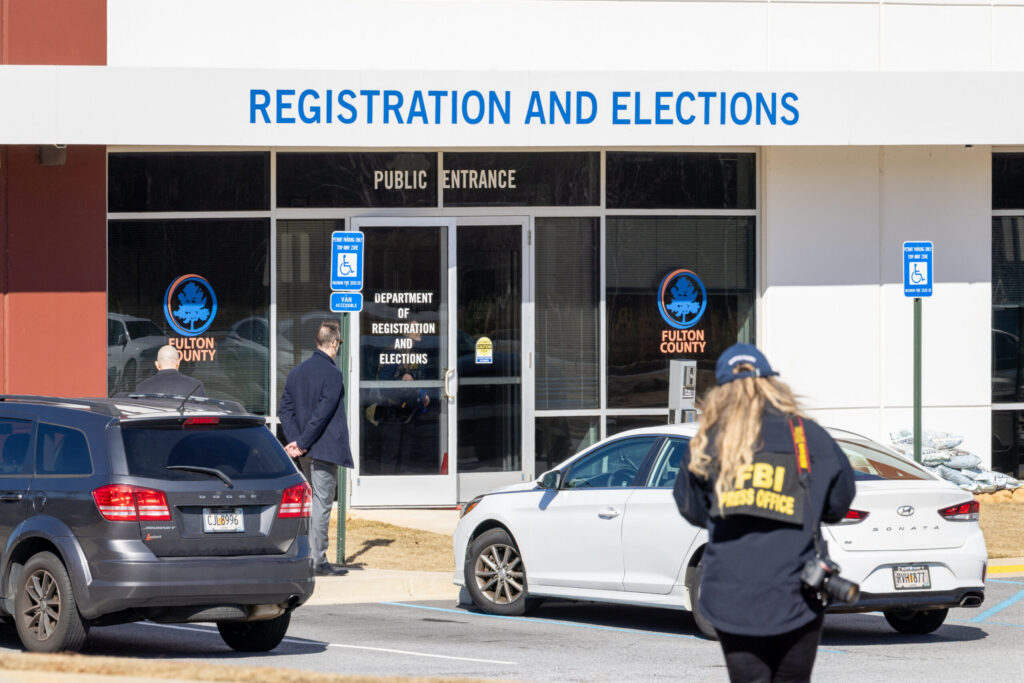
Four takeaways from Georgia, DC, Alabama, and Oklahoma primary elections
Rena Rowe, Washington Examiner
rena.rowe.washington.examiner@gazetteedit.wpenginepowered.com
Updated 21 hours ago
Voters across the country delivered a mixed verdict in a series of high-profile primary contests Tuesday, elevating political outsiders, boosting progressive candidates in deep-blue jurisdictions, and offering fresh clues about President Donald Trump’s hold on the GOP ahead of the...

Trump and Obama lock horns as White House tries to sell new Iran deal
NAOMI LIM Washington Examiner
naomi-lim-washington-examiner@coloradopolitics.com
Updated 21 hours ago
Former President Barack Obama‘s reemergence is looming over President Donald Trump‘s peace deal with Iran as the incumbent tries to sell his deal to an increasingly skeptical public after the nearly four-month war. Obama’s return to the headlines as he...