

Gov. Jared Polis to local governments: Comply with housing laws or lose funding
Gov. Jared Polis on Friday effectively threatened to pull millions of dollars in funding from local governments that have balked at the difficulty of implementing zoning, building codes, and other housing changes pushed by the General Assembly over the last two years.
The governor signed an executive order that puts on the line more than $100 million in funds to local governments that don’t comply with a series of laws adopted in the 2024 and 2025 sessions.
The executive order follows a decision by the Department of Local Affairs to hold up a wastewater funding grant for a municipality with discrepancies in its election records.
The following laws are covered under the governor’s executive order:
-
House Bill 24-1007 prohibits residential occupancy limits; the compliance date is July 1, 2024
-
HB 24-1152 deals with accessory dwelling units, which could require zoning changes; the compliance date is June 20, 2025
-
HB 24-1304 tackles minimum parking requirements; the compliance date is June 30, 2025
-
HB 24-1313 outlines housing in “transit-oriented” communities; the preliminary compliance date is June 30, 2025
-
SB 24-174 delves into sustainable affordable housing assistance; the first compliance date is Dec. 31, 2026
-
HB 25-1273 focuses on residential building stair modernization; the compliance date is Dec. 1, 2027
-
SB 25-002 dives into regional building codes for factory-built structures; the compliance date is May 8, 2025
Under the executive order, known as “strategic growth through compliance with state laws,” funding for local governments from various state agencies, including the Department of Transportation, the Colorado Energy Office, the Department of Local Affairs, and the Office of Economic Development and International Trade, could be tied to compliance with those laws.
The executive order defines non-compliance as non-satisfactory completion of requirements outlined in those laws, the local government adopting a resolution or policy not to conform with them, or acting contrary to the directives in those statutes.
Polis hinted at an Oct. 6 deadline for state agencies to develop grants and other funding that could be subject to the executive order.
During a Friday news conference, Polis acknowledged that the housing laws didn’t win support from some local governments.
“Many are going at different paces,” the governor said.
“This had many different opinions of local government,” he said, noting that some are “pro housing” and welcomed the assistance, while others do not view the changes favorably. He added that his order gives local governments time to successfully implement the laws that would be in play by Oct. 6 without hurting their funding.
The Colorado Municipal League was among the opponents of some of the housing laws, arguing they imposed unfunded mandates or interfered with home rule local control, which, the group argued, is established in the state constitution.
In a statement to Colorado Politics on Friday, the group’s executive director, Kevin Bommer, said, “CML will review the executive order in detail to determine whether there is any legal or regulatory basis for it. Regardless, CML continues to advocate for ‘partnership, not preemption’.”
A letter from the group to the Department of Local Affairs (DOLA) last month expressed “grave concern” over the conditions the housing laws place on municipalities.
That concern includes a hold that had been placed on an energy impact assistance grant for wastewater planning for a municipality that had discrepancies in filing election records, which CML said was unrelated to the purpose of the grant application. According to the CML letter, DOLA’s response was that it was a “long-standing practice” to require local governments to be up to date on budget, election and audit filings to receive grants unrelated to those areas.
The group said that “statutes relating to filing budgets, audits, and elections contain no provisions subjecting municipalities to withholding grant funds for non-compliance.”
The group added that, while CML appreciates DOLA’s goals, it fears “that this practice could become coercive and undermine the General Assembly’s goals in funding important local government projects.”
Only the courts can determine whether a law applies or has been violated, the letter group, and that’s around the issue of whether specific state laws apply to home rule municipalities or whether unfunded mandates apply to local governments.
“A structure where a state agency can decide these matters and take funding without oversight or recourse is not feasible or justifiable,” the group said.
Colorado Public Radio reported in February that communities, such as Westminster, Arvada, Colorado Springs, and Northglenn, have hinted or even outright said they won’t comply with some of the new laws.
The laws that appear to draw the most objections would block local governments from building parking next to new apartment buildings adjacent to transit, and eliminate residential occupancy limits, as well as on transit-oriented communities, which sets higher density requirements for multifamily housing built near transit centers.
Colorado Politics Must-Reads:

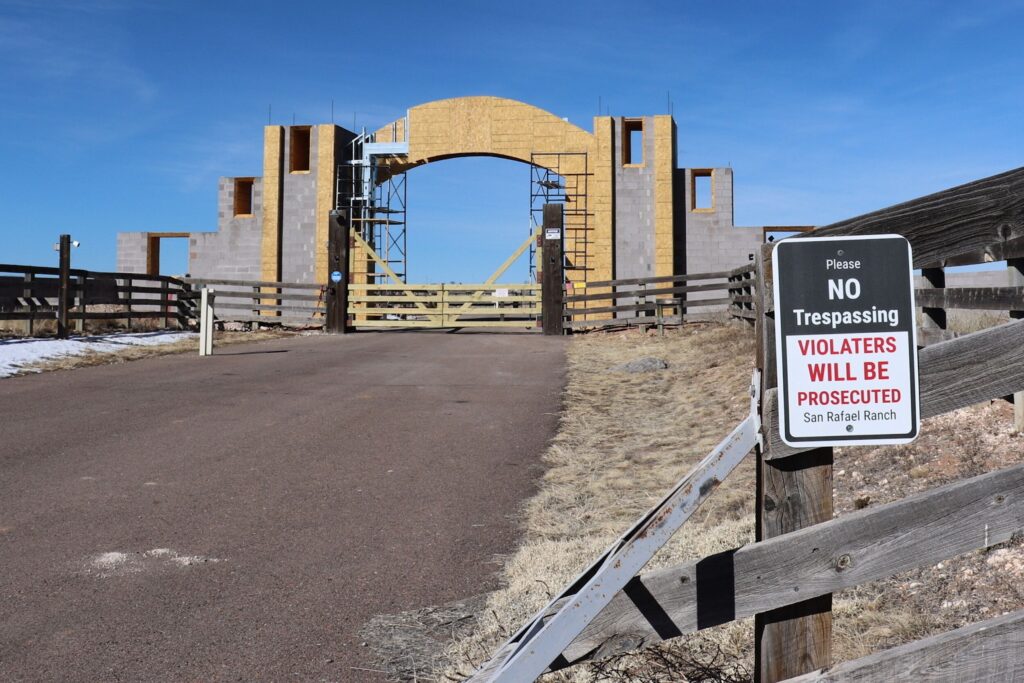
New Mexico launches ‘truth commission’ investigation into Jeffrey Epstein’s ranch | OUT WEST ROUNDUP
The Associated Press
the-associated-press@coloradopolitics.com
Updated 4 days ago
NEW MEXICO State investigates Epstein’s ranch SANTA FE — State legislators in New Mexico launched an investigation on Feb. 17 into past activity at a secluded desert ranch where financier and sex offender Jeffrey Epstein once entertained guests and whether...

The First Amendment protects the Second | Jon Caldara
Jon Caldara
jon-caldara@coloradopolitics.com
Updated 3 days ago
It’s not an attack on the Second Amendment, but the First Amendment. I know this is going to sound crazy but, there was a time when liberals, not conservatives, were the champions of free speech. Today? Now in Colorado it...

What Gallup polls teach us about presidents | Cronin & Loevy
Tom Cronin Bob Loevy
tom-cronin-bob-loevy@coloradopolitics.com
Updated 18 hours ago
The Gallup organization, founded by George Gallup, announced Feb. 11 they will no longer conduct their well-known polls that rate whether the Americans approve or disapprove the way presidents handle the job. Gallup began these polls in the late 1930s...

Colorado’s federal judges maintain approach to immigration detentions while escalating warnings
Michael Karlik
michael.karlik@coloradopolitics.com
Updated 10 hours ago
Colorado’s federal judges are maintaining their view that the government’s assertion of broad immigration detention authority is unlawful, casting aside a recent appellate decision to the contrary as “unpersuasive” and out of step with the predominant interpretation by the judiciary....
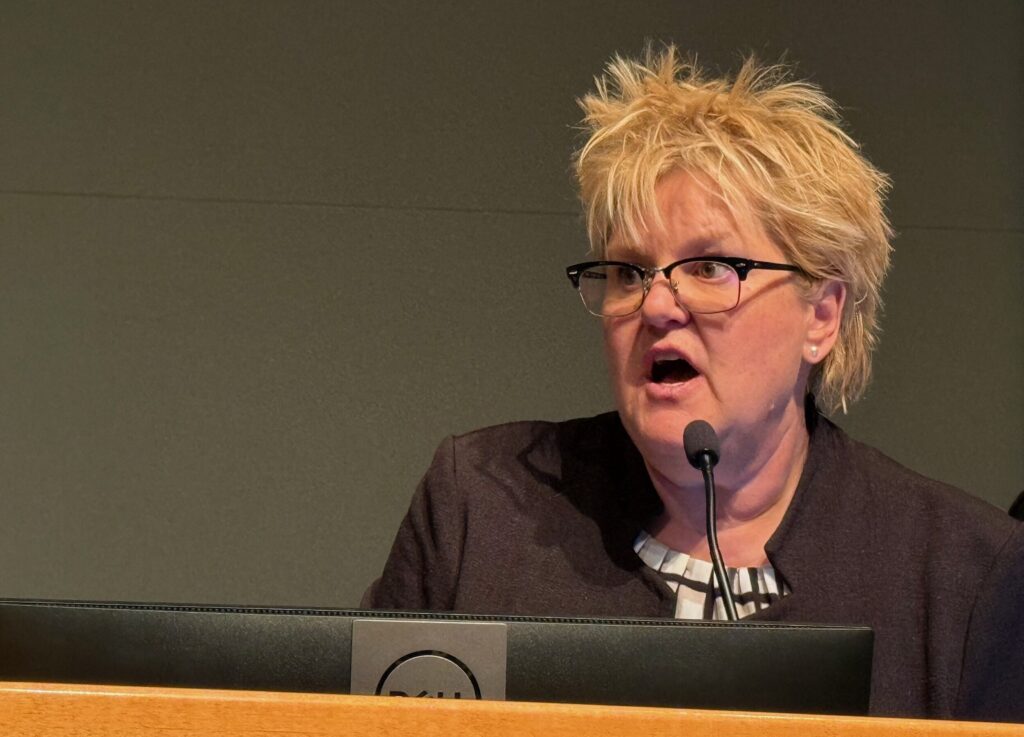
In a meeting Colorado GOP chair Brita Horn calls ‘illegal,’ Republicans vote to demand her resignation
Ernest Luning
ernest.luning@coloradopolitics.com
Updated 12 hours ago
Roughly half the membership of the Colorado Republican Party’s state central committee on Saturday voted overwhelmingly to approve a resolution expressing “no confidence” in state GOP Chairman Brita Horn’s leadership and calling for her immediate resignation in an online meeting...

Colorado Medicaid probe uncovers millions of dollars in alleged transport fraud ring
Nico Brambila
nico.brambila@denvergazette.com
Updated 16 hours ago
Colorado Medicaid officials detected $25 million in abnormal billing over just four months two years ago — a surge that prompted a new state law and the suspension of dozens of providers in what authorities now describe as an organized...
One small step for dialing back the partisanship | SONDERMANN
Eric Sondermann
eric-sondermann@coloradopolitics.com
Updated 3 days ago
Much ink, including a good deal of my own, has been spilled on the excesses of super-charged, toxic partisanship in this current era. Except for true believers along with those who profit from this all-consuming poison, there is broad agreement...

Greeley voters to decide fate of project that includes minor league hockey arena
Hap Fry, Special to The Gazette
hap-fry@gazette.com
Updated 16 hours ago
GREELEY • The fate of the Cascadia development — and quite possibly the future direction of the city — is in the hands of Greeley voters this Tuesday during a special city election on whether the landscape-altering project should be...

Colorado Politics Calendar Feb. 23-Mar. 1
Rachael Wright, Special to Colorado Politics
rachael.wright@coloradopolitics.com
Updated 4 days ago
CoPo’s weekly political calendar helps you find political and public policy events throughout Colorado. It includes candidate and issue campaign events, public policy meetings, court hearings, state and local party conventions, assemblies, debates, rallies, parades, speaking engagements, traveling dignitary appearances,...
Meeker rancher leads one of Colorado’s earliest attempts to transfer federal lands | A LOOK BACK
Rachael Wright, Special to Colorado Politics
rachael.wright@coloradopolitics.com
Updated 3 days ago
Forty-Five Years Ago This Week: Former state Rep. Nick Theos, R-Meeker, was one of several people testifying before the Senate Agriculture Committee on Senate Bill 81-170, which would transfer ownership of public lands from the federal government to state control....