

Bill to put school boards, special districts under Colorado ethics commission fails
For the third year in a row, a bill that would add school boards and special districts to the jurisdiction of the state’s independent ethics commission has failed.
The measure died in the Senate Appropriations Committee on Monday.
House Bill 1079 is the third attempt by Rep. Tammy Story, D-Evergreen, to add school boards and special districts — and their direct hires — under the ethics commission’s authority.
Article 29 defines a public officer, covered under the commission, as “any elected officer, including all statewide elected officeholders, the head of any department of the executive branch, and elected and appointed members of state boards and commissions.”
Notably, the definition excludes any member of a board, commission, council or committee “who receives no compensation other than a per diem allowance or necessary and reasonable expenses.”
While a few school boards, including Denver, pay their elected board members, most of the members of the state’s 178 school districts and more than 2,700 special districts — covering fire, water, sanitation, metropolitan, hospitals and libraries — do not receive compensation.
Article 29 identifies two specific areas under the commission’s purview: violations of the state’s gift ban and lobbying by former state lawmakers within two years of leaving office. It can also look at complaints of breaches of “standards of conduct or reporting requirements as provided by law.”
The commission receives, on average, about 35 complaints per year, and on it average accepts fewer than five annually for investigation.
The commission has issued hundreds of opinions regarding its authority, the vast majority tied to financial issues, such as gift bans and travel expenses. It has never issued an opinion that would define the standards of conduct or reporting requirements that would fall under its purview.
HB 1079 won a party-line 41-23 vote from the House on April 28 and a party-line 3-2 vote from the Senate State, Veterans and Military Affairs Committee on May 1.
The question around the constitutionality of trying to make the change contained in HB 1079 has been part of the reason previous attempts have failed, and Sen. Barbara Kirkmeyer, R-Brighton, cited it again on Monday during the Senate appropriations hearing.
“It’s not appropriate nor plausible to expand jurisdiction” due to those constitutional limitations, Kirkmeyer said.
The bill’s sponsor, Sen. Mike Weissman, D-Aurora, said he checked with the Office of Legislative Legal Services, the General Assembly’s lawyers, and maintained he would not have proceeded if it weren’t constitutional.
The Colorado Independent Ethics Commission did not seek the changes proposed by the bill, according to its executive director.
House Bill 1079 was laid over to May 10, three days after the end of the 2025 session, effectively killing it.


Bennet, Hickenlooper to vote against Trump’s 10th Circuit nominee from Colorado
Michael Karlik
michael.karlik@coloradopolitics.com
Updated 10 hours ago
Colorado’s two Democratic senators will not vote to confirm President Donald Trump’s nominee to a vacancy on the Denver-based federal appeals court. Trump has selected U.S. District Court Chief Judge Daniel D. Domenico, who he appointed as a federal trial...
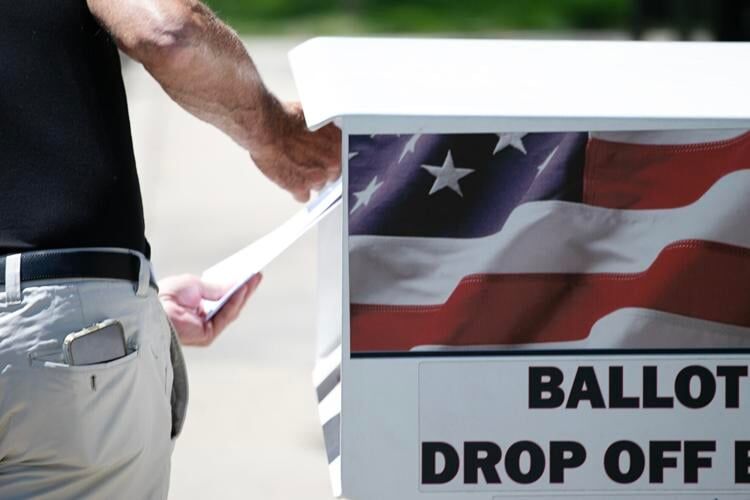
Who’s spending in Colorado to get your vote?
Marianne Goodland
marianne.goodland@coloradopolitics.com
Updated 7 hours ago
Groups that raise unlimited amounts of money have spent about $20 million in May and June to try and influence Colorado voters’ choices in the upcoming June 30 primaries. By law, these groups cannot coordinate with the candidates they support....
U.S. government declines to oppose multiple challenges to immigration detention in Colorado
Michael Karlik
michael.karlik@coloradopolitics.com
Updated 10 hours ago
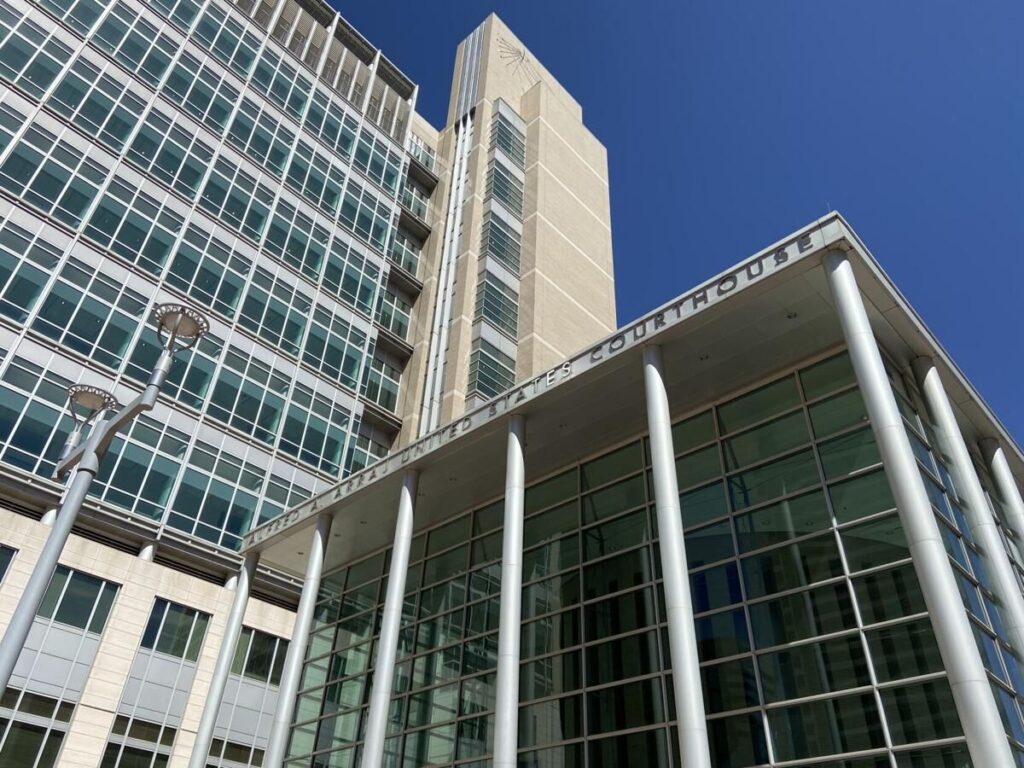
Multiple federal judges in Colorado granted petitions from people challenging the lawfulness of their immigration detention this week after the government took the unusual step of declining to submit arguments in opposition. Colorado’s federal trial court is facing a flood of...

Tina Peters tells supporters to ‘stand up and fight back’ at Castle Rock event
Marissa Ventrelli
marissa.ventrelli@coloradopolitics.com
Updated 9 hours ago
Tina Peters, the former Mesa County clerk recently released from prison, warned supporters that what happened to her could happen to them, too, if they did not “stand up and fight back” at an event at the Douglas County Fairgrounds....

Iran strikes cargo ship in Strait of Hormuz, endangering Trump’s peace
Christian Datoc
christian-datoc@coloradopolitics.com
Updated 16 hours ago
Iran attacked a cargo ship traveling through the Strait of Hormuz on Thursday, possibly upending President Donald Trump‘s diplomatic end to the war with Iran. A U.S. official confirmed to the Washington Examiner that the Islamic Revolutionary Guard Corps “struck...

Senate GOP tries to mend fences with Trump after heated lunch
David Sivak
david-sivak@coloradopolitics.com
Updated 14 hours ago
Senate Republicans are trying to turn the page on a heated lunch with President Donald Trump that brought weeks of tensions to a new high-water mark. In a symbolic gesture, Senate Republicans took another vote on the Iran war Wednesday...
Colorado justices discuss solution to confusion from prior criminal ruling
Michael Karlik
michael.karlik@coloradopolitics.com
Updated 8 hours ago
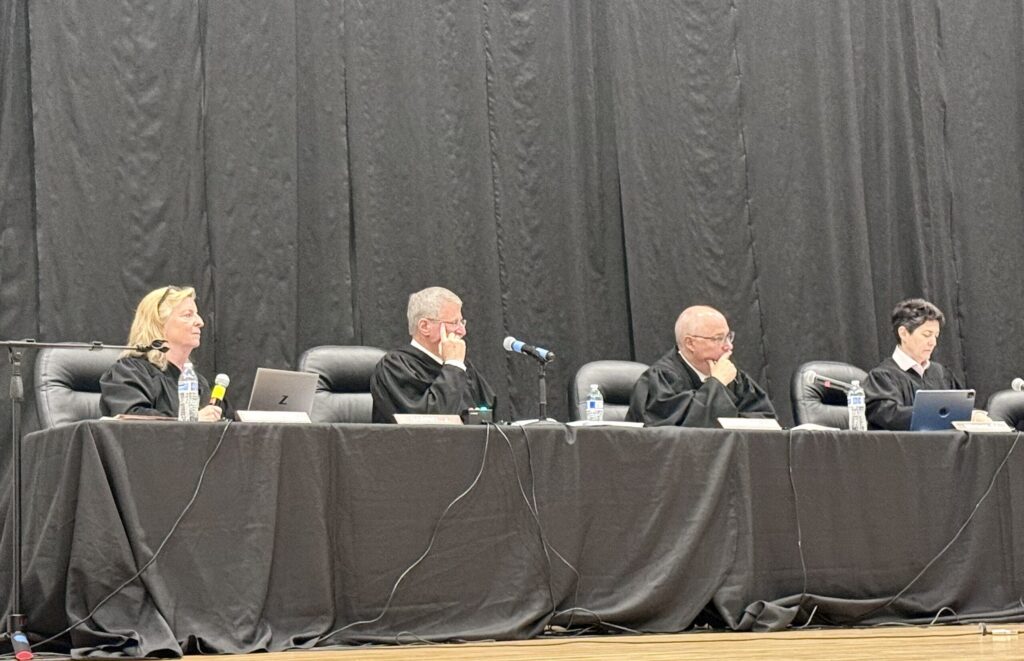
The Colorado Supreme Court pondered the fallout on Tuesday from its nearly six-year-old decision interpreting the state’s impaired driving laws, with the justices now addressing how defendants affected by the legal change must seek postconviction relief. In contrast to other...
Colorado to participate in Great American State Fair in Washington
Marissa Ventrelli
marissa.ventrelli@coloradopolitics.com
Updated 14 hours ago
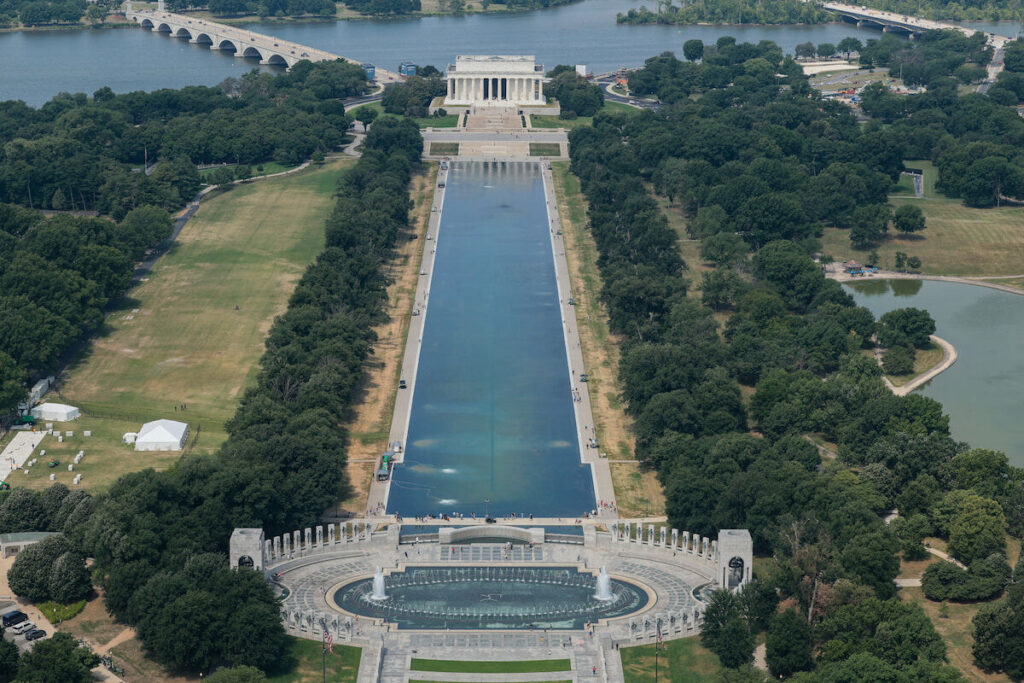
Visitors to Washington, D.C. for the country’s 250th anniversary will have the opportunity to learn about Colorado’s natural beauty and culture during the Great American State Fair, a World’s Fair-style event that opened Thursday at the National Mall. While all...

RTD to reconsider service priorities as cuts, budget deficit loom
Michael Braithwaite
michael.braithwaite@gazette.com
Updated 18 hours ago
Should the Regional Transportation District aim to maximize ridership or system coverage? That question sat at the heart of the RTD Board of Directors’ first Comprehensive Operations Analysis briefing on Thursday afternoon. With the Denver transit agency facing a budget...

Mobolade, Colorado Springs leaders say election date lawsuit is attack on local voters
Brennen Kauffman
brennen.kauffman@gazette.com
Updated 16 hours ago
Mayor Yemi Mobolade and other city leaders will fight to keep Colorado Springs elections in April in the face of a new lawsuit. Mobolade, the mayor’s Chief of Staff Wayne Williams and City Councilmember Roland Rainey addressed the lawsuit in...