

50,000 people in Colorado accessed homeless services in 2024, report says

More than 50,000 people in Colorado accessed homeless services last year, according to a statewide study of homelessness by a regional organization.
The study, released Monday by the Metro Denver Homeless Initiative, found that 52,806 people in Colorado sought housing and services related to homelessness. The group used as a database the Colorado Homeless Management Information System (COHMIS) in 2024. The study also showed a decrease in veteran homelessness and a determination that half of homeless people have disabilities.
Of the 45,285 households seeking housing services during the year, 37,034 were single adults, 4,109 were families and 3,712 were considered youth, according to the report.
While the MDHI releases a Denver-based study every year, the statewide study marks the first time the regional continuum of care — a designation by the U.S. Department of Housing and Urban Development — has looked at statewide numbers for an entire year.
“This is the first time all four Continuums of Care across Colorado worked together to ensure the data was unduplicated and to ensure consistent quality standards were applied,” Jason Johnson, executive director of MDHI, told The Denver Gazette.
“By bringing together data from all regions and perspectives, we’re strengthening collaboration and maintaining a united approach to homelessness reporting and solutions across our state,” he said.
The report combines data from COHMIS, point-in-time counts and Colorado’s Department of Education.
While it’s impossible to compare the numbers between 2023 and 2024 — with the newest report adding 25 agencies and 142 programs to the overall numbers — the MDHI’s 2023 study recorded 30,409 accessing services or housing with partner agencies between July 1, 2022 and June 30, 2023.
The new statewide report will act as a baseline for initiatives going forward, Johnson added, with MDHI able to compare full numbers in 2025 and beyond.
Men, people of color and veterans
Of the 52,806 people accessing homeless-based services in 2024, 54.6% were classified as Black, indigenous or people of color, according to the report.
Of the total, 41.6% were White.
In the 2023 report, which looked at the July 1, 2022 to June 30, 2023 timeframe, 59% of the people accessing services were White.
The MDHI called the amount of people of color who are homeless, as opposed to the overall population in Colorado, an overrepresentation.
“Generations of exclusion from homeownership — through policies like redlining, discriminatory lending and racial covenants — have led to lasting racial disparities in housing stability. Today, Black, indigenous, and people of color households are more likely to face eviction, rental barriers and wage gaps, making it harder to access and keep stable housing,” the report said.
Furthermore, 61.9% of the people accessing services in 2024 were men, just 0.1% less than the 2023 report.
Homeless veteran numbers are on the decline, according to the report.
Veteran homelessness in Colorado decreased by 7% from 2023. The MDHI attributed this progress to targeted funding and enhanced coordination between the U.S. Department of Veteran Affairs and local partners.
Disabilities are still a main factor in homelessness, with 28,491 of the 52,806 accessing homeless services in 2024 reporting a disabling condition, such as mental health disorders, substance abuse and chronic illnesses.
Denver numbers on the rise
The Denver homeless crisis continues, according to the study.
About 65% of the 52,806 people accessing homeless services in the state are in the Denver region — which is made up of Adams, Arapahoe, Boulder, Broomfield, Denver, Douglas and Jefferson counties.
The study classified 5,214 people as newly homeless and 11,179 as chronically homeless.
The city’s point-in-time count in 2024 — an annual survey conducted nationwide to provide a single night’s snapshot of homelessness in America — painted a similar picture.
MDHI’s point-in-time count, conducted in January 2024, saw 6,539 homeless people in the city on a single night. That number stood at 5,818 in 2023 and 6,884 in 2022.
Since taking office in July 2023, Denver Mayor Mike Johnston’s administration has spent $155 million on homelessness in the city — $65 million more than the mayor initially estimated.
Johnston has embraced a “housing first” approach, in which the primary consideration is getting people off the streets without preconditions or requirements
A part of this approach involved acquiring hotels and turning them into shelters and building “micro-communities,” though these measures, based on official counts, have only dented the overall homelessness numbers in the city.
Between 2023 and 2024, Denver saw only 150 fewer “unsheltered” people — individuals who sleep in public places, such as parks and in cars — compared to the previous year’s count.
In the beginning of 2025, Johnston stated his goal was to get 2,000 homeless people off of the city’s streets and 2,000 into “permanent” housing.
In the entire state, there are 14,559 permanent housing beds, according to the study. That is only enough to serve about a quarter of homeless people.
While the statewide bed numbers are a 7.5% increase from 2023, “it still falls short of meeting the growing need,” the report said.
Amy Beck, founder of the advocacy group Together Denver, told The Denver Gazette in February that treatment should come before housing.
“If we were able to get some prevention strategies in place, along with housing people under Johnston’s 2025 goals, what if you combined both of those efforts? It would have a significant impact,” Beck said.
MDHI noted in the 2024 report that prevention is one of the three pillars to addressing homelessness. It was listed as the first of the three pillars in the report.
MDHI defined prevention as “addressing the root causes of homelessness, such as housing instability, low wages, and healthcare gaps, to stop homelessness before it starts.”
Looking at the causes
The MDHI report said the three main causes of homelessness are a lack of affordable housing, low wages and rising eviction rates.
Others have insisted that the root causes of homelessness are drug addiction and mental health illnesses, and that without significant spending in treatment centers, for example, any campaign to confront the crisis is bound to fail. Advocates who believe in this paradigm insist that many are chronically homeless as a result of drug addiction — not because of economic forces or the lack of affordable housing, although the latter are contributing factors.
Colorado’s annual report on Affordable Housing Preservation and Production noted a decline in affordable housing production last year. There were 5,609 people, households and units supported between 2023 and 2024, a decrease of 1,643 from the previous year.
At the same time, the average subsidy per affordable housing unit rose by 191% from fiscal year 2021-22 to 2023-24, according to the report.
Also, 94,000 households in Colorado were living in poverty and facing severe housing cost burdens in 2023, according to the MDHI report.
Based on the Colorado minimum wage of $14.42 an hour in 2024, someone would have to work 104 hours a week to afford a two-bedroom apartment and 85 hours to afford a one-bedroom. The minimum wage in Colorado is now $14.81.
There were 39,620 eviction filings reported in Colorado in 2023, according to the Colorado Judicial Department. There were 47,613 evictions in 2024, an increase of 7,993 cases.
Nonpayment of rent is the leading cause of evictions in Colorado.
“Homelessness is driven by systemic and economic forces, primarily the severe shortage of affordable housing, rising rents, and wages that have not kept pace with the cost of living. When housing costs outstrip incomes, more individuals and families face housing instability, eviction, and, ultimately, homelessness,” MDHI said.
Denver Gazette reporter Noah Festenstein contributed to this report


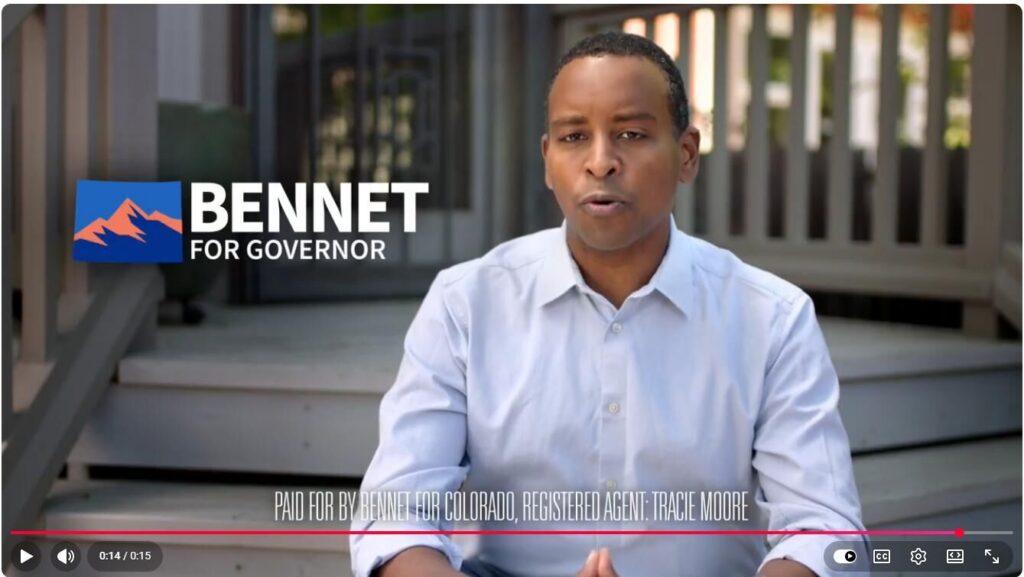
Bennet’s gubernatorial ads say U.S. Senate committee paid for them
Marianne Goodland
marianne.goodland@coloradopolitics.com
Updated 11 hours ago
A series of TV commercials for U.S. Sen. Michael Bennet’s gubernatorial campaign showed disclaimers that indicated his U.S. Senate campaign committee paid for those ads. That’s potentially a violation of state campaign finance law, one for which the Bennet campaign...

Democratic candidates for the 8th Congressional District: Meet Manny Rutinel and Shannon Bird
Thelma Grimes
thelma.grimes@coloradopolitics.com
Updated 15 hours ago
Colorado’s 8th Congressional District is once more the site of a hard‑fought Democratic primary, with candidates competing for the chance to challenge Republican incumbent Gabe Evans this November. A once‑crowded field has narrowed to state Rep. Manny Rutinel and former...
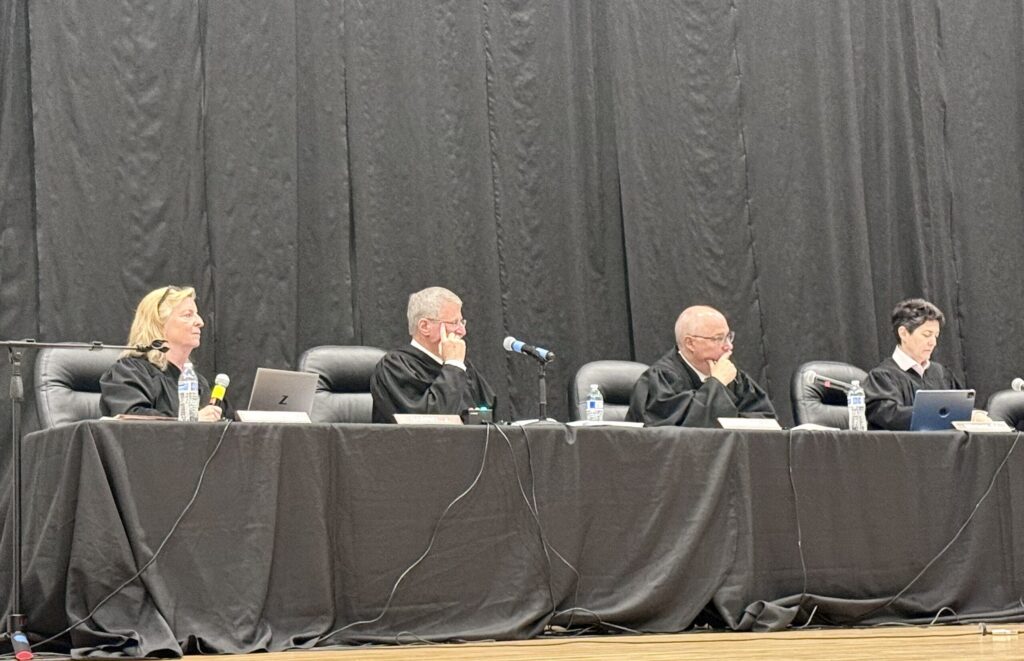
Colorado Supreme Court reverses 2 Chaffee County judges for imposing fee on habeas petitioner
Michael Karlik
michael.karlik@coloradopolitics.com
Updated 15 hours ago
The Colorado Supreme Court rejected two separate appeals earlier this month from an incarcerated defendant seeking immediate release from prison, but concluded that two Chaffee County judges incorrectly required him to prepay filing fees for his cases. David J. Gottorff...

A graduated tax plan could undercut Colorado’s business competitiveness, analysis warns
Marissa Ventrelli
marissa.ventrelli@coloradopolitics.com
Updated 15 hours ago
A proposal to move Colorado to a graduated income tax — taxing individuals and businesses at different rates based on their earnings — could generate more than $2 billion in its first year, but it may also weaken the state’s...
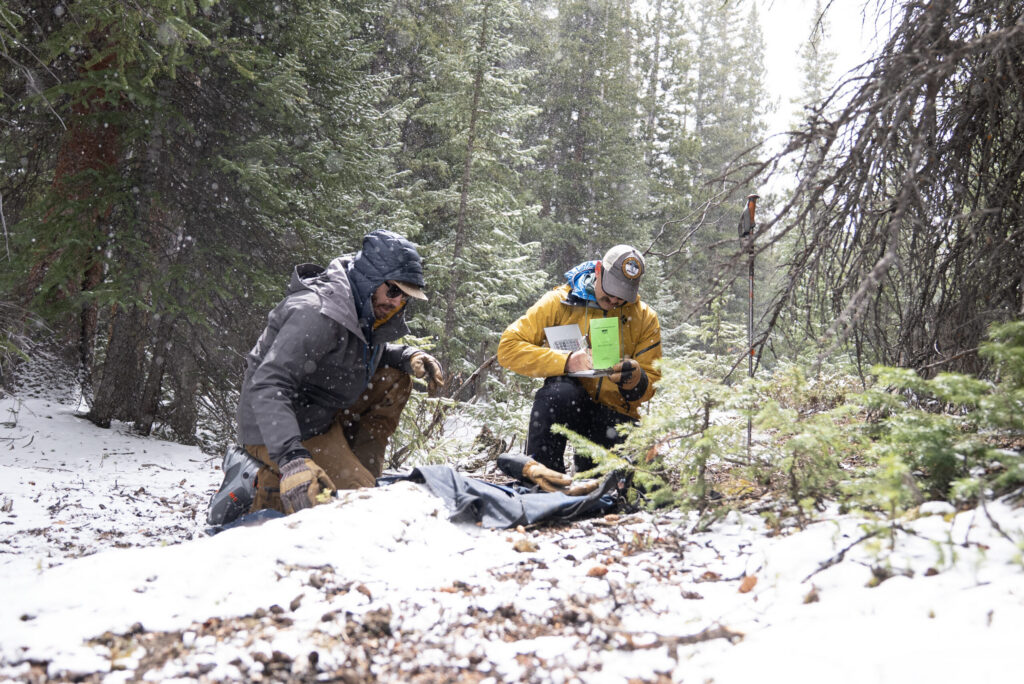
It won’t end the drought, but Super El Niño expected to boost Colorado moisture
Marianne Goodland
marianne.goodland@coloradopolitics.com
Updated 12 hours ago
Colorado is headed into what could be one of its strongest El Niño summers on record, a shift expected to bring above‑average monsoon moisture, though not enough to erase the state’s long‑running drought. That was the assessment on Tuesday from...

Vance says changing his tune on Trump was a sign of ‘humility’
Mabinty Quarshie, Washington Examiner
mabinty.quarshie.washington.examiner@gazetteedit.wpenginepowered.com
Updated 17 hours ago
Vice President JD Vance insisted his evolving views on President Donald Trump over the past decade were a sign of “humility” during his first interview with ABC’s The View. Vance spoke with the show’s co-hosts on Tuesday morning to promote...
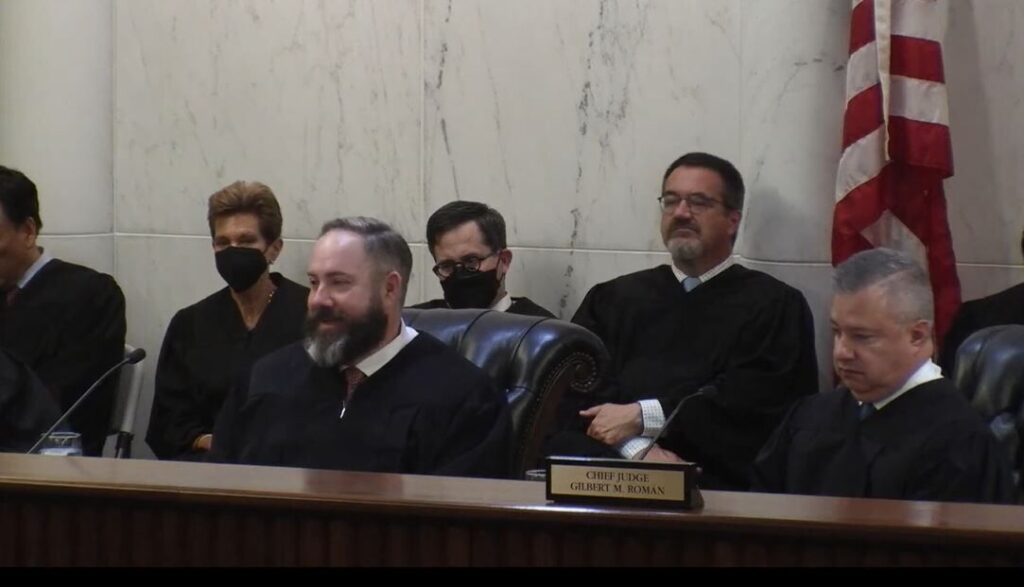
Weld County judge wrongly denied bail to murder defendant in gap between law change
Michael Karlik
michael.karlik@coloradopolitics.com
Updated 12 hours ago
Colorado’s second-highest court ruled this month that a Weld County judge was wrong to deny bail to a murder defendant in the window between the state Supreme Court’s recognition of the right to bail and the voters’ subsequent overruling of...
Defendants acquitted by insanity are eligible for records-sealing, appeals court says
Michael Karlik
michael.karlik@coloradopolitics.com
Updated 10 hours ago
Colorado’s second-highest court clarified last month that defendants who are found not guilty by reason of insanity are eligible to have their criminal records sealed from public view. Judges must seal criminal records if, among other things, a defendant is...

Colorado primary for U.S. Senator: Candidates John Hickenlooper and Julie Gonzales
Thelma Grimes
thelma.grimes@coloradopolitics.com
Updated 14 hours ago
The race between U.S. Sen. John Hickenlooper and state Sen. Julie Gonzales has emerged as one of Colorado’s most intriguing Democratic primaries. Gonzales is running on a message of generational change, arguing that Democrats need a more aggressive approach and...

Vance hits back at Obama’s criticism of Trump-Iran deal: ‘They hate the Obama deal’
Brady Knox, Washington Examiner
brady.knox.washington.examiner@gazetteedit.wpenginepowered.com
Updated 17 hours ago
Vice President JD Vance shot back at former President Barack Obama‘s criticism of the deal to end the U.S. war with Iran, arguing that a major indicator of the difference is the Gulf Arabs’ love of the deal. Obama voiced...