

Federal judge blocks government from summarily removing ‘alien enemies’ from Colorado
A federal judge on Tuesday temporarily blocked the government from removing alleged “alien enemies” from Colorado pursuant to an 18th-Century wartime law, noting she is following the U.S. Supreme Court’s requirement that detainees must be given notice and time to challenge their removals.
U.S. District Court Judge Charlotte N. Sweeney issued the temporary restraining order in a case brought by two detained Venezuelan men on behalf of themselves and all others subject to President Donald Trump’s proclamation invoking the Alien Enemies Act of 1798. In the March 14 proclamation, Trump initiated a process to summarily remove non-citizens, over the age of 14, accused of being members of the Tren de Aragua gang.
Sweeney, a Joe Biden appointee, wrote in an April 22 order that if she did not act, the government could designate someone an “alien enemy” whenever it wanted.
“Petitioners face the risk of being deported — perhaps wrongfully deported — under the Act and Proclamation in violation of their constitutional rights. Again: How Petitioners are currently classified does not eliminate this risk, when that classification — and the legal framework under which they may be removed — can change at any time,” she wrote.

In addition to blocking removals of people within the class, Sweeney also ordered the government to give 21 days’ notice of its intent to remove those non-citizens, inform them of their right to seek judicial review, and alert them of the ability to consult with an attorney. All of that information “must be written in a language the individual understands,” she added.
The order does not affect deportation proceedings that are not occurring under the proclamation’s terms.
The U.S. Attorney’s Office for Colorado had no comment on Sweeney’s order. The ACLU of Colorado, which brought the case along with other legal groups, called due process “fundmanetal to the rule of law,” the evasion of which is “a threat to all of us.”
Questions about process
On Monday morning, Sweeney held a hearing in the case during which two primary themes emerged.
First, Sweeney felt the Supreme Court recently cleared the path for her to block removals, following its early-morning order on Saturday in a case out of Texas. That litigation, which she called “extremely similar” to the case before her, also involved a request to intervene on behalf of a class of alleged “alien enemies.” Without elaboration, the Supreme Court halted removal efforts.
The second theme was Sweeney’s skepticism that the government would provide due process to the petitioners in the Colorado case after all. Reading from a removal notice for one alleged “alien enemy,” Sweeney noted that the document was in English and did not inform its recipient how to challenge their designation.
She was also concerned about the government’s claim that the named petitioners were not currently designated as “alien enemies” and need not worry about being removed pursuant to the proclamation.
“You can imagine it’s not great comfort to be told you’re not currently being considered for removal. That can change any time,” observed Sweeney.
The case, filed less than two weeks ago, is one of a handful that have emerged to challenge Trump’s proclamation targeting suspected members of TdA who are not naturalized citizens or lawful permanent residents. Among other issues, the litigation disputes the legality of Trump’s reliance on the Alien Enemies Act, which specifically applies during “a declared war between the United States and any foreign nation or government.”
The two named petitioners, D.B.U. and R.M.M., alleged they are Venezuelan nationals detained in Colorado who have incorrectly been labeled as members of TdA. One of the men alleged he, in fact, “lives in fear of the gang” because the group killed two of his family members.
They filed under a legal tool known as “habeas corpus,” which challenges a person’s convictions or confinement as unlawful. The Supreme Court decided, by 5-4 earlier this month, that a habeas action in the place of detention was the required approach.
On behalf of all proposed class members in Colorado who are subject to Trump’s proclamation, the lawsuit seeks to block the government from deporting them without notice and an opportunity to respond.
Doubts about legality
A major development happened shortly after midnight on Saturday, when the Supreme Court’s majority blocked the government from removing alleged “alien enemies” from a Texas detention center in a case with similar circumstances as Colorado’s. NBC News reported that buses full of detained non-citizens turned around from the airport at some point while the litigation was being heard.
Allegedly, those detainees were destined for El Salvador, where the government has already sent numerous people to a “mega-prison” — including a Maryland man who was removed by mistake and who the White House has insisted is “never coming back.“
A lawyer for the U.S. Department of Justice told Sweeney during the hearing that it intends to give alleged “alien enemies” the ability to contest their designations and removals. But Timothy R. Macdonald, legal director of the ACLU of Colorado who represents the petitioners, countered that detainees have experienced a more perfunctory procedure elsewhere.
In her order, Sweeney cast doubt on the legality of Trump’s use of the Alien Enemies Act. She wrote that the terms of the law “contemplate military action” and that an “invasion” requires more than Trump’s allegation of TdA’s “irregular warfare” against the United States.
“At bottom, the Proclamation fails to adequately find or assert TdA is a ‘foreign nation or government,'” she wrote.
While Sweeney acknowledged the president has powers to conduct foreign relations, she explained that she must also “recognize the Supreme Court’s command that Petitioners are entitled, in this habeas proceeding, to judicial review regarding the Act’s ‘interpretation’ and its ‘constitutionality.'”
Sweeney allowed the petitioners to file a motion for a preliminary injunction, which would provide longer-term relief if granted.
The case is D.B.U. et al. v. Trump et al.


Colorado Supreme Court accepts cases about reliability of gun-to-bullet matching
Michael Karlik
michael.karlik@coloradopolitics.com
Updated 14 hours ago
The Colorado Supreme Court announced on Monday that it will hear two cases questioning the reliability of expert testimony that purports to identify whether a specific bullet was fired from a specific gun. At least three of the court’s seven...

Colorado District Attorneys unveil 2026 legislative priorities | WHAT’S YOUR AGENDA?
Marissa Ventrelli
marissa.ventrelli@coloradopolitics.com
Updated 2 days ago
Welcome to What’s Your Agenda?: The Colorado Politics’ weekly publication of trade association priorities for the state’s 2026 legislative session. The Colorado District Attorneys’ Council provides training, resources, and legislative support to every prosecutor in the state. In order to...
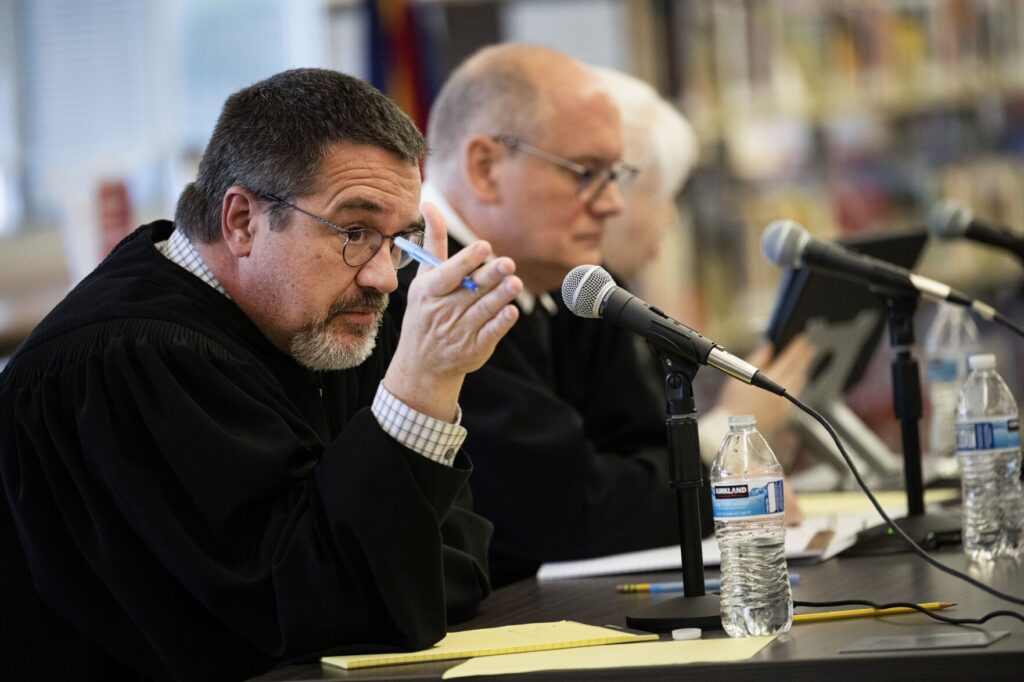
Appeals court clarifies what materials judges may rely on for postconviction decisions
Michael Karlik
michael.karlik@coloradopolitics.com
Updated 14 hours ago
Colorado’s second-highest court clarified on Thursday that trial judges who are deciding whether to grant relief to convicted defendants may rely on the materials attached to, or referenced in, the parties’ arguments. In contrast to direct appeals of criminal convictions,...
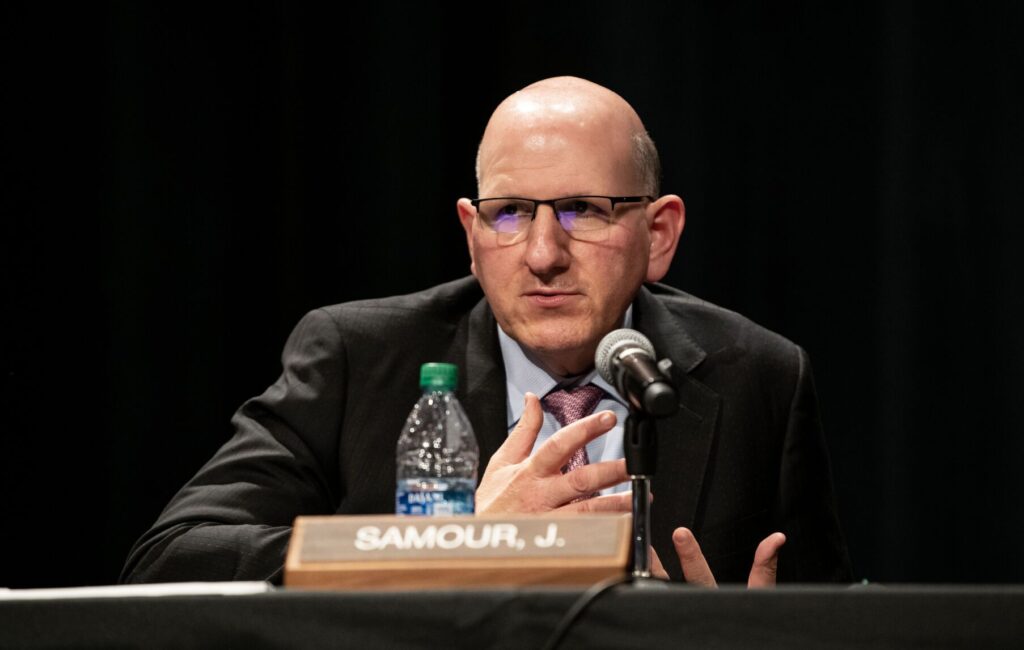
Colorado justices skeptical of challenge to water enterprises’ eminent domain power
Michael Karlik
michael.karlik@coloradopolitics.com
Updated 20 hours ago
Members of the Colorado Supreme Court appeared receptive on Wednesday to the notion that water-related enterprises have the legal authority to exercise the governmental power of eminent domain over private property. An enterprise is a government-owned business that provides fee-based...
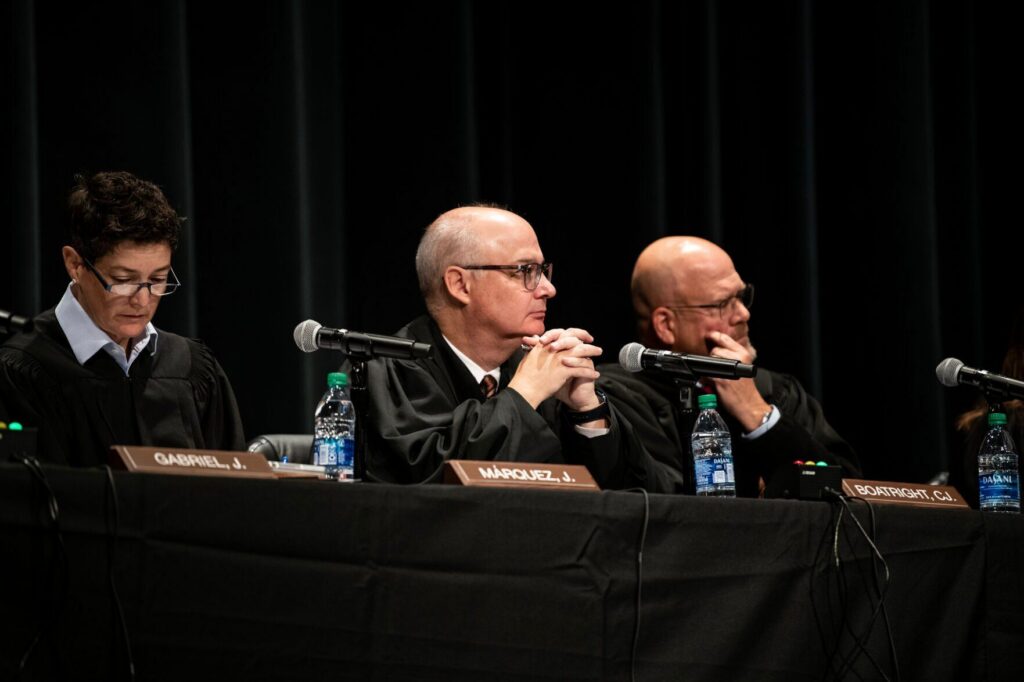
Colorado justices skeptical that intimate messages relevant to assault case
Michael Karlik
michael.karlik@coloradopolitics.com
Updated 13 hours ago
Members of the Colorado Supreme Court seemed to agree on Tuesday that a Douglas County judge acted reasonably by blocking evidence of a defendant’s BDSM-related conversations with the victim in his trial for assault and false imprisonment. Jurors found Donald Louis...
Second appeals judge voices concerns about new ‘reasonable doubt’ instruction
Michael Karlik
michael.karlik@coloradopolitics.com
Updated 2 days ago
Another member of Colorado’s second-highest court registered his concern on Thursday that a portion of the recently revised “reasonable doubt” definition improperly lowers the prosecution’s burden to prove a defendant guilty. Judge Daniel M. Taubman wrote that the current instruction...
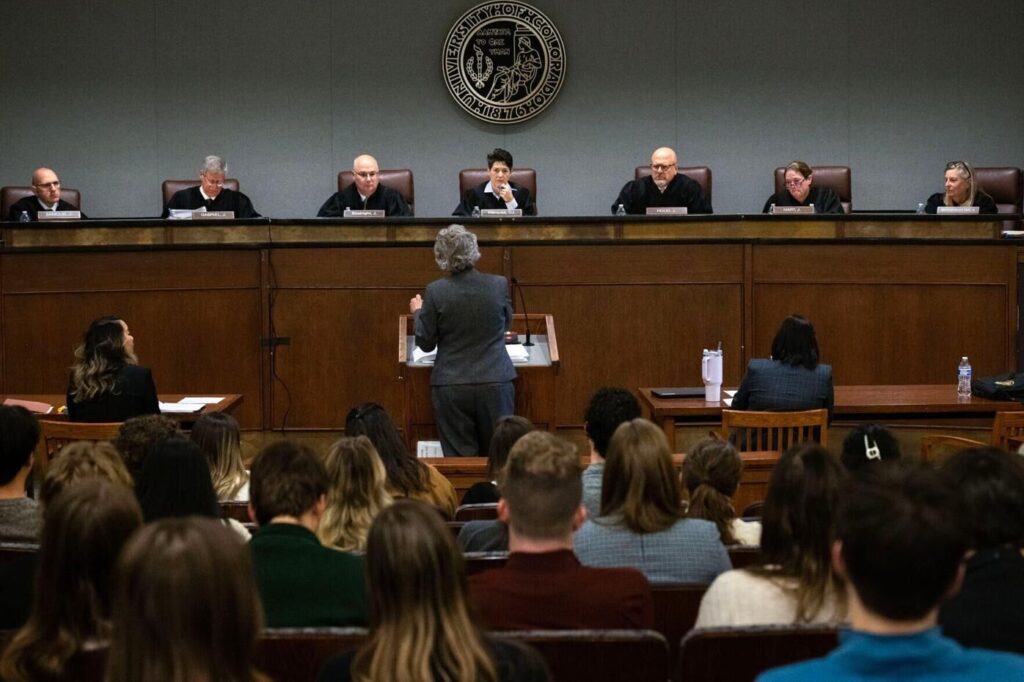
Colorado Supreme Court blocks ‘child-to-parent violence’ testimony in Boulder County case
Michael Karlik
michael.karlik@coloradopolitics.com
Updated 3 days ago
The Colorado Supreme Court concluded on Friday that a Boulder County judge incorrectly green-lit a psychologist’s expert testimony when the defendant had not laid the necessary groundwork for the evidence. State law requires criminal defendants to provide notice and undergo...
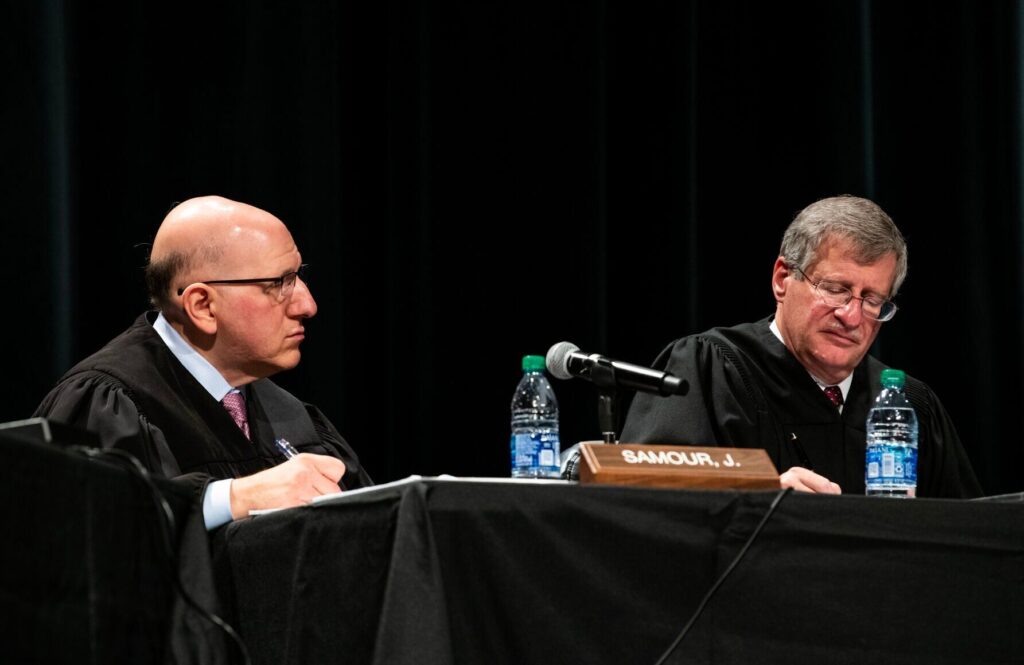
Colorado justices concerned about retrying defendant after jury signaled acquittal
Michael Karlik
michael.karlik@coloradopolitics.com
Updated 2 days ago
Some members of the Colorado Supreme Court appeared uncomfortable on Tuesday with allowing a criminal defendant to stand trial a second time after a Larimer County jury signaled it was deadlocked on some counts but had found him not guilty...

Missy Woods pleads not guilty; trial set for fall
Jenny Deam
jenny-deam@coloradopolitics.com
Updated 3 days ago
The former Colorado Bureau of Investigation DNA expert charged with more than 100 felonies entered a plea of not guilty to all of them Wednesday in a packed Jefferson County courtroom. The plea was entered by her defense attorney Tom...
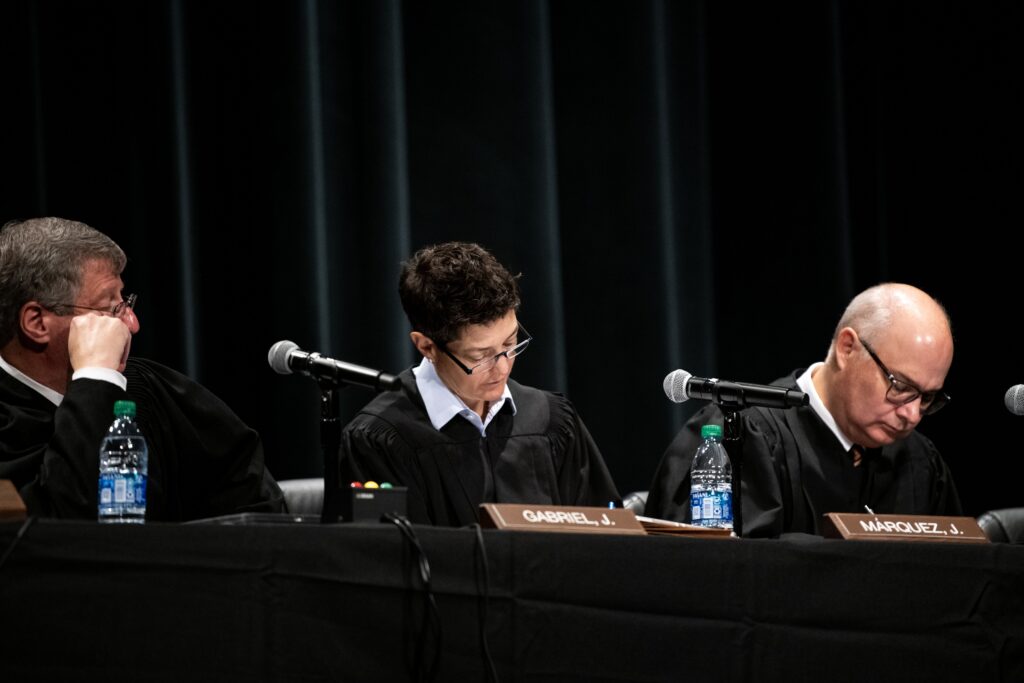
Colorado justices question process for parole board appeals
Michael Karlik
michael.karlik@coloradopolitics.com
Updated 2 days ago
The Colorado Supreme Court considered on Tuesday whether criminal defendants whose parole is revoked must appeal the decision internally to the state’s parole board before seeking review by a judge. The process for returning someone to incarceration for violating the...