

‘He’s our poppa’: Colorado Springs Catholics remember Pope Francis as merciful advocate for the poor and marginalized
The amiable Roman Catholic leader for the past 12 years, Pope Francis, died early Monday morning leaving a legacy as the pope of peace, mercy and overarchingly a champion for the common people, some of his flock noted Monday in reflecting on his passing.
Colorado Springs resident Leah Aguirre said she couldn’t believe that Pope Francis, 88, returned to publicly greeting people as soon as he was well enough. The pope had been hospitalized from Feb. 14 to March 23, initially for bronchitis and then pneumonia in both lungs. He died of a cerebral stroke that led to a coma and heart failure, the Vatican announced.
Aguirre was on a pilgrimage in Italy last month with her husband, when their group got word that the Pope was being released from the hospital. They quickly boarded a bus in Assisi and high-tailed it to Rome, where they saw the Pope in a parking lot after exiting the hospital.
“I could tell he wasn’t healthy. He looked swollen and couldn’t raise his arms; he just moved his hands up and down,” she said — as if waving at the assembled crowd to acknowledge his release from infirmity. “It was very moving.”
And hopeful, she said. “We thought, ‘Oh my gosh, he’s going to pull through.’”
Being in the presence of Pope Francis imparted a special feeling for Aguirre.
“He’s an important person and significant to the Catholic Church,” she said. “He has that position of authority. You just honor him.”
Born in Argentina, Pope Francis was serving as Cardinal Jorge Mario Bergoglio, the archbishop of Buenos Aires, when he was elected in 2013 as the first Latin American pontiff.
Believers said he will leave a legacy of advocating for the poor, advancing evangelism, supporting immigrants, emulating humility and building inclusivity.
“He demonstrated great courage in confronting the challenges faced by the Catholic Church, always keeping at the forefront of his fatherly concern those most affected by war, poverty and exploitation,” Bishop James Golka, who heads the Diocese of Colorado Springs, said in a statement.
Pope Francis selected Golka to be the third bishop of the Diocese of Colorado Springs in 2021. Golka said he had met with Pope Francis several times in Rome over the years and “always enjoyed his warmth, sense of humor and deep faith.”
That Pope Francis served in the role for more than a decade while dealing with various health problems and physical limitations is commendable, Golka said.
The pope worked until his death, reminding the faithful during his Easter blessing on Sunday from St. Peter’s Basilica that “All those who put their hope in God place their feeble hands in his strong and mighty hand; they let themselves be raised up and set out on a journey. Together with the risen Jesus, they become pilgrims of hope, witnesses of the victory of love and of the disarmed power of life.”
Denver Archbishop Samuel J. Aquila said in a statement, “His special emphasis on seeking out the lost and marginalized has encouraged many to encounter Jesus … As we mourn his passing, may we remember his call to preach the Gospel courageously, joyfully and full of hope.”
A Colorado Springs resident named Eve, who declined to give her last name, said she doesn’t normally attend a weekday Mass but made sure she was at the noontime service on Monday at St. Mary’s Cathedral to pray in solidarity for the Pope.
“He’s our poppa,” she said.
Eve said she converted to Catholicism during the late Pope John Paul II’s 26-year reign of the world’s Catholics, whose numbers now top 1.406 billion, according to statistics the Vatican’s Central Office for Church Statistics released last month.
“The richness of faith of Catholics is just amazing,” she said.
The Sisters of Benet Hill Monastery in Black Forest relied on the pope’s teachings through documents he issued on the intersectionality between environmental distress, migration, racism, classism and xenophobia to create a Land Ethic for their 100-acre property and focus on caring for creation, said Ruth Roland, director of mission advancement.
“We hope that the next pope will prayerfully continue to listen to the people of God and the cries of Mother Earth,” she said. “And perhaps the next pope will re-open the conversation on expanding the role of women in the church, following the example of the early Christian church where women were considered the equals of their brothers.”
In 15 to 20 days, a papal conclave of cardinals — the highest-ranking clergy — will begin the process in Rome to elect the Catholic Church’s 267th spiritual leader. The pope is considered to be the successor of Peter, one of the apostles of Jesus, who is viewed the first head of the church and the first bishop of Rome.
Mixed with the sadness of Pope Francis’ demise is excitement over who will be chosen as the next leader, Aguirre said.
In keeping with tradition, ballots are burned in the Sistine Chapel at the Vatican, with white smoke from the chimney indicating to the world that a two-thirds majority of the cardinal electors has selected a new pope. Black smoke means the group will return to discerning who will become the next bishop of Rome.
“I can’t wait to see the conclave and see the smoke and see who it is,” Aguirre said.
What do people want in the next pope? A return to traditional roots, said some leaving Monday’s service at the local cathedral. Others said they want forward movement in addressing societal changes.
“Unity in the church,” Aguirre said.
“I’d like to see a man of God and not a man of politics,” said a churchgoer named Jim, who declined to provide a surname. He believes doing so would help the Catholic Church retain more members. “More people would come to Christ, and less would fall away.”
Louise, who also gave a single name, said she wants a pope who is “not influenced by the world” but one that “would be holy and help us all be holy.”
Contact the writer: 719-476-1656.


Taxpayers donate to tax increase campaign | Jon Caldara
Jon Caldara
jon-caldara@coloradopolitics.com
Updated 3 days ago
Give the man his due. President Donald Trump has undeniable talents. Colorado politicians are learning. Chief among The Don’s skills is taking the self-serving, ethically dubious behavior of previous politicians and putting it on steroids. Or, to borrow from the...

Colorado Politics Calendar Aug. 24-30
Rachael Wright, Special to Colorado Politics
rachael.wright@coloradopolitics.com
Updated 4 days ago
CoPo’s weekly political calendar will help you find political and public-policy events throughout Colorado. It includes candidate and issue campaign events, public policy meetings, court hearings, state and local party conventions, assemblies, debates, rallies, parades, speaking engagements, traveling dignitary appearances,...
A summertime all-you-can-eat political buffet | SONDERMANN
Eric Sondermann
eric-sondermann@coloradopolitics.com
Updated 4 days ago
We find ourselves in the doldrums of August with a complete dearth of political news. Yeah, right. These days, that train never stops moving. It is a 24/7/365 express amplified by 24/7/365 media. Let me respond with one of my...
GOP worker pleads guilty to campaign funds embezzlement scheme | A LOOK BACK
Rachael Wright, Special to Colorado Politics
rachael.wright@coloradopolitics.com
Updated 4 days ago
Forty-five Years ago this week: After pleading not guilty to a Denver federal grand jury indictment of five counts of bank embezzlement, Eve Lynn Lincoln, a Colorado Republican Party employee, decided to plead guilty to one count: using bank credit...
Schoolchildren’s presence at child sex-related trial did not harm Arapahoe County defendant, appeals court says
Michael Karlik
michael.karlik@coloradopolitics.com
Updated 16 hours ago
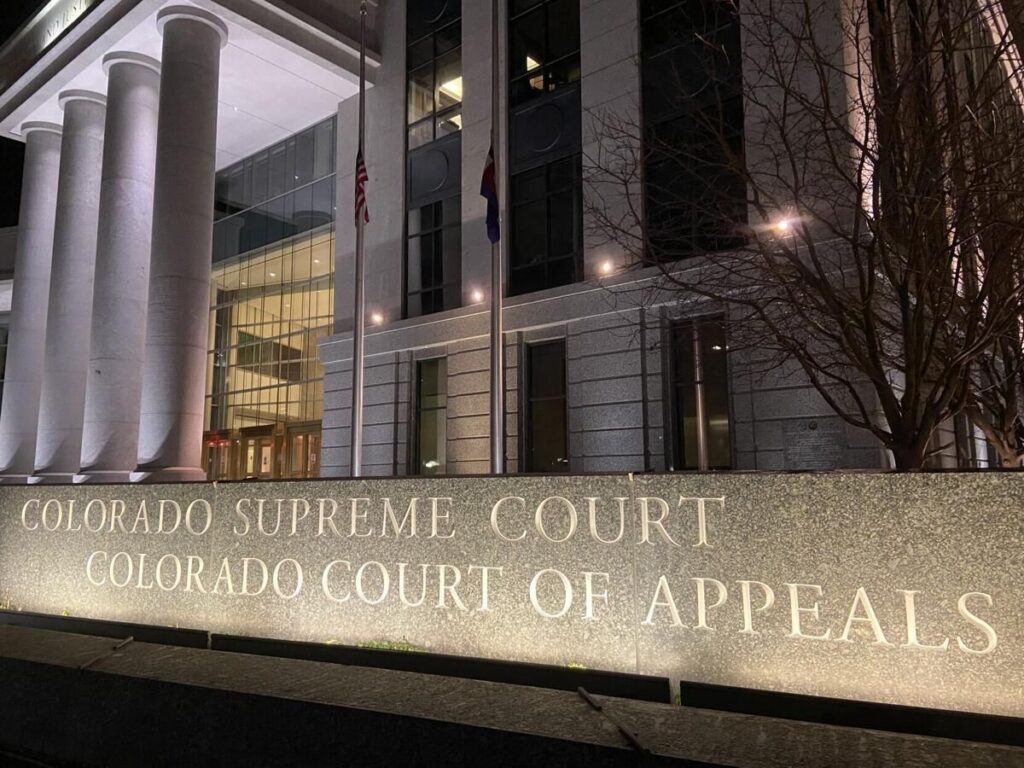
Colorado’s second-highest court decided on Thursday that the presence of a group of schoolchildren on the first day of a child sexual exploitation trial did not violate an Arapahoe County defendant’s constitutional right to a fair trial. Prosecutors charged Jerry...
‘All in Good Taste:’ A delicious way to raise money for a good cause | NONPROFIT REGISTER
Joanne Davidson Special to Colorado Politics
joanne-davidson-special-to-colorado-politics@coloradopolitics.com
Updated 2 days ago
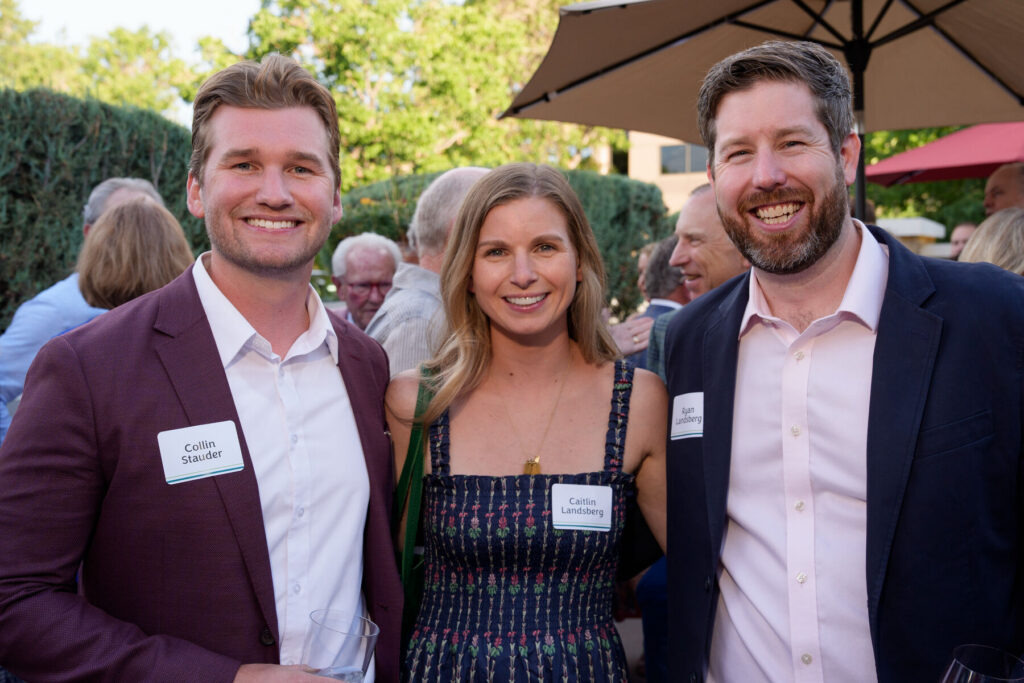
JUNIOR ACHIEVEMENT-ROCKY MOUNTAIN Greenwood Village News: Fundraising dinners abound in these parts, and the one that’s hard to beat is All in Good Taste. This benefit for Junior Achievement-Rocky Mountain is presented by Huntington Bank and held at the Orchard...
Appeals court cites week-old Colorado law to reinstate child neglect case at child, father’s request
Michael Karlik
michael.karlik@coloradopolitics.com
Updated 13 hours ago
Colorado’s second-highest court invoked a new state law for the first time on Thursday and reinstated a child neglect case that both the child and her father wished to reopen. House Bill 1227 took effect on Aug. 12, reversing a...
Democratic candidate in Colorado’s 4th CD urges long-term water planning
Marianne Goodland
marianne.goodland@coloradopolitics.com
Updated 12 hours ago
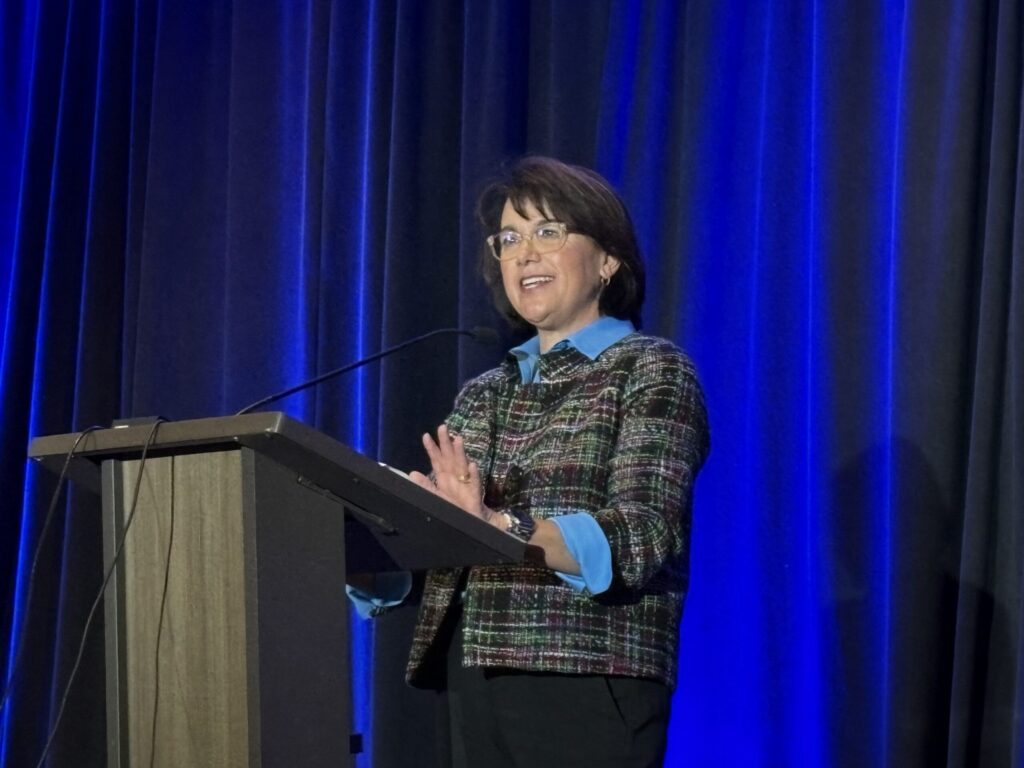
The Democrat hoping to become the next representative of Colorado’s 4th Congressional District on Thursday made her case on the final day of Colorado Water Congress in Steamboat Springs. Eileen Laubacher, who spent 34 years in the U.S. Navy and...

Castle Rock council declines to censure member accused of misconduct
Nicholas Fogleman
nicholas.fogleman@denvergazette.com
Updated 2 days ago
A Castle Rock Town Council meeting Tuesday became consumed by allegations that a councilmember attempted to trade a town policy decision for the withdrawal of a recall effort against him. The allegations against Councilmember Mark Davis surfaced during public comment...

Proposal to cap Colorado income tax rate qualifies for November ballot
Thelma Grimes
thelma.grimes@coloradopolitics.com
Updated 5 minutes ago
Election officials on Thursday confirmed that the proposal to cap the state’s income tax at the current rate submitted signatures and voters will consequently decide its fate this November. The fight over tax rates is part of the tug and...