

How one Colorado rural fire chief says he’s cracked the code on getting and keeping volunteers
In the tiny mountain town of Florissant, Colorado, Fire Chief John Buchan shuffles through the stacks of papers on his desk.
“Oh, and these are just from last week,” he said, holding up four crisp, new applications from individuals hoping to become new fire department volunteers.
Across rural Colorado, as well as much of the nation, dwindling numbers of volunteers, ballooning bureaucracy and roller-coaster funding have become well-worn stories from frustrated communities as they watch volunteer fire departments slowly become a thing of the past.
Buchan said that’s not the case in Florissant — at least not anymore.
In less than a year, the former recruiting and retention manager for the Tontitown, Arkansas Fire Department said he’s been able to almost double the number of volunteers serving the Florissant Fire Protection District, from close to 30 to more than 60.
And he said he’s done it without “going to the taxpayers.”
His secret?
“I listened to the volunteers,” he said. “I listened to the reasons they weren’t happy — if you’re going to be doing something for free, you should at least be happy doing it.”
Buchan is the department’s only paid employee. But by mixing up the volunteer opportunities from just firefighter or EMT, being fully engaged and creating a fire house atmosphere people want to be in, he’s found somewhat of a secret sauce other departments could learn from, he said.
In a survey conducted by the National Volunteer Fire Council, volunteer fire departments often lose members due to leadership challenges, lack of resources, incentive concerns and time demands.
Buchan, who has been on the job just under a year, doesn’t disagree, but added that one of the biggest challenges he encountered was with the term “firefighter” itself.
“A lot of departments will say that they have 20, 30, or 40 firefighters on the roster, but are they really firefighters?” he said. “We’ve kind of stripped the title of firefighter because it was kind of a misconception.”
Florissant prefers the term “emergency responder” instead, reserving “firefighter” for many of its volunteers, citing more clarity in job function.
“As many people know, nationally, the number of volunteer firefighters has dropped dramatically, Buchan said. “But how many of those were really firefighters?”
Some may have been administrators, only drove the fire truck, or only went on medical calls.
“We said, let’s bundle those people into another bucket and call them emergency responders and leave the term firefighter for the actual firefighters,” Buchan explained.
This freed volunteers to pick the field they were most interested in without the extensive obligation and time commitment to maintain training standards for the formal title.
Standards are still met for those who choose to be a firefighter or EMS, Buchan said, but the remaining department volunteers just want to give back to the community, not launch a new career.
“If you want to be EMS, great! I have a spot for you because 70% of our calls are medical,” Buchan said. “And if they don’t want to fight fire, they don’t have to fight fire — I have a spot for them.”
Other changes, such as swapping out rarely used fire trucks with more agile pickup-type “brush” vehicles, accommodate close to 80% of the departs calls.
The move not only reduced the department’s fuel, maintenance and insurance cost but also upped the number of individuals qualified to drive and that helped increase response time.
“When I got here, we had 18 fire trucks in our fleet,” Buchan said. “We identified that we really only needed five.”
By buying fuel in bulk rather than at the pump, the department saves an estimated $700 annually.
A remodeled dayroom with games and overnight bunking reduces out-of-pocket expenses for volunteers who need to stay overnight.
“I guess the biggest cost I have to put up with is all the different packages because they (volunteers) do movie nights, so we got ESPN, Amazon and HBO,” Buchan joked. “I really want to make it fun and afford them the opportunity to live the firefighter life.”
Also, by encouraging volunteers to stay overnight, Buchan said he’s pretty much created a full-time department without the cost of salaries.
Volunteers say the changes Buchan has made, such as engaging volunteers and putting them first, have brought new life back to the fire hall and made volunteers “want to be here.”
Lt. LeAnne Spicer, who’s been with the department since June of 2023, said one of the most obvious indicators of Buchan’s impact so far is “you walked through the doors today, and there were people here.”
“Prior to him (Buchan), this was a ghost town to where even the chief worked from home,” Spicer said.
Buchan took over in June of 2024 from the interim fire chief, Capt. David Quick, who served for almost a year after the Florissant Fire Rescue District Board fired the former chief, Erik Holt.
Holt would later go on to sue the board, but did not prevail.
Spicer said that the department had a total of five chiefs in four and a half years, which has contributed to the department’s lagging inflow of volunteers.
Emergency responder volunteer and administrator Vicky Collings said Buchan has hit the ground running.
“He has absolutely been a game changer,” Collings said. “There’s no idle button on him — finally there’s a chief that is very involved, but also willing to delegate stuff.”
Local residents are also excited about the changes, saying events such the department’s annual pancake breakfast, toy drive and “genuine welcoming” atmosphere have made a difference.
Florissant has a population of approximately 5,000 people.
However, as a winter retreat and summer cabin destination, Buchan said the town can swell to more than 10,000 in the summer.
Along with increased transparency policies, Buchan and staff have cleaned up finances and are pursuing additional revenue streams for the department, including amping up cost-recovery, deployment pay and conducting a study to look at potential impact fees.
Fiscal responsibility is at the top of Buchan’s list.
“The last thing I want to do is to have to ask the taxpayers for more money,” he said. “We have the lowest mill levy in the area, and I want to keep it that way.”
Deployments to assist other states and jurisdictions not only bring in revenue to the department, they also provide volunteers with pay and an opportunity to train with other, more experienced departments.
Buchan said the department has even looked at partnering with organizations like AAA to provide motorist services such as bringing fuel or changing tires.
Spicer added that Buchan’s “emergency responder” approach has changed the stereotype of volunteer firefighters.
“When you mention firefighters, most people think of what you see on TV shows — the 6-foot-4 sexy type working on a full-time city department,” Spicer said. “But on a volunteer rural department, we’re not that — but yet when we go out on calls, you realize you can help without being 6-foot-4 and 220 pounds.”
Time, Buchan said, is the most important thing volunteers bring to a department.
“I could have all the fancy equipment I want, but if I don’t have their time, I can’t do anything.”

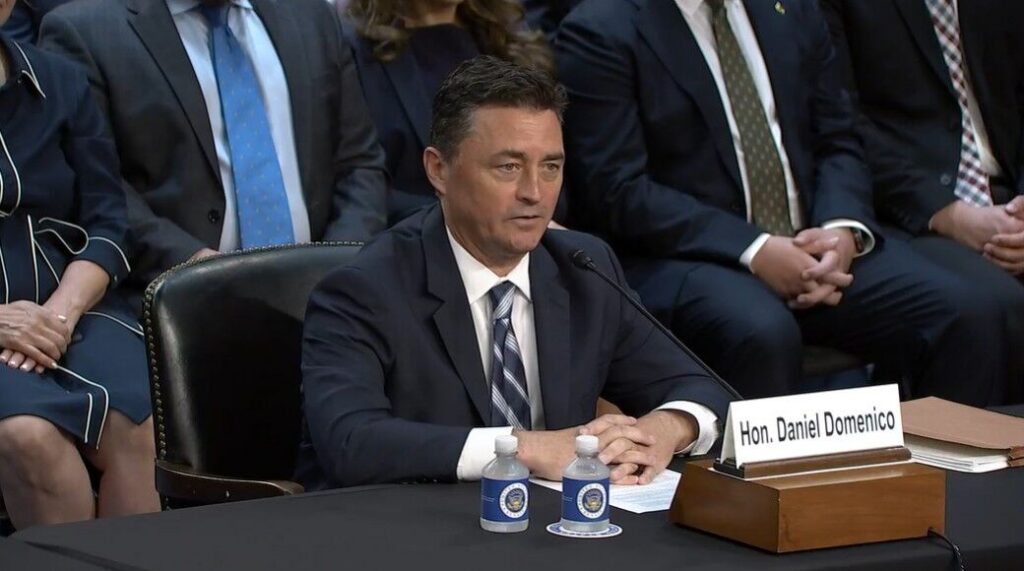
Senate committee advances Trump’s 10th Circuit nominee, as Domenico responds to questions about delays
MICHAEL KARLIK Colorado Politics
michael_karlik_colorado_politics@coloradopolitics.com
Updated 9 hours ago
The U.S. Senate Judiciary Committee advanced President Donald Trump’s nominee to the Denver-based federal appeals court on Thursday by a party-line vote of 12-10. U.S. District Court Judge Daniel D. Domenico, who was Trump’s first-term appointee to Colorado’s federal trial...
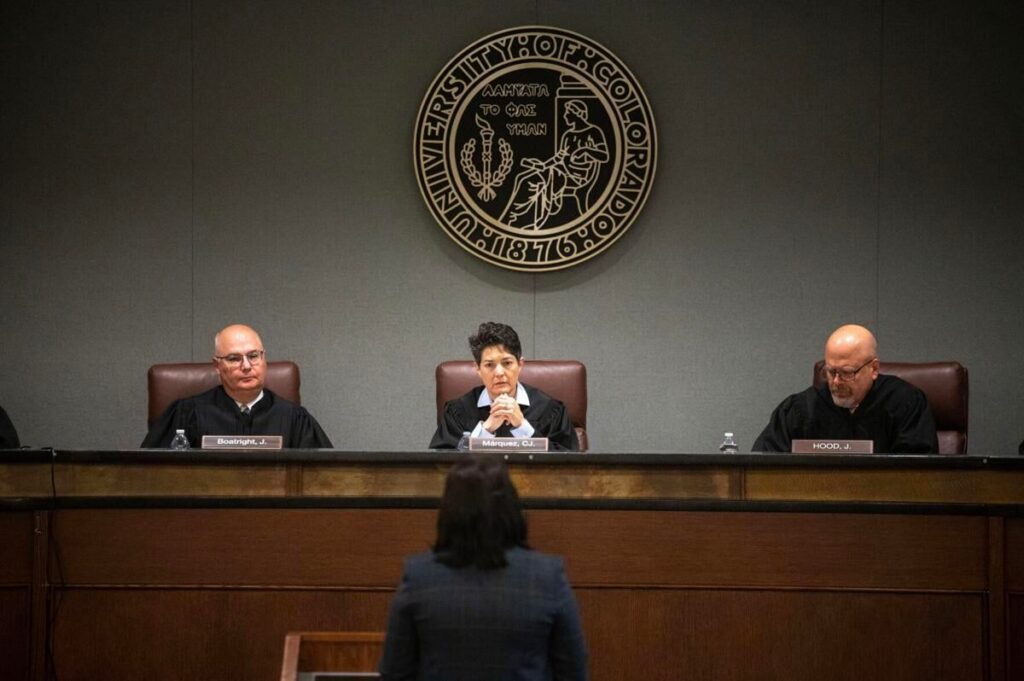
Colorado justices to hear embryonic donation dispute
MICHAEL KARLIK Colorado Politics
michael_karlik_colorado_politics@coloradopolitics.com
Updated 9 hours ago
The Colorado Supreme Court announced on Monday that it will decide whether lower court judges properly applied its framework for adjudicating disputes over the fate of pre-embryos, in which one person wants to use them to become a parent and...

Colorado faces $8M repayment demand after federal Medicaid audit
Marianne Goodland
marianne_goodland@coloradopolitics.com
Updated 11 hours ago
Colorado failed to follow federal and state requirements for certain Medicaid personal care service payments, according to a report from the U.S. Department of Health and Human Services inspector general, which is now seeking an $8 million repayment from the...

Jefferson County to fill commissioner vacancy after Dahlkemper tapped for lieutenant governor
Matt Kyle
matt.kyle@denvergazette.com
Updated 9 hours ago
Democratic gubernatorial nominee Phil Weiser on Wednesday announced that Jefferson County Commissioner Lesley Dahlkemper would be his lieutenant governor, meaning she would be leaving her commissioner seat open should he win the race in November. However, Dahlkemper’s term was already...

New wolf pack confirmed in Eagle County, marking 4th Colorado pack with pups this year
Marissa Ventrelli
marissa.ventrelli@coloradopolitics.com
Updated 10 hours ago
A new gray wolf pack has formed in Eagle County, Colorado Parks and Wildlife announced on Wednesday. Known as the Piney Ridge Pack, it is the fourth pack of gray wolves in the state to have produced pups this year....
Colorado justices to hear embryonic donation dispute
Michael Karlik
michael.karlik@coloradopolitics.com
Updated 7 hours ago
The Colorado Supreme Court announced on Monday that it will decide whether lower court judges properly applied its framework for adjudicating disputes over the fate of pre-embryos, in which one person wants to use them to become a parent and...
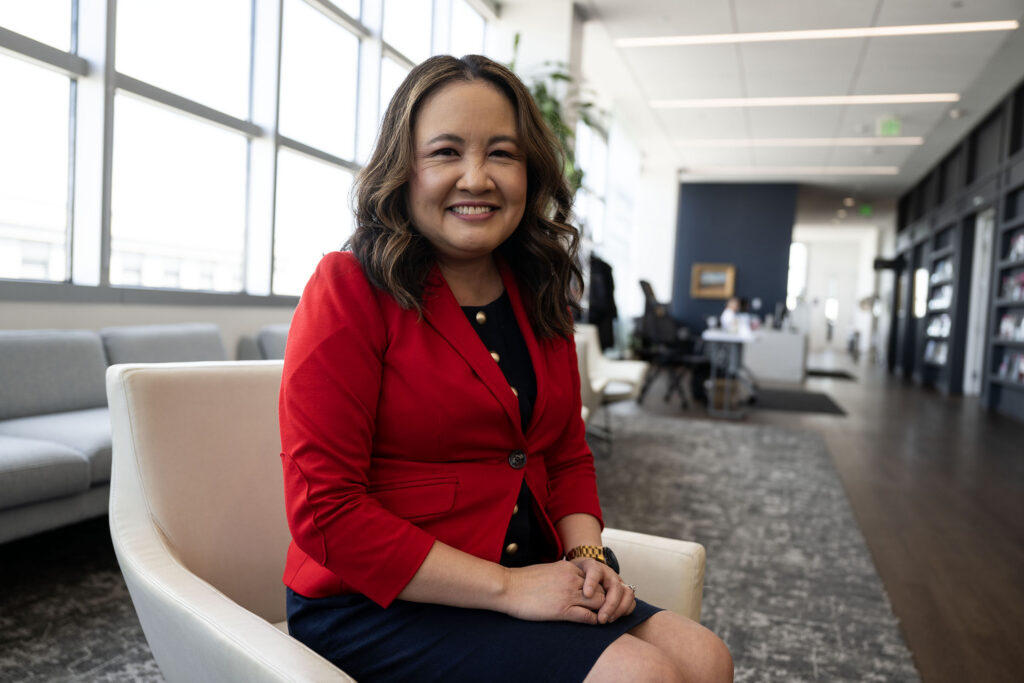
Isolation, emotion, persona: Colorado judicial programming prepares people for life on the bench
Michael Karlik
michael.karlik@coloradopolitics.com
Updated 9 hours ago
As a trial judge and now as a member of the Colorado Supreme Court, Justice Carlos A. Samour Jr. has heard the view that being a judge is isolating. “In neither court have I felt isolated. I’ve always interacted a...
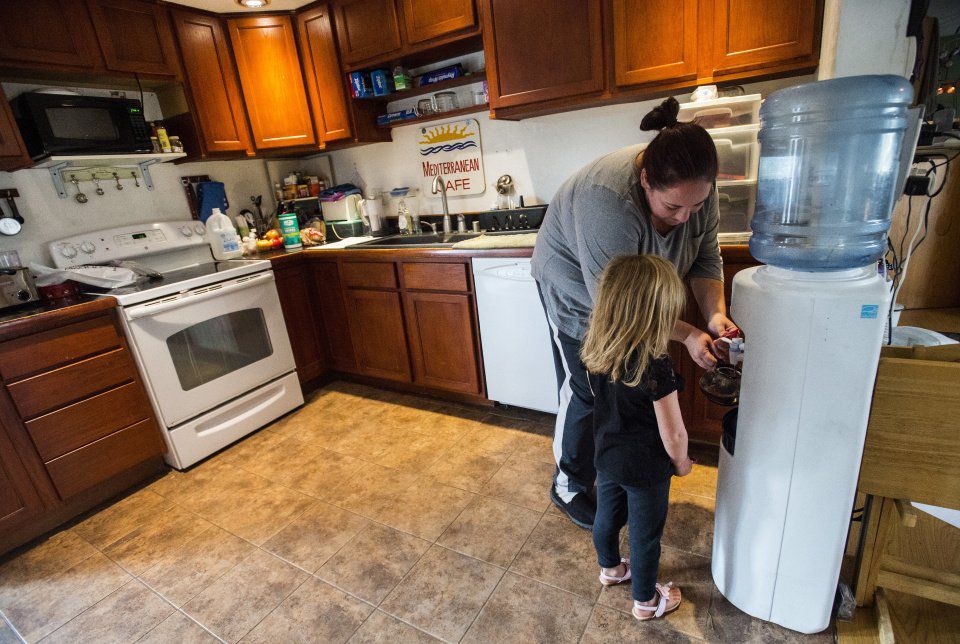
Colorado housing laws take effect, expanding tools for affordable and workforce housing
Marissa Ventrelli
marissa.ventrelli@coloradopolitics.com
Updated 1 day ago
New housing laws taking effect on Aug. 12 in Colorado aim to boost affordability, improve homelessness response and ensure safer water systems for mobile‑home communities. The first bill, Senate Bill 001, allows municipalities to sell county- or town-owned property to...

Ex-Venezuelan dictator Nicolas Maduro and wife scheduled for June 2027 drug trafficking trial
Kaelan Deese
kaelan-deese@coloradopolitics.com
Updated 2 days ago
Disgraced former Venezuelan dictator Nicolas Maduro and his wife are scheduled to stand trial June 1, 2027, on charges that they participated in a decadeslong conspiracy to flood the United States with cocaine. U.S. District Judge Alvin Hellerstein, a 92-year-old...
Democrat Phil Weiser names Jeffco Commissioner Lesley Dahlkemper as his gubernatorial running mate
Ernest Luning
ernest.luning@coloradopolitics.com
Updated 1 day ago
Colorado Attorney General Phil Weiser, the Democratic nominee for governor, on Wednesday named Jefferson County Commissioner Lesley Dahlkemper to be his lieutenant governor running mate in the general election. Calling her “someone who can be a governing partner,” Weiser said...