

Democratic lawmakers prepare to sue over constitutionality of Colorado’s TABOR
In 2011, a coalition of 33 individuals and groups, including current and former lawmakers, county commission and other elected officials and school districts, sued the state of Colorado, challenging the constitutionality of the Taxpayer’s Bill of Rights.
A decade later, the lawsuit was dismissed on a technicality: the lawsuit, the federal courts indicated, had the wrong plaintiffs.
A state Democratic lawmaker who was part of the legal team in Kerr v. Hickenlooper (later Kerr v. Polis) is now sponsoring a resolution to try again, but with some important differences.
Rep. Sean Camacho, D-Denver, sponsored House Joint Resolution 1023, which would require the General Assembly to sue over TABOR’s constitutionality in state district court.
The two differences between Kerr and this lawsuit are the plaintiffs and where it will be filed.
Camacho told Colorado Politics that Kerr was litigated for years, going from federal district court to the 10th Circuit Court of Appeals, on to the U.S. Supreme court, and then back to the district court and appeals court. After all that time, the appeals court said, “We had the wrong plaintiffs because we had individual legislators and school districts.” Notably, the lawsuit did not have the Colorado General Assembly as a plaintiff.
“We never got to the merits of the actual legal argument,” Camacho said. “We were pushed aside, essentially in a procedural issue. So, this lawsuit fixes that.”
“And, instead of being in federal court, we’re going across the street,” he said, referring to the state court system.
His resolution directs the joint committee on legal services to retain legal counsel to sue in state court, rather than federal court, as was the case in Kerr.
The legal question, Camacho said, is still awaiting its day in court: “We all deserve an answer (on) whether or not we are following the Colorado and U.S. Constitution. And are we giving voters the republican form of government that we believe they’re entitled to?”
The underpinning to that argument, he explained, is that lawmakers are elected by their constituents to make the laws to fund schools, infrastructure, healthcare and housing.
“These are all things that if you’ve looked at the budget, we cannot do because our system of government prevents it, mainly TABOR,” he said. That tax policy, he added, “is not equipped for the challenges we face in 2025. We all deserve an answer on whether or not it’s constitutional. This is not a political question, even though some people might want to frame it that way.”
Camacho said there is precedent for overturning a voter’s initiative, beginning with 1992’s Amendment 2, which barred municipalities from passing antidiscrimination laws for LGBTQ persons. It was overturned by the U.S. Supreme Court in 1996. The high court’s 2015 Obergefell decision also rendered moot Colorado’s 2006 Amendment 43, which banned same-sex marriage.
While he wasn’t among the named attorneys, Camacho provided pro bono legal research and other work for the Kerr lawsuit through his law firm, Denton’s, and later through Brownstein, Hyatt, Farber and Schreck.
The 2021 ruling from the 10th Circuit Court explored whether the case was a question of standing and concluded it must abandoned that framework in favor of viewing the issue as an “inquiry going to the merits of the case, not the court’s jurisdiction.”
“We ask whether the political subdivision has a cause of action,” said the appellate court, which also adopted the test of whether a federal statute has authorized a political subdivision to sue its parent state if the law in question were “directed at protecting political subdivisions.”
Notably, the court said the plaintiffs failed to back up their premise that the constitution’s “Guarantee Clause” protects a “Republican Form of Government.”
“And they also allege that TABOR violates this guarantee ‘for all subordinate levels of government in the State,'” the court said, adding, “But the complaint is entirely silent about why the political subdivisions are protected by this constitutional guarantee.”
The court added that the plaintiffs “placed most of their eggs in the Enabling Act basket on appeal.”
“But looking inside, that basket is not very full,” the court said.
Michael Fields, president of Advance Colorado Institute, told Colorado Politics that with the federal courts ruling against the plaintiffs, “liberal legislators” are exploring the state courts “to get rid of TABOR entirely.”
“This isn’t a new tactic. They tried to do the same thing in federal court over a decade ago, and in 2021, they lost that case on the merits,” Fields said.
Fields said Gov. Jared Polis and Attorney General Phil Weiser defended the state in the previous case and speculated they would so again. Fields said Polis has said he supports TABOR.
“So, what we have is Democratic lawmakers wasting taxpayers’ dollars to go after a 33-year-old Constitutional measure that has a 70% approval rating. The reason they are using a joint resolution is because they want to get around Governor Polis since he has no role in that specific process (as opposed to bills that he signs or vetoes),” Fields said. “The real story here is the divide between legislators and the people on TABOR, and also the divide within the Democratic Party.”
The father of TABOR, Douglas Bruce, a former state lawmaker and county commissioner, said he won’t lose any sleep over the lawsuit.
“Is this an April Fool’s joke?” he asked. “They’re a little late. It’s been more than 30 years since it passed.”
He called the lawsuit idea foolish.
“You can’t say a state constitutional amendment is a violation of the state constitution,” he said. “Why do they hate giving people a chance to vote on keeping excess revenue? Why do they object to obeying the constitution?”
Bruce asserted the issue has already been through federal court, combed over with a fine-toothed comb and is now settled law.
“They obviously have too much time on their hands,” he said, adding the would-be plaintiffs do not have the right to overrule the will of the voters.
This shows their contempt for the citizens of Colorado, Bruce added.
TABOR has become a bigger issue in the 2025 session due to the tight state budget, and lawmakers’ worries that, despite no shortage of revenue, the state government cannot fund its priorities because of the limitations imposed by the law.
The TABOR ballot measure, which passed on its third try in 1992, was a multi-subject initiative that on its face allowed voters to decide on tax increases. Buried in its language was a whole host of other restrictions — state revenue could increase only by inflation, plus population; decreases in revenue would “ratchet” down the revenue for the next year; any revenue above the TABOR limit would be refunded to taxpayers.
The ratchet effect was eliminated by Referendum C in 2005 and a new Ref C revenue limit was put in place, although the state has once again reached the Ref C limit and is barred from spending revenue above the cap.
According to the Bell Policy Center, as of 2024, 51 of the 64 counties, 230 out of 274 municipalities, and 177 out of 178 school districts, have “de-Bruced” since TABOR’s inception in 1992. De-Brucing means getting permission from the voters to allow a governmental entity to retain and spend revenue, instead of refunding the money back to the taxpayers.

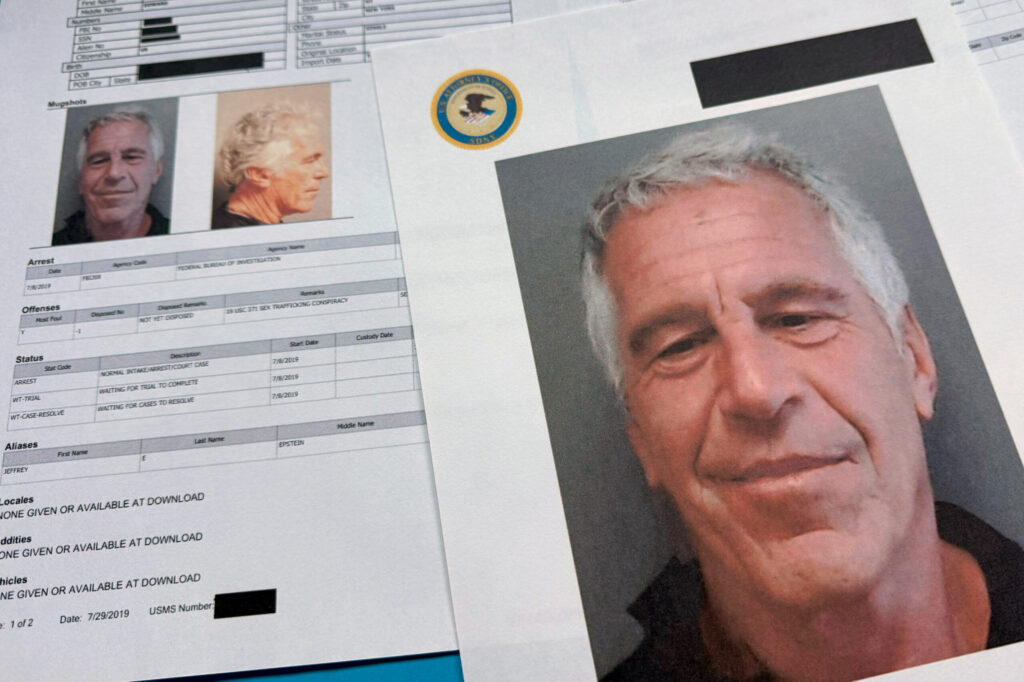
Colorado, some Coloradans make appearances in the Epstein Files
RACHAEL WRIGHT Special to The Gazette
rachael-wright-special-to-the-gazette@coloradopolitics.com
Updated 15 hours ago
With the U.S. Department of Justice’s release of 3 million more files pertaining to convicted sex felon Jeffrey Epstein, multiple written mentions of alleged connections to Colorado towns and business owners have come to light. A word search of the documents for “Colorado” generates 1,485 hits, with inquiries for cities including Denver and Aspen generating several thousands more. Chad...
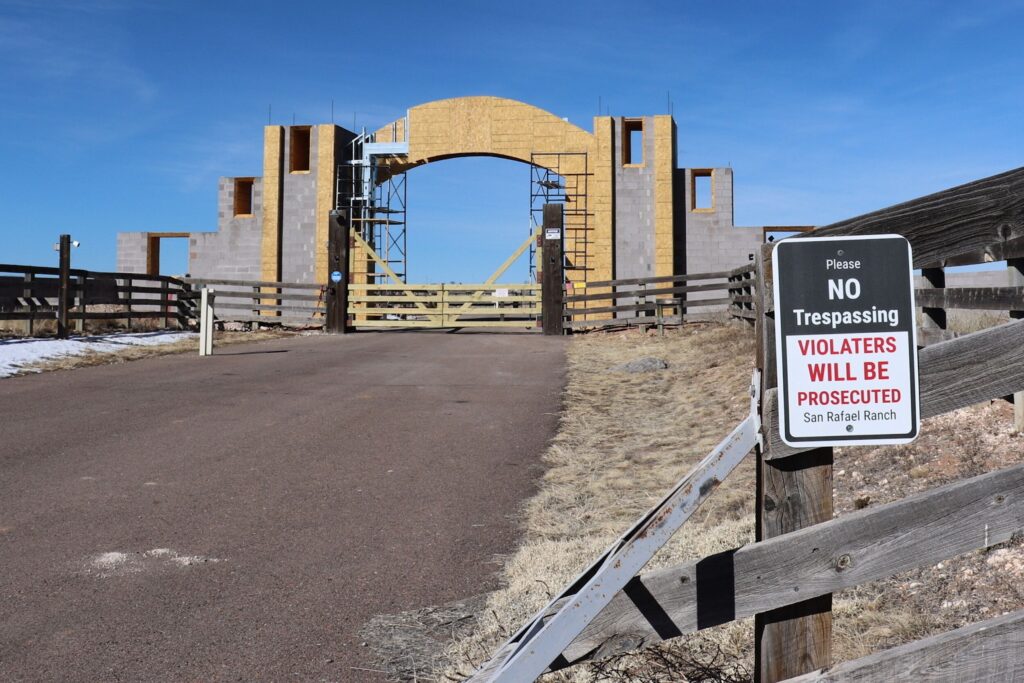
New Mexico launches ‘truth commission’ investigation into Jeffrey Epstein’s ranch | OUT WEST ROUNDUP
The Associated Press
the-associated-press@coloradopolitics.com
Updated 4 days ago
NEW MEXICO State investigates Epstein’s ranch SANTA FE — State legislators in New Mexico launched an investigation on Feb. 17 into past activity at a secluded desert ranch where financier and sex offender Jeffrey Epstein once entertained guests and whether...
Colorado’s federal judges maintain approach to immigration detentions while escalating warnings
Michael Karlik
michael.karlik@coloradopolitics.com
Updated 1 day ago
Colorado’s federal judges are maintaining their view that the government’s assertion of broad immigration detention authority is unlawful, casting aside a recent appellate decision to the contrary as “unpersuasive” and out of step with the predominant interpretation by the judiciary....
In a meeting Colorado GOP chair Brita Horn calls ‘illegal,’ Republicans vote to demand her resignation
Ernest Luning
ernest.luning@coloradopolitics.com
Updated 1 day ago
Roughly half the membership of the Colorado Republican Party’s state central committee on Saturday voted overwhelmingly to approve a resolution expressing “no confidence” in state GOP Chairman Brita Horn’s leadership and calling for her immediate resignation in an online meeting...

Colorado Medicaid probe uncovers millions of dollars in alleged transport fraud ring
Nico Brambila
nico.brambila@denvergazette.com
Updated 1 day ago
Colorado Medicaid officials detected $25 million in abnormal billing over just four months two years ago — a surge that prompted a new state law and the suspension of dozens of providers in what authorities now describe as an organized...
One small step for dialing back the partisanship | SONDERMANN
Eric Sondermann
eric-sondermann@coloradopolitics.com
Updated 4 days ago
Much ink, including a good deal of my own, has been spilled on the excesses of super-charged, toxic partisanship in this current era. Except for true believers along with those who profit from this all-consuming poison, there is broad agreement...
Greeley voters to decide fate of project that includes minor league hockey arena
Hap Fry, Special to The Gazette
hap-fry@gazette.com
Updated 9 hours ago
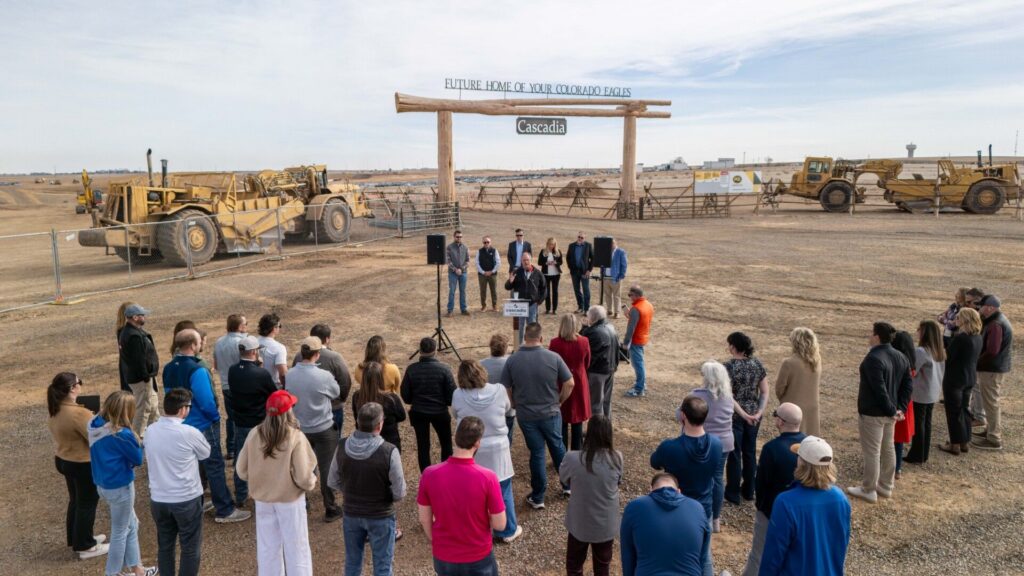
GREELEY • The fate of the Cascadia development — and quite possibly the future direction of the city — is in the hands of Greeley voters this Tuesday during a special city election on whether the landscape-altering project should be...

Colorado Politics Calendar Feb. 23-Mar. 1
Rachael Wright, Special to Colorado Politics
rachael.wright@coloradopolitics.com
Updated 5 days ago
CoPo’s weekly political calendar helps you find political and public policy events throughout Colorado. It includes candidate and issue campaign events, public policy meetings, court hearings, state and local party conventions, assemblies, debates, rallies, parades, speaking engagements, traveling dignitary appearances,...
Meeker rancher leads one of Colorado’s earliest attempts to transfer federal lands | A LOOK BACK
Rachael Wright, Special to Colorado Politics
rachael.wright@coloradopolitics.com
Updated 4 days ago
Forty-Five Years Ago This Week: Former state Rep. Nick Theos, R-Meeker, was one of several people testifying before the Senate Agriculture Committee on Senate Bill 81-170, which would transfer ownership of public lands from the federal government to state control....

Democrats Michael Bennet, Phil Weiser make their cases to be Colorado’s next governor ahead of primary
Ernest Luning
ernest.luning@coloradopolitics.com
Updated 3 days ago
Nearly eight months before ballots will be counted in Colorado’s race for the its open gubernatorial seat, voters are lining up behind two of the state’s leading Democrats, who are facing off in a primary that will likely determine which...