

‘Project Sunshine’ aimed to achieve greater transparency from state, local government | A LOOK BACK
Thirty-Five Years Ago This Week: “The public has a right to know what’s going on,” said Mort Stern, chairman of the Department of Journalism at the University of Northern Colorado, and president of Citizens for Open Government.
A petition drive called “Project Sunshine” was unveiled by COG at the Colorado Press Association’s annual meeting, which sought to establish uniform open meeting requirements for all units of government so the formation of public policy was not conducted in secret.
“The crucial point is to have sunshine provisions at all levels of government and to have uniformity,” said Stern. “School boards and board of county commissioners are probably the most difficult for some reasons. But the burden to justify secrecy should be on the public body rather than the burden being on the citizens to justify openness.”
Stern said that COG was optimistic that the organization could gather enough signatures to petition onto the November ballot and thereby amend Colorado’s constitution.
Sanda Eid, first vice-president of the League of Women Voters of Colorado, was hired to work on “Project Sunshine” and said that the group had established a hotline to keep track of complaints about abuses. Rural areas specifically suffered from a lack of transparency in government, she said.
“Opposition might come from county commissioners, cities, and school boards,” Eid said. “That’s why it wasn’t feasible to try to get the legislature to put it on the ballot, because it takes a two-thirds majority vote of both houses and might be subject to strong lobbying efforts by those who oppose it.”
Eid said that she was distributing the petitions to publishers throughout the state and that many had already indicated an interest in getting signatures.
“Carrying a petition might be a tough ethical decision for a reporter,” Stern said, “but supporting open government isn’t a partisan political issue, so it shouldn’t prove to be a problem for reporters to maintain their objectivity.”
Fifteen Years Ago: Just days after the General Assembly’s passage and the governor’s signing of Senate Bill 10-1 a group known as “SavePERACOLA.com” filed a lawsuit in Denver District Court, charging that the law was “unconstitutional” because it impaired “retirees’ contractual right to receive pension benefits at the level promised.”
The bi-partisan SB10-1 was largely the work of Senate President Brandon Shaffer, D-Longmont, who said it was his top legislative priority for the session. The bill pledged to restore Colorado’s pension plan, PERA, to full financial health within 30 years. In order to do so, the 3.5 percent cost of living increase benefit check that was due to go into effect at the end of March would be eliminated.
PERA employers, under SB10-1, were also required to increase their contributions to 2%, and most public employees would have to wait to age 55 to retire with at least 30 years of service.
But during committee hearings, dozens of PERA retirees protested the bill, arguing that COLA elimination and changes to retirees’ benefits would not survive legal challenges.
In signing the bill, Gov. Bill Ritter said, “Colorado is the first state in the country to pass legislation that really addresses public employee pension concerns.”
The lawsuit filed in Denver District Court, sought class-action status, and Gary Justus, the named plaintiff in the case said that, “This lawsuit is about the state complying with its own Constitution. The General Assembly is trying to correct its past mistakes on the backs of the retirees.”
Justus cited a 2004 opinion by former Attorney General Ken Salazar that stated when a PERA member retires and starts receiving benefits, “the pension becomes a vested contractual obligation of the pension program that is not subject to unilateral change by any type by the General Assembly.”
Rachael Wright is the author of several novels including The Twins of Strathnaver, with degrees in Political Science and History from Colorado Mesa University, and is a contributing writer to Colorado Politics, the Colorado Springs Gazette and the Denver Gazette.

Colorado board permits state to appeal injunction against arthritis drug price cap
Marissa Ventrelli
marissa.ventrelli@coloradopolitics.com
Updated 2 hours ago
A Colorado board voted Friday to allow the Attorney General’s Office to fight an injunction against a price cap on a drug that treats arthritis. A U.S. district court judge had granted the company Amgen a preliminary injunction, temporarily blocking...

Federal judge rejects constitutional claims, ‘expressions of hatred’ by Club Q defendant
Michael Karlik
michael.karlik@coloradopolitics.com
Updated 2 hours ago
A federal judge rejected a defendant’s claims that he received constitutionally ineffective assistance of counsel while facing federal hate crime and firearms charges for murdering five people at a Colorado Springs LGBTQ nightclub in 2022. Anderson Lee Aldrich is serving...

Divided 10th Circuit upholds Colorado congestion fee on car rentals
Michael Karlik
michael.karlik@coloradopolitics.com
Updated 2 hours ago
The Denver-based federal appeals court concluded on Monday that a 2024 “congestion impact fee” that lawmakers imposed on short-term vehicle rentals did not conflict with a federal prohibition on certain airport-related charges. Beginning in the 1970s, Congress began limiting the...

Space Force should measure workforce needs as it prepares to double in size, GAO report says
Mary Shinn
mary-shinn@coloradopolitics.com
Updated 7 hours ago
The Space Force needs more people. It’s just not precisely sure how many more. A Government Accountability Office report released earlier this month found that the youngest and smallest military branch does not have a process to consistently or accurately...

Colorado schools receive $24 million for free meals program
Marissa Ventrelli
marissa.ventrelli@coloradopolitics.com
Updated 2 hours ago
The Colorado Department of Education is providing Colorado schools with nearly $24 million in grant funding to implement a free lunch program. Approved by voters in 2022, the Healthy School Meals for All provides free breakfast and lunch to all...
Secret Service agent placed on administrative leave after arrest for near-deadly hazing ritual
Claire Carter
claire.carter@washingtonexaminer.com
Updated 9 hours ago
A Miami Secret Service agent in Florida was placed on administrative leave following his arrest on Sunday in connection with a near-deadly hazing incident at a University of Miami fraternity. Marquez Christopher Pinder, 29, was arrested alongside two other individuals...
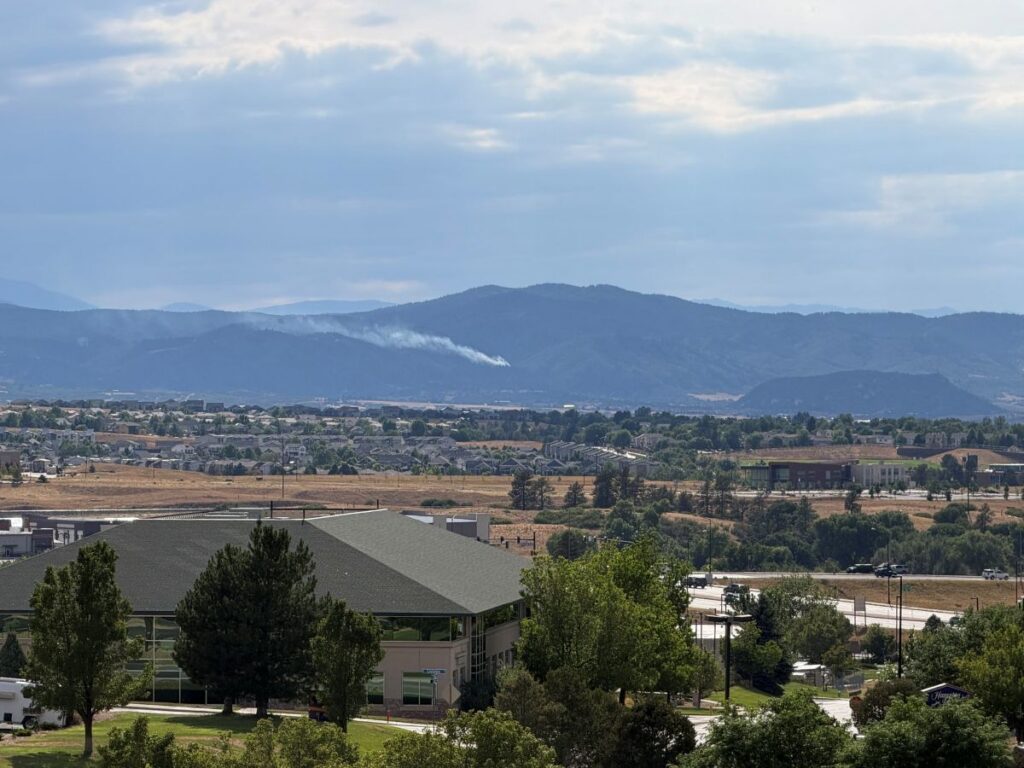
Forest fire west of Sedalia prompts evacuations in Douglas County
Nicholas Fogleman
nicholas.fogleman@denvergazette.com
Updated 12 hours ago
Emergency crews are responding to a forest fire burning west of Sedalia, prompting evacuation orders for nearby residents Sunday afternoon. At about 5 p.m. Sunday, the Douglas County Sheriff’s Office issued an evacuation order for residents within a 2-mile radius...

Airstrikes have paused and talks are pressing forward. But can the US and Iran take the off-ramp?
The Associated Press
the-associated-press@coloradopolitics.com
Updated 11 hours ago
WASHINGTON (AP) — The U.S. military has paused its airstrikes on Iran after nearly two weeks of intensifying bombing, while diplomatic efforts have pushed forward to try to avert a return to all-out war. But it remains to be seen...
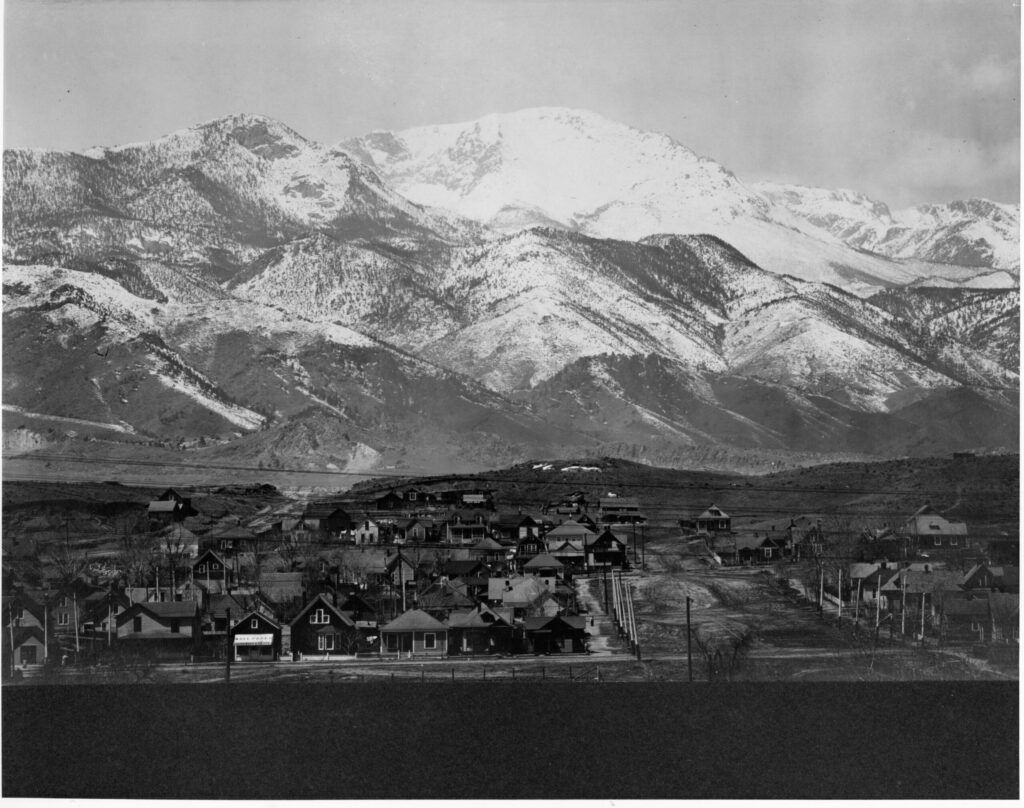
Penrose fortune paved the way for Colorado Springs to be a military, space and sports town
Mary Shinn
mary-shinn@coloradopolitics.com
Updated 12 hours ago
Colorado Springs is always working to catch the next big economic wave. “We’re always trying to figure out what the next thing is going to be,” explained Matt Mayberry, director of the Colorado Springs Pioneers Museum. In the early days,...
Colorado Politics Calendar July 27-Aug. 2
Rachael Wright, Special to Colorado Politics
rachael.wright@coloradopolitics.com
Updated 5 days ago
CoPo’s weekly political calendar will help you find political and public-policy events throughout Colorado. It includes candidate and issue campaign events, public policy meetings, court hearings, state and local party conventions, assemblies, debates, rallies, parades, speaking engagements, traveling dignitary appearances,...