

Colorado energy transparency only significant if violations spur action | NOONAN
Paula Noonan

President Donald Trump is conducting a reorg. National Dems may eventually get to a re-do. State agencies will need a re-up. That is, in blue-state Colorado, as Trump attacks federal agencies protecting our safety and welfare with insufficient pushback from the minority party, our state agencies led by a Democratic governor will have to show their mettle.
This situation pressures state environmental protection departments, as our quality of life depends on our natural attractions. Front Range air quality is not an attraction that’s advertised in our Visit Colorado marketing campaigns.
The combinations of components contributing to bad air will no doubt get worse under the Trump administration. Here’s what needs to happen to improve our air quality: fewer combustion engine cars on the road, more use of rapid transit, more electric vehicles with more charging stations, more conversions of powerplants to green power sources, less oil and gas drilling, less refinement of fossil fuels overall and less production using tar sands crude from Canada.
Stay up to speed: Sign up for daily opinion in your inbox Monday-Friday
As state policymakers sort through this environmental protection list inside Trump’s anti-regulatory atmosphere, it makes sense to identify where they can achieve results fastest. Much long-term planning has already occurred, but most of that work has been pushed years out.
Immediate air quality improvements will fall to the oversight of two state agencies: the Air Pollution Control Division (APCD) in the Department of Public Health and Environment, and the Energy and Carbon Management Commission (ECMC) in the Department of Natural Resources. EPA has tangled with the APCD to push it to crack down on fossil fuel and industrial polluters, with Suncor refinery as a notorious violator of air standards.
Unfortunately, according to a lawsuit filed against the refinery, Suncor has violated federal emission standards more than 9,000 times since 2006. Its emissions include hydrogen sulfide, carbon monoxide, formaldehyde and benzene as well as radiation. The company was fined $10.5 million to clean up its act, with $8 million back to the plant for reinvestment in air quality compliance. Then EPA and APCD issued additional citations in July 2024.
These most recent violations include noncompliance with Section 111 of the Clean Air Act including emissions of toxic volatile organic compounds. The plant violated Section 112 of the Clean Air Act with more hazardous air pollutants. The refinery did not comply with Title V of its operating permits, which indicates it failed to monitor, report and control emissions. Suncor has also, allegedly, violated federal consent decrees requiring stricter pollution compliance.
We can add to Suncor’s repeated pokes to the eyes of Colorado’s citizens that it pipes the most environmentally destructive crude from its oil fields in Canada to Commerce City. This oil sands production requires lots of water contaminated and stored in tailing ponds containing benzene, mercury and arsenic. The ponds have been known to leak. This crude, when refined, creates high levels of sulfur dioxide, nitrogen oxide, and particulate matter, sickening nearby communities with higher rates of respiratory illness and cancer. Tariffs on this Canadian product would actually do Colorado’s environment some good.
Colorado has passed legislation to improve environmental quality in the state. The founding statute is SB19-181 to protect our public and environmental health and welfare. Many environmental groups have argued the ECMC has been dilatory at best in implementing adequate pollution controls over oil and gas extraction. One of ECMC’s most important missions is regulating wells that leak methane into the atmosphere, which contributes both to ozone pollution and global warming. Environmentalists state programs to manage leaks are insufficient. Orphan wells frequently leak, but ECMC’s program to seal these wells is woefully underfunded, risking the state’s budget when it’s already broke.
Two environmental justice pieces of legislation, HB21-1266, “the Environmental Justice Act”, and HB24-1338, “Cumulative Impacts and Environmental Justice”, give state agencies authority to hire an air pollution control expert for petroleum refineries, increase emissions monitoring, and perform cumulative impact statements on pollution effects in disproportionately affected communities.
In January, before the Trump administration took over, the regional EPA and the Colorado Department of Public Health and Environment signed an informal resolution agreement under the Civil Rights Act of 1964 to increase public notice and comment on industries holding Title V operating permits that govern allowable emissions from industry. The goal is increased transparency. Transparency is only significant if action occurs when violations occur.
Questions for the legislature and Gov. Jared Polis remain, given our current circumstances: will the APCD under the Colorado Public Health and Environment department and ECMC under Natural Resources step up their compliance actions to put enough pressure on Suncor, as the state’s only refinery, and the many oil and gas producers to clean up their emissions to help the state clean up its air? Fines for violations could offset our budget deficit.
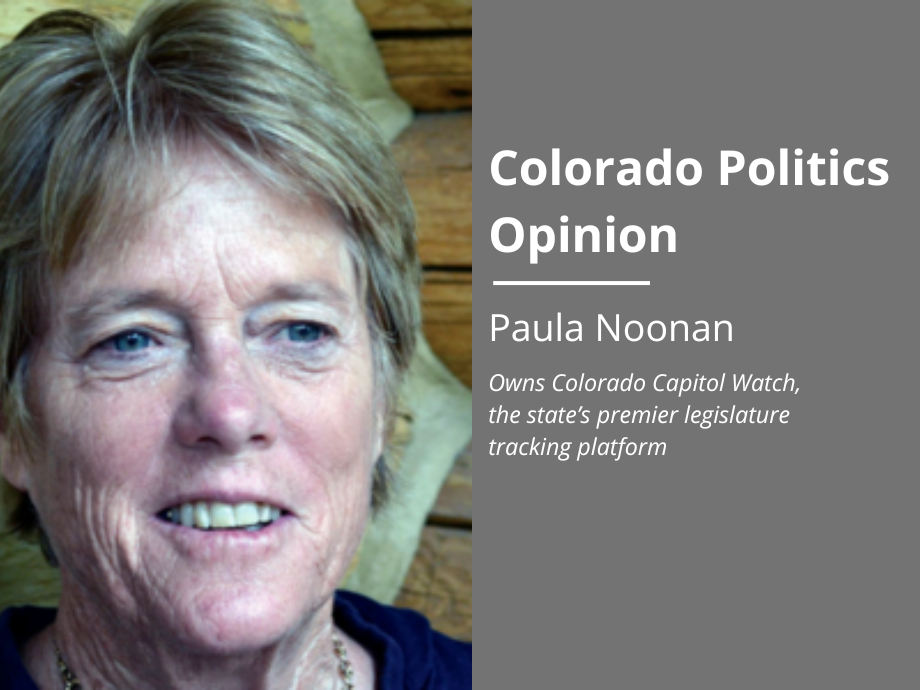
Paula Noonan owns Colorado Capitol Watch, the state’s premier legislature tracking platform.


Dan Haley on the role of oil and gas in Colorado’s energy future | The OpEdge Podcast
Tony Olivero
tony.olivero@gazette.com
Updated 3 hours ago
Dan Haley, executive director of Coloradans for Responsible Energy Development, joins The OpEdge to discuss the role of oil and natural gas in Colorado’s energy future amid the state’s aggressive push toward “net zero.” Haley tells host and investigative columnist...

Rural hospitals don’t want special treatment, just a chance to care for locals | PODIUM
Colorado Politics
colorado-politics@coloradopolitics.com
Updated 1 day ago
By Kevin Stansbury As chief executive of Lincoln Health, my responsibility is simple: ensure the people of eastern Colorado have access to high-quality healthcare close to home when they need it most. That mission has never been easy. Rural hospitals...
Blue states should avoid disasters | Hal Bidlack
Hal Bidlack
hal-bidlack@coloradopolitics.com
Updated 1 day ago
Back when I was teaching political science at the U.S. Air Force Academy (and amazingly to me, a week from this column’s publication will mark 20 years since my retirement from active duty. Where the heck did that time go?)...
Right-to-hunt ballot measure’s a cruel, anti-wildlife solution to a nonexistent problem | GUEST COLUMN
Colorado Politics
colorado-politics@coloradopolitics.com
Updated 2 days ago
By Eric Washburn I love to hunt. Every year I try to hunt big game in Colorado and waterfowl in Louisiana. This year, I applied for five Colorado big game licenses — elk, deer, pronghorn, moose and bighorn sheep. I...

Jena Griswold’s record: corruption, incompetence | Dick Wadhams
Dick Wadhams
dick-wadhams@coloradopolitics.com
Updated 5 days ago
There is no statewide elected official going back decades who is as breathtakingly corrupt and incompetent as Secretary of State Jena Griswold, who is now running for attorney general of all things. And compliant ruling Democrats know it. Their silence...

Kiros exudes why Colorado’s political times are a-changin’ at annual Denver Dems gala | Miller Hudson
Miller Hudson
miller-hudson@coloradopolitics.com
Updated 5 days ago
Among Colorado’s few remaining bipartisan rituals are county and state party dinners. I was particularly intrigued by last week’s Denver Democratic Party’s 2026 Annual Gala, a “New Deal for a New Era.” Their glossy program featured an artist’s Technicolor rendering...

Livestock grazing regulations need flexible updates | Rachel Gabel
Rachel Gabel
rachel-gabel@coloradopolitics.com
Updated 5 days ago
The Bureau of Land Management last updated their livestock grazing regulations the year I graduated from high school. I am 49. Assessing rangeland health can’t be done once and not revisited. This year is a prime example that managers must...

Taxpayers donate to tax increase campaign | Jon Caldara
Jon Caldara
jon-caldara@coloradopolitics.com
Updated 6 days ago
Give the man his due. President Donald Trump has undeniable talents. Colorado politicians are learning. Chief among The Don’s skills is taking the self-serving, ethically dubious behavior of previous politicians and putting it on steroids. Or, to borrow from the...

A summertime all-you-can-eat political buffet | SONDERMANN
Eric Sondermann
eric-sondermann@coloradopolitics.com
Updated 1 week ago
We find ourselves in the doldrums of August with a complete dearth of political news. Yeah, right. These days, that train never stops moving. It is a 24/7/365 express amplified by 24/7/365 media. Let me respond with one of my...
State money diversion scheme the unsurprising downfall of ERBOCES scam | Paula Noonan
Paula Noonan
paula-noonan@coloradopolitics.com
Updated 6 days ago
Falcon School District 49, aka El Paso County School District 49, has finally cut bait, thrown the fishing pole into the lake and sunk the canoe. The longtime enabler of the Education Reenvisioned BOCES’ (ERBOCES) schemes to fund private Christian...