

Bill to hide Colorado college athlete deals from public scrutiny passes Senate committee
Advocates for government transparency were out in force at the state Capitol Monday, testifying on the first of three bills they believe could continue to weaken the state’s open records laws.
First up: TV, radio, print, online media and other transparency advocates testified against House Bill 1041, a bill on name, image and likeness (NIL) contracts for public college athletes who stand to make millions of dollars but with almost no public transparency. The bill creates a new exception to the state’s open records law to block from public records the names of public college athletes and any other personally identifiable information when they sign an NIL deal with a college or university.
House Bill 1041 would allow a public institution of higher education or athletic association to compensate a student-athlete for using their name, image, or likeness in branding or marketing for the institution. The bill won a 6-1 vote from the Senate Education Committee. It will now be heard by the full Senate.
Despite concerns over the lack of transparency, the bill passed the House by a 59-5 vote last month.
The changes to the state’s existing law on NIL were partly prompted by a series of legal settlements and NCAA rule changes that will take effect on July 1, 2025.
Among them is House v. NCAA, which consolidated two previous class-action lawsuits regarding NIL payments last October. Under House, $2.78 billion must be paid to thousands of college athletes who played between 2016 and 2021. The NCAA will pay $1.2 billion, while colleges and universities will pay the rest. Colleges and universities would also be able, but not mandated, to share 22% of their athletics revenue with student-athletes.
Universities profit millions of dollars annually from student sports competitions, with football and men’s basketball being the biggest revenue-generating sports. Those revenues often pay for other athletic programs that do not turn a profit, including sports that put students on the road to the Olympics.
Backers of HB 1041, including co-sponsor Sen. Judy Amabile, D-Boulder, told the Senate Education Committee Monday that the bill requires institutions participating in institutional-funded NIL contracts to report the aggregated data to the Department of Higher Education annually. That information would be broken down by gender and sport-based spending in budget, salary, participation, financial aid, and revenue-sharing payments. She said this is the same data that will be reported to the NCAA through the Equity in Athletics Disclosure Act.
“Make no mistake, this bill provides transparency into NIL rights payments to student athletes,” Amabile said. But she also said that by making a student athlete’s NIL compensation public, it makes them subject to those who might prey upon them. Restricting public access to student athlete compensation allows Colorado universities to be on a level playing field with other universities around the country, which she said is “essential for recruiting and competitive balance.”
Katie Gleason, associate university counsel at the University of Colorado-Boulder, told the committee eight states have similar protections in their laws to HB 1041.
But the Washington Post reported last October that 24 states require public universities to disclose NIL deals. Another 26 states, including Colorado, require that student-athletes disclose those deals to their athletic departments. The Post reported that CU Quarterback Shedeur Sanders had NIL deals with Google, KFC and Overtime valued at $400,000.
John Meeks of Brownstein, Hyatt, Farber & Schreck, testifying on behalf of Colorado State University, said public disclosure of personally identifiable Colorado student NIL compensation puts Colorado students in universities at a competitive disadvantage. “Other universities would know exactly what additional financial compensation might attract a student athlete away and would reduce student athlete bargaining power when they’re looking to transfer to another school.”
Senate Minority Leader Paul Lundeen, R-Monument, questioned what would happen if a student athlete worked with a predatory agent and got a bad contract.
The answer, for now, appears to be that it would be up to the institutions. CU Athletic Director Rick George told the committee about possible federal legislation, but as it currently stands an agent could be a basketball coach, he said, so the institution would have to be careful and watch closely what kinds of fees the athlete is being charged by that agent.
Members of the media pleaded for more transparency, not less. Tony Kovaleski of Denver7 told the committee that open records have been the foundation of public accountability. “We’re at a time right now where transparency and accountability are perhaps more important than ever. If you choose to support the exclusion of this information, I believe you’re setting a dangerous precedent.”
If an athlete accepts public money, transparency comes with it, Kovaleski said. “Don’t be fooled by claims that this provides transparency, because it does not.”
Tim Regan-Porter of the Colorado Press Association also urged the committee to make the information more public. “Barring public disclosure of NIL contract details, including amounts, is dangerous, unnecessary, and a step in the wrong direction for transparency.”
He noted those who back the bill claim keeping this information secret protects students. But state institutions will now pay students to use their names and images to promote the university, regardless of the fungible source of money. “Doing this in secret doesn’t protect the student, it exposes them to potential abuse at a minimum contract,” Regan-Porter said.
So, who protects secrecy? He explained that it protects the system from accountability, from scrutiny and from ensuring fairness, he explained.
Regan-Porter noted the deal made for Carson Beck, a University of Georgia football player who got a $3 million NIL contract. “That’s not a mere student job or simple license agreement,” he said. “That’s a major contract brokered by agents, using state institutions to funnel money to kids.”
He also asked what will happen with the hundreds of other athletes whose NIL deals might not be fair, or about potential manipulation and favoritism that “inevitably creep into unregulated, hidden systems? This bill keeps all of that in the shadows.”
Eric Maxfield, an attorney representing the Colorado Freedom of Information Coalition, said the potential beneficiary of closure of records is higher ed institution. “Make no mistake, because closure gives the institution an advantage in negotiations with student athletes,” he said. And closing off information about contracts will cover up gender inequity, which is prohibited by Title IX, he said.
Aggregate data is not enough, said John Vahlenkamp, the regional manager for Prairie Mountain Media. “These are not merely student academic records being held by the university,” he said. They are contracts for large sums that the university uses during its business.
Excluding these contracts from the Open Records Act serves only to protect the interests of taxpayer-supported institutions, Vahlenkamp said. “If anyone wants to hide misconduct or even an egregious error, this bill in its current form provides cover” and is yet another obstacle to the press in its efforts to hold public institutions accountable.
NIL could lead to bidding wars, kickbacks to families or contractual perks, such as a guaranteed diploma or even not having to go to class. All are possible, and would be shielded from public scrutiny, according to Sean Nethery, senior vice president for programming at Colorado Public Radio.
“It would be a short walk from shielding the identity of athletes receiving payments to shielding the identity of the people or companies writing the checks,” Nethery said.
An amendment from Lundeen would have removed license fees from the list of information that would be kept secret, but the committee rejected it.

Colorado to participate in Great American State Fair in Washington
Marissa Ventrelli
marissa.ventrelli@coloradopolitics.com
Updated 10 hours ago
Visitors to Washington, D.C., for the country’s 250th anniversary will have the opportunity to learn about Colorado’s natural beauty and culture during the Great American State Fair, a World’s Fair-style event that opened Thursday at the National Mall. While all...
Colorado health officials say federal budget adds pressure to already stressed system
Marissa Ventrelli
marissa.ventrelli@coloradopolitics.com
Updated 10 hours ago
As the first anniversary of H.R. 1 approaches, Colorado Democrats and hospital executives say the law’s Medicaid reductions and eligibility rules are accelerating financial stress in a system where many facilities were already operating on the brink. Signed by President...
Phil Weiser leading Michael Bennet in Colorado’s Democratic gubernatorial primary, internal poll finds
Ernest Luning
ernest.luning@coloradopolitics.com
Updated 5 hours ago
Attorney General Phil Weiser holds a lead over U.S. Sen. Michael Bennet among likely voters less than a week before ballots are due in Colorado’s Democratic gubernatorial primary, according to a new poll released Thursday by a group backing Weiser....
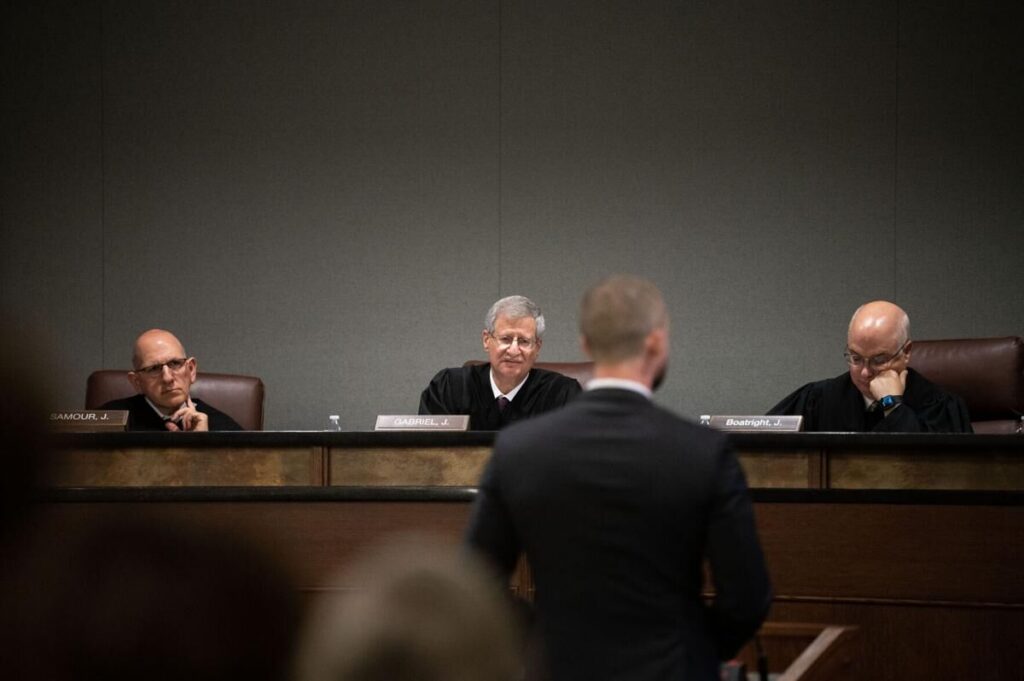
Colorado justices suggest father entitled to appeal of custody decision
Michael Karlik
michael.karlik@coloradopolitics.com
Updated 13 hours ago
Members of the Colorado Supreme Court signaled strongly on Tuesday that a father deserved some avenue for challenging a temporary child custody order that no lower court believed it could review due to the unusual circumstances of the case. Because...
Colorado justices agree fraud claims belong in corporate dispute
Michael Karlik
michael.karlik@coloradopolitics.com
Updated 15 hours ago
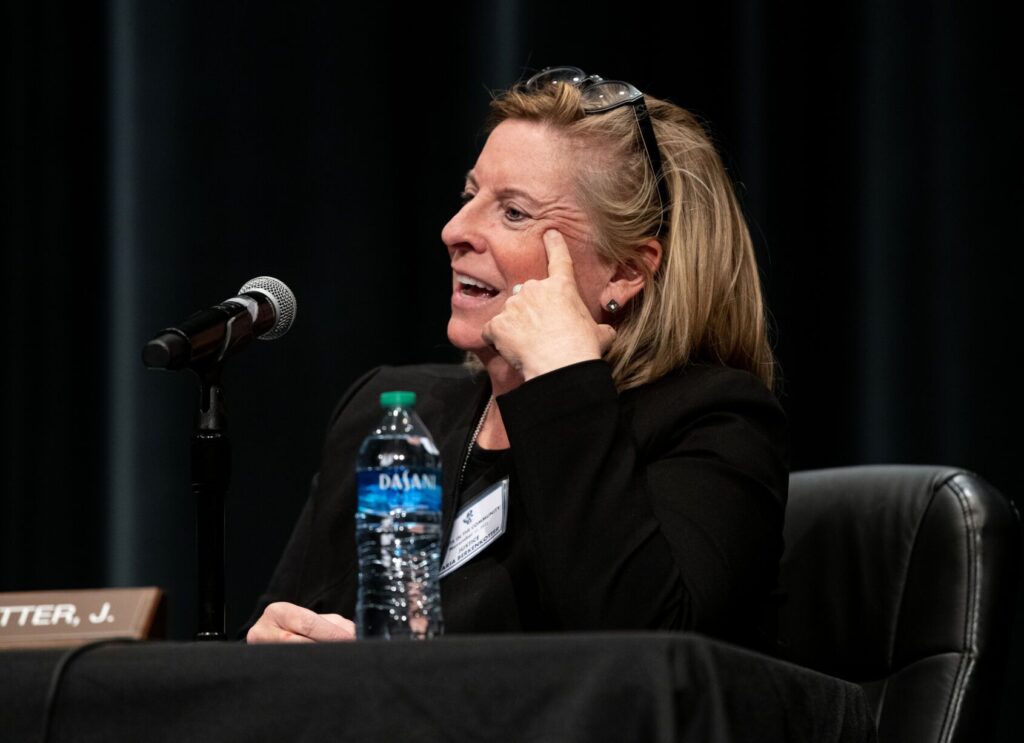
The Colorado Supreme Court decided on Tuesday that a corporate plaintiff validly pursued fraud claims over conduct that was not covered by a contract or by a set of interrelated business agreements leading up to the contract. Previously, the Court...
Colorado Supreme Court says intimate messages irrelevant to assault case
Michael Karlik
michael.karlik@coloradopolitics.com
Updated 16 hours ago
The Colorado Supreme Court decided on Tuesday that a Douglas County judge acted reasonably by blocking evidence of a defendant’s BDSM-related conversations with the victim in his trial for assault and false imprisonment. While the Court of Appeals believed that...
Postmaster general spars with Senate Democrats over mail-in ballot restrictions
Molly Parks
molly.parks@washingtonexaminer.com
Updated 17 hours ago
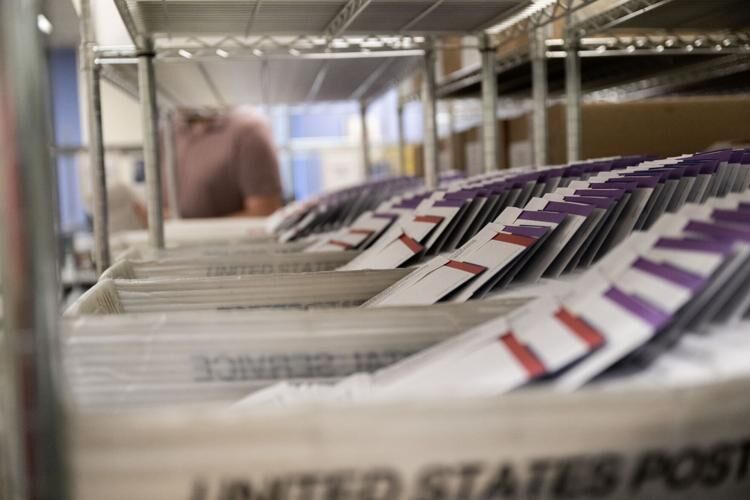
Senate Democrats sparred with Postmaster General David Steiner on Wednesday over the U.S. Postal Service’s move to stop delivering mail-in ballots in states that don’t hand over their voter rolls to the federal government. Steiner, who has stayed out of...

Douglas County water plan entering public review phase
Nicholas Fogleman
nicholas.fogleman@denvergazette.com
Updated 14 hours ago
After more than two years of formal work, Douglas County officials are moving into the public review phase of a countywide water plan they say will help guide future development and water resources through 2050. The Douglas County Water Commission...

Douglas County cracks down on illegal scooter, off-road vehicle use
Nicholas Fogleman
nicholas.fogleman@denvergazette.com
Updated 14 hours ago
Douglas County joined a growing list of local governments regulating electric scooters and motorcycles, setting standards and penalties for misuse. County commissioners approved an ordinance Tuesday regulating off-highway vehicles and low-powered scooters following broad community support and a presentation from...
Homeless recruits of ‘The Program’ say they were told to sign NDAs amid investigations in Colorado
David Migoya
david.migoya@gazette.com
Updated 1 day ago
Several formerly homeless people — each drawn into an Aurora-based enterprise known as “The Program” that promised free housing and cash in return for letting a home-health business administer prescriptions they were given — said they were pressed into signing...