

Colorado Democrats want to raise tax obligation, keep TABOR refund to pay for school meals
Colorado Democrats want to increase the tax obligation of Coloradans earning at least $300,000 and allow the state to keep dollars due to be refunded to residents under two ballot proposals they say would fix a $50 million deficit in a program meant to provide free meals to all students.
If the ballot measures succeed, taxpayers under this income bracket will pay an average of $385 more in tax obligations for individuals and $570 for joint filers.
The proposals would generate about $107 million a year.
Approved by voters in 2022, Proposition FF increased the tax obligations of some residents by adding back deductions when computing their state tax obligations in order to pay for the “Healthy School Meals for All Program,” which offers free breakfast and lunch to all K-12 public school students.
The program provided 100 million meals to students in its first year, but state policymakers underestimated its cost.
Initially, state analysts said the program would cost up to $115.5 million in fiscal year 2023-2024 and anywhere from $71.4 to $101.5 million the following year. However, the actual figures came in at $166 million and more than $131 million in those two years, respectively.
The cost overrun — resulting from a combination of unforeseen and anticipated challenges, inflation, discrepancies in estimates and federal changes — prompted complaints from lawmakers, who earlier noted that previous analyses already showed that the “math doesn’t work, and nobody listened.”
Because of the $50 million deficit, key elements of the program, including pay increases for school cafeteria workers and partnerships between schools and local agriculture producers, have not been implemented.
The amount of revenue the tax changes brought in actually exceeded the estimate by $12 million, and under the Taxpayer’s Bill of Rights, that must be returned to taxpayers — unless voters allow the state to retain that amount.
$570 more in taxes for joint filers
Now lawmakers want to go back to the voters and ask them to further increase the tax obligation of people earning at least $300,000.
House Bill 1274, sponsored by Rep. Lorena Garcia, D-Denver, and Sen. Dafna Michaelson Jenet, D-Commerce City, proposes two ballot measures, one of which would allow the state to retain the $12.4 million in revenue collected above the initial estimate.
Under the current law enacted in Proposition FF, Coloradans with an adjusted gross income of at least $300,000 must add back a portion of the federal standard or itemized deductions for the purposes of computing the state taxable income. Currently, deductions above $12,000 are required to be added back.
HB 1274‘s second ballot measure would change that deduction threshold to $1,000 for single tax filers and $2,000 for joint filers.
The change would apply to about 194,000 taxpayers with incomes greater than $300,000 in tax year 2026.
The bill would also create a cash reserve in the Healthy School Meals for All Cash Fund.
Garcia said the state is facing a “now-or-never situation,” especially considering the potential for changes at the federal level that could decrease the number of students eligible to receive free or reduced meals through the U.S. Department of Agriculture’s Community Eligibility Provision. The federal program provides reimbursements for three-quarters of the state’s school districts.
“We know that a lot of work went into Prop FF, and we had hoped sincerely that our estimates of funding needed for FF was on the mark, but we have had a number of new factors emerge since it was passed in 2022,” Garcia said, noting record-high food costs, higher program participation and changes to the federal reimbursement program.
“All of these things mean our money has not gone as far as we need, and we face new uncertainties that make this bill very timely,” she added.
If the measures don’t pass, the meals program will be unable to continue, putting thousands of students at risk of going hungry, Garcia said.
Eight other states have universal school meal programs, Anya Rose of Hunger Free Colorado told Colorado Politics.
Like Colorado, those programs also faced funding challenges due to rising food costs and federal changes. Those states found a way to find money in their budgets to cover costs — something Colorado can’t do in the same manner due to TABOR, Rose said.
“It’s clear that the only way to provide stability for this program in uncertain times is to raise additional funds and build a reserve to help weather federal policy changes while providing meals to students without interruption,” she said.
A hard lesson
Rep. Jennifer Bacon, D-Denver, said Proposition FF taught lawmakers an important lesson — before putting a measure on the ballot, they need to seriously consider whether the state can, in fact, afford it.
“We do not have an infinite pool of money in this state,” she said.
Bacon nonetheless praised the program’s goal to provide students with fresh, healthy Colorado-grown food.
“Not all families need free meals,” argued Rep. Lori Garcia Sander, R-Eaton.
As a former principal, she said the voters who approved Proposition FF would be “appalled” if they saw how much food goes to waste in school cafeterias.
She also challenged the argument that the program would help reduce “stigma,” as there are already measures in place to ensure students and staffers don’t know which students qualify for free and reduced meals.
“Given the economy, I have to ask: What are the must-haves versus want-to-haves?” she said. “I don’t believe the majority of Colorado’s taxpayers will have the appetite for this this year.”
Supporters say program erases stigma
Supporters made several claims in support of the bill.
Dan Sharp, the school nutrition director of Mesa County’s School District 51, said the program reduced the stigma against low-income students by allowing everybody to receive free meals. Before the program, many students eligible to receive free or reduced meals chose to go hungry because they didn’t want their peers to find out they were poor, he claimed.
District 51 has seen a 40% increase in meals served to students since the program was first implemented in 2023.
Zander Kaschub of the Jeffco Education Support Professionals Association said the increase in meal demand has put a strain on cafeteria workers, especially in districts that can’t afford to hire additional staffers to manage the increased workload.
“This bill directly supports food service workers by providing direct funding that school districts can use for wage increases,” Kaschub said. “We cannot have a strong, sustainable school meal program without a strong, sustainable workforce.”
Others, like Rachel Landis of the Durango-based Good Food Collective, said the program allows schools to partner with farmers and ranchers, providing the latter with a stable and reliable source of income.
The House Education Committee advanced the bill on a 7-5 on a party line vote. Its next stop is the House Finance Committee.

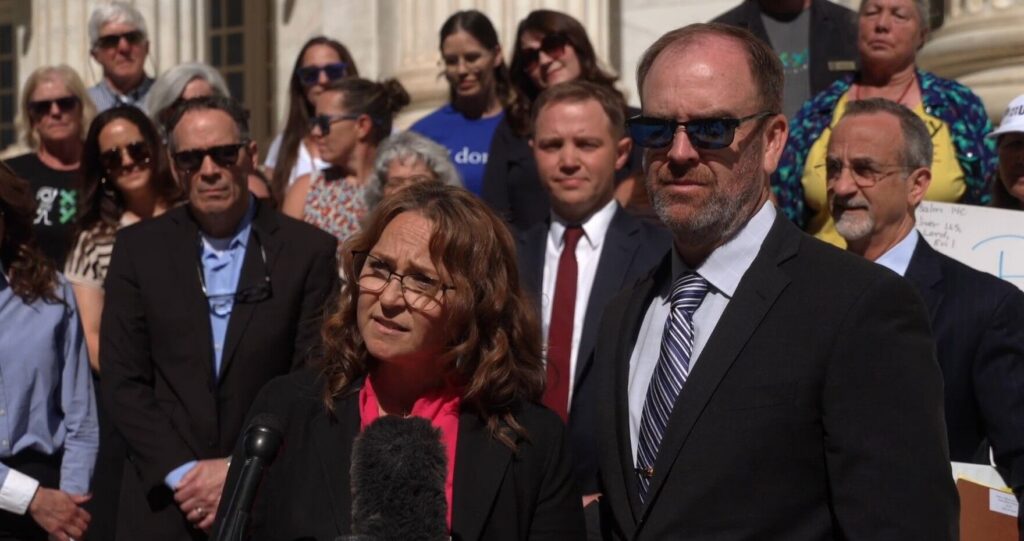
Federal judges hear arguments over Colorado school district’s gender identity rooming policy
Nicholas Fogleman
nicholas.fogleman@denvergazette.com
Updated 18 hours ago
A panel of judges at the 10th U.S. Circuit Court of Appeals heard arguments Tuesday in a lawsuit challenging JeffCo Public School’s policy of assigning students to overnight accommodations on school trips based on gender identity. The lawsuit, filed in...

Colorado legislators ask voters to forfeit thousands in TABOR refunds, redirect money to school spending
Marissa Ventrelli
marissa.ventrelli@coloradopolitics.com
Updated 8 hours ago
A Democratic‑backed proposal to direct money to K‑12 schools using Taxpayer’s Bill of Rights dollars is headed to the ballot, setting up a major debate over taxpayer refunds and long‑term education funding. If voters approve it, the average Coloradan would...
Trends and challenges in higher education | Tom Cronin
Tom Cronin
tom-cronin@coloradopolitics.com
Updated 3 days ago
Americans are both proud and critical of our higher-education system. More American universities are highly ranked than those in other countries. More international students come here than to any other country. And basic research at U.S. universities has earned more patents and Nobel Prizes than elsewhere. Yet...
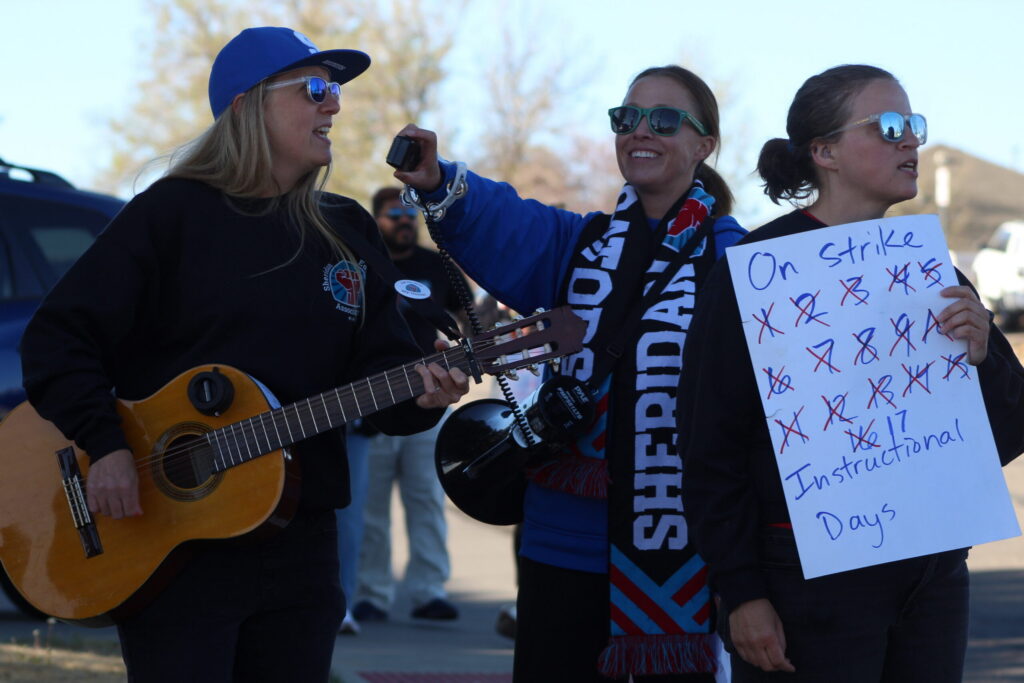
Sheridan school board approves teachers’ contract, ending historic strike
Nico Brambila
nico.brambila@denvergazette.com
Updated 1 week ago
The Sheridan teachers strike that languished through much of the month is officially over. The Sheridan School District Board of Education unanimously voted Tuesday to accept the union contract. “It has been a long road to get to today,” Sheridan...
Union presses Douglas County School District to negotiate first contract in 13 years
Nicholas Fogleman
nicholas.fogleman@denvergazette.com
Updated 2 weeks ago
A Douglas County teachers’ union is urging the Douglas County School District to begin negotiations for a collective bargaining agreement after going for more than 13 years without one. The Douglas County Federation of Teachers (DCF) asked the Douglas County...
Cherry Creek School Board member resigns after ‘racialized remarks,’ district says
Nico Brambila
nico.brambila@denvergazette.com
Updated 2 weeks ago
Editor’s Note: This story has been updated to include a response from former board member Terry Bates, which was received after publication. Cherry Creek School Board Member Terry Bates resigned after making “racialized remarks,” the district announced Friday. District officials...

Proposal to use TABOR refunds for education gets preliminary OK in Colorado
Marianne Goodland
marianne.goodland@coloradopolitics.com
Updated 3 weeks ago
KEY TAKEAWAY: Colorado residents will lose more than $7,000 in TABOR refunds over 10 years under a Democratic proposal to divert the money to K-12 education. If approved by the full Senate, its next stop is the House. Colorado senators...
Colorado taxpayers would lose thousands in TABOR refunds under Democrats’ proposed ballot measure
Marianne Goodland
marianne.goodland@coloradopolitics.com
Updated 3 weeks ago
A nonpartisan analysis of a proposed ballot measure that seeks to increase public education spending by tapping Taxpayer’s Bill of Rights refunds shows that about 75% of what would otherwise go to Colorado residents wouldn’t actually go to K-12 schools....

University of Denver closes in on carbon neutrality goals
Deborah Grigsby
deborah.smith@denvergazette.com
Updated 3 weeks ago
The University of Denver has notched some pretty big goals recently, and they are closing in on another. But this time, it’s off the ice. The goal? Over the next 12 to 24 months, DU, in partnership with Pivot Energy,...

DPS committee backs bell-to-bell cellphone ban
Nico Brambila
nico.brambila@denvergazette.com
Updated 3 weeks ago
Students might have to ditch their cell phones if the Denver Public Schools Board of Education follows a recommendation to adopt a bell-to-bell cellphone ban. A Communication Devices Advisory Committee was formed earlier this year to comply with a new...