

Denver Mayor Mike Johnston to testify before Congress on his biggest stage yet
Denver Mayor Mike Johnston will sit behind a microphone on Wednesday in front a row of U.S. lawmakers on an elevated platform seated behind nameplates that gleam under bright overhead lights to give an account of his handling of the immigration crisis that spilled into America’s interior cities.
Summoned by the U.S. House Committee on Oversight and Government Reform also because of his vow to defy President Donald Trump’s mass deportation plans, this is the perhaps the biggest stage Johnston has graced.
So, how did the former school teacher a small eastern plains town find himself here?
The seeds were planted before Johnston was sworn in as mayor roughly six months after Denver began seeing an influx of immigrants, who illegally crossed the southern border into El Paso, Texas. Under the leadership of former Denver Mayor Michael B. Hancock, city officials decided to assume the responsibility for the unfolding humanitarian crisis.
Johnston continued this policy after being sworn in to office in July 2023.
As immigrants — many from South and Central America — began pouring into the city, Hancock declared two states of emergency and converted rec centers into temporary shelters.
Many of the immigrants came with little more than the clothes on their backs.
An unprecedented number of the new arrivals were Venezuelans fleeing the political instability and economic collapse in their home country. Nearly eight million have fled over the past decade under President Nicolás Maduro’s regime, with more than 500,000 estimated to be living in the U.S.
Venezuela’s once booming oil industry had made the country one of the richest in Latin America. When displaced Venezuelans began arriving in the U.S., they did not have a support system, as other immigrants have had.
Since the crisis began, Denver has helped nearly 5,000 immigrants file for asylum and work permits, said Jon Ewing, a Johnston spokesperson. It is unknown many have been approved.
Without work authorization, Venezuelans across the U.S. have had to rely on the goodwill of host cities, such as Boston, Chicago and New York.
On Wednesday, Johnston will be flanked by the mayors of these cities, as they testify before Congress.
‘Ground zero’ of the illegal immigration crisis
Johnston’s appearance before Congress seems inevitable, given the trajectory of the unfolding crisis, the city’s response, the activities of a Venezuelan gang that had taken over two Aurora apartment complexes and Trump’s return to the White House.
Amid the crisis, Johnston took on the role as the de facto spokesperson for the interior cities, as he appeared before national TV and visited the nation’s capital to press their case.
In pushing for federal action on illegal immigration, Johnston often pleaded to Congress and the White House for more funding for cities grappling with the crisis, work authorization and a “coordinated entry program.”
The mayor notably stayed clear of talking about “border security,” an omission that served to underscore the ideological lenses with which Democrats and Republicans view the border crisis.
Last year, before city crews dismantled dozens of tents and relocated hundreds of homeless immigrants at an encampment that sprang up near Zuni Street, Johnston visited the site and spoke in Spanish to the refugees who encircled him.
In a press junket before razing the encampment, Johnston — along with the Democratic mayors of Chicago and New York City — blasted Texas Gov. Greg Abbott for what they called the “reckless and unsafe” political strategy of transporting droves of immigrants to their communities, threatening local economies.
Dubbed “Operation Lone Star,” Texas has transported more than 100,000 immigrants to Chicago, Denver and New York City over the last two and half years, according to Abbott’s office. The roughly 19,200 immigrants Texas bused to Denver alone represented about half of the people who arrived in the city.
“Denver finds itself right now at ground zero in trying to resolve and respond to the migrant crisis,” Johnston said in December 2023. “We have had at this point more migrant arrivals to our city than any city in America, per capita.
“And that is not because there is a thoughtful or coordinated strategy to entry. It is because we are the first big city north of El Paso.”
Located about 640 miles north of El Paso, Denver also attracted Tren de Aragua (TdA) gang members, who embedded themselves with with immigrants fleeing Venezuela.
Originally a Venezuelan prison gang, TdA has been involved in a myriad of criminal activities that include drug trafficking, kidnapping, money laundering, extortion and human trafficking, particularly of immigrant women and girls.
The armed TdA gang members who barged into an Aurora apartment last summer and were captured on a viral video last summer kicked up a political firestorm that drew the attention of then-presidential candidate Trump, who promised to crack down on the gang with a mass deportation effort.
Aurora Mayor Mike Coffman has blamed Johnston’s policies for allowing the gang taking root in Colorado’s third-most populous city.
These actions, and others, eventually thrusted Johnston into the national spotlight.
‘Denver has become a border city’
In the two years since 90 immigrants were dropped off downtown and left to wander in the cold, more than 40,000 immigrants have come to Colorado’s largest city. Although the city has received some state and federal funding, Denver taxpayers have assumed the bulk of the nearly $90 million cost.
Bus, plane and train tickets purchased for immigrants to travel elsewhere suggest that about half have stayed. That’s the equivalent of adding a city the size of Golden.
Historically, immigrants typically chose gateway cities like Chicago, Los Angeles and New York City. Early on, the prevailing theory in Denver for the city’s draw was its proximity to El Paso, Texas, its pivotal transportation hub and its status as a “sanctuary city.”
Generally speaking, a sanctuary city is a designation given to municipalities and counties that establish policies to discourage local law enforcement from reporting an individual’s immigration status to federal authorities.
State and city officials have long denied this.
But it’s the reason lawmakers called Johnston to Washington D.C.
While local officials were struggling to understand why Denver had emerged as a destination for immigrants at the border, authorities in El Paso Texas pointed to another reason — the Colorado city’s promise of free shelter and onward travel.
“There’s a pull factor created by this, and the policies in Denver for paying for onward destinations,” Irene Gutiérrez, executive director of El Paso County Community Services in west Texas, has said.
Local officials denied the city’s role in attracting immigrants to Denver, but later revised its length-of-stay policy, reducing the free stay at shelters from weeks to days.
With thousands of immigrants temporarily living in hotels and shelters last winter, Johnston warned Denver had reached a breaking point that threatened the city’s fiscal health that — if left unabated — could reach $180 million. Though those costs did not materialize, Johnston implemented cuts to city departments and services, such as cutting DMV hours and skipping flower planting to save money.
Political consultants — on both sides of the aisle — said that, given the entrenched partisanship in Washington, Johnston is unlikely to come out of the hearing unscathed.
But if he is able to hold his ground and stay cool under pressure, that could be a win, said Mike Dino, a Democratic political analyst and principal at Patton Boggs LLP.
“I don’t think he’s going to get out of it with an upper hand in what is probably a stacked deck,” said Dino.
But having already made unsuccessful attempts for Colorado governor in 2018 and the U.S. Senate in 2020, the hearing could further shape Johnston’s political stature.
“Ultimately, I think the mayor has a good story to tell,” Dino said.
With Johnston’s policies taking center stage, it remains to be seen whether he would quibble over what constitutes a “sanctuary city” or move beyond the label, Dino said and Dick Wadhams, a Republican political consultant and former Republican state chair, said.
Johnston’s administration has hired a law firm — at a cost capped $2 million for a year — to help him prepare for the hearing.
Wadhams recognized the balancing act Johnston would have to pull off.
“He’s caught between a rock and a hard place,” Wadhams said.
But Wadhams was quick to add that Denver’s welcoming stance likely worsened a problem that traditionally had been felt in border communities.
“Denver has become a border city due to the policies Mayor Johnston has implemented,” Wadhams said.

After internal strategy sessions, Colorado Senate to take up $46B budget debate
Marianne Goodland
marianne.goodland@coloradopolitics.com
Updated 1 hour ago
Tax Day carries added weight at the state Capitol this year, as the Senate prepares to take up the 2026‑27 budget on Wednesday following a day of preparations by both Republican and Democratic caucuses. Senators are expected to raise some...
Colorado Supreme Court weighs trans rights case involving Children’s Hospital and federal threats
Michael Karlik
michael.karlik@coloradopolitics.com
Updated 14 hours ago
Some members of the Colorado Supreme Court expressed discomfort on Tuesday with having to decide whether to order Children’s Hospital Colorado to resume providing certain services to transgender children, which could trigger a “death sentence” if the federal government imposes...
Colorado justices weigh constitutionality of unique disclosure requirement for ballot measures
Michael Karlik
michael.karlik@coloradopolitics.com
Updated 23 hours ago
Members of the Colorado Supreme Court considered on Tuesday whether a unique feature of the state’s campaign finance system categorically violates the First Amendment by requiring the disclosure of a ballot measure committee’s legal representative on advertisements. No on EE...
Appeals court shuts down Boasberg contempt inquiry into Trump administration over El Salvador deportations
Kaelan Deese, Washington Examiner
kaelan.deese.washington.examiner@gazetteedit.wpenginepowered.com
Updated 23 hours ago
A federal appeals court on Tuesday ordered an end to U.S. District Judge James Boasberg’s criminal contempt inquiry into Trump administration officials over last year’s deportations of Venezuelans to El Salvador, delivering a second major rebuke to Boasberg and foreclosing...

Colorado marijuana regulators pledge crackdown on intoxicating hemp
Christopher Osher
chris.osher@gazette.com
Updated 24 hours ago
Citing potential tax avoidance, ‘serious risk to public safety,’ Marijuana Enforcement Division warns companies about swapping illegal chemically converted hemp for marijuana This article was produced for ProPublica’s Local Reporting Network in partnership with The Denver Gazette. Colorado regulators announced...
Polis pushes back after Trump administration again denies federal disaster aid
Marissa Ventrelli
marissa.ventrelli@coloradopolitics.com
Updated 17 hours ago
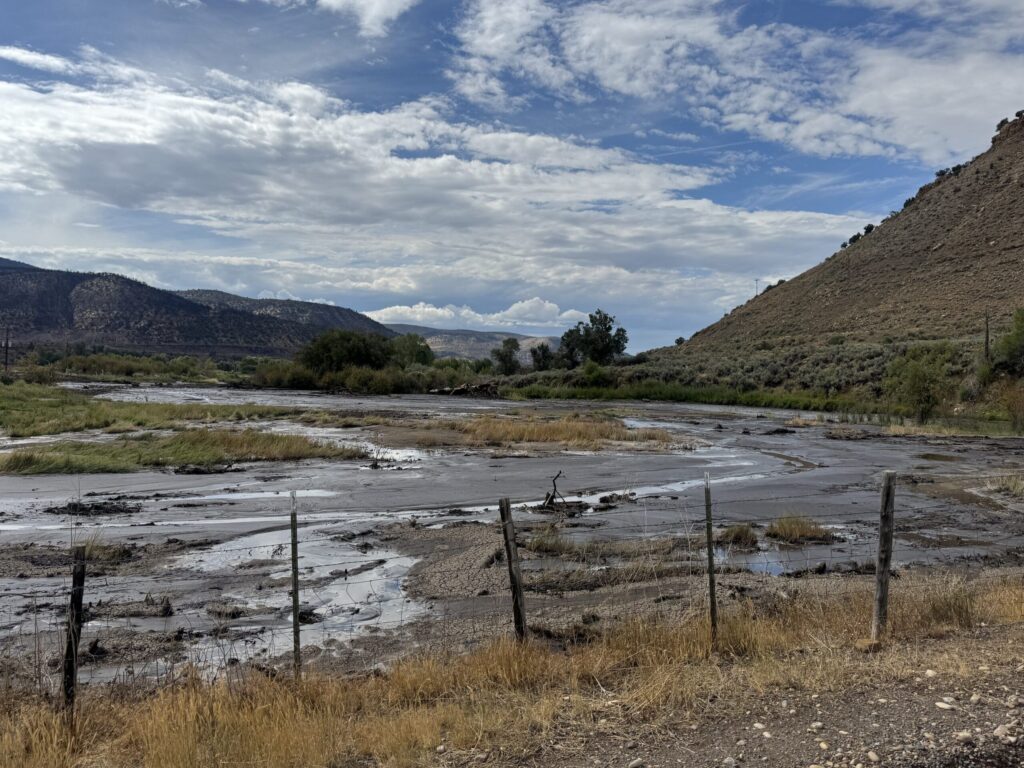
A dispute over federal disaster aid escalated Monday as Colorado Gov. Jared Polis faulted the Trump administration for rejecting the state’s appeals for assistance following last fall’s fires and flooding. The state initially filed for a Major Disaster Declaration for...

Colorado justices block injured plaintiff from suing, despite alleged concealment by Manitou Springs
Michael Karlik
michael.karlik@coloradopolitics.com
Updated 2 days ago
The Colorado Supreme Court ruled on Monday that a woman injured on a Manitou Springs sidewalk could not sue the allegedly responsible entity, the city of Colorado Springs, even though she did not learn until too late of an agreement...
Rep. Eric Swalwell of California says he will resign after sexual misconduct allegations
Kevin Freking
kevin.freking@associatedpress.com
Updated 2 days ago
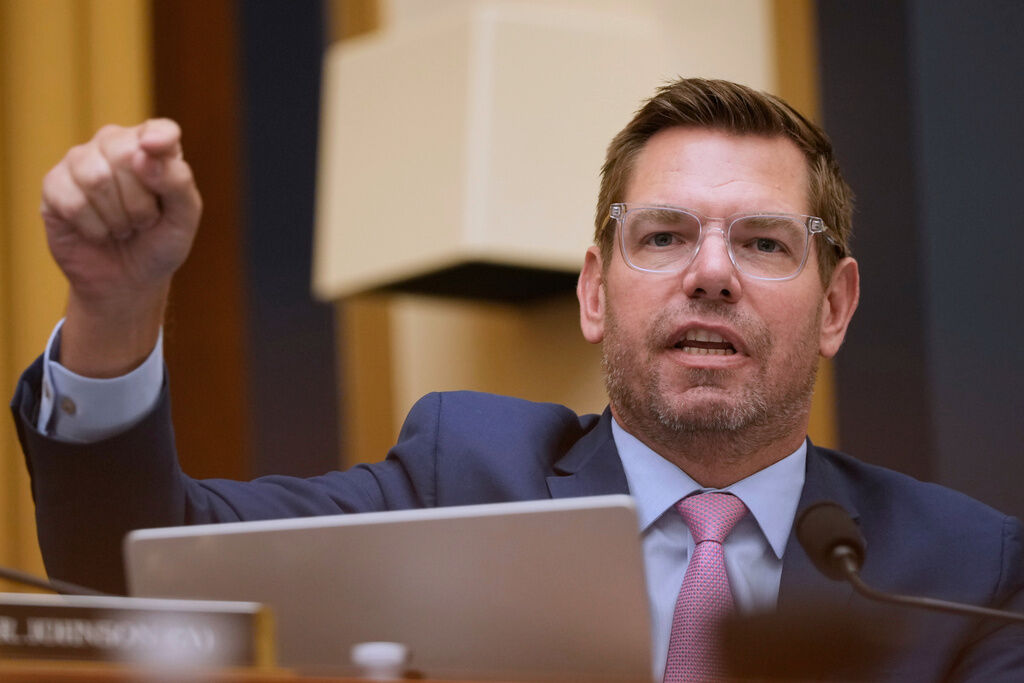
WASHINGTON (AP) — Democratic Rep. Eric Swalwell of California announced Monday he will resign from Congress following sexual assault and misconduct allegations that prompted loud bipartisan calls for him to step down. The decision caps a swift political fall for...
Denver continues to explore moving to a biennial budget
Deborah Grigsby
deborah.smith@denvergazette.com
Updated 1 day ago
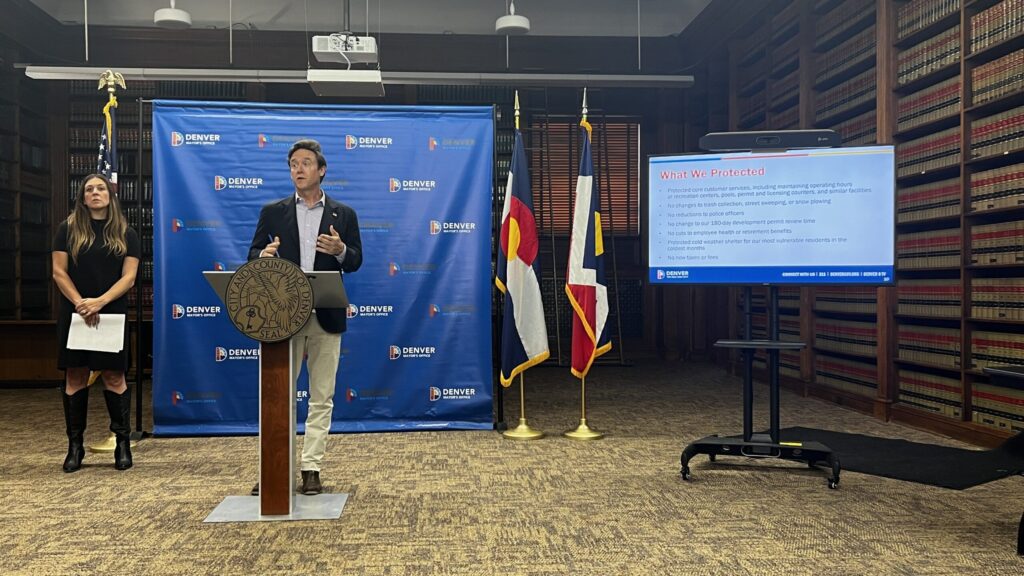
There’s continued momentum to shift the city of Denver to a biennial budget cycle, and if approved by the City Council, the measure would be sent to voters on the November 2026 ballot. The idea, first put forth in December,...
Colorado saw job losses for the first time since pandemic
Bernadette Berdychowski
bernadette.berdychowski@denvergazette.com
Updated 22 hours ago
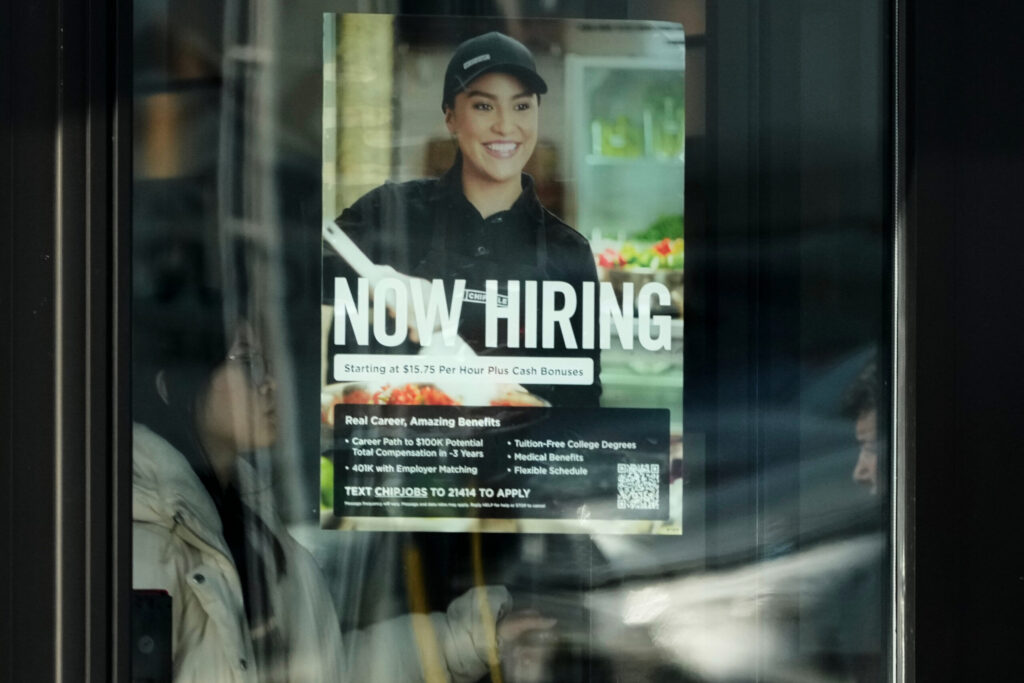
Colorado’s job market last year appears to have been dimmer than it was originally believed to have been, new state data revisions show. The labor market wasn’t slowly growing, but rather it contracted in 2025. The state saw job losses...