

Democratic bill cutting reimbursement rates for Colorado’s urban hospitals sparks debate, backlash
A bill that won a party-line vote from a Colorado House committee aims to cap the price insurers pay urban hospitals for health services for state employees and those insured in the small group market.
As introduced, House Bill 1174 would set reimbursement rates that health insurance carriers pay to mostly urban hospitals for covered services. There are about 200,000 insured in the small group market and 60,000 state employees, which is about 6% of the total health insurance market.
The bill won an 8-4 vote from the House Health and Human Services Committee over the objections of businesses and healthcare providers, including the largest urban facilities to some of the state’s smallest rural healthcare providers. The bill also raised worries from some that it intends to shore up one part of the state’s safety net at the expense of other parts of that system.
Supporters insisted it would save the state significant dollars and rejected arguments it would result in cost-shifting. Some small business owners also testified that the proposal would help them.
Rep. Kyle Brown, D-Louisville, one of the bill’s sponsors, admitted he gave the hospitals and other stakeholders little time to review the proposal before its introduction, claiming the industry’s only interest is in killing it. He added he would consider technical amendments but indicated he isn’t interested in more substantial changes.
The bill’s fiscal note estimates savings of $65 million in state general funds annually, starting in the 2026-27 fiscal year.
But an amendment added to the bill during the committee hearing on Wednesday also showed that a significant part of the savings would pay health insurance premiums for state employees.
The Department of Personnel and Administration will decide how that would work, according to HB 1174 co-sponsor Rep. Emily Sirota, D-Denver, a member of the Joint Budget Committee. In the Senate, JBC Chair Sen. Jeff Bridges, D-Englewood, is one of the prime sponsors.
Sponsors: Bill would save the state money
According to the state’s compensation report issued in January, state employees will pay as much as 10% more for their health insurance in 2026. The state’s share for health, dental, and life coverage is $500 million, including $276.9 million in general funds. Most employee-only health, life and dental premiums for the next year are around $800 monthly.
HB 1174 targets large, urban hospitals, exempting most rural health care providers, with some pointing out that they are on the edge of insolvency. The bill does not exempt 11 rural hospitals that are not critical access hospitals — meaning those with fewer than 25 beds.
Speaking in favor of HB 1174, Sirota said the bill would save the state money on health care by capping hospital prices.
Should the state pay nearly three times what Medicare pays for health care? Sirota asked.
Currently, Medicare pays about 73% of the cost of hospital health services.
Under HB 1174, the state would pay about 20% above what Medicare pays urban hospitals for the same services.
The model for HB 1174 comes from a 2017 law in Oregon.
The 2017 measure applied to two dozen of that state’s largest urban hospitals. The Oregon law, however, had much higher price caps — 200% of Medicare payments for in-network services and 185% for out-of-network — than is contained in HB 1174. The price caps saved about $107.5 million over 27 months.
Sirota pointed out that in 2017, Oregon, which had a $1 billion budget shortfall, passed the in-network and out-of-network reimbursement limit on payments to its large and urban hospitals. All of the state’s hospitals remained in-network, and there is no evidence that hospitals increased prices to compensate for revenue losses, she said.
However, that law may also have played a small part in closing the only hospital in the state’s third-largest city, including the only emergency room.
PeaceHealth Sacred Heart Medical Center University District in Eugene, home to the University of Oregon and about 1,800 Oregon state employees, closed in December 2023, citing a $24 million deficit. It was among the hospitals included in the 2017 law that went into effect in 2019 for teachers and 2020 for state employees.
Profitable or not profitable?
The issue underpinning HB 1174 is the state Department of Health Care Policy and Financing’s long-time claim that Colorado hospitals rake in hundreds of millions in profits every year.
That’s not the situation today, according to the latest HCPF hospital transparency report. In its 2024 report, which looked at 2022 data, the agency said, “Numerous indicators show much of Colorado’s hospital industry is healthy, except for the state’s rural hospitals and the state’s largest safety net hospital, Denver Health, disproportionately impacted by the pandemic and the influx of migrants.”
The pandemic took a toll on all hospitals, including those that had been the most profitable before the pandemic. The HCPF report said those profits dropped by 90% in 2022.
Then, there are Medicare reimbursement rates, which don’t come close to covering the costs.
Medicare underpays hospitals for their services, according to Molly Smith of the American Hospital Association. Medicare hasn’t covered the total cost of care since 2002, she told the committee. That resulted in 152 rural hospitals closing across the country since 2010, she said, adding that those reliant on Medicare payment rates are suffering.
That burden falls on at least seven rural hospitals across the state that are in danger of failing, according to a 2024 report from the Center for Healthcare Quality and Payment Reform. Medicare payment rates are cited as part of the problem for those hospitals.
While HB 1174 seeks to protect “safety nets” in health care, rural hospitals aren’t part of that plan. The savings would go to community health centers, which provide primary health care but are not hospitals, community mental health centers, and, as amended, state employee health insurance premiums.
Sirota asserted that Colorado hospitals remain among the most profitable in the country, citing data from the National Academy of State Health Policy.
“Profit per patient in Colorado is twice the national average,” she said, although she added that rural hospitals are struggling, and that’s why they’re exempted from the proposal.
The most recent data from the National Academy 2023 showed that out of 82 Colorado hospitals, 32, including a dozen urban hospitals, showed either no profits or a net profit loss. Another 30 had 1% to 10% earnings, and 18 had profits between 11% and 36%. Of those 18, eight were rural, and 10 were in the urban Front Range. The most profitable was Poudre Valley in Fort Collins.
Will the proposal lead to cost shifting?
Sirota disputed claims that the change would result in cost-shifting, which is when a hospital charges private insurance more to cover losses from Medicare and Medicaid or from uncompensated care.
“Decades of evidence tell us that providers can’t raise their price just because another payer pays less,” Sirota said.
And it didn’t happen in Oregon, either, when they implemented their 2017 law, she insisted.
Kevin McFatridge, with the Colorado Association of Health Plans, countered that price controls do not address the underlying drivers of healthcare costs.
“Instead, they create new problems, reducing access, stifling innovation, and ultimately driving up costs elsewhere,” he told the committee.
“Make no mistake, this bill will lead to cost shifting,” McFatridge said. “When organizations lose revenue in one area, they make up for it elsewhere, which will drive up premiums for nearly 60% of Coloradans with employer-sponsored insurance.”
Others who work in the industry also voiced worries.
Pat Samples, who has worked in large health systems and rural community hospital settings and currently works for a critical access hospital that primarily serves rural communities, pointed to the symbiotic relationship between large and small hospitals.
She told the committee that rural and critical access hospitals depend on large hospitals and health systems to support high-quality care. She said HB 1174 risks that relationship, noting that large hospitals and health systems share best practices, expertise and resources with rural and critical access hospitals and provide necessary services that smaller hospitals can’t offer.
“This is something that we want to protect, not dismantle,” Samples said.
Smith, of the American Hospital Association, said she fears for rural hospitals should HB 1174 pass.
State union backs bill
The state employee union, Colorado WINS, fearing their compensation won’t cover what was negotiated in last year’s contract, backs the bill.
Hillary Glasgow of WINS said HB 1174 would allocate 20% of the state savings to state employees to reduce premiums and out-of-pocket expenses state employees pay as part of their copays.
“These savings are especially important this year when the JBC is contemplating not fully funding our contract,” she told the committee.
Some small business owners support the measure, arguing HB 1174 will reduce the bills patients receive from big hospital systems and insurance companies and it will support small companies who provide their employees with health insurance.
“We want a healthcare system that works for everyone, not just the biggest corporations. Small businesses are the backbone of our economy, but we need your support,” said Alejandro Flores Munoz, who owns a small catering business and covers some of the cost of health insurance for his employees.
University official: Bill would raise costs for higher education
Meanwhile, the state’s largest and smallest health systems spoke against HB 1174.
Tony DeCrosta, the chief health plan administrator for the University of Colorado, warned that the bill would not only increase costs for their members but could also raise the cost of public higher education.
“These costs shifts into our plans would increase premiums for the university, increase higher out-of-pocket expenses for our 55,000 members, and both have the effect of making public higher education less affordable in our state,” he warned.
Jon Cohee of Delta Health said his hospital is not carved out of HB 1174. While it’s in a rural community, it’s not designated as a rural hospital, and his hospital is among those that showed no profit in 2024.
Delta Health lost $1.8 million providing healthcare services for Medicare and Medicaid patients, Cohee told the committee, and the only place the hospital can make up any differences is on private insurance.
“Reimbursement cuts under this bill will make it even more difficult to retain providers, maintain critical services, and invest in necessary infrastructure and technology. We already are operate on razor thin margins,” he said.
Several witnesses noted the bill also could drive patients away from rural hospitals toward larger systems
CEO Kelly Johnston noted that St. Vincent Health in Leadville came within 24 hours of shutting down in 2022. By arbitrarily reducing reimbursement rates for nearby facilities in Vail and Summit County, “private insurers will be incentivized to divert our patients away from our facility.”
“Such patient diversion would be devastating as we rely on our patient volume to maintain our financial sustainability. Having recently emerged from the brink of financial collapse, St. Vincent Health cannot afford to lose patients to larger hospitals,” Johnston said.
Dr. Benson Pulikkottil, a burn reconstruction unit surgeon at Swedish Hospital, put it more bluntly, as his patient population is 70% uninsured or underfunded.
“I need commercial patients. Without those commercial patients, I can’t take care of my entire list of patients. And when I get a reduction in my commercial reimbursement … dieticians, therapists, other doctors, and nurses start getting cut.”
This bill will kill patients, he told the committee.
HB 1174 now heads to the House Appropriations Committee, along with a $260,000 cost to the state.


Immigration reporting measure fuels debate over Colorado’s role with ICE
Marissa Ventrelli
marissa.ventrelli@coloradopolitics.com
Updated 5 hours ago
A coalition of advocacy groups and several district attorneys rallied outside the Colorado Capitol on Thursday to oppose a ballot measure that, if approved by voters in November, would require state and local law enforcement to cooperate with federal immigration...

Colorado Politics Calendar Sept. 14-20
Rachael Wright, Special to Colorado Politics
rachael.wright@coloradopolitics.com
Updated 3 days ago
CoPo’s weekly political calendar will help you find political and public-policy events throughout Colorado. It includes candidate and issue campaign events, public policy meetings, court hearings, state and local party conventions, assemblies, debates, rallies, parades, speaking engagements, traveling dignitary appearances,...
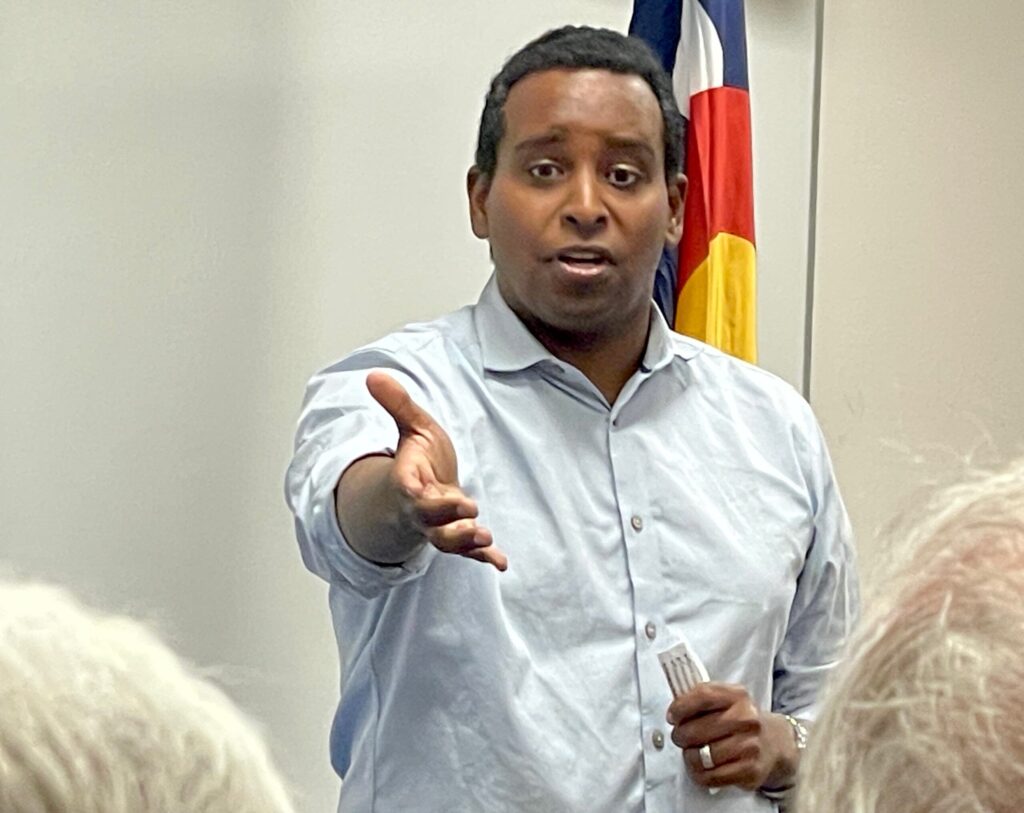
The African roots of three Colorado leaders | SONDERMANN
Eric Sondermann
eric-sondermann@coloradopolitics.com
Updated 3 days ago
Colorado’s political transformation is measured in many ways. A once reliably red state (with asterisks) became purple and is now a rather deep blue. For better or worse, probably the latter, power is ever more consolidated along the Front Range...
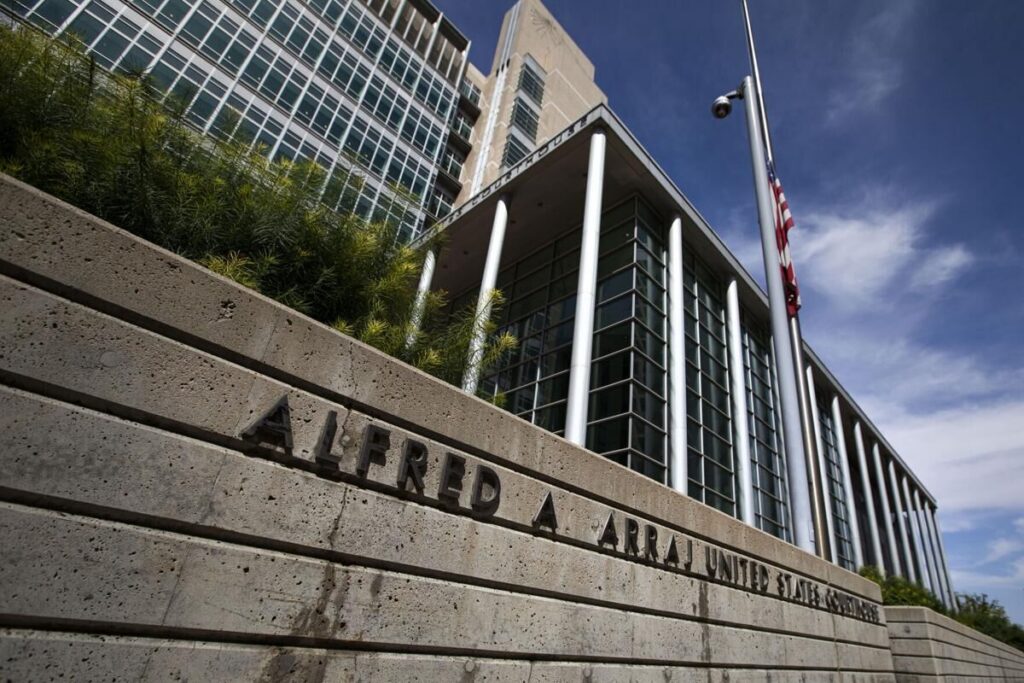
Federal judge green-lights civil trial against ex-Fort Collins DUI officer
Michael Karlik
michael.karlik@coloradopolitics.com
Updated 1 day ago
A federal judge ruled on Thursday that Fort Collins’ former “DUI officer” will face a civil trial for allegedly investigating a motorist for impaired driving without any reasonable suspicion to do so. In recent years, several people arrested by Officer...

Denver police reopen 13 sex assault cases after retesting Missy Woods’ CBI work
Jenny Deam
jenny.deam@gazette.com
Updated 1 day ago
Thirteen previously closed Denver sexual assault cases have been reopened after the city’s crime lab retested DNA evidence once analyzed by former Colorado Bureau of Investigation forensic analyst Yvonne Woods. A police spokesperson told The Denver Gazette the once-closed cases...

Ballot measure aims to shift Colorado sporting goods tax revenue to land, water and wildfire projects
Marissa Ventrelli
marissa.ventrelli@coloradopolitics.com
Updated 5 hours ago
Colorado voters this November will decide whether to direct a share of sales tax revenue from sporting goods — including bicycles and skiing equipment — toward land and water conservation, wildfire prevention and expanding outdoor recreation. Supporters say the measure...

Colorado Supreme Court suspends Mesa County judge pending misconduct investigation
Michael Karlik
michael.karlik@coloradopolitics.com
Updated 8 hours ago
The Colorado Supreme Court suspended Mesa County Court Judge Michael J. Grattan on Thursday amid a misconduct investigation. The court’s Sept. 10 order gave Grattan 21 days to explain why his paid suspension should not continue through the end of...

Trump honors the fallen of the 9/11 terrorist attacks during Pentagon speech
Mabinty Quarshie
mabinty-quarshie@coloradopolitics.com
Updated 1 day ago
President Donald Trump and first lady Melania Trump honored the roughly 3,000 Americans killed during the Sept. 11, 2001, terrorist attacks during a ceremony at the Pentagon. The event marking the 25th anniversary of the deadliest attack on American soil...
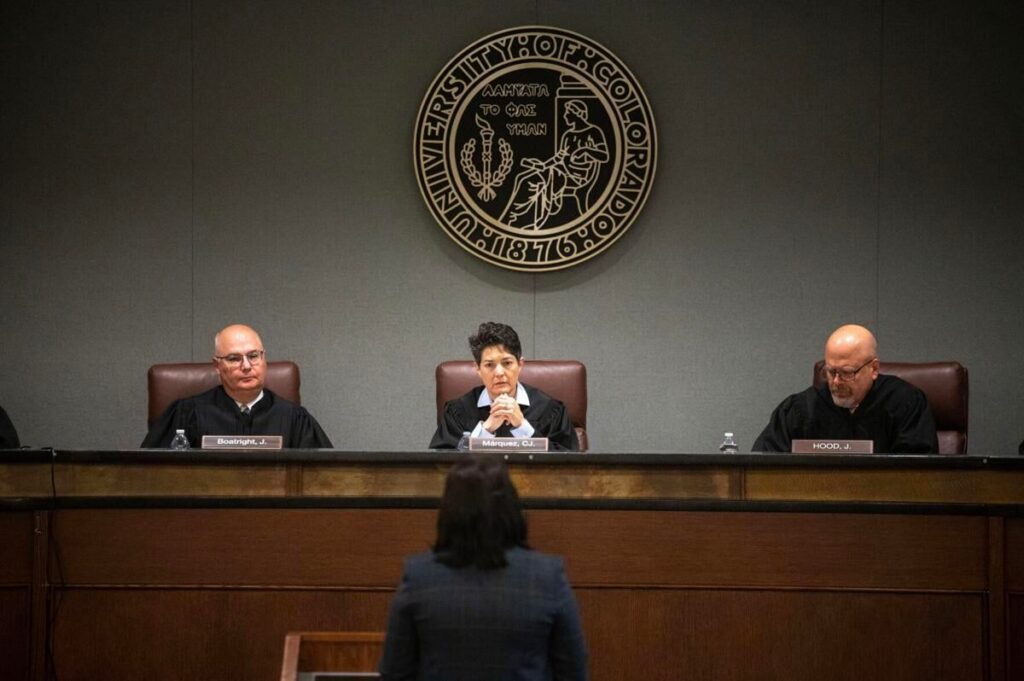
Colorado Supreme Court changes course, dismisses case about special district bonds
Michael Karlik
michael.karlik@coloradopolitics.com
Updated 8 hours ago
The Colorado Supreme Court declined on Friday to decide a dispute between a large-scale Commerce City development and the various districts financing it, after initially showing interest in the ongoing case. Colorado has roughly 2,800 special districts, which are local...

Colorado leaders express outrage and pain following 9/11 attacks | A LOOK BACK
Rachael Wright, Special to Colorado Politics
rachael.wright@coloradopolitics.com
Updated 2 days ago
Twenty-Five Years Ago This Week: “Responding to the 9/11 terrorist attacks, Colorado Gov. Bill Owens told reporters in a statement, “I join all Coloradans in expressing outrage and horror at the senseless terrorist bombings in New York and Washington D.C....