

‘An American success story’: Cyrus Chung ceremonially sworn in as federal magistrate judge
Cyrus Y. Chung’s parents immigrated to the U.S. from Korea, and they had a vision about which paths would offer the surest bet for a good life.
“Asian immigrant parents, chasing a better life, think themselves very generous because they offer their kids three whole career options: You can be a doctor, you can be a lawyer or you can be an engineer,” said Chung. “Before I was a lawyer, I used to write air traffic control software. So, I have done two out of the three.”
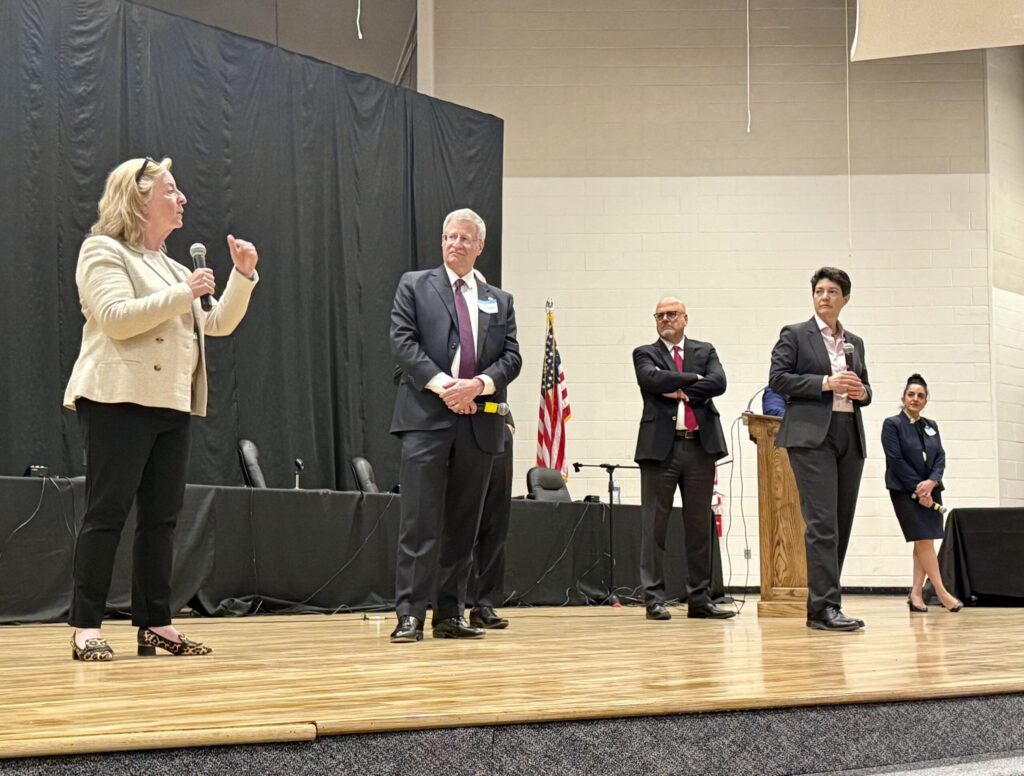
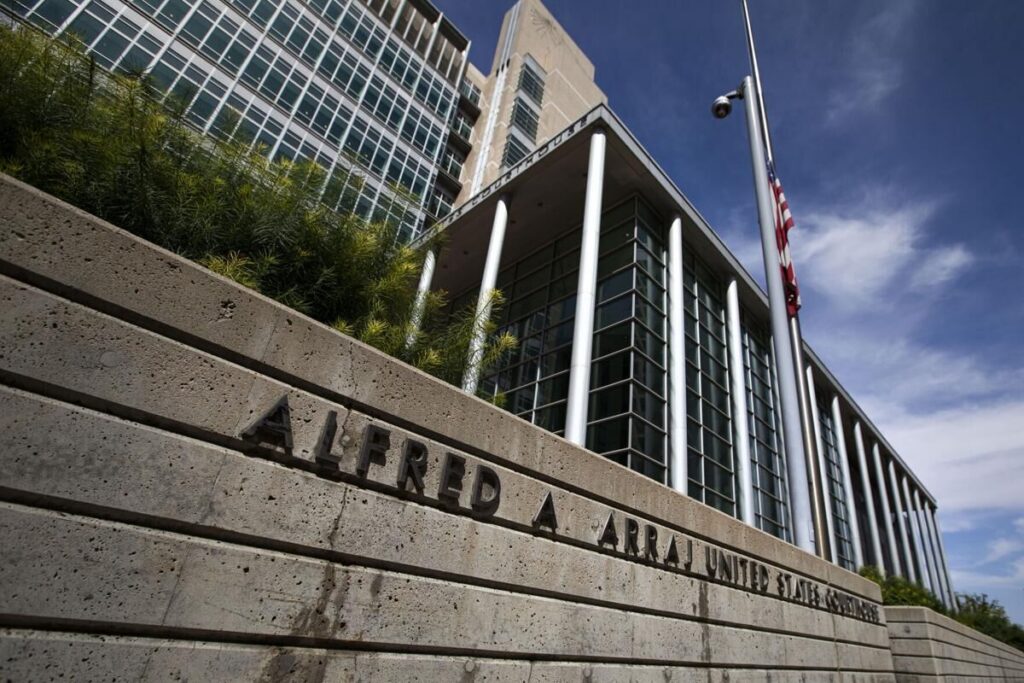
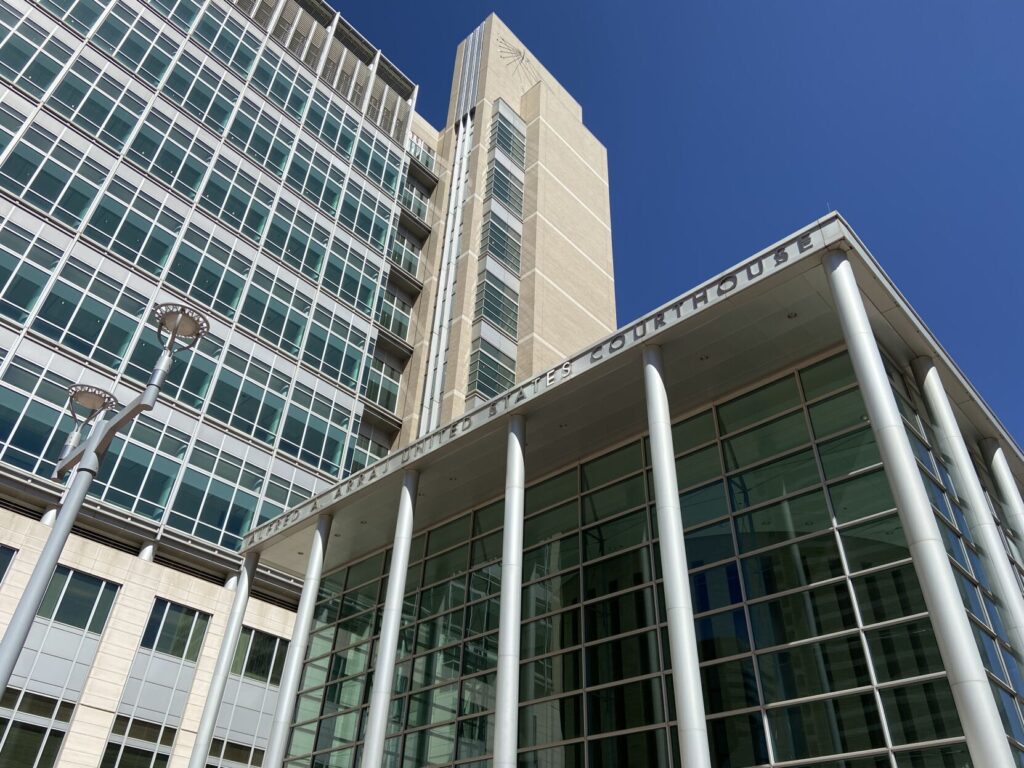
Speaking on Friday at the Alfred A. Arraj U.S. Courthouse in downtown Denver, Chung was ceremonially sworn-in as one of the seven full-time magistrate judges for Colorado’s federal trial court. Chung has been on the bench since last month, succeeding retired Chief U.S. Magistrate Judge Michael E. Hegarty.
In contrast to the district judges, who the president nominates and the U.S. Senate confirms for life, magistrate judges are screened by a selection panel, hired by the district judges and serve for eight-year terms. They tend to focus more on administrative and preliminary matters, but can perform most of the same functions as the district judges, including handling civil cases on their own.
For the first time during the Biden administration, magistrate judges were appointed to be district judges in Colorado amid a push for professional and demographic diversity on the bench.
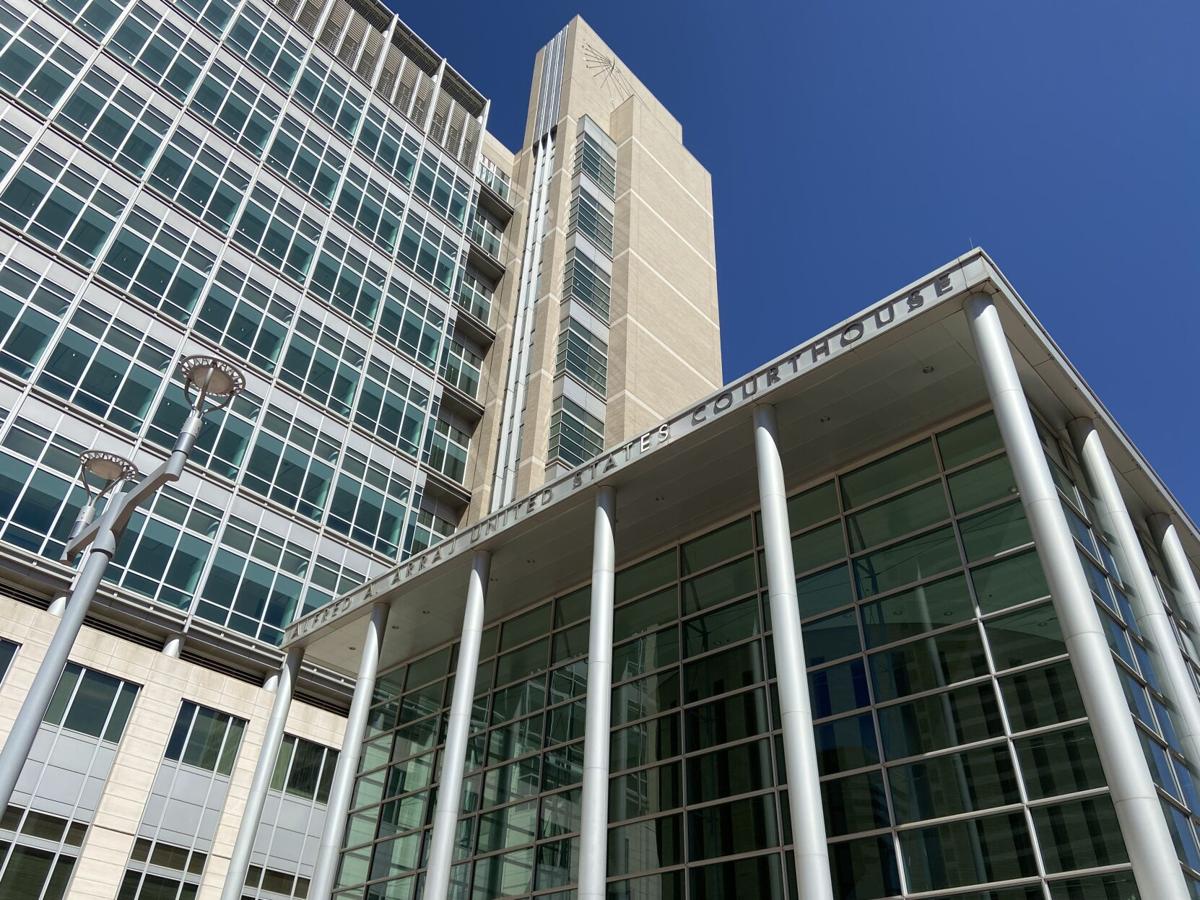
FILE PHOTO: The Alfred A. Arraj U.S. Courthouse in downtown Denver.
Colorado Politics file photo

FILE PHOTO: The Alfred A. Arraj U.S. Courthouse in downtown Denver.
At Chung’s ceremony, known as an investiture, U.S. District Court Chief Judge Philip A. Brimmer shared Chung’s accomplishments: He majored in computer science and minored in business administration and Mandarin Chinese. He wakes up at 5 a.m. to study Spanish or Korean. He passed the patent bar, which is “really hard.”
“He is an American success story,” said Brimmer.
Prior to his time in Colorado, Chung worked at the Middlesex County District Attorney’s Office in Massachusetts.
The sense of duty to repay his parents’ adoptive country, Chung said, “made me enter public service a decade ago as an assistant DA at a job The Boston Globe liked to advertise made less than the janitors at the courthouse.”
After being hired at Colorado’s U.S. Attorney’s Office, the cases Chung prosecuted included a defendant who pleaded guilty to aiming a laser pointer at a police aircraft, a defendant who threatened to kill a public official and detonate bombs in Crowley and Otero counties, plus more traditional narcotics cases. In 2022, then-U.S. Attorney Cole Finegan selected Chung to oversee the federal response to election-related threats.
Matthew T. Kirsch, who was Colorado’s acting U.S. attorney during Chung’s tenure and is now in a high-ranking role at the Denver District Attorney’s Office, described how Chung wrote computer code to fully automate their office’s process for assembling document packets.
Kirsch said Chung left the federal prosecutor’s office for the bench at a time when he could capitalize on his experience, “yet avoid any of the current controversies associated with” the U.S. Department of Justice.
“At this moment when the justice system as a whole is under a little bit of fire, every single person I worked with the whole time I was at the Department of Justice — whether it was the people in the office … the judges, the probation officers — every single one of those people was committed to seeking justice,” Kirsch said. “I can assure everyone here that Cyrus embodies that commitment to seeking justice.”
Andrew Ho, president of the Asian Pacific American Bar Association of Colorado, called Chung a “superstar among superstars” who turned the group’s continuing legal education committee into a “well-oiled machine.” Ho also said it was meaningful to the Asian and Pacific American community for Chung to be on the bench.
“As a criminal defense attorney speaking to a federal prosecutor, it wasn’t uncommon that we didn’t always see eye to eye,” Ho said. But “you could tell he valued differing opinions. Almost asked for them, as if it was a challenge to him.”
“And if you could convince him, he was always willing to change his position,” Ho added.
In his speech, Chung described his father, who joined the U.S. Army, became a citizen and went to college on the GI Bill, and his mother, who studied graphic design and went back to school once in the U.S. Both of them died from cancer years ago.
“I only wish that they could have been here,” he said. “Because I, unlike them, was a natural-born citizen. So, they could tell me that the goal was supposed to be president, not federal judge.”
In attendance at the Denver courthouse were Chief Judge Jerome A. Holmes of the U.S. Court of Appeals for the 10th Circuit; U.S. District Court Judges Robert E. Blackburn, Christine M. Arguello, William J. Martínez, Daniel D. Domenico, Regina M. Rodriguez, Charlotte N. Sweeney, Nina Y. Wang and S. Kato Crews; U.S. Magistrate Judges Scott T. Varholak, Kathryn A. Starnella and Timothy P. O’Hara; Acting U.S. Attorney J. Bishop Grewell; and Federal Public Defender Virginia L. Grady.
Afterward, there was a reception at the 10th Circuit’s courthouse, which Chung’s in-laws paid for.

Colorado justices to decide insurance companies’ obligation to disclose relevant policies
Michael Karlik
michael.karlik@coloradopolitics.com
Updated 2 hours ago
The Colorado Supreme Court announced on Monday that it will decide whether an insurance company violated state law by withholding an at-fault driver’s policy for nearly a year when there was no dispute that the policy was not in effect...

Judicial performance evaluations released, Montezuma County judge disciplined | COURT CRAWL
Michael Karlik
michael.karlik@coloradopolitics.com
Updated 22 hours ago
Welcome to Court Crawl, Colorado Politics’ roundup of news from the third branch of government. Colorado’s citizen-led judicial performance commissions released their voter narratives for the judges standing for retention in November, plus a disciplinary panel imposed consequences on a...

DA justifies CSPD officers in fatally shooting man at McDonald’s
Cleo Westin
cleo-westin@coloradopolitics.com
Updated 1 hour ago
The deadly shooting of a man by Colorado Springs police officers at a McDonald’s was ruled justified by the 4th Judicial District Attorney’s Office on Monday, the office announced in a news release. The ruling determined officers Daniel White, Mitchell...
Federal judge holds off on dismissing formerly bankrupt medical contractor from Jeffco jail death lawsuit
Michael Karlik
michael.karlik@coloradopolitics.com
Updated 1 day ago
A federal judge declined on Monday to dismiss the formerly bankrupt medical contractor from a lawsuit over a detainee’s death in Jefferson County jail, but indicated she would do so if the plaintiffs’ attorneys go through the process to ensure...
Castle Rock caregiver sentenced after stealing more than $110,000 in jewelry from family
Nicholas Fogleman
nicholas.fogleman@denvergazette.com
Updated 4 hours ago
A judge sentenced a Castle Rock caregiver to 90 days in jail after she pleaded guilty to stealing more than $110,000 worth of jewelry from the family of a disabled son under her care. Elsa Montejo-Fuentes, 32, had worked for...
Federal judge green-lights excessive force, retaliation claims for trial against Fort Collins officers
Michael Karlik
michael.karlik@coloradopolitics.com
Updated 3 days ago
A federal judge green-lit a jury trial last week against multiple Fort Collins police officers on claims that they used excessive force on one man who was standing unarmed in his underwear, and retaliated against another man for exercising his...

10th Circuit revives wage violation lawsuit against Papa John’s operator
Michael Karlik
michael.karlik@coloradopolitics.com
Updated 4 days ago
The Denver-based federal appeals court on Tuesday reinstated a former Papa John’s delivery driver’s lawsuit alleging violations of federal and state wage law. Steve Mighell worked for one month at a Denver Papa John’s location in summer 2023. He alleged...
Colorado appeals judge’s delays in releasing opinions noted by performance commission
Michael Karlik
michael.karlik@coloradopolitics.com
Updated 3 days ago
The citizen-led performance commission that provides guidance to voters about whether to retain members of Colorado’s second-highest court raised concerns by judges and attorneys that Judge Elizabeth L. Harris sometimes struggles with releasing opinions promptly. Harris, who joined the Court...
Colorado judge explores sanctions against DOJ, ICE for rearresting man 4 days after release on bond
Michael Karlik
michael.karlik@coloradopolitics.com
Updated 4 days ago
A federal judge in Colorado is considering sanctions against the government after immigration agents rearrested a man four days after an immigration judge found him suitable for release on bond. On July 28, U.S. Magistrate Judge N. Reid Neureiter ordered...
Divided disciplinary panel censures Montezuma County judge after agreement reached
Michael Karlik
michael.karlik@coloradopolitics.com
Updated 4 days ago
A disciplinary panel formally imposed a public censure, suspension, and further training on Montezuma County Court Judge Ian J. MacLaren on Tuesday by a 2-1 vote. Under constitutional Amendment H, which voters adopted in November 2024, MacLaren was set to...