

Q&A with Greg Lopez | Colorado Republican reflects on abbreviated stint in Congress
Nearing the end of his six-month term representing Colorado’s 4th Congressional District, Douglas County Republican Greg Lopez told Colorado Politics in an exclusive interview that he’s been struck by the U.S. House of Representative’s inefficiency and disappointed that there’s little communication across the aisle.
Lopez, a former Parker mayor and state director of the U.S. Small Business Administration, was elected in June to fill the remainder of former U.S. Rep. Ken Buck’s term after Buck resigned his seat in March. Sworn in on July 8 for a term ending Jan. 2, Lopez serves on the House Budget and Science, Space and Technology committees.
When he ran in the rare congressional special election — only the second in Colorado history — Lopez made clear he wasn’t seeking a full term, which helped clear the way for U.S. Rep. Lauren Boebert to win the primary and general election in the state’s most heavily Republican district.
While Lopez said he was focused on pending legislation as the lame-duck Congress neared a Dec. 20 funding deadline for the federal government, the two-time U.S. Senate hopeful and two-time gubernatorial candidate also said he hasn’t ruled out running for top statewide office again in the 2026 midterms.
This interview, conducted on Dec. 16, has been lightly edited for length and clarity.
Colorado Politics: The last time we spoke, you said you were waiting to see what happened with the election before we knew what would happen with the Farm Bill and a possible continuing resolution to fund the government after Dec. 20. We’re in the thick of things now — what’s the situation with the end-of-year bills?
Greg Lopez: First of all, I think the election clearly shifted the attitudes and the approach of the federal government as it looks into the future. You know, I think a lot of people were somewhat surprised that the Hispanic vote shifted over more to the Republican side and so forth, but the sentiment here in Congress, the attitudes, have shifted because of the trifecta that occurred with the Republicans winning the House, the Senate and the presidency.
While our margins are small, they mean that the chairs of every committee will still hold onto their gavels. And so what I’m seeing, to some extent, is there seems to be a little bit more collaboration, working together, as they look to move into the 119th Congress. …
There’s a lot of concern, including from members including myself, as it pertains to the $36 trillion national debt that we have. You know, when I got sworn in, the national debt was $35 trillion. Now we’re at $36 trillion, and it’s because it grows by a trillion dollars every 100 days. And so I think it’s time for some good discussion.
As you know, I sit on the budget committee. We’ve talked about the national debt. We had a hearing on it. I’m hopeful that the 119th Congress will take the national debt seriously, that they really look at, what does it mean if they’re going to try to raise the debt ceiling and how that impacts every family across America. But those are the conversations we’re having right now.
CP: What do you want to see happen with the CR (continuing resolution)?
Lopez: You know, it’s frustrating to me that when we came back after the election, we didn’t sit down in November and take advantage of the last couple of weeks that we had to actually pass the 12 appropriation bills and actually pass a true budget. You know, it’s sad when Congress has only passed the budget four times in the last 40 years.
That’s a clear indication that Congress is not doing their job. Congress is not focused on doing the right things for the American people when it comes to watching the purse of the American people; make sure that there’s minimal fraud, waste and abuse. And so right now, it seems like we’re going to be doing the same thing with the continued resolution, which is the normal (thing).
I’m inclined to vote against it because the national debt. I want to wait to see all the numbers, but there’s no offsets, so everything that’s being done right now is just adding to the national debt, and our interest payments are starting to reach $2 trillion, so we need to start looking at what this means.
Look, at the same time, the farmers need help. They also are in need of funding to be able to sustain their operations, whether it’s crop insurance, whether it’s loans, whether it’s being able to continue to operate. Because when a farmer decides to shut down their operations, it’s not like a store that they can re-open in six weeks. So the biggest concern is that if we do not in some manner help them in a Farm Bill, that we will lose a lot of farmland and will lose a lot of small farms.
And the other big frustration for me when it comes to the Farm Bill is that 83% of the Farm Bill is SNAP (the Supplemental Nutrition Assistance Program, commonly known as food stamps). It has nothing to do with farming and ranching. I would have preferred that we rename it to the Farm and Food Bill so that people would understand that there’s more to the Farm Bill than just funding for the farmers and ranchers — that is where all the SNAP funding is identified and appropriated.
So, those are the types of things that I struggle with — my frustration. But I’m so happy that President (Donald) Trump brought in Elon Musk and Vivek Ramaswamy to look at DOGE (Trump’s proposed Department of Government Efficiency) to look at the efficiency of government. Where can we cut the overspending? You know, we have over 1,200 “zombie” programs that no longer have the authority to exist, don’t have the authorization from Congress, and we’re spending over $516 billion on those programs. It’s time for Congress to evaluate all those programs and either reauthorize them or eliminate them. But we need to have those discussions, and I’m hopeful that perhaps the 119th Congress will do that, so that once again, we get ahold on the stability of our financial house.
CP: It sounds like there just wasn’t an appetite to have those discussions after the election. Why is that?
Lopez: I think what it really comes down to is that for too many people on both sides of the aisle, our first focus is on getting reelected, and then when they do get reelected, their mindset shifts to the next Congress, and they don’t necessarily want to finish the work of the 118th Congress. And again, it comes down to leadership. Leadership is not necessarily putting these bills on the floor, putting these bills forward for us to vote. Because right now, the sentiment is: “Well, we can pass them, but the Senate won’t.” And there’s some truth of that — we’ve passed five appropriation bills out of the 12, and the Senate, under (Majority Leader Chuck) Schumer, has not touched them. They haven’t brought them up for voting.
But I remind our leadership that we should not worry about what the Senate does, we should worry about what the House does. And we should approve all the 12 appropriations bills and send them all over to the Senate, and if they don’t approve them at all, that’s not our concern. That’s the Senate’s concern. We need to show the American people that the House is doing the job of the people and we’re moving forward.
And so I think it’s a lot of, this is a normal protocol every time we get close to the end of the year, and I don’t think that the leadership has actually encouraged people to actually do the job that Congress needs to do.
CP: Do you think leadership will act differently with, as you say, triumvirate control of government by Republicans?
Lopez: I think there will be some different approaches. Just to give you a perfect example — and I wish the House would have done this — but under the Senate calendar, the Senate is going to be in session for the first three months (of 2025) without any breaks. They’re coming in and they’re going to focus on their jobs. They’re going to focus to be able to make sure that we start 2025 with a strong government that’s making decisions helping President Trump with their nominations and their appointments.
But I really think the House should have taken that lead and taken that example. The House should have also done that, full time, at least for the first three months, to really get the work and build the foundation that we need in order to get our country back on track. But unfortunately, that didn’t occur. But I am hopeful that there’ll be more collaboration between the Senate and the House during the 119th Congress.
CP: What are a couple things that you’ve learned once you got back there, now that you’re near the end of your term?
Lopez: One of the things that I learned is that it’s a very structured system that doesn’t work very well, isn’t very efficient. There’s a lot of politics being played on both sides of the aisle.
The other thing that I found very interesting — I had this conversation with Rep. (Diana) DeGette when I tried to meet with all of the congressional delegation on the Democrat side, right? Because I just wanted to sit down with them, because it’s all about Colorado. It’s about what we’re doing. And so she shared with me, she said: “You know, Greg, I’m so glad you reached out to me, because we used to do this, we used to be able to talk to each other and kind of just discuss the different viewpoints on the bill, the different viewpoints of what legislation we’re looking at.” And we would be able to get a better understanding as to why one side and the other are looking at it differently. And she said: “You know, we don’t do that very much anymore. We don’t, and we need to get back to that.”
And so those are things that I noticed — is that there seems to be this real strong line or divide, that very seldom do members talk to each other from the opposite sides of the aisle. Even in the committees that I’ve seen, even when we have hearings, it seems like everybody’s so focused on pointing the finger at one administration or another administration, and they lose sight of the issue. They lose sight of solving the problem or addressing the issue that’s in front of them. You know, I think there’s too many problem observers up here and not enough problem solvers.
That was one of the things that I found very interesting, and also that you’ve got to earn your stripes before any legislation or any idea that you might bring forward will be seriously considered by leadership.
CP: You probably have about the the least seniority in this Congress right now, right?
Lopez: I think someone came in after me. There was another special election and they did finally bring someone on, but I’m one of them.
CP: Near the bottom of the totem pole. That has to be frustrating. You’ve talked about bills you’ve introduced. Did any of your bills get heard?
Lopez: That’s absolutely correct. I had a bill that I thought was a very simple bill, that I felt shouldn’t be a lot of discussion, and if there is, let’s have some debate. One of the bills that I introduced was just requiring that in any federal election, that at the top of the ballot, that they must print the national debt for the last three years. To me, that’s pretty simple, it didn’t have a financial expenditure to it. And I thought it would be a good educational piece for the public at large, because if the national debt is rising like it is right now, that if they had the question, who’s raising this national debt, all they had to do was look at who they’re voting for on the ballot, whether it’s a representative or a senator, those are the folks that make those decisions.
I introduced it, and I requested that it go to committee and that it gets marked up and it just never went anywhere, which I thought was telling. It’s telling that a simple bill won’t even be acknowledged at a committee level for discussion. And I never got a real explanation as to why they never scheduled it in front of committee. I talked to the committee chair, and they said, “Well, yeah, I’m going to look at it,” and you know, it’s more about their interest and not necessarily, I feel, looking at good legislation and saying, “What’s the harm? Let’s look at this. Let’s debate it. Seems to be no real issue here.”
The other one is the red card bill. This is the one about a noncitizen work permit. Now, this is a more complex, a more robust bill that I knew was not going to necessarily be able to come out of the House in the short term that I was here. But presenting it as a starting point for, how do we manage our labor force when the mass deportations happen? How do we make sure that those people who want to work in America have the ability to work, and if they’re not here to work, then we need to find out what their intentions are. But that hasn’t received any real discussion from anyone.
And again, it’s the system that’s entrenched in, to some extent, leadership and others are more interested in their agenda. And if you’re a newcomer to the Congress, they have a tendency to not necessarily look at your legislation in the same manner that perhaps a more senior individual would get the attention.
CP: You’ll be giving your your farewell address in a couple of days. Can you give us a preview?
Lopez: I’m going to touch on the numerous successes that I’ve had down in Colorado with the district, the number of cases that we resolved, the hundreds of thousands of dollars that we were able to bring back to Colorado residents and CD 4, through either the IRS, veterans benefits, those types of things, the number of calls. I’m going to be talking a lot about the legislation that I introduced. I’m going to be talking about the national debt.
I’m going to be sharing with people the importance of them understanding that when they do elect individuals, when they come into Congress that you need to ask some real potent, strong questions as to how they think. So, I’m going to be touching on that. And also what I look to do with the DOGE caucus, with the government office of efficiency.
CP: In a little over two weeks, you’ll be a private citizen again. What’s next?
Lopez: I guess I don’t know that I haven’t been a private citizen. I’m not a rock star, you know. I’m a representative of the people. I’ve always seen myself, when I go back to Colorado, I’m just a representative. And I do carry the voice of the people, but I will continue to do that. I’ve always told people, you don’t need a title, you don’t need stripes on your arm to defend our nation or to have your voices heard. So, I plan to go back and keep doing what I was doing, and that is trying to figure out how we can make Colorado a state that we can all be proud of as it pertains to the quality of life for all 64 counties.
CP: Speaking of needing an office or not, two statewide offices are going to be on the ballot in two years — governor and the U.S. Senate. Are you considering running for either of those?
Lopez: You know, I’ve had a lot of conversations with people who are urging me to seriously consider it. I haven’t ruled anything out. You know, I’m going to finish the job that I’m doing here. I will be working until Jan. 2 as a congressman for Congressional District Four. But you know what? I haven’t ruled anything out, so don’t be surprised if you do see my name on the ballot once again.
Q&A with Dustin Zvonek | Aurora councilmember looks ahead as his time on the council ends
Q&A with Mark Dillen | Rallying support, raising awareness at Ukrainians of Colorado
Q&A with Anne Mangiardi | New judicial discipline director shares plans for change

Appeals court reverses convictions after judge blocked defendant’s character witnesses
Michael Karlik
michael.karlik@coloradopolitics.com
Updated 2 hours ago
Colorado’s second-highest court reversed a defendant’s convictions for forgery and attempting to influence a public servant last month because a Boulder County judge improperly blocked him from calling witnesses who could testify about his truthfulness. A three-judge Court of Appeals...
Uncertain status of McConnell could create legal firestorm over possible replacement
Kaelan Deese
kaelan-deese@coloradopolitics.com
Updated 7 hours ago
Sen. Mitch McConnell’s (R-KY) extended hospitalization is drawing new attention to an unresolved legal question in Kentucky that could trigger a high-stakes court battle if the longtime Republican senator were unable to complete the remainder of his term. The question...
Overruling the voters before they even vote | PODIUM
Colorado Politics
colorado-politics@coloradopolitics.com
Updated 16 hours ago
By Chris Richardson There is something profoundly wrong with a legislature that sees a citizen-led constitutional amendment gaining momentum and responds not by making its case to the public, but by passing a law designed to neutralize it before voters...
Colorado Supreme Court accepts child neglect, unlawful search appeals
Michael Karlik
michael.karlik@coloradopolitics.com
Updated 19 hours ago
The Colorado Supreme Court recently announced that it will decide whether a series of missteps led an El Paso County judge to improperly terminate a father’s parental rights, and whether a police officer defendant bears the burden of proving that...

Independent candidate launches late campaign against Melat Kiros for CD1
Mark Samuelson Special to The Denver Gazette
mark.samuelson@denvergazette.com
Updated 18 hours ago
Democratic Socialist Melat Kiros’ surprising defeat of 15-term Congresswoman Diana DeGette may be creating a void within Denver’s voter base — and at least one latecomer is jumping into that gap, petitioning to get himself on the November ballot as...
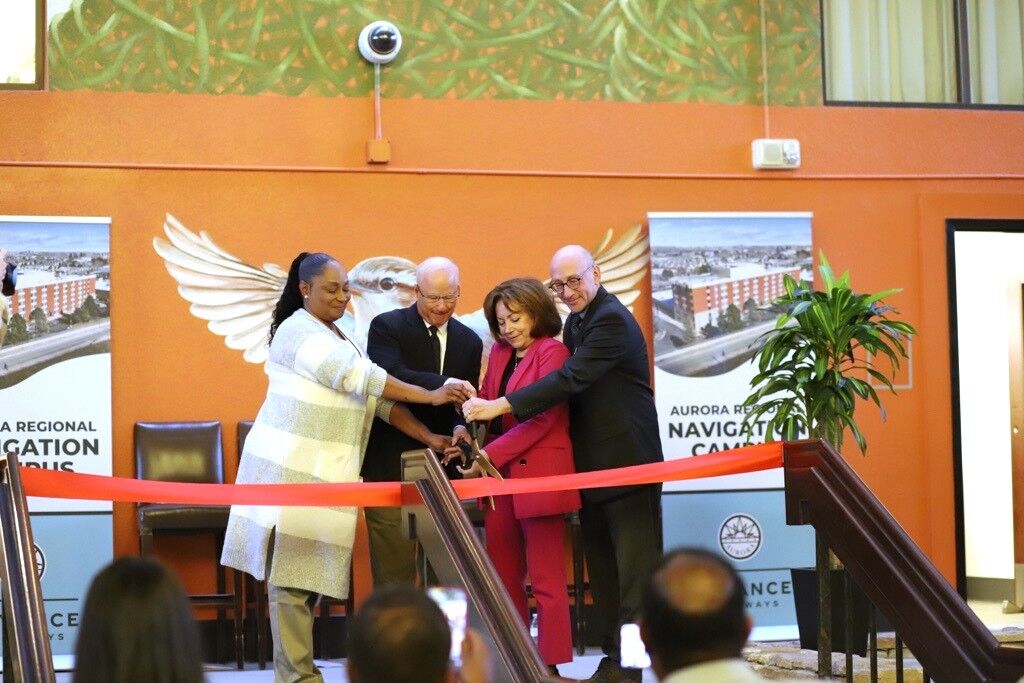
Colorado Attorney General sues HUD over changes to homeless funding
Matt Kyle
matt.kyle@denvergazette.com
Updated 21 hours ago
Colorado Attorney General Phil Weiser on Tuesday joined the attorneys general of several other states to sue the federal government over an attempt to cap funding for permanent housing projects. The change would result in tens of thousands of people...
10th Circuit upholds dismissal of ex-Teller County fire chief’s First Amendment lawsuit
Michael Karlik
michael.karlik@coloradopolitics.com
Updated 3 hours ago
The Denver-based federal appeals court agreed on Tuesday that the former chief of the Florissant Fire Protection District could not prevail on the claim that his 2023 firing was retaliation for his First Amendment-protected activity. Erik Holt alleged the Teller...
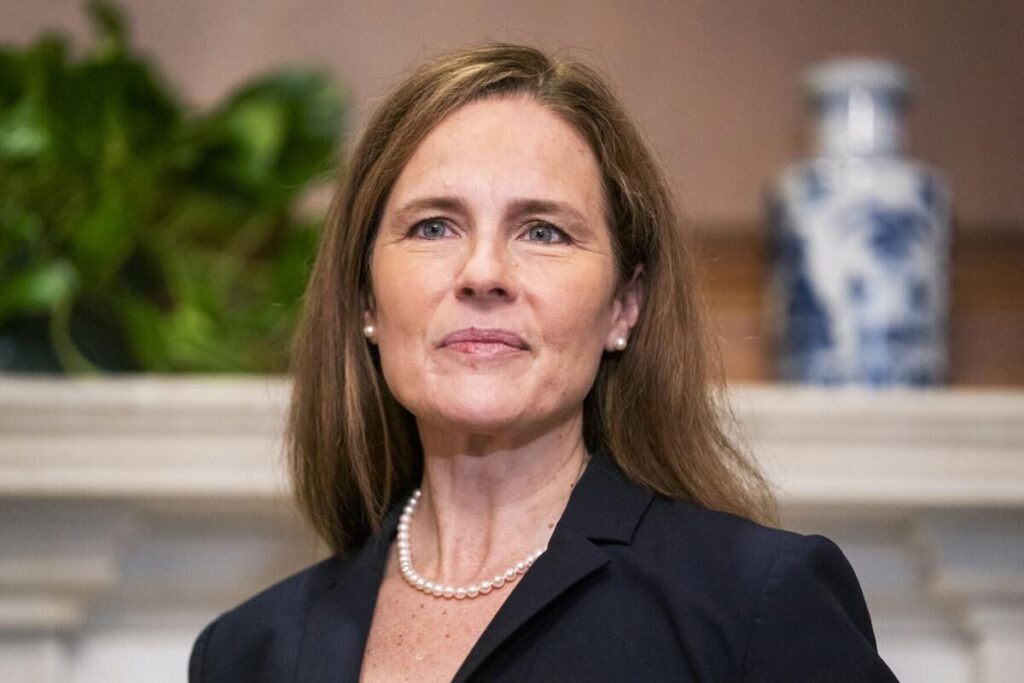
Supreme Court justices Kagan and Barrett to testify on Capitol Hill
Rena Rowe
rena.rowe@washingtonexaminer.com
Updated 1 day ago
Supreme Court Justices Amy Coney Barrett and Elena Kagan are scheduled to testify before Congress next week as lawmakers consider the judiciary’s funding request. Barrett and Kagan are slated to appear before the House Subcommittee on Financial Services and General...
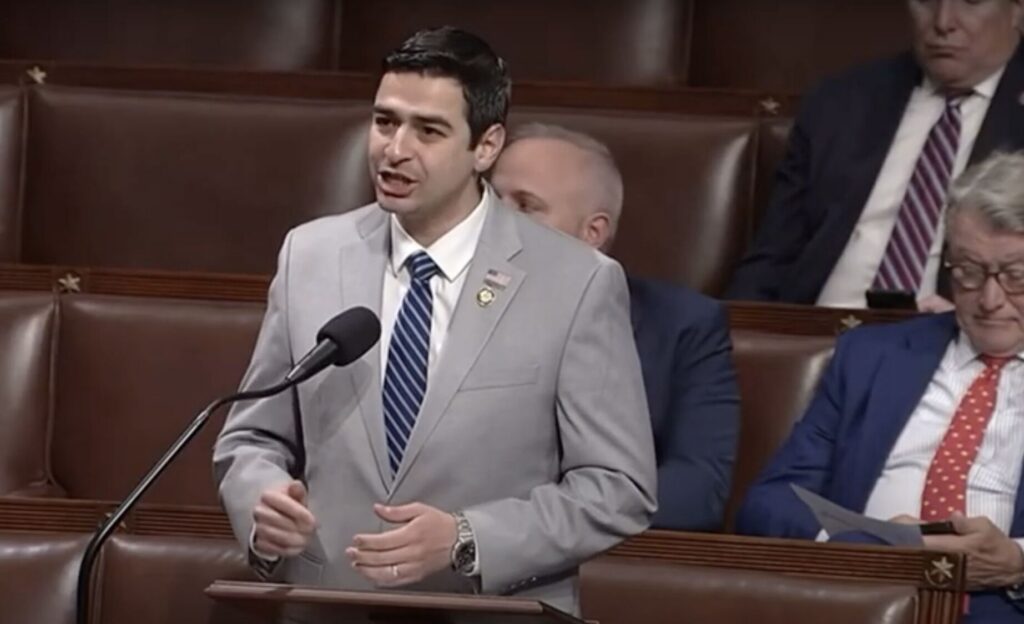
U.S. Rep. Evans tells Polis small businesses are feeling strain from state regulations
Marissa Ventrelli
marissa.ventrelli@coloradopolitics.com
Updated 21 hours ago
In a letter to Colorado Gov. Jared Polis on Tuesday afternoon, U.S. Rep. Gabe Evans raised concerns he says he’s hearing from small-business owners about the effects of the continued increase in state regulations. Evans wrote in the letter, which...

AI is already reshaping US politics at every level
The Associated Press
the-associated-press@coloradopolitics.com
Updated 1 day ago
Artificial intelligence is barging into the workplace and transforming the battlefield. Now, it’s coming to the ballot box, promising to rewrite the DNA of politics. Driven by a flood of Silicon Valley money, AI has emerged as one of the...