

New addiction recovery center opens in Colorado Springs using trending model in the field
Angelletta Hixon lives up to the shortened name of “Angel” that she goes by, say people who know her.
Whether she’s passing out coats, tents and food to people living in homeless encampments, coaxing them to give addiction treatment a go or talking about her own personal struggles, the energetic Hixon’s modus operandi is protection and goodness.
“Across the board not just in small circles, she is widely known to be the greatest peer coach in the city,” said Adam Alexander, who runs the Colorado Springs office of Peer Connect, another local addiction-recovery company. He’s also her older brother and champion.
“She’s so good at it, the size of her groups and the ability of her team to do outreach, it’s just a magical thing to see,” he said.
Now, Hixon is spreading her wings. She’s opening her own addiction recovery center and official homelessness outreach program.
Silver Linings Recovery debuts Monday at 11 a.m. at 806 S. Tejon St., offering clinical and group therapy by certified recovery coaches and professional clinicians. The for-profit business backed by Hixon and two silent partners employs a crew of 25, which includes 20 coaches and two clinicians.
A nonprofit arm of the operation receives 30% of revenues from Medicaid to provide homeless and substance-addicted people with life coaching, food, clothing, money for rental deposits and other daily essentials.
“I started my own center so I could help more people,” Hixon said. “I was limited at who I could go out and help. My goal and motto is to end homelessness, one heartbeat at a time.”
The combination of for-profit and nonprofit business model stretches its ability to provide assistance, Hixon said.
“A lot of times with a nonprofit you have X amount of dollars given as grants, and you have to use the money on only certain things,” she said. “If someone is to walk in our center off the street and say, ‘I need boots and dog food,’ our company can donate those specific items.”
The structure also seems to be trending in the field, as other businesses, including Peer Connect, are using the format.
“People are getting creative; you have to find ways to fund your operations, so it makes sense,” said Rochelle Schlortt, spokeswoman for Catholic Charities of Central Colorado, a longtime nonprofit that runs various programs for the homeless population. Last year the organization expanded its counseling services to accept Medicaid and Medicare and provide numerous types of therapies for clients.
“We expanded to address a major need in the community — many of our clients need counseling and therapy, and there’s a lack of professionals,” she said.
A former meth addict of 15 years who served time in prison and lived in her car with her kids before turning her life around, Hixon has a relatable, charismatic personality that draws people wherever she goes.
“I’m just myself, I go out there with hopes to just help one person and that’s it,” she said. “It’s having somebody be receptive.”
If it’s cold outside, Hixon will rifle through her closet and pick out warm clothing and take it with her to hand out to people who need it more than she does.
“I can get more clothes. These human beings don’t have anything, and they don’t have that ability to go shopping,” Hixon said.
She proudly claims sobriety for nearly five years and has worked as a peer recovery coach for two other places in town that provide similar services, including the one Alexander runs.
For several years, Hixon has spearheaded regular free giveaways of food and other basics at parks where homeless people hang out.
On her own, she’s known to make up sack lunches, find a group of homeless people hanging out in a park and distribute the bags, then sit down and eat with them.
And she’s dedicated Thanksgiving and Christmas to handing out sack lunches and presents to people she meets on the trails that day.
Silver Linings now will adopt that same welcoming model.
Though its official opening isn’t until Monday, last week’s snowstorm led Hixon to put pots of chili on the stove and unofficially open the doors of the new center for homeless people to come indoors, have some food and coffee, talk about their needs and problems, and maybe consider taking the first step to bettering their lives.
During the height of the storm last Wednesday, 59 people wandered in and took advantage of the offerings, including resource materials, she said. Showers, laundry services and a free clothing room also are being added.
On the streets, “We’re finding a lack of housing and communication and clothes,” Hixon said. Her recovery center also gives away free government cell phones.
“The biggest thing is shelter — they’ve either been kicked out of Springs Rescue Mission (the city’s largest homeless shelter), or they don’t have identification so they can’t go anywhere,” Hixon said. “The need is great — there are hundreds of people living under bridges and on the streets, and they’re receptive. We take people whether they’re in active addiction or not.”
One aspect that makes Silver Linings different is that staff accompany groups of clients on recreational and entertaining outings in the community, such as bowling, hiking, miniature golf, skating, playing pool, basketball sessions and window-shopping.
Such activities help people bond and form relationships and also experience fun and explore how they can live a normal lifestyle, Alexander said. Therapy also is innovative, with group sessions including retail therapy and trauma therapy.
Hixon’s brother also did time in prison, and the pair have made recovery a family thing. Their mother was a longtime addict who died last year from a fentanyl overdose, Hixon said.
“Addiction has been part of my family for many years, and I knew when I was in the Department of Corrections that I had to do something different to change my life,” she said.
“I have so much heart to help others because I want to see everybody succeed, and success looks different for people. It could be working at a McDonald’s or managing a Starbucks.”
Or being a peer recovery coach.
Contact the writer: 719-476-1656.


Democratic group aims Spanish-language TV ad at Gabe Evans in Colorado’s battleground 8th CD
Ernest Luning
ernest.luning@coloradopolitics.com
Updated 21 minutes ago
A national group tied to House Democratic leadership launched a six-figure Spanish-language TV ad in Colorado this week targeting Republican U.S. Rep. Gabe Evans and the GOP’s signature budget legislation. The 30-second spot is part of $15 million in new...

Colorado School of Mines lands major share in Trump’s $100M mining-education plan
Thelma Grimes
thelma.grimes@coloradopolitics.com
Updated 3 minutes ago
President Donald Trump on Friday named the Colorado School of Mines among roughly a dozen institutions that will share in a $100 million commitment “to train the next generation of American miners.” Paul Johnson, the university’s president, said he is...

Local party leaders, incoming judge among members of judicial performance commission that violated law
Michael Karlik
michael.karlik@coloradopolitics.com
Updated 14 minutes ago
A local Democratic leader and 2024 presidential elector. A legislative aide and leader in the Young Republicans. An incoming county court judge freshly appointed by the governor. They are among the eight members of the northeastern Colorado judicial performance commission...

Judge dismisses lawsuit seeking records from Colorado Democratic group
Marianne Goodland
marianne.goodland@coloradopolitics.com
Updated 58 minutes ago
A lawsuit seeking to obtain records from Democratic lawmakers affiliated with a caucus has been thrown out by a Denver District Court judge. On July 17, Judge Ericka Englert dismissed the April lawsuit filed by progressive activist Derrick Blanton, who...

US job market stalled in July as employers cut 23,000 jobs, delivering political setback to Trump
The Associated Press
the-associated-press@coloradopolitics.com
Updated 8 hours ago
WASHINGTON (AP) — The U.S. job market stalled unexpectedly last month, delivering a political blow to President Donald Trump three months ahead of midterm elections and complicating decision-making for the inflation fighters at the Federal Reserve. Employers cut 23,000 jobs...

Colorado must continue finding common ground on wildfire policy | GUEST COLUMN
Colorado Politics
colorado-politics@coloradopolitics.com
Updated 1 day ago
By John Herrick Colorado has never lacked for opinions about wildfire policy. We debate forest management, climate change, prescribed burns, land use, air quality and budgets. Those debates are familiar territory, but a new discussion is beginning to happen around...

Proposition NN is the best investment for Colorado’s students and schools | GUEST COLUMN
Colorado Politics
colorado-politics@coloradopolitics.com
Updated 1 day ago
By Justin Ogden Colorado families know what it means to make difficult budget decisions. Inflation has driven up the cost of groceries, housing, utilities and just about everything else. Families like mine work hard to stretch every dollar while still...
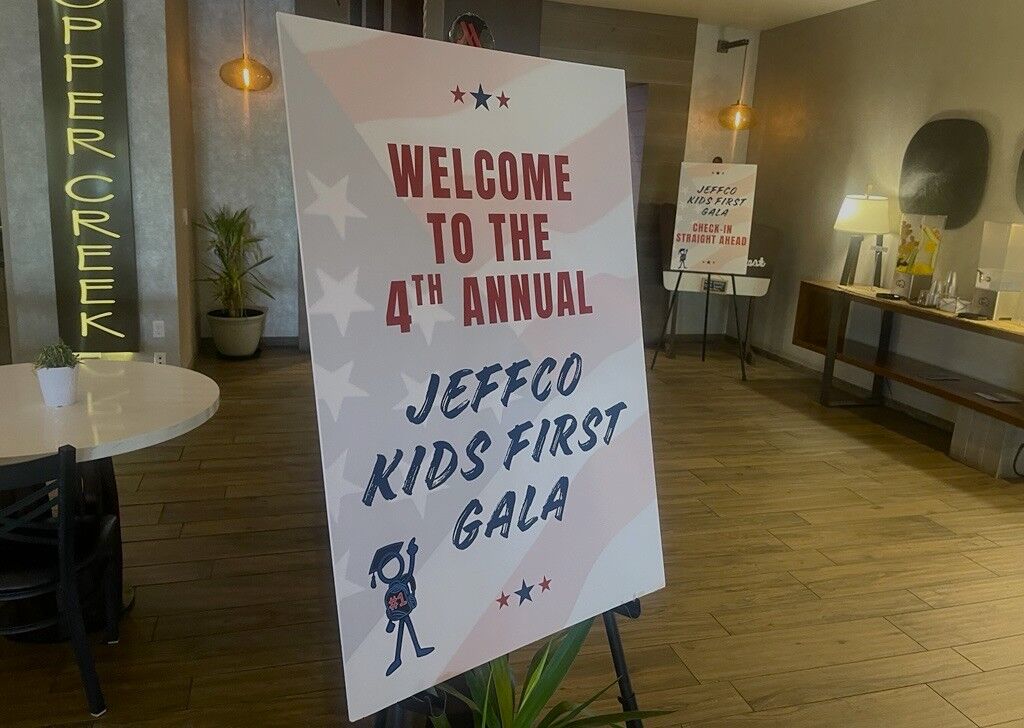
DOJ official decries ‘nonsense’ in Jeffco schools at fundraising gala
Matt Kyle
matt.kyle@denvergazette.com
Updated 5 hours ago
Amid a legal battle between Jeffco Public Schools and the federal government, a Department of Justice official spoke at a fundraising gala and decried “crazy stuff” and “nonsense” in the school district. The gala was for Jeffco Kids First, an...

Colorado Springs mother Deborah Nicholls’ murder conviction overturned
Nick Smith
nick-smith@coloradopolitics.com
Updated 22 hours ago
A Colorado Springs mother convicted in 2008 of murdering her three children in a house fire might get a new trial after a judge ruled that prosecutors withheld key evidence that could have impacted the jury’s verdict. Deborah Nicholls, whose...

Aurora Community College student journalist accuses college of ‘unconstitutional gag order’
Kyla Pearce
kyla.pearce@gazette.com
Updated 8 hours ago
An Aurora Community College student is accusing the college of putting an “unconstitutional gag order” on his student-run publication, saying the college banned it from publishing until students jumped through “countless bureaucratic hoops.” A college spokesperson said the college is...