

Polis can correct Colorado’s bad wolf-reintroduction bet | OPINION

Terrance Carroll

Terrance Carroll

Donald Valdez

Donald Valdez
Colorado voters four years ago narrowly passed Proposition 114, the ballot initiative to reintroduce gray wolves. It was an ill-advised idea then that put public fascination with these wild animals ahead of sound science. Now the consequences have come home to roost.
In the state legislature we wrestled with these issues: conservation, environmental stewardship and economic development. We are both ranchers and serve on organizations that advocate for agricultural communities, including the Natural Resources Conservation Service and the Western Stock Show. We personally understand wolves’ threat to ranchers, rural communities and even suburbanites who could encounter them.
We encourage Gov. Jared Polis, who is a pragmatic leader and an equitable voice for Colorado’s diverse stakeholders, to pause the program before irreparable harm is done — environmentally, economically and politically.
Stay up to speed: Sign up for daily opinion in your inbox Monday-Friday
Though well-intentioned, Proposition 114 put our state in a precarious spot. It gave everyday individuals, most of whom know little about the complexities of wildlife management, jurisdiction over our state’s environmental resources. Colorado Parks and Wildlife’s hands are tied. The agency now has the unenviable job of managing reintroduction, even as growing evidence confirms transplanting wolves isn’t what voters were sold.
A 20-year Colorado State University study in Yellowstone found apex predator reintroduction “failed to restore” ecological balance. Even the New York Times concedes, “Wolf packs… are not magic bullets for restoring ecosystems.” And unlike Yellowstone, Colorado’s Western Slope is home to more than a half-million people — families who now must think twice about whether their pets are locked up or if their children are inside. Colorado is not the same habitat wolves roamed 80 years ago.
Sadly, our state’s ranchers and farmers, who contribute more than $45 billion to our state’s economy each year, have borne the brunt of this hasty plan. Since the first wolves were released last December, dozens of cattle and sheep have been killed. Colorado had just eight fewer livestock losses in the first nine months of this year than Montana had in all of 2023, despite Montana having 70-times the number of wolves.
Those statistics can’t depict the psychological impact. Colorado ranchers are worried their livelihood is at risk. The CPW preaches non-lethal deterrents, including around-the-clock patrols and flags on fence lines. It’s had to “shift” funds to conflict management, even as the program’s price tag keeps going up. But as any rancher knows, it’s impossible to be everywhere at once. Even when a wolf doesn’t take down a steer or sheep, their presence stresses livestock, which contributes to less weight gain. Less gain means less income.
When an animal is killed, it’s not only money lost. It’s time away from day-to-day work to file paperwork and jump through regulatory hoops. In a business that already requires 24 hours a day, most ranchers do not have the time or resources to navigate the government bureaucracy of it all.
The national romanticism of wolves undoubtedly affected voters when they went to the polls four years ago. The reality hasn’t been so pastoral, though: livestock ravaged, livelihoods upended and even greater political divides being driven between rural and urban Colorado. It’s not hard to see why Proposition 114 was overwhelmingly opposed in rural and agricultural communities, where hardworking families are now grappling with the consequences.
Wolf reintroduction should not be driven by politics. It should be about our state, our people and our environment. But, as one Grand County commissioner put it, “It’s really not about wolves anymore. It’s about politics.” It’s hard to ignore the fact this issue could hurt Democrats running for state and local office when Coloradans go to the polls again next week.
Colorado’s wolf reintroduction has shown what happens when “ballot-box biology” trumps real science. Gov. Jared Polis has a chance to correct course for our state and deliver a needed win for our ranchers and farmers by tapping the breaks on this ill-advised plan. We hope he will.
Terrance Carroll was elected to the Colorado House of Representatives in 2003 and served as the 54th Speaker of the House from 2009 to 2011. He is currently an attorney with Sherman & Howard/Taft, and a member of the board of directors of the Western Stock Show Association. Donald Valdez represented House District 62, covering several counties in southern Colorado as a Democratic member of the Colorado State House of Representatives from January 2017 to January 2019. He currently operates a farm and ranch in La Jara.

Is the ‘penumbra of privacy’ going, going, gone in Colorado? | Hal Bidlack
Hal Bidlack
hal-bidlack@coloradopolitics.com
Updated 9 hours ago
Once again, there are too many things in Colorado Politics that are newsworthy and should be written about. Unless my kindly editor will allow me to write a book-length column this week? (Ed: not so much…) First up, I’d like...

Quiet at the state Capitol doesn’t mean silence on energy policy | GUEST COLUMN
Colorado Politics
colorado-politics@coloradopolitics.com
Updated 10 hours ago
By Carly West By many accounts, Colorado’s 2026 legislative session was unusually quiet on oil-and-natural-gas policy. There was no sweeping new oil-and-natural-gas package. No major new production restrictions. After years of contentious energy debates dominating the Capitol, the relative quiet...
The history, and future, of extinction in Colorado | GUEST COLUMN
Colorado Politics
colorado-politics@coloradopolitics.com
Updated 9 hours ago
By Eric Washburn When I was a kid growing up in Aurora in the late 1960s and early 1970s, one of my favorite things to do was to go to the Denver Museum of Natural History and spend countless hours...

Processing plants are an important piece of the ag puzzle | Rachel Gabel
Rachel Gabel
rachel-gabel@coloradopolitics.com
Updated 1 day ago
Concrete barricades blocked the entrance to the Cargill beef plant in Ft. Morgan, Colo., on May 20. About 1,700 workers had been locked out by the company after months of contract negotiations ended with workers voting to reject the company’s...

As AI advances, are the accompanying AI advances for the better? | Miller Hudson
Miller Hudson
miller-hudson@coloradopolitics.com
Updated 1 day ago
You may have noted Elon Musk was in court suing Sam Altman of OpenAI. If you were praying there was a way both of these greed bros could lose, you nearly got your wish. Emails exchanged between the parties reflect...

Too much Tina | Jon Caldara
Jon Caldara
jon-caldara@coloradopolitics.com
Updated 5 days ago
Really? This much hullabaloo over Tina Peters? We enjoy being distracted by the silliest things, don’t we? Our governor’s commutation of Peters’ sentence is just that — a silly thing. Just as it was nonsensical for the “Free Tina Peters”...
A mistaken commutation and an over-the-top reaction | SONDERMANN
By Eric Sondermann
by-eric-sondermann@coloradopolitics.com
Updated 4 days ago
It seemed an itch that Gov. Jared Polis just had to scratch. After months of hints and speculation, Polis put his signature on a commutation of the prison sentence of Colorado’s election-denying queen, former Mesa County Clerk Tina Peters. True,...

Colorado is too wealthy to keep cutting basic services | GUEST COLUMN
Colorado Politics
colorado-politics@coloradopolitics.com
Updated 4 days ago
By Kathy White and Lydia McCoy Colorado is a wealthy state. It may be hard to believe right now because so many of us are feeling the strain. Costs are high. Many families are struggling to keep up. There is...
Polis’ — and the replacement candidates’ — positions on Colorado’s most contested 2026 legislation | Paula Noonan
Paula Noonan
paula-noonan@coloradopolitics.com
Updated 5 days ago
The knock on the word “assume” is it can make an “a**” out of “(yo)u” and “me.” Let’s nevertheless assume the 2026 General Assembly addressed big problems facing the state. Let’s further assume the current governor can move on these...
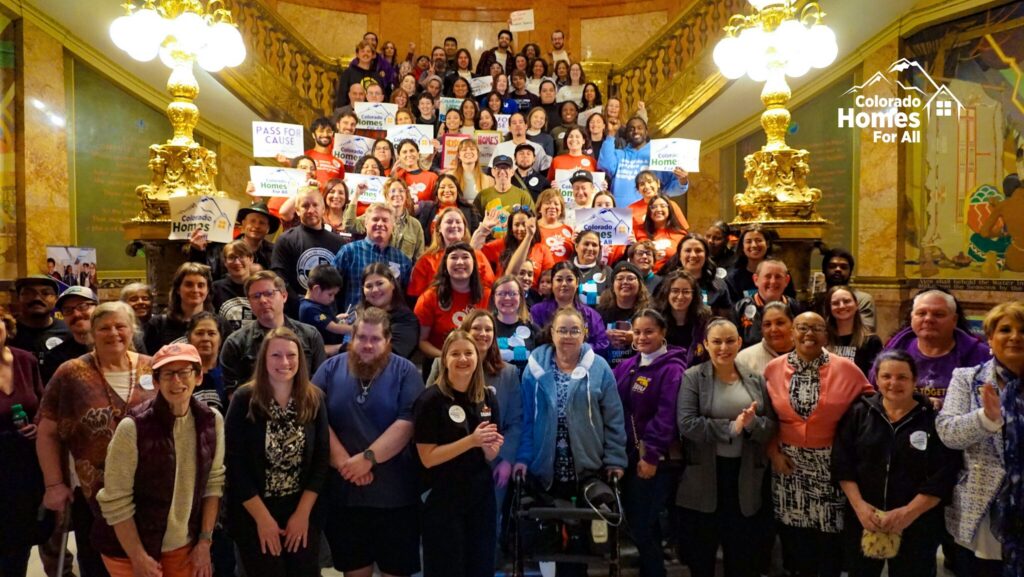
SPONSORED: What you’re missing about housing — an open letter to all of Colorado’s candidates for governor
Colorado Politics
colorado-politics@coloradopolitics.com
Updated 6 days ago
By Colorado Homes For All You say affordable housing, we say housing we can actually afford. As working-class people from across the state who are renters, we are struggling to keep up with our housing costs and we are being...