

10th Circuit says no constitutional violation from Denver officers’ warrantless search of storage unit
Denver police officers did not violate a man’s constitutional rights with their warrantless search of a storage locker he had been using without authorization in his apartment building, the federal appeals court based in Colorado ruled last month.
Although the U.S. Court of Appeals for the 10th Circuit emphasized its Sept. 20 opinion hinged on specific shortcomings in the evidence, one member of the three-judge panel was curious about law enforcement’s right in other scenarios to search areas that people are not lawfully occupying — in particular, homeless encampments on public property.
In the underlying case, jurors convicted Scott Lowe of three gun- and drug-related counts. He is serving 10 years in prison. The sequence of events leading to his indictment began in 2019, when Lowe’s probation officer received a tip that Lowe used a storage unit for narcotics and firearms. However, the informant was unreliable, the building manager confirmed Lowe did not rent a storage unit and Lowe denied that he had one.
In February 2020, police arrested Lowe on state criminal charges. During a search of his apartment, they found drug evidence and got another indication Lowe was hiding something in a storage unit. Officers checked out the storage room but found no evidence of criminal activity.
Days after Lowe’s arrest, his probation officer once more received a tip about Lowe using a storage locker for illegal activity. The probation officer, who was out of town, asked Denver police to investigate the allegation.
Two officers, accompanied by the property manager, went to a storage room on a different floor than before. After identifying a storage unit that was in use, but listed as vacant, the manager gave her consent to search it. Inside, officers found a suitcase with a gun, drugs and items linked to Lowe.

FILE PHOTO
The defense moved to exclude the evidence from trial, alleging a violation of the Fourth Amendment’s prohibition on unreasonable searches. Generally, police must either obtain a warrant or rely on an exception to the warrant requirement. But U.S. District Court Senior Judge William J. Martínez, in denying the motion, concluded there was objectively no expectation of privacy Lowe had in the storage locker in the first place.
Lowe “chose not to rent the storage unit from his apartment building; therefore, he had neither lawful possession or control over the storage unit nor the right to exclude others,” wrote Martínez. “Moreover, by placing his belongings in storage unit 6 without permission to do so, Defendant assumed the risk that the true owner of the storage unit (i.e., representatives of the apartment building) would discover his unauthorized use of the storage unit, regain access to the unit, and allow law enforcements to search the unit.”
During oral arguments to the 10th Circuit panel this year, Lowe’s attorney maintained there was an expectation of privacy in a suitcase that had no outward indication of suspicious activity. The appellate judges appeared doubtful.
“It’s like I put my stuff in a neighbor’s garage without his consent and then I deny that it’s my stuff. And then I trundle along later and say, ‘Oh, I have an expectation of privacy in my stuff that’s stored basically as a squatter,'” said Judge Timothy M. Tymkovich. “That just seems odd to me to grant Fourth Amendment privacy protections in that circumstance.”

Judge Timothy M. Tymkovich of the U.S. Court of Appeals for the 10th Circuit.
Senior Judge David M. Ebel asked the government how the panel should view Lowe’s objectively reasonable expectation of privacy in light of a related scenario: homelessness.
“Do they have a right to privacy to stuff inside their tents?” wondered Ebel. Can police “just bust into a tent without any repercussions even though someone was living there?”
Assistant U.S. Attorney Jess D. Mekeel replied that Lowe’s case did not require an analysis of that issue.
“I think there is an analogy. It’s not perfect, but my question still stands,” Ebel pushed back. “What law is there about the right to privacy in tents on public land?”
“Would society be prepared to recognize as legitimate, if somebody has a tent on a sidewalk, that they have an expectation of privacy? I think it’s a troubling issue. It’s one that’s facing political leaders,” acknowledged Mekeel.
Tymkovich, in the panel’s opinion, noted that society does not generally recognize a privacy expectation in instances “where property use is unauthorized or obtained through fraudulent means.”
“Absent any evidence showing lawful or legitimate use or possession,” Tymkovich wrote, “we conclude that Mr. Lowe failed to provide sufficient evidence to establish an objectively reasonable expectation of privacy in the storage unit.”
The panel cited two other relevant facts: Lowe was on probation, which inherently reduced his privacy, and Lowe also denied that he had a storage locker.
Although the opinion did not reference Ebel’s concerns about the privacy rights of homeless persons, Tymkovich repeated that Lowe, problematically, had not provided evidence demonstrating his legitimate use of the searched place. The “particular facts here,” Tymkovich clarified, did not amount to a constitutional violation.
The case is United States v. Lowe.

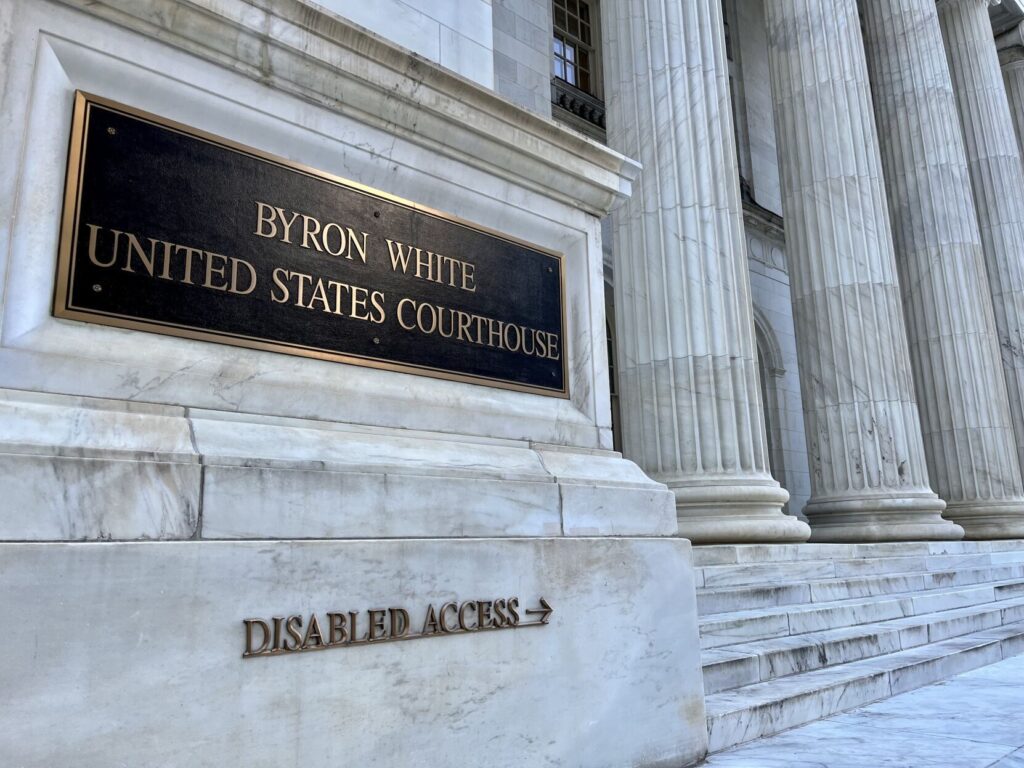
10th Circuit upholds finding of no misconduct against Colorado federal judge
Michael Karlik
michael.karlik@coloradopolitics.com
Updated 7 hours ago
A judicial committee for the Denver-based federal appeals court upheld the chief judge’s finding last week that a federal judge in Colorado did not engage in misconduct by handling a civil case involving other attorneys and judges in the state....
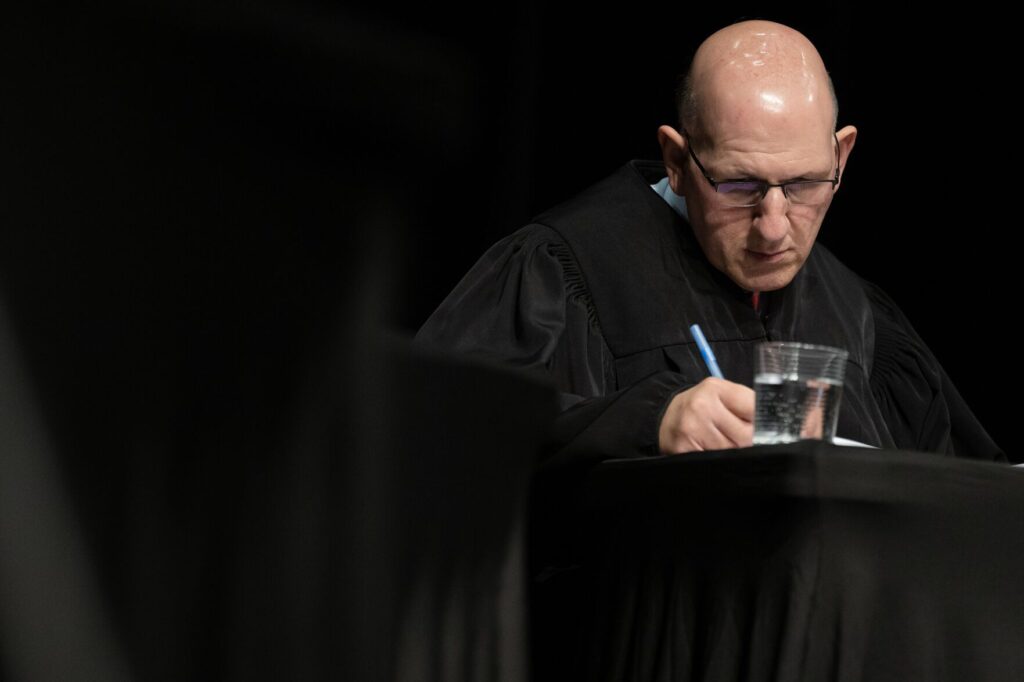
SCOTUS whisperer? Justice Carlos Samour may get second opportunity to turn state dissent into national precedent
Michael Karlik
michael.karlik@coloradopolitics.com
Updated 11 hours ago
For the second time in two years, Justice Carlos A. Samour Jr. occupies an unusual position: Having his dissent in a Colorado Supreme Court case potentially forming the basis of U.S. Supreme Court precedent. Earlier this week, the nation’s highest...

10th Circuit appoints ex-Colorado solicitor general to argue issue after federal government declines
Michael Karlik
michael.karlik@coloradopolitics.com
Updated 1 day ago
The Denver-based federal appeals court took the unusual step earlier this month of appointing an attorney to independently argue a key issue in a criminal sentencing appeal after the government indicated it would not contest the defendant’s view of the...

Daniel Domenico to take over as Colorado’s chief federal judge
Michael Karlik
michael.karlik@coloradopolitics.com
Updated 11 hours ago
Daniel D. Domenico will become the new chief judge of Colorado’s federal trial court next week, a role that encompasses the administration of the court as well as a judicial caseload. Under federal law, the chief judge of a U.S....
10th Circuit upholds violations, sanctions against Colorado Springs mental health hospital
Michael Karlik
michael.karlik@coloradopolitics.com
Updated 1 day ago
The Denver-based federal appeals court agreed earlier this month that the government properly cited and penalized a Colorado Springs psychiatric hospital for failing to protect its staff from known risks posed by patients. The Occupational Safety and Health Administration inspected...
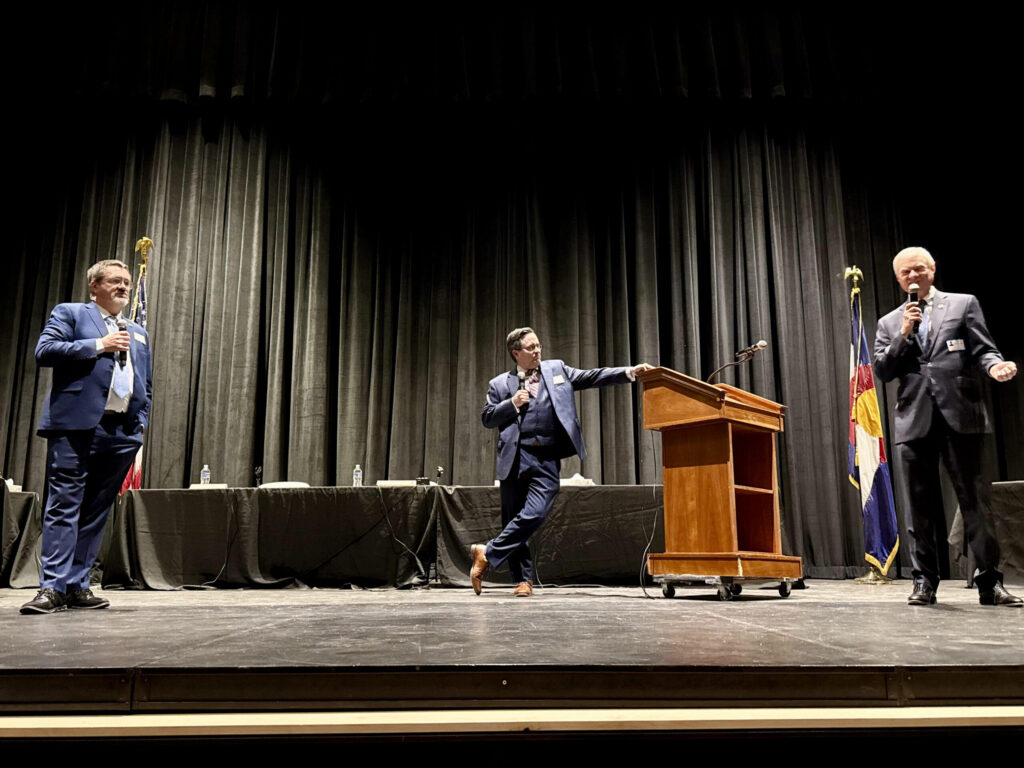
Appeals judges tell Boulder students about workload, ‘attack mode’ during school visit
Michael Karlik
michael.karlik@coloradopolitics.com
Updated 1 day ago
Three judges on Colorado’s second-highest court traveled to Boulder on Tuesday to hear oral arguments in real cases and field questions from students about their professional paths, their workload on the Court of Appeals, and their approach to interacting with...
Judge: CBI ordered to provide access to thousands of DNA cases
Jenny Deam
jenny-deam@coloradopolitics.com
Updated 1 day ago
Boulder County District Judge Nancy W. Salomone on Monday ordered the Colorado Bureau of Investigation to provide access to thousands of cases where past DNA analysis could be in question or show a pattern. The ruling came in a pre-trial...
Trial delayed for former Fountain city councilwoman accused of public assistance theft
Nick Smith
nick-smith@coloradopolitics.com
Updated 2 days ago
The trial for a former Fountain City Councilmember accused of stealing over $37,000 in public assistance funds has been pushed to July. Detra Duncan, 55, resigned in mid-September 2025 after El Paso County investigators say they found forged documents that...
Judge Timothy Tymkovich to step aside, create Colorado-based vacancy on 10th Circuit
Michael Karlik
michael.karlik@coloradopolitics.com
Updated 1 day ago
Judge Timothy M. Tymkovich of Colorado has announced his intent to step aside as an active member of the Denver-based federal appeals court, creating the first vacancy for President Donald Trump to fill in his second term. In a Feb....
Divided appeals court reverses murder convictions due to faulty self-defense instruction
Michael Karlik
michael.karlik@coloradopolitics.com
Updated 1 day ago
Colorado’s second-highest court concluded last week that an incomplete self-defense instruction required the reversal of an El Paso County defendant’s murder convictions. Demetrius Montez Martin was among those present late at night at a club in Colorado Springs. An argument...