

Colorado Supreme Court weighs effort to streamline magistrate rules, aid litigants
Members of the Colorado Supreme Court took comments on Tuesday about proposed changes to the rules governing magistrates, where they heard that the attempt to streamline protocols still presents challenges for litigants and for the trial judges who review magistrate decisions.
Magistrates are judicial employees who are not judges but who handle aspects of cases in the trial courts. Litigants may consent to magistrates being the final decision maker in certain proceedings, but judicial rules also permit magistrates to address matters without consent. In those circumstances, before there can be an appeal to the Court of Appeals, a litigant will need to seek review from a trial judge.
Court of Appeals Judge Jerry N. Jones, who chairs the civil rules committee, told the Supreme Court the desire for change began five years ago largely due to confusion over the diverging paths for appeals.
“What was occurring, of course, was that parties didn’t understand the difference between these paths,” he said. “They were being misinformed frequently by judges and magistrates as to their appellate rights.”

Judge Jerry N. Jones of the Colorado Court of Appeals
As far back as 2009, one member of the Court of Appeals deemed the rules a “confusing appellate labyrinth” that most endanger self-represented litigants in domestic relations and juvenile matters who are unsure of the proper steps for challenging a magistrate’s order. Jones added that the appellate court sometimes finds it lacks jurisdiction to hear appeals filed incorrectly.
The resulting rule change, if enacted, would require all final decisions of magistrates to be appealed to a district judge first, then to the Court of Appeals. The proposal lays out the timelines for each step of the process as well as the lens district judges must use when evaluating a magistrate’s work.
However, lawyers who reacted to the proposal raised concerns at the granular and big-picture levels. Some attorneys criticized the notion that the approximately 95 magistrates working across the state should even be deciding matters without the parties’ consent in the first place.
“Magistrates are not appointed, reviewed, or retained by the voters under the Colorado Constitution, and forcing their use deprives litigants of their right to be heard before a constitutionally appointed judge,” attorney Paige Mackey Murray wrote to the Supreme Court. “This requirement means that critical and sensitive matters that are highly fact-based — especially in the area of domestic relations — are being delegated to non-constitutional judicial officers.”
Jones acknowledged the desire for a judge to render a decision, but pointed out that with the streamlined process, a district judge would see every appeal.

Colorado Supreme Court Justice Carlos Samour, Jr., left, asks a question during oral arguments before the court on Dec. 6 in Denver. Looking on are Justices Richard L. Gabriel, second from left, Monica M. Marquez, third from left, and Chief Justice Brian D. Boatright. Colorado Supreme Court justices have sharply questioned whether they could exclude former President Donald Trump from the state’s 2024 ballot.
Trish Cooper, representing the Colorado Chapter of the American Academy of Matrimonial Lawyers, told the justices that in her experience, parties in domestic relations cases often cannot afford one level of appeal, much less two. She also worried that the upshot would be an increase in the workload of district judges.
“We are losing district court judges at an alarming rate,” said Cooper. “I have never seen such a high rate of retirements and folks leaving the district court bench.”
The court heard concerns about the burdens on trial judges from other sources. Chief Judge Michelle A. Amico of the 18th Judicial District in suburban Denver wrote that the proposed 63-day deadline for district judges to review magistrates’ decisions — after which the parties may turn to the Court of Appeals — will be “challenging to accommodate,” as domestic relations judges may be handling 300-400 cases at a given time.
A trio of district judges in Adams County — Kelley R. Southerland, Rayna Gokli and Teri L. Vasquez — also advocated for the appointment of more domestic relations judges to “absorb this additional caseload.”
Denver District Court Judge Michael W.V. Angel, a former magistrate, echoed the concern about workload and pointed to two recent appellate decisions on the subject: a Supreme Court opinion in March requiring district judges to hear appeals of magistrates’ probable cause rulings in certain criminal cases and an August Court of Appeals decision clarifying that district judges cannot direct magistrates to conduct further proceedings. Instead, they must make the final decision on appeal, even if it means holding additional proceedings themselves.

The Lindsey-Flanigan Courthouse in Denver.
Angel also called attention to the difficulty litigants may encounter in assembling the necessary record within the envisioned appellate timeline.
“Having been in multiple jurisdictions and having practiced around the state prior to being appointed to the bench, I can tell you that the ability to get transcripts in a timely manner varies greatly,” he said.
Justice Carlos A. Samour Jr. asked Jones, the rules committee chair, if he saw any benefit to holding further discussions to address the commenters’ issues. Jones said the committee did examine some of the concerns, but simply felt differently. He added that while the committee forwarded the proposal to the Supreme Court on a 26-1 vote, there were several provisions of the existing rules the committee declined to modify due to lack of agreement.
“I think the most common concern that was expressed about the proposal are the tightness of the timelines that are proposed,” Jones said. But “we are hearing from judges and magistrates and from practitioners that things are taking too much time” under the existing framework.
If the Supreme Court wants the rules committee to perform further work, Jones continued, “it would be beneficial to have some specific instructions. That is, ‘Please look at these specific concerns.'”

Federal judge sides with Mesa County school district in ex-student’s First Amendment claims
Michael Karlik
michael.karlik@coloradopolitics.com
Updated 1 day ago
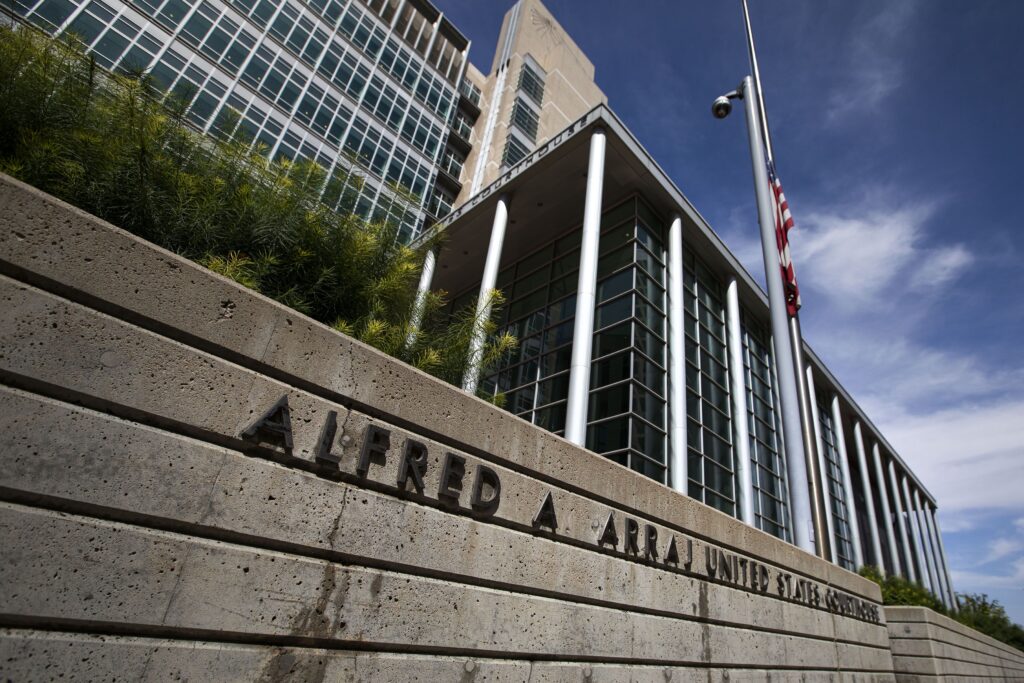
A federal judge concluded last week that Mesa County Valley School District 51 and three of its administrators did not violate the First Amendment rights of a former student when they imposed minor discipline in response to disruptive behavior. In...

Colorado Supreme Court intervenes in 4 ongoing cases
Michael Karlik
michael.karlik@coloradopolitics.com
Updated 1 day ago
The Colorado Supreme Court recently moved to intervene in four ongoing cases, including two criminal prosecutions, a civil lawsuit, and a child welfare proceeding. At least four of the court’s seven members must agree to hear a case outside of...

Federal judge releases man immediately as consequence for immigration judge disobeying orders
Michael Karlik
michael.karlik@coloradopolitics.com
Updated 1 day ago
A federal judge ordered a man’s immediate release from immigration detention on Thursday after finding an immigration judge disregarded his prior orders requiring a bond hearing. For the past year, Colorado’s federal district court has faced a flood of “habeas corpus”...

Denver judge denies Gov. Polis request to dismiss ICE-related records case
Marianne Goodland
marianne.goodland@coloradopolitics.com
Updated 17 hours ago
A year after blocking the release of state records to federal immigration agents, a Denver judge has now denied Gov. Jared Polis’ effort to end the lawsuit at the center of the dispute. The lawsuit filed against the governor in...
Colorado justices accept appeals on Netflix taxation, children pursuing neglect cases
Michael Karlik
michael.karlik@coloradopolitics.com
Updated 1 day ago
The Colorado Supreme Court announced on Monday that it will decide whether Netflix subscriptions are subject to the state’s sales tax as “tangible personal property.” At least three of the court’s seven members must agree to hear an appeal. The...
Letecia Stauch murder conviction in stepson Gannon’s death overturned by Colorado appeals court
Nick Smith
nick-smith@coloradopolitics.com
Updated 2 days ago
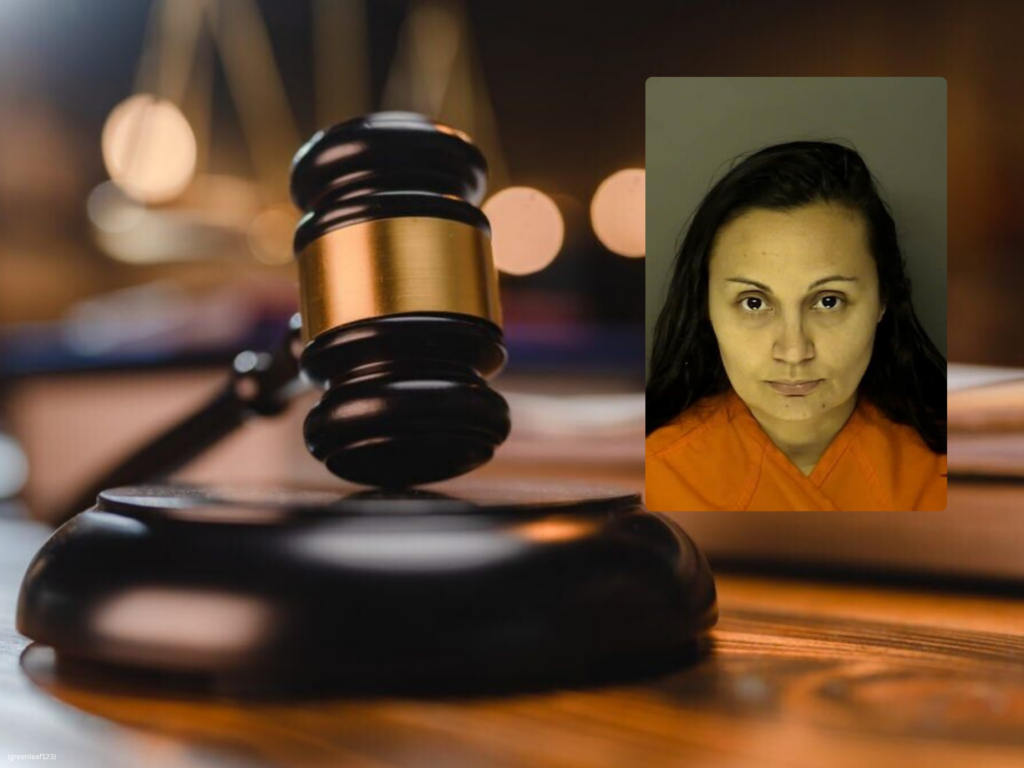
An El Paso County woman convicted of killing her stepson in 2020, shoving his body in a suitcase, then dumping it in Florida, is getting a new trial. The Colorado Court of Appeals published a 52-page ruling on Thursday, stating...

10th Circuit grants rare all-judges’ review of Colorado banking regulation
Michael Karlik
michael.karlik@coloradopolitics.com
Updated 2 days ago
The Denver-based federal appeals court announced on Thursday that it will hold a rare all-judges review of a recent decision that permits Colorado to require out-of-state banks to abide by the state’s maximum interest rates when they lend to in-state...
Colorado appeals court orders new sentencing for Tina Peters, upholds convictions
Michael Karlik
michael.karlik@coloradopolitics.com
Updated 2 days ago
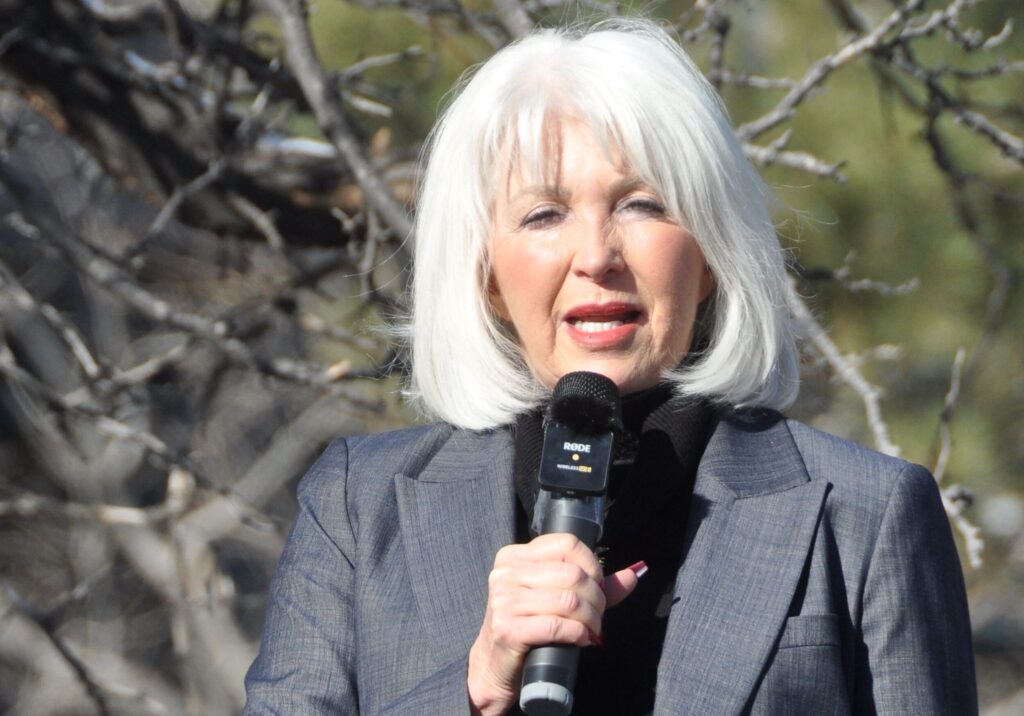
Colorado’s second-highest court determined on Thursday that a trial judge improperly sentenced former Mesa County clerk Tina Peters based upon her exercise of protected speech, while at the same time upholding her convictions. The three-judge Court of Appeals panel also...

Judge rules that Colorado law makes it too hard for parties to bar unaffiliated voters from primaries
Ernest Luning
ernest.luning@coloradopolitics.com
Updated 3 days ago
A federal judge ruled in favor of the Colorado Republican Party late Tuesday, saying that a portion of the state law that allows unaffiliated voters to cast ballots in party primaries is unconstitutional because it imposes an unrealistic burden on...
10th Circuit upholds regulator’s methodology for Tri-State exit fees
Michael Karlik
michael.karlik@coloradopolitics.com
Updated 3 days ago
The Denver-based federal appeals court upheld a regulatory agency’s methodology for calculating the fee owed by entities seeking to withdraw from Tri-State Generation and Transmission Association last week. Tri-State is a Westminster-based cooperative that provides and transmits electricity to member...