

New Center for the Study of Evangelicalism at UCCS opens to explore intertwining of faith, politics
In the past two presidential elections, evangelical Christians have thrown their support behind former President Donald Trump in what some viewed as astonishing numbers.
Trump procured 81% of the White evangelical vote in 2016 — much more than former President George H.W. Bush, a mainline Protestant whose theology and policies were interpreted as closely aligning with evangelicals.
Again in 2020, about 8 in 10 White evangelicals stood by Trump, despite his issues of divorce, association with a porn star and crude language.
In office and as a candidate, Trump has said that he will “defend Christian values” as president.
UCCS announces selection of new campus police chief
Out of that observation came the idea for the new Center for the Study of Evangelicalism at the Colorado Springs campus of the University of Colorado.
It’s the only such center in the nation, said professor Jeffrey Scholes, chair of the philosophy department, director of the Center for Religious Diversity and Public Life, and his new hat of director of the Center for the Study of Evangelicalism.
“We’re excited, as we hope it will be the hub for studies in this area in the world,” he said.
Scholes, along with Paul Harvey, UCCS distinguished professor of history, and George Bayuga, UCCS assistant professor of anthropology, founded the center.
With two months to go until this year’s presidential election again with Trump as a contender in the race, the center opened this semester and is preparing for its first public event.
Tim Alberta, a staff writer at The Atlantic magazine and formerly chief political correspondent for Politico, will speak at 6 p.m. on Oct. 2 at the Ent Center for the Arts, 5225 N. Nevada Ave. The talk is free and open to the public.
Alberta’s topic is “Evangelicalism, Politics and the Future.”
UCCS product Morgan Stickney swims to second Paralympic medal this week in 100-meter freestyle
Although the event is free, tickets must be reserved and presented at the event. For tickets, go to https://tickets.entcenterforthearts.org/5159/5160.
The son of an evangelical pastor, Alberta wrote the book, “The Kingdom, the Power and the Glory: American Evangelicals in an Age of Extremism,” which published in 2023. He also co-moderated the final Democratic presidential debate in 2019 for “PBS Newshour.”
Alberta still considers himself an evangelical but has disassociated himself from conservative ideology and politics, having appeared with MSNBC’s liberal TV commentator Rachel Maddow during the Republican National Convention.
The branch of Protestant Christianity crosses churches and denominations. Evangelicals subscribe to theological views recognizing the Bible as the ultimate authority, the sacrifice of Jesus Christ as enabling the redemption of humanity, conversion through life transformation and activism in missionary work and social reform, according to the National Association of Evangelicals.
While America is not as religious or evangelical-leaning as it was, it’s still estimated that about 1 in 4 Americans define themselves as evangelical, according to the Cooperative Election Study, the largest academic survey focused on American elections. Fifteen years ago, 1 in 3 Americans identified as evangelical, according to the group.
Evangelicalism dates to the 17th century in the United States, Scholes said, and has a long history of hueing to the same theological principles.
Just over half a century ago, a certain set of politics began being associated with evangelicalism, with the Roe v. Wade decision that nationalized abortion.
“White evangelicals helped Ronald Reagan win the presidency, and then you begin to see the tight intertwining of one’s faith and one’s politics,” Scholes said.
“I got to thinking this topic as it intersects with American politics needs to be more thoroughly studied at a public state university and in a city which is, for better or worse, known as one of the hubs of evangelicalism,” he said.
“It seemed like locating the center in Colorado Springs and it serving the scholarly and community needs for the study of what evangelicalism is about was fitting.”
Police outline key evidence, reveal new details in UCCS shooting; judge rules case can go to trial
In the late 1980s and early 1990s, economic development leaders courted many large evangelical ministries to move their headquarters to Colorado Springs, including Focus on the Family, International Bible Society (now Biblica) HCJB World Radio (now Reach Beyond), the Christian and Missionary Alliance (which again relocated in 2021 to Columbus, Ohio), the Association of Christian Schools International, David C. Cook and other like-minded faith-based nonprofits.
The city already was home to giants such as Compassion International, Young Life, the Navigators and Summit Ministries.
Colorado Springs also was the birthplace of Amendment 2, which voters passed in 1992 to prohibit the Colorado from enacting anti-discrimination laws for gays, lesbians and bisexuals, and which the U.S. Supreme Court overturned. A fundamental evangelical group, Colorado for Family Values, promoted the initiative.
In January, the three professors received a $300,000 grant from the Henry Luce Foundation, of which “a good chunk” is paying for the creation of the new center, Scholes said.
The center will study Colorado Springs’ evangelical community, produce a documentary on Colorado Springs’ involvement in the evangelical movement, and publish an edited version of the findings in a book, he said.
“We are coming at this as scholars at a state university to open inquiry about what evangelicalism is and what does it mean to be an evangelical, and we’ll involve the community,” Scholes said.
The center has no political agenda: “It’s not that our goal is to trash evangelicalism or be a cudgel, nor is it to promote evangelicalism,” he said.
“We are investigating it from multiple disciplines — sociology, anthropology, economics, literature, history, theology and religious studies. No discipline is off the table.”
However, the center is interested in examining the power of evangelicals at the ballot, Scholes said, since “It’s been a pretty reliable voting bloc for the past 50 years.”
Jim Daly, president of Focus on the Family, said via email that through the Center for Religious Diversity and Public Life, Scholes has formalized his commitment to “demonstrate and extend a generous and inviting spirit to the faith community of Colorado Springs.”
In recent years, Daly said that he has spoken to some of Scholes’ students on campus, to “engage and even respectfully spar” with them, and Focus on the Family has hosted classes for Scholes’ students of religious studies at it headquarters, with positive results.
“The visits always have been good-natured, interesting and enlightening,” Daly said.
An urban oasis at UCCS: Bunnies, chickens roam at campus farm — which cultivates more than just food
“As evangelical Christians living in a pluralistic society, we value the opportunity to dialogue in good faith with those who may share a different perspective,” he said. “It’s our hope and prayer that the new center will always reflect this commitment.”
Today’s generations, from Gen Z to millennials, have been confused about why their faith is intertwined with a political persuasion that may not represent their moral values, Scholes said.
“They may have lost their faith but culturally speaking they are wrestling with how they may look and talk like an evangelical but say they don’t believe in such and such,” he said.
For example, they may take climate change seriously, while their parents do not.
Yet the evangelical culture remains firmly rooted for many, Scholes said: “What is it about cultural evangelicalism that has staying power? We’re interested in finding out. There’s a cocoon around evangelicalism that people are scared by it or confused by it or don’t know what it is.”
Gallup polls show younger Americans have weaker attachments to religion, with 35% of 18- to 29-year-olds saying they have no religious preference or identity with a specific faith, and just 22% indicating they attend church regularly.
Scholes said the three professors are seeking additional grants to permanently fund the Center for the Study of Evangelicalism, which does not yet have an office on the UCCS campus.


10th Circuit dismisses challenge to Colorado legislature’s decorum rules
Michael Karlik
michael.karlik@coloradopolitics.com
Updated 3 hours ago
The Denver-based federal appeals court concluded on Tuesday that Colorado lawmakers cannot be sued for creating and enforcing rules of decorum that circumscribe the public commentary allowed at legislative committee hearings. A three-judge panel of the U.S. Court of Appeals...
U.S. energy secretary warns Colorado’s energy policies could drive up prices, deter businesses
Scott Weiser
scott.weiser@gazette.com
Updated 52 minutes ago
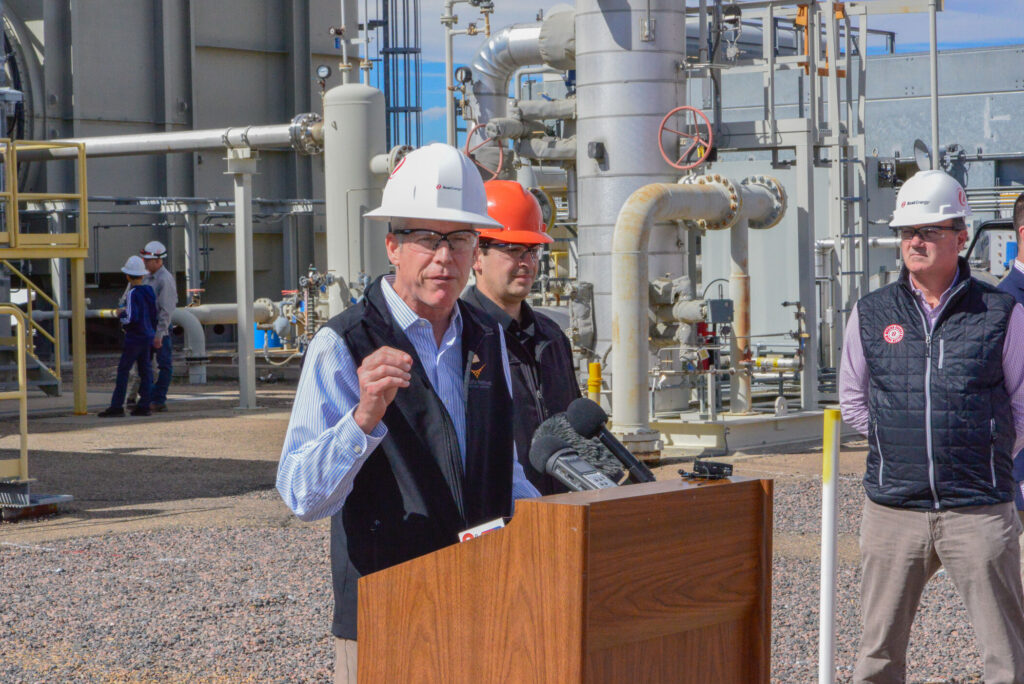
U.S. Energy Secretary Chris Wright on Monday warned that Colorado’s energy policies could lead to higher electricity prices and deter businesses, such as data centers, from locating in the state. Wright, a former executive of a Colorado-based energy company tapped...
Split vote by Colorado Title Board stops ballot push to privatize Pinnacol Assurance
Marianne Goodland
marianne.goodland@coloradopolitics.com
Updated 5 hours ago
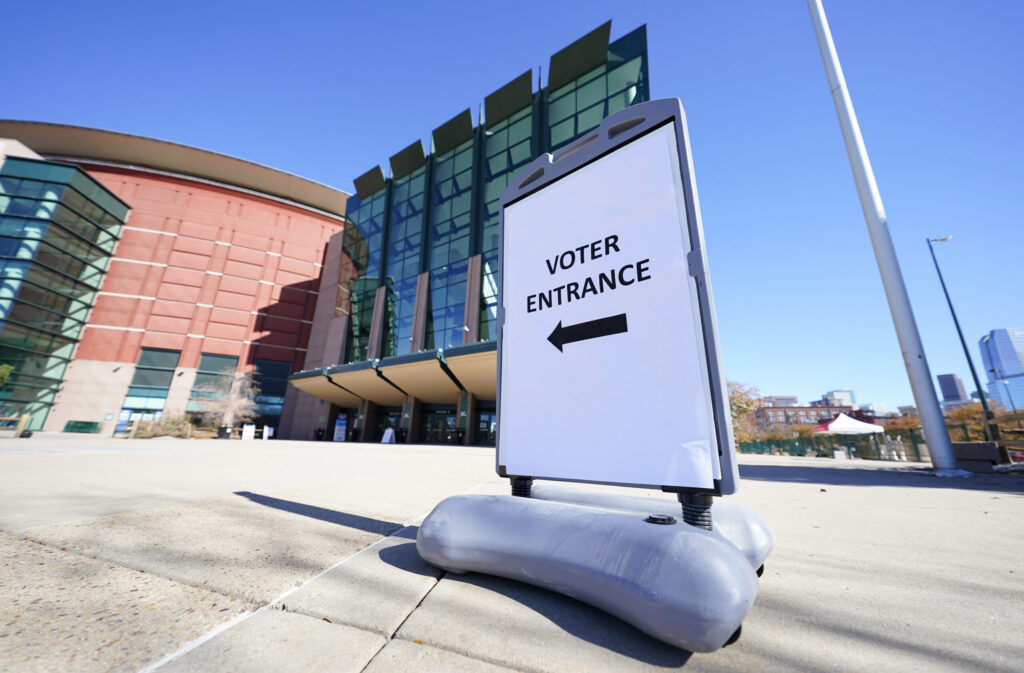
The Colorado Title Board, a three-member panel that sets the language for ballot measures, recently reversed a prior decision and blocked a proposal to privatize Pinnacol Assurance from moving forward. The main issue decided by the title board is whether...
Jackson and Kavanaugh disagree over if the Supreme Court treats Trump like Biden
David Zimmermann Washington Examiner
davidzimmermannwashingtonexaminer@wpstage.coloradopolitics.com
Updated 6 hours ago
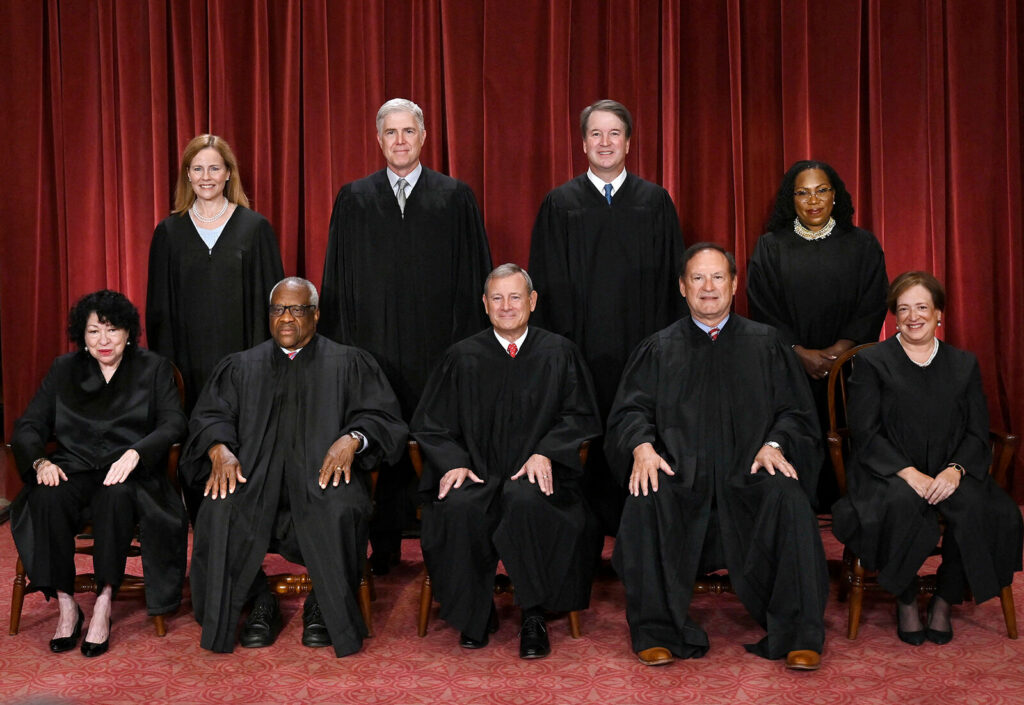
Supreme Court justices Ketanji Brown Jackson and Brett Kavanaugh disagreed on Monday over whether the high court treats President Donald Trump the same as former President Joe Biden in cases brought by their respective administrations. Jackson, who often writes dissents...

Rand Paul announces tentative date for Mullin DHS confirmation hearing
Washington Examiner Staff, Washington Examiner
washington.examiner.staff.washington.examiner@gazetteedit.wpenginepowered.com
Updated 6 hours ago
The nomination of Sen. Markwayne Mullin (R-OK) to be the next Department of Homeland Security Secretart was officially sent to the Senate by the White House on Monday. Mullin was nominated on March 5 by President Donald Trump to replace...
Trump calls SAVE America Act his ‘No. 1’ priority for House GOP
Rachel Schilke, Washington Examiner
rachel.schilke.washington.examiner@gazetteedit.wpenginepowered.com
Updated 7 hours ago
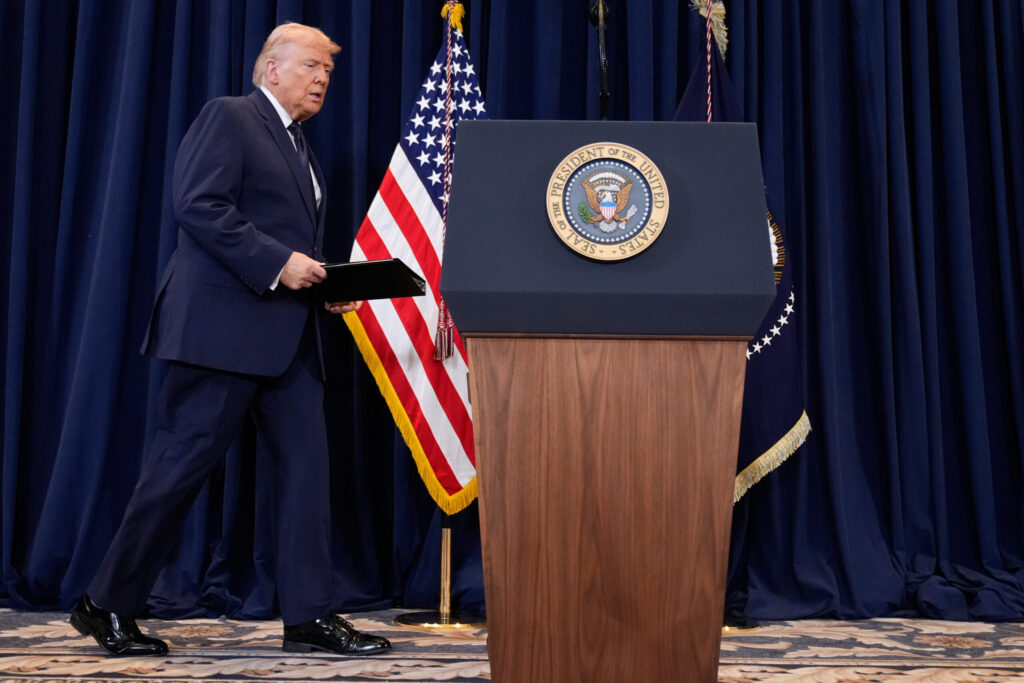
DORAL, Florida — President Donald Trump made his “biggest plea” to House Republicans on Monday: Pass the SAVE America Act, a GOP voter identification bill, even if it takes the rest of this year. A little over 100 of the...

Colorado Senate panel OKs bill named for Boulder teen cyclist killed in 2023 crash
Marissa Ventrelli
marissa.ventrelli@coloradopolitics.com
Updated 38 minutes ago
The Senate Judiciary Committee on Monday gave unanimous approval to a bill that would require law enforcement officers responding to crashes resulting in serious injury or death to offer drivers a voluntary breathalyzer test. Sponsors hope the measure would provide...

Fort Carson-based soldier killed in Iranian attack
Mary Shinn
mary-shinn@coloradopolitics.com
Updated 8 hours ago
A Fort Carson-based soldier is among the U.S. service members killed in an attack by Iran during Operation Epic Fury, according to a Department of Defense news release. Sgt. Benjamin N. Pennington, 26, died Sunday of injuries sustained during an...
Colorado open records bill dies in Senate committee
Marianne Goodland
marianne.goodland@coloradopolitics.com
Updated 7 hours ago
Efforts to overhaul Colorado’s open records law stalled anew. A proposal that would have extended response times for public records requests and added accountability measures for late responses failed to advance out of its first committee and will not move...
Colorado Supreme Court blocks ballot initiative defining ‘fees’
Michael Karlik
michael.karlik@coloradopolitics.com
Updated 1 day ago
The Colorado Supreme Court blocked a proposed ballot initiative on Monday that would have required voter approval for new fees above a certain threshold, while also enshrining a definition of “fee” into the state constitution for the first time. Chief...