

Colorado’s Medicaid overspending contributes to $1 billion hole in state reserve
Colorado’s budget writers on Thursday examined a $1 billion hole in reserves for the next fiscal year, a deficit aggravated by overspending by the state agency that administers Medicaid.
The Joint Budget Committee, which received revenue forecasts that will shape its decisions for the state’s 2025-26 spending plan, started its review by looking at the Colorado economy.
Policymakers learned that the state took in much less than hoped, a problem that will become more pronounced as they craft the next fiscal year’s budget.
Here’s just one headache: The Department of Health Care Policy and Financing HCPF, the state’s Medicaid agency, is over its budget by $150 million.
Broadly speaking, the forecast anticipates a continued, slowing economic expansion, but with more disruptive downside risks that include deteriorating household finances, election-related uncertainty, high borrowing costs that continue to discourage investment, and deteriorating labor market conditions.
While Colorado’s economic growth surpassed most expectations, at 2.7%, it will not continue at that level, according to Elizabeth Ramey, an economist with the Legislative Council staff.
She told lawmakers that consumer spending has been the main driver of economic activity, despite inflation and interest rates.
The change in the interest rates was likely the biggest news of the day, with the Federal Reserve announcing on Wednesday a 0.5% cut. This will have billowing effects on mortgage rates, car loan rates, and credit card rates down the road.
The cut is expected to be the first in a series continuing into 2026, Ramey said.
There was good news on inflation: Ramey said inflation, at 1.9% in Colorado, is below the national rate of 2.5% but the economist added that many households may not yet feel the relief.
The cost of energy is also down, she told lawmakers.
According to the forecast, housing price inflationary pressure is also on a downward trend. That means that home prices are easing, down some 3% compared to May 2022, Ramey said. Mortgage rates are starting to decrease, as well.
However, the downside is that homebuilding activity hasn’t picked up based on monthly permits.
The decline has been the steepest in single-family homes, which Ramey said was offset by permits for multifamily units.
But that isn’t looking good, either. She said economists expect homebuilding permits to fall by almost 25% this year and to begin to go back up next year.
Ramey attributed the decline to high interest rates for development projects and construction labor force shortages.
The Federal Reserve’s decisions on interest rates and a reaction from the labor market to those changing monetary policies counter the risks outlined earlier.
Ramey said the downside risks will be more disruptive to the state budget.
The forecast, updated from June, showed a lot of red ink.
The state took in $48 million less in fiscal year 2023-24 compared to June, $76 million less in fiscal 2024-25, and a whopping $411 million less in 2025-26 compared to the June forecast.
The “why” was attributed to the slowing labor market, which impacts income taxes, and constrained household finances, which impact sales taxes. Revenue from investment income and insurance premium taxes also took a small dive.
Economists from the legislative council and governor’s Office of State Planning and Budgeting (OSPB) forecast a drop in TABOR refunds, although they differed on how that would look.
In 2023-24, TABOR refunds are expected to reach $1.66 billion and be paid out in tax year 2024, using all three of the TABOR refund mechanisms — an income tax rate reduction, the six-tiered sales tax refund and property tax exemptions for seniors and veterans.
Legislative Council economists predicted, however, that 2024-25 refunds would drop to $365 million, allowing only the property tax exemption and sales tax refunds. OSPB believes that the drop will not happen until the following year.
However, one of the biggest headaches for lawmakers is what’s happening to the state general fund reserve.
That’s the state’s “rainy day” fund — and it’s raining.
The state is supposed to maintain a 15% reserve, but it is already below that 15% requirement at 12.7%, a drop of $285 million from the June forecast.
The total shortfall is $371 million.
The news got worse. The general fund reserve is likely to fall $1 billion short of its 15% requirement in the upcoming year, leaving it at about 9.2%.
Other factors that could require lawmakers to tap the reserve include capital transfers ($268 million), additional appropriations to cover items like increased caseload and inflation ($769 million), and what’s known as the ARPA roll-off ($593 million). That’s the expiration of American Rescue Plan Act funds that were used to offset a portion of FY 2024-25 appropriations.
Another part of that hit to the reserve is a requirement to cover overspending by the Department of Health Care Policy and Financing HCPF, the state’s Medicaid agency. The agency is over its budget by $150 million, which drew concerns and questions from lawmakers, who noted that Medicaid enrollment had declined with the expiration of the expanded Medicaid availability during the pandemic.
OSPB Director Mark Ferrandino attributed the overspending not to higher enrollment but to higher utilization of Medicaid services. He said 20% of the Medicaid population is responsible for 80% of the utilization, which is primarily vulnerable populations. It’s a problem many states are experiencing.
In Illinois, for example, the overspending on Medicaid is nearly $1 billion.
“We are seeing changing demographics,” he explained, including an aging population that needs more services.
Sen. Barbara Kirkmeyer, R-Weld County, said she is astounded by the lack of accountability for this spending and asked where the plan is to address this.
“We’ve budgeted $1 billion more to this department but we’re not getting accountability,” she said, noting that she’s hearing from providers that their contracts aren’t getting signed and reimbursement rates — which were supposed to go up in 2024-25 — haven’t. That’s leading to concerns that the state could lose providers.
Rep. Judy Amabile, D-Boulder, said she’s hearing that people on Medicaid are having more trouble accessing care.
“I want to be sure we have providers at the end of the day,” Kirkmeyer added.
JBC Chair Rep. Shannon Bird, D-Westminster, told Colorado Politics she doesn’t have a problem with using the state general fund reserve to cover the Medicaid problem.
As to next year’s budget, “we will have to make cuts,” she said.
But, she added, lawmakers will ensure the most vulnerable continue to have access to Medicaid services and protect K-12 and higher education funding.
Lawmakers will have to decide the “right size” of Medicaid relative to everything else in the budget, and that will require a long-term discussion on Medicaid sustainability, Bird said.
Budget writers will see the beginning of new payments to K-12 through the revised school finance formula adopted by lawmakers in the 2024 session. That’s $95 million more beginning in 2025-26, increasing to about $571 million by the end of its six-year phase-in through 2030-31.
Here’s the big question: Can the state budget afford it?
The state education fund, which receives one-third of 1% of all taxable income, sits at $1.1 billion. If the general fund contribution to school finance is held constant, the state education fund will run out of money by 2026-27. If lawmakers approve a 4.2% increase in general fund to school finance, the state education fund will still be broke by 2027-28. That’s the historical increase lawmakers have been sending to school finance.
Only if lawmakers approve a 5.3% increase will the state education fund stay above $100 million through the next five years.
The forecast from OSPB was quite like the legislative council’s numbers and expectations.
Those economists agreed on changes in the labor market, with more people looking for work, the inflation rate, and declining housing prices.
The economists also saw increased chances the state will see a recession, from 25% to 33%, with more downside risks, such as longer-term demographic risks with a rapidly aging population and slower population growth.
Their expectations for general fund revenue were also lower, partly due to the passage of the Family Affordability Tax Credit and the higher Earned Income Tax Credit, both approved by lawmakers in the past year.
OSPB also looked at four ballot measures in November that will affect the state budget.
• Proposition JJ, which would “de-Bruce” sports betting tax revenues and allow the state to retain and spend all it collects, would result in additional revenue of $6.1 million in the current fiscal year
• Proposition KK, which would impose a 6.5% excise tax on the sale of firearms and ammunition, would exempt $39 million from state revenue limits
• According to Legislative Council estimates, Proposition 112, which would require people convicted of the most serious crimes to serve 85% of their sentences, wouldn’t affect the budget for 20 years, although OSPB estimated it would be more like seven to 10 years, and it would have a $12 million annual impact.
• Proposition 157, which directs the legislature to increase funding for the state Department of Public Safety by $350 million, also creates a $1 million death benefit that economists said would cost about $4 million per year, over and above the $350 million.

Grand Canyon flooding threatens economy that’s still recovering from a fire | OUT WEST ROUNDUP
Ernest Luning
ernest.luning@coloradopolitics.com
Updated 3 days ago
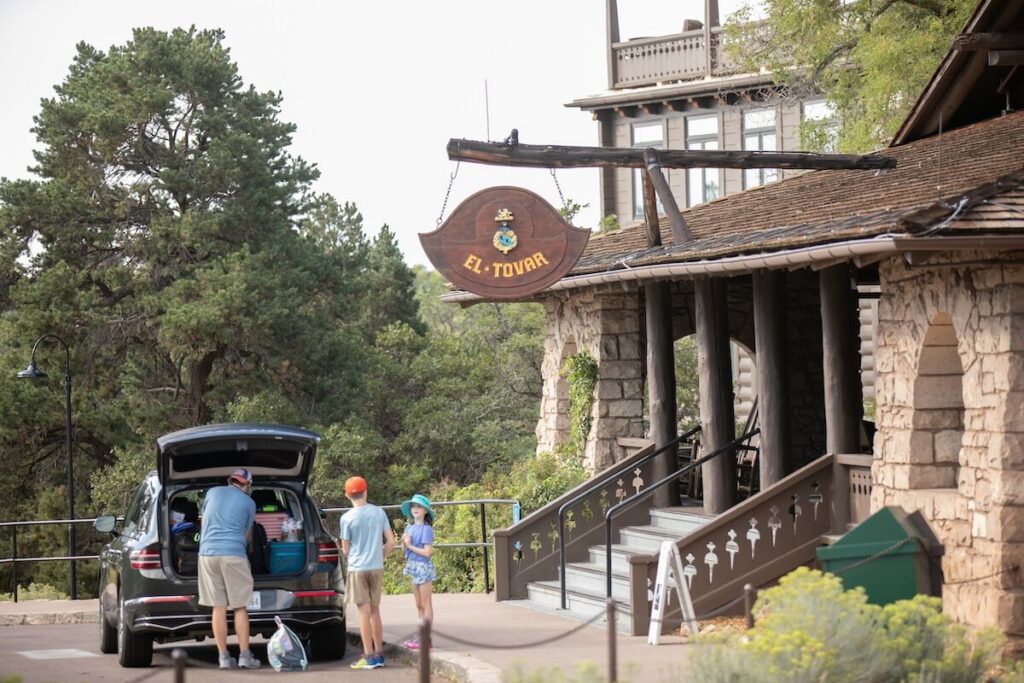
ARIZONA Flooding slams park’s economy Deadly flooding at the Grand Canyon is damaging the area’s economy, with a washed-out pipeline severing the South Rim’s water supply and shutting down lodging at the popular tourist vista for an indefinite period. The...

Immigration reporting measure fuels debate over Colorado’s role with ICE
Marissa Ventrelli
marissa.ventrelli@coloradopolitics.com
Updated 4 hours ago
A coalition of advocacy groups and several district attorneys rallied outside the Colorado Capitol on Thursday to oppose a ballot measure that, if approved by voters in November, would require state and local law enforcement to cooperate with federal immigration...
Colorado Politics Calendar Sept. 14-20
Rachael Wright, Special to Colorado Politics
rachael.wright@coloradopolitics.com
Updated 4 days ago
CoPo’s weekly political calendar will help you find political and public-policy events throughout Colorado. It includes candidate and issue campaign events, public policy meetings, court hearings, state and local party conventions, assemblies, debates, rallies, parades, speaking engagements, traveling dignitary appearances,...
The African roots of three Colorado leaders | SONDERMANN
Eric Sondermann
eric-sondermann@coloradopolitics.com
Updated 3 days ago
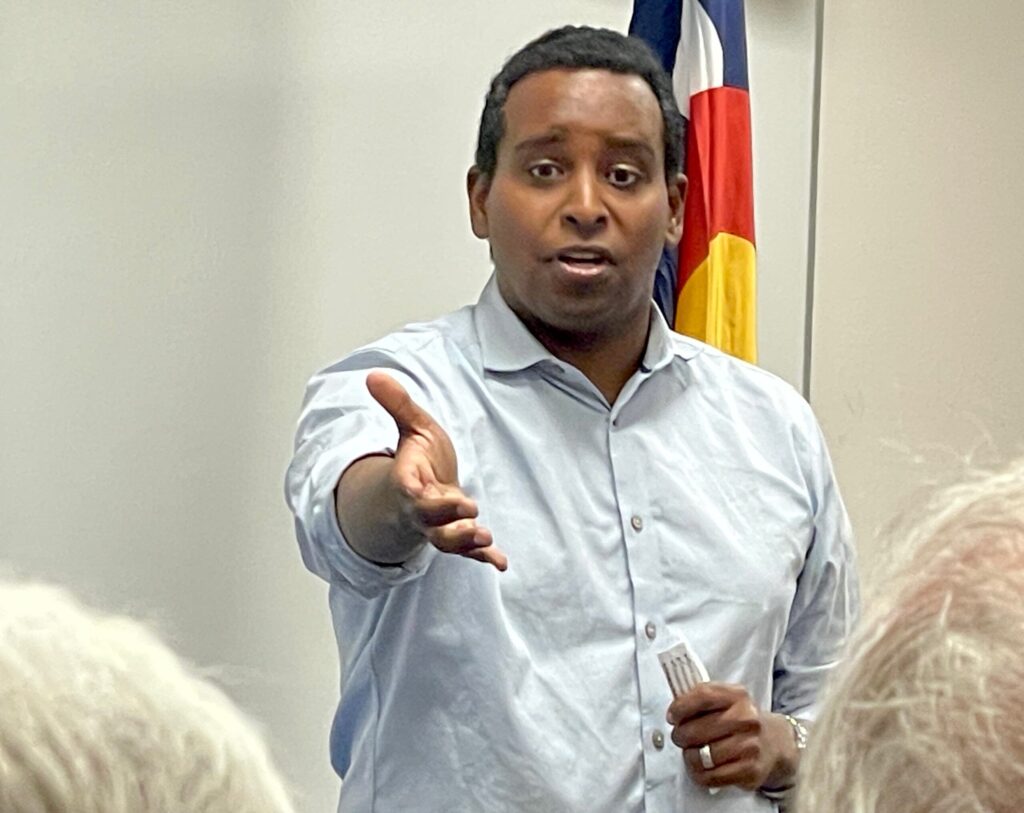
Colorado’s political transformation is measured in many ways. A once reliably red state (with asterisks) became purple and is now a rather deep blue. For better or worse, probably the latter, power is ever more consolidated along the Front Range...
Federal judge green-lights civil trial against ex-Fort Collins DUI officer
Michael Karlik
michael.karlik@coloradopolitics.com
Updated 2 days ago
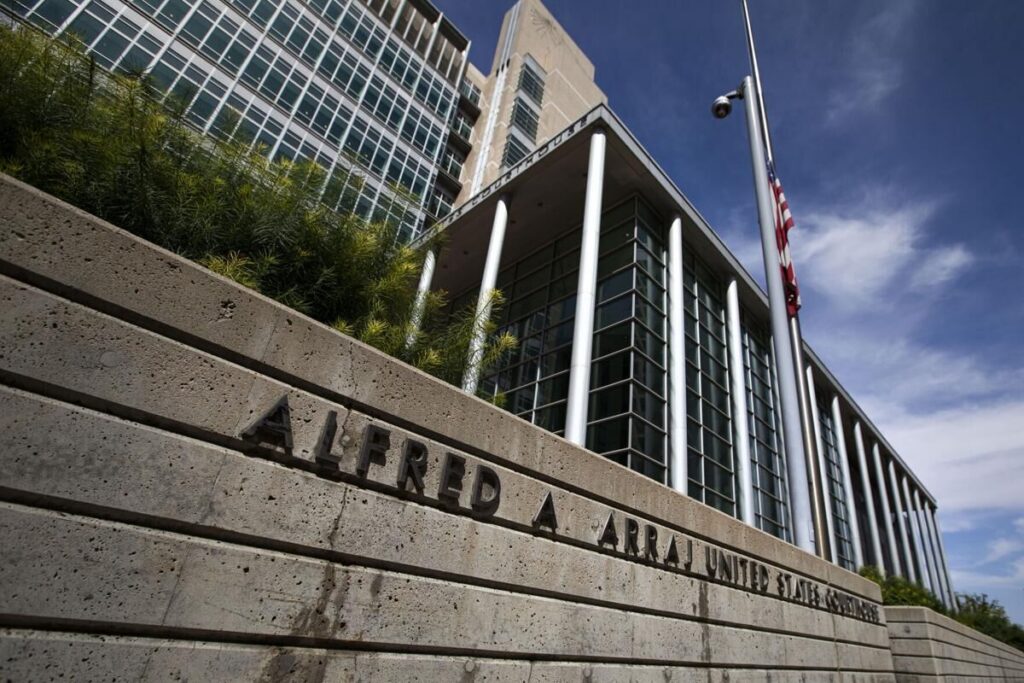
A federal judge ruled on Thursday that Fort Collins’ former “DUI officer” will face a civil trial for allegedly investigating a motorist for impaired driving without any reasonable suspicion to do so. In recent years, several people arrested by Officer...

Denver police reopen 13 sex assault cases after retesting Missy Woods’ CBI work
Jenny Deam
jenny.deam@gazette.com
Updated 4 hours ago
Thirteen previously closed Denver sexual assault cases have been reopened after the city’s crime lab retested DNA evidence once analyzed by former Colorado Bureau of Investigation forensic analyst Yvonne Woods. A police spokesperson told The Denver Gazette the once-closed cases...

Ballot measure aims to shift Colorado sporting goods tax revenue to land, water and wildfire projects
Marissa Ventrelli
marissa.ventrelli@coloradopolitics.com
Updated 20 hours ago
Colorado voters this November will decide whether to direct a share of sales tax revenue from sporting goods — including bicycles and skiing equipment — toward land and water conservation, wildfire prevention and expanding outdoor recreation. Supporters say the measure...

Colorado Supreme Court suspends Mesa County judge pending misconduct investigation
Michael Karlik
michael.karlik@coloradopolitics.com
Updated 22 hours ago
The Colorado Supreme Court suspended Mesa County Court Judge Michael J. Grattan on Thursday amid a misconduct investigation. The court’s Sept. 10 order gave Grattan 21 days to explain why his paid suspension should not continue through the end of...

Trump honors the fallen of the 9/11 terrorist attacks during Pentagon speech
Mabinty Quarshie
mabinty-quarshie@coloradopolitics.com
Updated 2 days ago
President Donald Trump and first lady Melania Trump honored the roughly 3,000 Americans killed during the Sept. 11, 2001, terrorist attacks during a ceremony at the Pentagon. The event marking the 25th anniversary of the deadliest attack on American soil...
Colorado Supreme Court changes course, dismisses case about special district bonds
Michael Karlik
michael.karlik@coloradopolitics.com
Updated 22 hours ago
The Colorado Supreme Court declined on Friday to decide a dispute between a large-scale Commerce City development and the various districts financing it, after initially showing interest in the ongoing case. Colorado has roughly 2,800 special districts, which are local...