

Cherry Creek West project sparks density, traffic concerns
Residents and neighbors of Cherry Creek have hunkered down to push for changes and assurances ahead of a key meeting this week at Denver City Hall, even as some expressed disappointment that, despite the worries they have raised, Denver officials appear bent on approving a massive redevelopment of the west end of a prominent shopping center.
Indeed, the one thing that proponents and opponents agree on is that the project already has overwhelming support from Denver city officials — and is likely to get a go-ahead for rezoning.
Some are urging city planners to listen to their concerns, while pointing to the defeat of another major redevelopment project at the ballot box last year as a warning to Denver officials to not ignore residents.
“It’s going to be approved,” said Cherry Creek resident Bill Tanner, who leads a planning committee for the Cherry Creek East Association, one of a number of resident organizations that have expressed fears about the project as it heads to a Denver Planning Board hearing Wednesday.
Tanner told The Denver Gazette that Cherry Creek West — 1.6 million square feet of offices and apartments that would fill a 13-acre site at E. First Avenue and University Boulevard — checks all the boxes that administrators appear to prioritize now, as Denver deals with its future in a post-COVID era.
Included on that list, Tanner said, is a potent source of tax revenue at a moment when proposed solutions for urban crime and homelessness have left the city cash strapped. Cherry Creek has been an attractive revenue generator for the city — more than $112 million in taxes during last year alone.
‘Density’ as the panacea to Denver’s woes?
City planners’ inclinations toward the project, which is on track to be 45% larger in square footage than Cherry Creek Shopping Center itself, are particularly rooted in a belief that greater “density” is a solution for many urban problems.
The density rationale is encompassed in the “15-minute city” idea — widely quoted in support of the project. The urban planning concept envisions communities where employers, shops, schools, medical care, and recreation all lie within a 15-minute walk, bike or bus ride from where residents live.
That philosophy has also permeated policymaking at the state Capitol, where lawmakers are pushing for housing clusters close to transit as some kind of panacea to the state’s housing and transportation challenges.
“I don’t understand (the idea that) the way you cure congestion is through greater density. I don’t see it,” said Buzz Geller, a resident in Denver’s Country Club neighborhood just west of the project site. The organization has withheld support for Cherry Creek West while demanding added limits on the heights of its buildings.
The city has echoed the idea in Denver Moves Cherry Creek, a report issued by the Department of Transportation and Infrastructure last February, addressing traffic congestion along E. First, University and other Cherry Creek thoroughfares.
“An increase in density is needed to support higher frequency and more reliable transit, as well as walking and biking,” the DOTI report said. “More homes, jobs, and businesses … increases ridership, revenue generated from fares, and the number of people who live and work within a short walk to a bus stop.”
Opponents are widely skeptical about “density” as a cure-all, and about rapid transit as a means to enable that. Several cited a kind of circular logic embedded in the idea, along the lines of “we need more residents to serve buses,” and then “we need more buses to serve residents.”
But as the project speeds toward approval, neighbors are focusing their attention on getting assurances and limitations worded into the planned-urban development (PUD) documentation that will guide the city’s future oversight of the project.
“The biggest problem is that the PUD doesn’t represent what they’re showing us as images,” said architect Bob Fuller with Country Club Historic District’s neighborhood association.
“Denver wanted additional affordable units and we’d love to have that, but we wish they would cap at an average of 10 stories, with no more than seven buildings.”
Lou Raders of the Cherry Creek North Neighborhood Association is planning to attend the Planning Board hearing on Wednesday.
“I will be there to object to what is currently in the zoning documents, as they do not represent the codification of what has been presented to the area residents over the last two-and-a-half years,” Raders said.
Raders also chairs the Cherry Creek Steering Committee, with members representing a broad group of Cherry Creek stakeholders, including several surrounding neighborhood organizations. The committee is working to address the issues with the project as it heads for the Planning Board.
Last week, Raders wrote the planning board on behalf of the steering committee, asking for better guarantees regarding specifics that will influence the anticipated impacts.
Raders and other leaders were quick to note that the project’s developer, East West Partners, is widely respected for its new urban projects around Denver and has been cooperative with the neighbors in answering concerns.
“The developer has been on board with neighborhood and area concerns,” Raders told The Denver Gazette. “But the zoning doesn’t reflect what has been represented.”
Raders and other neighbors said that the PUD being approved in the course of rezoning doesn’t echo the parameters that East West has defined for Cherry Creek West — including the heights, densities or even the number of buildings that could be created over a planned, decade-long buildout.
As currently presented by East West in their website materials, the project would deliver seven buildings of offices and apartments between First Avenue and the Cherry Creek bike trail to a site that now houses the old Bed Bath & Beyond store, Elways steakhouse, some low-rise stores, and parking. The Bed Bath & Beyond store closed in 2017.
Buildings at Cherry Creek West would average 10.5 stories in height, and some could tower to 13 stories.
Will Cherry Creek choke?
Central to the Cherry Creek question is whether the area can absorb such a large-scale project.
Though both sides agree the redevelopment would attract traffic, supporters insist it can handle it.
Critics, meanwhile, said planners are missing the impact that large scale projects, including Cherry Creek West and the redevelopment north across First of the old Sears site by BMC Investments, would have when they open. In particular, they pointed to a study suggesting that an additional 1,922 vehicle trips would be generated by the project, boosting traffic at First and University, which is already reaching its maximum capacity during rush hours.
Also implicit in the study is the assumption that any projection will likely underestimate actual growth in Cherry Creek, just as the 2013 estimate understated the development that materialized over the last 10 years.
Ultimately, opponents fear the scale of the project would choke Cherry Creek, effectively killing what has been a golden goose of revenue for the city.
East West, which conducted its own study, insisted that the project would draw in substantially less traffic — “almost half of what they’re projecting,” a spokesperson for the developer said. Other supporters said traffic worries at the site are overblown.
Nick LeMasters, president and CEO of the Cherry Creek Alliance, earlier said that while the intersection at E. First Avenue and University is “challenged,” the problem manifests in specific times of the day — from 7 to 9 a.m. and from 4 to 6 p.m.
“If you’re driving down First any other time of the day it’s not a significant problem,” LeMasters said in a previous interview.
Both the residential apartments and the commercial components of the project are likely to meet strong market demand, according to brokers and developers. Project supporters and opponents all said that affordable housing is badly needed around the shopping district, though they offered different solutions to meet that challenge.
Meanwhile, brokers noted, some 600,000 square feet of offices would see quick absorption from employers. Some of them would be moving from less-expensive downtown office areas that have struggled following the pandemic, anxious to lure employees back to the office in Cherry Creek’s more attractive setting.
It’s precisely that draw that is leading some to worry about the project’s potential impact on the city’s efforts to revitalize downtown Denver, arguing that limited resources, such as money for transportation infrastructure, is best allocated toward the struggling area — not to Cherry Creek, which, they argued, is best left alone.
The proposed expenditure on Cherry Creek is coming at a time when officials are pressing for tax hikes to generate nearly $200 million in revenue for housing and Denver Health. If approved at the ballot box, they would make Denver the highest-taxed city in the metro area, rivaling only Colorado’s mountain resort towns.
In response to queries from neighborhood groups, Amy Cara, managing partner at East West, wrote residents to confirm that no — many of the proposed specifications that have been outlined by East West in the course of its initial proposal are not actually defined in the PUD being approved by city planning.
Cara wrote that the PUD does not specify how many buildings would be permitted on site; nor does it specify the density of the structures; nor the size of the floorplates; nor the overall density of the development.
The PUD does, she wrote, limit building heights to 13-stories, 168 feet. Cara told the residents that other factors, including market conditions and ancillary agreements, will work to keep the project close to East West’s vision.
That has done little to reassure nervous residents, some of whom recall original plans dating from the 1980s and 1990s, when Cherry Creek Shopping Center was being rebuilt into its current mall configuration. At that point, some recall, the current project site was envisioned for nothing more than a hotel and low-rise shopping.
Some of their worries center on what new directions the project’s office components might take over the course of its decade-long buildout.
As a for-instance, Raders mentioned the possibility that some future buildings might attract medical office tenants, which Raders and the residential members of the steering committee want to limit.
“We want (the city) to set limits so that future phases won’t allow the project to become a medical campus,” Raders told The Denver Gazette.
“We have a UC Health building on First and Cook, which has been a welcome addition to the neighborhood. But you can see how people drive in and out for appointments all day long. For CCW, this use would generate much more traffic than the project originally anticipated.
“All of sudden we could have a medical office campus that won’t be able to support the traffic and for which the planned traffic management systems would not be able to effectively offset.”
‘Overwhelming’ height and sheer density
Developer David Steel of Western Development Group, who was among the developers who created some 8.5 million feet of offices, hotels and residential buildings that arrived north across First in the Cherry Creek North shopping district since 2014, said the city could end up “tripping over its own feet” as the buildout impacts the area.
One of the concerns is grocery shopping.
Steel, who along with former Denver City Councilman Wayne New submitted the traffic impact study on the project to the city earlier this year, said one of the logical uses for the site could have been for a supermarket. Cherry Creek is currently served only by its Whole Foods store at E. 2nd Avenue and Josephine. It lost its erstwhile Safeway store in 2018.
“All of a sudden, there is no place for these guys to go,” Steel said. “Ground is so expensive. (For groceries) you got to go to Sixth and Corona, or Glendale. It closes the door on getting better food service here.”
Both Steel and New voice discouragement at how quickly the project has moved past the point where neighbors could have provided input that might have redirected it.
“It’s disheartening from my perspective,” Steel told The Denver Gazette.
“It’s unusual for a big-time developer like David Steel to be against this,” added Country Club’s Geller, who was among numbers of neighbors from other organizations who gathered last weekend for a meeting on strategy, as the planning board submission looms.
“Nobody is saying that nothing should be built there,” Geller told The Gazette. “The sheer height and density is what is so overwhelming.”
In addition to Rader’s Steering Committee letter, the city’s planning website listed numbers of individual area residents’ letters on the project. Some of those are in support, with some of their texts reflecting a similar wording. But several neighbors expressed dismay with the visage.
“I ask that you turn down their development application and have them reduce the height and density of this behemoth project,” Christina Caulkins, a resident of Polo Club, wrote to Denver City Council members Amanda Sawyer and Paul Kashmann, whose districts border the area.
Curt Brunk, who wrote from the neighborhood south of the shopping center bordering Cherry Creek South Drive, said building heights are a key problem.
“Twelve (or) 13 story buildings are way too tall for what is essentially a transition zone of Cherry Creek to those of us on the other side of the Creek,” Brunk wrote, referencing the trail corridor.
“Having 13-story buildings that go straight up will create a dark canyon because it blocks the sun in the morning and because it will create a sheer cliff wall to the north side of the creek, when the whole point of the creek is that it is essentially an open space for walking, talking, enjoying nature.”
Cherry Creek East’s Bill Tanner told the Denver Gazette that he and other residents will be upset if the planning and zoning process doesn’t result in signed agreements limiting heights of buildings and specifics about open space.
Tanner noted the outcome of 2023’s overwhelming defeat of the Park Hill Golf Course redevelopment project is a warning sign to planners about voters’ concerns with density and open space.
“Residents sent a message that we don’t want another development,” Tanner said. “The city hasn’t been quite doing the job of looking out for residents.”


‘CoCo’ would take taxpayers for a ride | John Caldara
Jon Caldara
jon-caldara@coloradopolitics.com
Updated 2 days ago
Colorado wants taxpayers to spend another $4.73 billion on passenger rail. Don’t worry. They have a plan. Which is a little like your brother-in-law announcing he’s launching another exciting restaurant venture after his last three restaurants ended in bankruptcy. Please....

Colorado Politics Calendar July 27-Aug. 2
Rachael Wright, Special to Colorado Politics
rachael.wright@coloradopolitics.com
Updated 4 days ago
CoPo’s weekly political calendar will help you find political and public-policy events throughout Colorado. It includes candidate and issue campaign events, public policy meetings, court hearings, state and local party conventions, assemblies, debates, rallies, parades, speaking engagements, traveling dignitary appearances,...

Armstrong staffer considers congressional bid, DeGette angers rural communities with wilderness act | A LOOK BACK
Rachael Wright, Special to Colorado Politics
rachael.wright@coloradopolitics.com
Updated 3 days ago
Forty-five years ago this week: If the lines were drawn just right, Republican Sen. Bill Armstrong stood the chance of losing his office manager, Ruth Fountain. Fountain admitted she was seriously thinking about running for Colorado’s new congressional seat in...

Colorado districts prepare for school year amid mental health cuts. But will less cellphone distractions help?
Marissa Ventrelli
marissa.ventrelli@coloradopolitics.com
Updated 2 days ago
The signs of a new school year are everywhere — buses in the shop, teachers unpacking boxes, families ticking through supply lists — but behind the familiar rituals, Colorado districts are preparing for a year defined less by routine than...

The through line from Donald Trump to Victor Marx | SONDERMANN
By Eric Sondermann
by-eric-sondermann@coloradopolitics.com
Updated 4 days ago
Over 10 years ago, before Donald Trump could ever defeat Hillary Rodham Clinton, he had to first engineer a hostile takeover of the Republican Party. Prior to his descent of that golden escalator, the previous seven Republican presidential nominees had...
10th Circuit dismisses woman’s lawsuit following 10-year attempt to undo restraining order
Michael Karlik
michael.karlik@coloradopolitics.com
Updated 2 days ago
The Denver-based federal appeals court rejected a woman’s challenge on Friday to a restraining order imposed on her more than a decade ago, finding that she cannot credibly claim she will be prosecuted for violating the restraining order through her...
10th Circuit dismisses woman’s lawsuit following 10-year attempt to undo restraining order
Michael Karlik
michael.karlik@coloradopolitics.com
Updated 2 days ago
The Denver-based federal appeals court rejected a woman’s challenge on Friday to a restraining order imposed on her more than a decade ago, finding that she cannot credibly claim she will be prosecuted for violating the restraining order through her...

Surprise candidate Shimon Blau cleared to face off against Melat Kiros in November
Ernest Luning
ernest.luning@coloradopolitics.com
Updated 2 days ago
Unaffiliated congressional candidate Shimon Blau, a Denver doctor, has qualified by petition for the general election in Colorado’s 1st District, where Democrat Melat Kiros defeated 15-term U.S. Rep. Diana DeGette in last month’s primary, the Colorado Secretary of State’s Office...

Colorado produce not tied to nationwide cyclospora outbreak, agriculture officials say
Marissa Ventrelli
marissa.ventrelli@coloradopolitics.com
Updated 22 hours ago
There is no indication that the recent outbreak of cyclospora, a fecal parasite that has contaminated food and water across nearly every state, can be linked to produce grown in Colorado, according to the state’s Department of Agriculture. “Colorado growers...
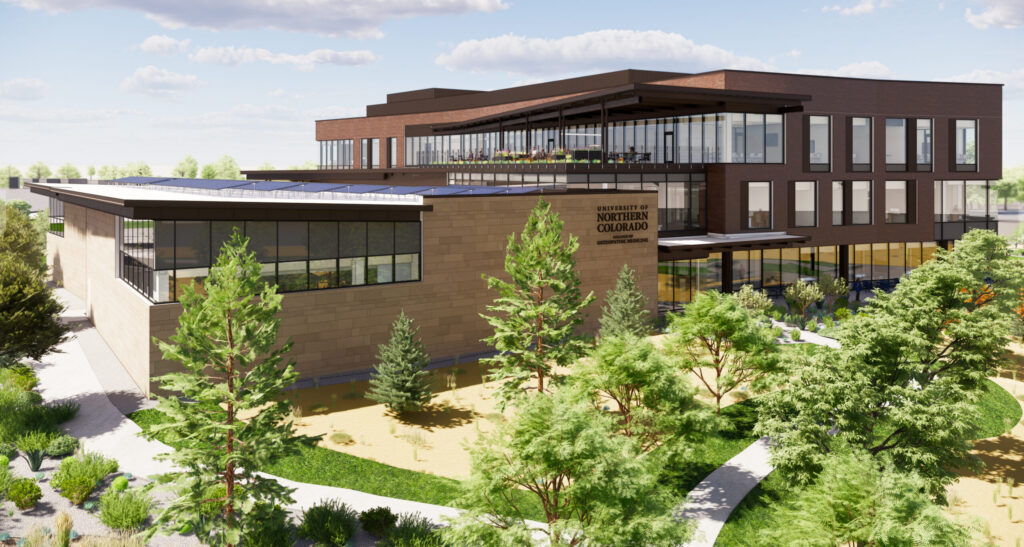
UNC opens College of Osteopathic Medicine
Marissa Ventrelli
marissa.ventrelli@coloradopolitics.com
Updated 2 days ago
The University of Northern Colorado held a grand opening for its new College of Osteopathic Medicine on Friday, with Gov. Jared Polis in attendance to celebrate the culmination of a two-year, $127.5 million project. The project was funded through legislation...