

The end of Reaganism? | SLOAN

Kelly Sloan
It can generally be conceded we spend far more time than we ought to analyzing vice-presidential candidate picks. That is not to say the selection of a running mate is inconsequential — just ask Lyndon Johnson, George H.W. Bush or Kamala Harris — only that we tend to dissect the decision mainly because it’s fun to do so, not because it tends to make that big of a difference in the long run. The conventional political wisdom tells us a running mate won’t do much to help a presidential candidate, but can certainly hurt. That tends to hold true.
Everyone is waiting to see who Harris will pick, and what that person will have to offer the ticket. The Democratic Party coalesced around Vice President Harris as replacement for President Joe Biden almost instantly. Certainly Harris does not come with the increasingly obvious weaknesses that plagued Biden. But that coalescing was a product of political necessity, given the election is a mere 100 days away. Few argue Harris is anything close to the ideal candidate. Consequently, she needs all the help she can get.
Stay up to speed: Sign up for daily opinion in your inbox Monday-Friday
As for former President Donald Trump’s selection, the best that can be said is, one, J.D. Vance is not approaching his ninth decade on the planet and, two, it crystallizes the Republican Party, at least at the top of the ticket, is committed to a different direction. Many hoped for a more traditional conservative to fill the billet, but that was never going to happen. In selecting Vance, Trump has signaled clearly he intends to complete the transmogrification of the GOP from a conservative party to a populist one.
What does that mean, exactly? Vance is as good a representative of that new vision as anyone, having rebranded himself over the years accordingly. Populism of the Trump/Vance variety borrows from both the left and right, but the most significant changes are to the left. It is ironic MAGA true-believers, at those in Colorado, like to label their traditionally conservative adversaries as “uniparty,” suggesting little to no difference between their policies and those of the Democrats, when many of the key platforms of MAGA are remarkably homogeneous with the liberal Democratic left. On some of the most important issues — trade, government spending, entitlements, foreign policy — the difference in approach between Trump/Vance and Democratic policies going back to before the New Deal are subtle at best.
The author of “Hillbilly Elegy,” for reasons known but to him, has apparently fallen for the type of big-government, anti-growth policies that exacerbate the very conditions and social problems he describes. A great deal of the rhetoric in Vance’s acceptance speech during the Republican National Convention — for instance, around the evils of Wall Street, the Iraq War, evocations of class warfare, condemnation of the use of American power and opposition to free trade — could have been included in speeches by John Kerry, Barack Obama, either Clinton, Michael Dukakis, or George McGovern. John Kenneth Galbraith could have written much of that speech for him.
In other words, as George Will pointed out in a recent column, “concerning the broad contours of public policy, there is a disturbing convergence. Programmatically, the parties are more aligned than they have been since the 1950s, when President Dwight D. Eisenhower caused Republicans to accept the permanency of the New Deal’s legacy.”
Indeed. Yet for all that, Harris offers an even more distressing vision for the country. She had a unique opportunity to define herself when she became heir-apparent, simply by not having had to win the candidacy by way of a primary. Most voters have forgotten the primary she was in, in 2020, and this time around she had the chance, rarely presented, to stake out a position nearer the coveted political center, without first having had to tack left to win over the Democratic base. Granted, her record is not exactly moderate, and it would have required an impressive bit of sleight-of-hand, but it could have been done. Instead, right out the gate she cemented her progressive bona fides.
The populists have taken to writing off the traditional Republicans as “zombie Reaganites,” evocative of Obama’s quip during the 2012 presidential debate the “1980s called and want their foreign policy back,” referring to Mitt Romney’s warnings about Russian revanchism. Yet America still faces an existential debt crisis. Government spending has kept inflation unacceptably high. And on top of the existing foreign crisis, we are greeted this week with the news of an actually stolen election in Venezuela, and the long-overdue neutralization of Hamas’s Terrorist-in-Chief, which, as welcome as that is, draws Iran closer to the fray. Reaganism may be in disfavor within the GOP hierarchy at the moment, but it’s not going anywhere. And it will be back in due course — simply because America, and the world, needs it.
Kelly Sloan is a political and public affairs consultant and a recovering journalist based in Denver.

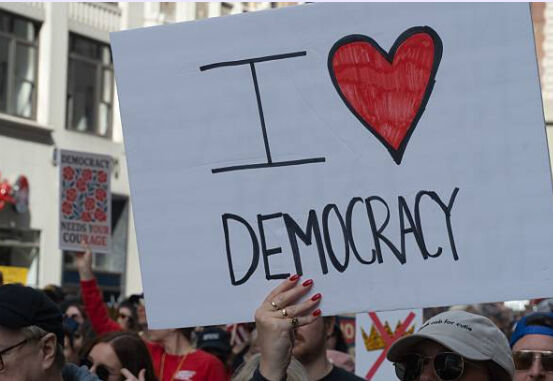
Can deliberation save democracy? | Vince Bzdek
Vince Bzdek
vince.bzdek@gazette.com
Updated 2 hours ago
By Vince Bzdek In September 2019, 523 Americans traveled to Dallas, Texas, for an experiment called “America in One Room.” The gathering was designed to test a theory: Could representative citizens deliberate productively even in an era of intense polarization?...

Is Trump a builder or just a latter-day headhunter? | SONDERMANN
By Eric Sondermann
by-eric-sondermann@coloradopolitics.com
Updated 2 days ago
It was well under 100 hours after President Donald Trump’s overly long, overly theatrical State of the Union speech that he unleashed American bombers across Iran. As I write, it is now less than 100 hours since those bombers started...
Pueblo board violates Open Meetings Law | Dennis Maes
Dennis Maes
dennis-maes@coloradopolitics.com
Updated 21 hours ago
By Dennis Maes I recently witnessed two serious violations of the Colorado Open Meetings Law by the Pueblo Urban Renewal Authority (PURA) board. Both were brought to the attention of the board in an open meeting and entered on the...

Legislation would undermine educational opportunity | OPINION
Colorado Politics
colorado-politics@coloradopolitics.com
Updated 2 days ago
By Norton Rainey and Weston Kurz New legislation under consideration by Colorado lawmakers could have far-reaching consequences for Colorado students and families looking for new educational options. HB26-1292, currently under consideration by the Colorado General Assembly, would severely limit the...

Medicaid cuts for critical care hurts providers, reduces access to the best care for patients | OPINION
Colorado Politics
colorado-politics@coloradopolitics.com
Updated 2 days ago
By Gurdev Rai This year, the legislative session started with one thing on everyone’s minds: the state budget, and the major hole created by Congress’ HR 1 law. Costs, including for health care, have ballooned across the board, and we...
Not-so-public comment in Douglas County | Paula Noonan
Paula Noonan
paula-noonan@coloradopolitics.com
Updated 2 days ago
Let’s do some high and low history. First, the high history. England’s King George III didn’t like the complaining he heard from the American colonies, so he went to war to shut the people up. President Donald Trump doesn’t like...
Why Colorado should stop charging swipe fees on sales taxes | OPINION
Colorado Politics
colorado-politics@coloradopolitics.com
Updated 2 days ago
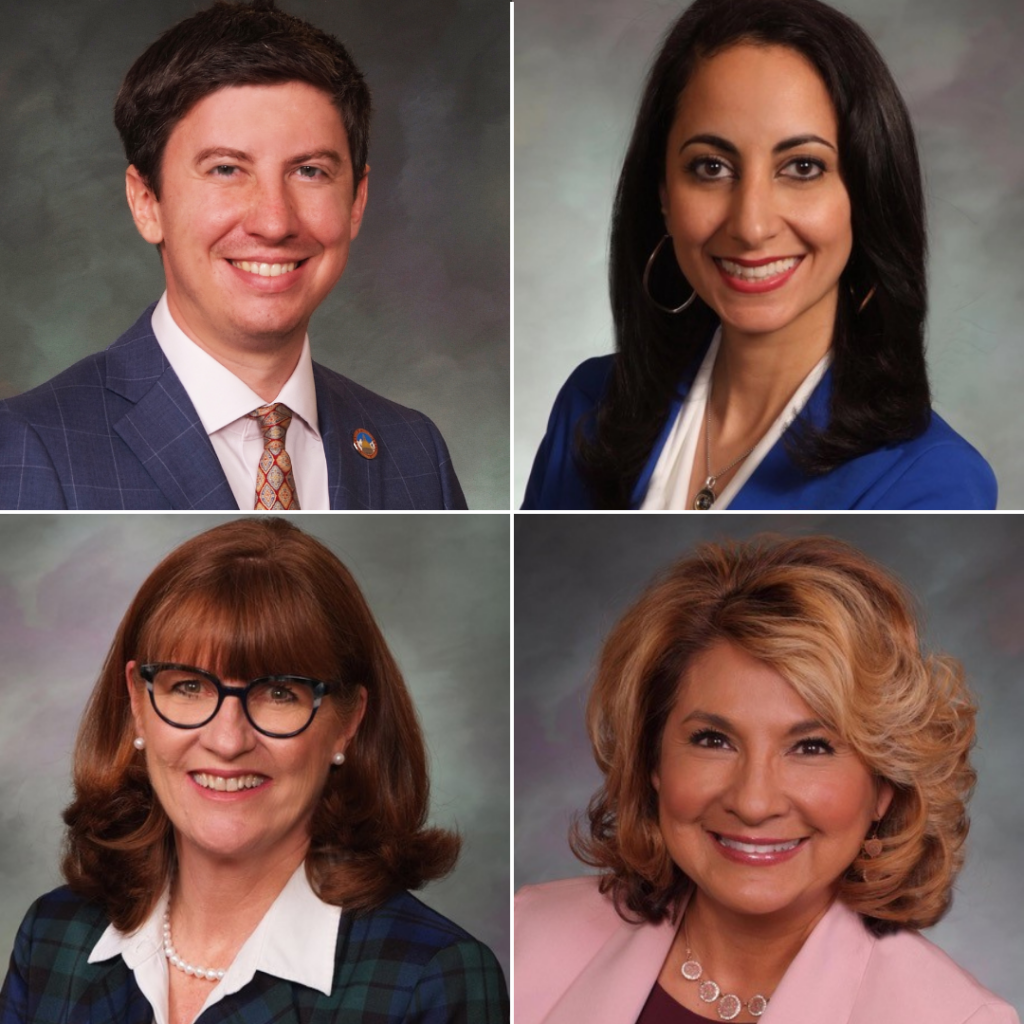
By William Lindstedt, Iman Jodeh, Julie McCluskie and Monica Duran Small businesses across Colorado are working harder than ever right now to keep their doors open, hire local workers and serve their communities. But every day, they are forced to...

Colorado can be a gamechanger in regulating GLP-1 weight loss drugs | OPINION
Colorado Politics
colorado-politics@coloradopolitics.com
Updated 3 days ago
By Nancy Glick “As goes California, so goes the nation” is a phrase reflecting California’s reputation as a bellwether in setting regulations that often become a precedent for national policy. Now, Colorado can play this role, setting new safety standards...
Colorado can be a gamechanger in regulating GLP-1 weight loss drugs | OPINION
Colorado Politics
colorado-politics@coloradopolitics.com
Updated 3 days ago
By Nancy Glick “As goes California, so goes the nation” is a phrase reflecting California’s reputation as a bellwether in setting regulations that often become a precedent for national policy. Now, Colorado can play this role, setting new safety standards...

The public health hazards in sports betting | PODIUM
Colorado Politics
colorado-politics@coloradopolitics.com
Updated 2 days ago
By Brandon Zelasko As Colorado lawmakers revisit sports betting policy this session, the state has an opportunity to widen the lens. Beyond revenue projections and regulatory frameworks lies a critical question: Are we fully reckoning with the human effect of...