

A framework for a measured, responsible transition to RCV | COUNTERPOINT

Lisa LaBriola
One of the most contentious bills awaiting Gov. Jared Polis’s signature is SB24-210, a bipartisan effort to modify Colorado’s election laws. This bill, coupled with a ballot initiative proposing the adoption of rank-choice voting (RCV), has sparked significant debate.
If signed, SB24-210 would impose specific requirements for municipalities wishing to implement RCV. These include conducting audits to verify correct outcomes and meeting other criteria, with a comprehensive report from the Secretary of State’s office to relevant legislative committees. This last-minute amendment, added in the House of Representatives, has been criticized by RCV proponents as a “poison pill” intended to make adopting RCV nearly impossible, even if the ballot initiative passes in November.
Stay up to speed: Sign up for daily opinion in your inbox Monday-Friday
However, the amendment’s supporters, including county clerks who played a crucial role in its formulation, argue it addresses practical concerns about the feasibility of implementing RCV by 2026. These clerks, who manage the elections on the ground, have voiced serious concerns about the logistical and technical challenges of such a rapid transition.
Integrity in elections has been a hot topic nationally, with many questioning the reliability of electoral processes. In this context, the warnings from county clerks cannot be ignored. Implementing a fundamentally different voting system like RCV is a significant undertaking that requires thorough preparation. Collecting data and conducting pilot tests in various municipalities will help ensure the accuracy and effectiveness of RCV, preventing potential errors that could undermine voter confidence.
Education on the new system is also critical. If county clerks, who are intimately familiar with the electoral process, feel unprepared for RCV, imagine the confusion among voters. Rushing into such a substantial change without adequate preparation could lead to lower voter participation. Our focus should be on increasing access to voting and ensuring high turnout, not creating barriers through a hasty rollout of a complex new system.
Politicians attempt to subvert voters (again) | POINT
Though the goal of RCV is to improve electoral outcomes by offering more choice to voters, it is vital any changes are implemented correctly. This is not just a matter of policy disagreement but a significant overhaul of our electoral system. The stakes are high, and we must do everything in our power to get it right.
Claims about the potential success or failure of RCV implementation are speculative at this stage. Given this system has not been widely tested in Colorado, it is incumbent upon us to proceed cautiously. SB24-210 provides a framework for a measured, responsible transition to RCV, ensuring we learn from initial implementations and avoid pitfalls that could compromise our election integrity.
Lisa LaBriola is a principal at Husch Blackwell Strategies and was a Senate Democrat staffer for close to a decade. She served as chief of staff to former Senate Minority Leader Lucia Guzman and former Senate President Leroy Garcia. Opinions expressed here are her own and do not reflect the opinions of any other organizations.

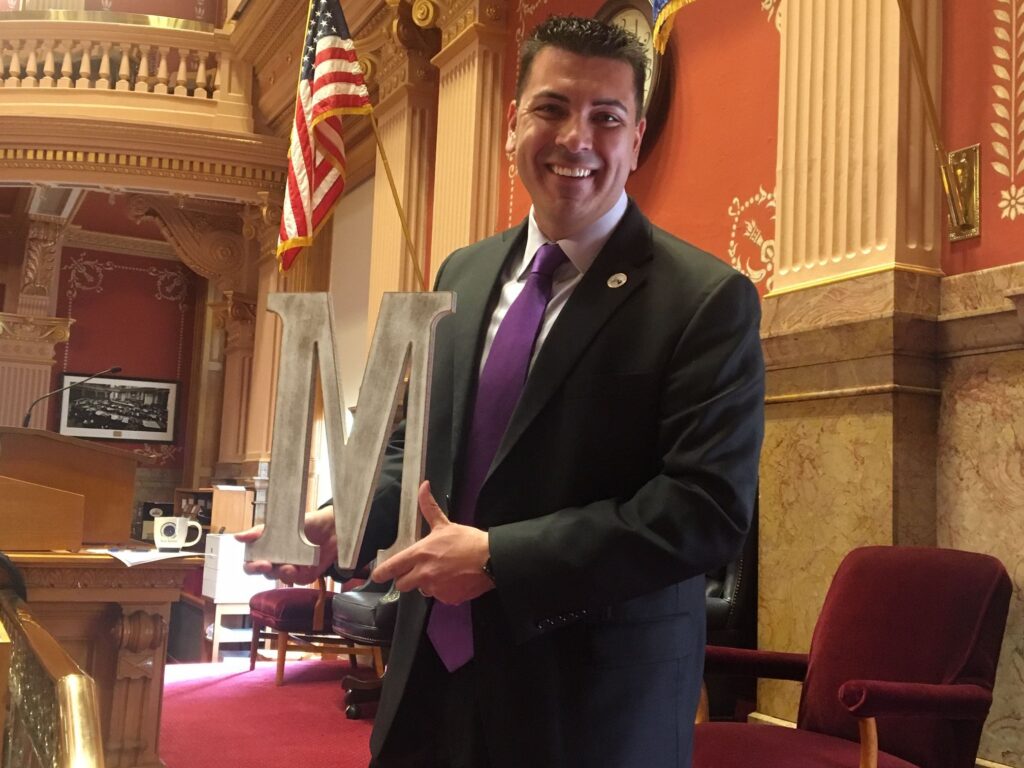
A Mile High, again: Capitol M | Week of March 21, 2026
Marianne Goodland
marianne.goodland@coloradopolitics.com
Updated 3 days ago
The lighter side of the Capitol, usually…. Local Journalism Day, except they forgot their very own local journalists. The state Senate on Thursday, March 19, passed a resolution recognizing Local Journalism Day. Everyone voted for it, which is good, because...

The insular bubble of caucuses and assemblies | SONDERMANN
Eric Sondermann
eric-sondermann@coloradopolitics.com
Updated 2 days ago
Nearly 30 years ago, then-Federal Reserve Chairman Alan Greenspan coined the term “irrational exuberance” to describe the overheated stock market. That descriptive phrase could also apply to much of the political realm. The hype in politics often grossly exceeds the...

Set appropriate state guidelines for critical surveillance technology | OPINION
Colorado Politics
colorado-politics@coloradopolitics.com
Updated 1 day ago
I admit it: I’m worried. I’m hearing a lot about surveillance in the public arena. I hear cameras are capturing my car’s license plate wherever I drive, my face as I go in and out of stores and health facilities,...

Puppy trafficking bill promotes inhumane breeding | OPINION
Colorado Politics
colorado-politics@coloradopolitics.com
Updated 1 day ago
By Patti Strand When Justice Thurgood Marshall wrote “The Constitution does not prohibit legislatures from enacting stupid laws,” he wasn’t wrong. He was referring to a political process sometimes ill-equipped to deal with complex issues that require subject-matter knowledge and a...

Penny wise but foolish by pounds | Paula Noonan
Paula Noonan
paula-noonan@coloradopolitics.com
Updated 2 days ago
Leadership of Colorado’s General Assembly introduced the Fiscal Year 2026-2027 Legislative Appropriation bill, HB26-1333, at $75.72 million. That will be the budget to run the state legislature next year. About $74 million comes out of the general fund and the...

Proposed evictions bill fails to improve housing stability while threatening higher rents | OPINION
Colorado Politics
colorado-politics@coloradopolitics.com
Updated 2 days ago
No landlord wants to evict a tenant for non-payment of rent. That is true for large housing providers, small “mom-and-pop” owners and nonprofit housing rental providers alike. Evictions are financially and emotionally costly for everyone involved. But when rent goes unpaid, eviction...

Prevention works — invest in conflict prevention with wolves | FEEDBACK
Colorado Politics
colorado-politics@coloradopolitics.com
Updated 2 days ago
The recent reporting on Colorado’s wolf depredation payouts exceeding $700,000 highlights a critical problem with the current approach to wolf recovery: current mainstream systems focus on compensation and ineffective reactive non-lethals. These systems are not designed to prevent conflict but attempts...
Colorado’s clean-energy future must be affordable for older adults | PODIUM
Colorado Politics
colorado-politics@coloradopolitics.com
Updated 2 days ago
By Jason DeaBueno Last winter, one of the older adults we serve at Silver Key shared something that has stayed with me. She begun turning her heat down at night — not because she wanted to, but because she was...
Why Denver should care about conservation easements — even if you’ve never set foot on a ranch | OPINION
Colorado Politics
colorado-politics@coloradopolitics.com
Updated 3 days ago
By Jason Swann I live in Denver. I drink tap water from my kitchen sink, hike close to home when I can, worry about wildfire smoke every summer, and try, like many families, to keep up with the rising cost...

Could it be the end of hunting as we’ve always known it in Colorado? | FEEDBACK
Colorado Politics
colorado-politics@coloradopolitics.com
Updated 2 days ago
By Eric Washburn Recently, the Colorado Parks and Wildlife (CPW) Commission voted to ban the commercial sale of fur and reject CPW’s proposed daily bag limits of 15 per day per person (450 per person per month!!) for harvesting 17...