

Proposed Denver slaughterhouse ban could cost Colorado economy up to $861M, study shows
If Denver’s ballot measure to ban slaughterhouses is approved by voters in November, it could cost Colorado’s economy up to $861 million and impact nearly 3,000 jobs, according to a study by Colorado State University’s Regional Economic Development Institute.
Denver voters will be asked, “Shall the voters of the City and County of Denver adopt an ordinance prohibiting slaughterhouses, and, in connection, beginning January 1, 2026, prohibiting the construction, maintenance, or use of slaughterhouses within the City; and requiring the City to prioritize residents whose employment is affected by the ordinance in workforce training or employment assistance programs?”
Pro-Animal Future, a group that works to protect animal rights, introduced the ballot measure.
The group argues that slaughterhouses are “nuisances” to nearby neighborhoods due to the odors they produce and the controversial nature of slaughtering animals.
Pro-Animal Future also cited work conditions in slaughterhouses, which it said are associated with higher workplace injuries, mental illnesses and addiction “due to the unique psychological harms experienced by slaughterhouse workers.”
CSU’s study found that banning slaughterhouses in Denver could impact 2,787 jobs, plus significantly reduce lamb slaughtering capacity and adversely impact businesses.
The study laid out three possible scenarios if voters approve the measure:
- The first, or what the study calls “the most pessimistic” scenario, suggests livestock harvest operators in Denver would, as a whole, leave Colorado – a loss of $861 million to the economy and 2,787 jobs.
- The second scenario suggests livestock harvesters and businesses will adapt and move elsewhere, a loss of $430.5 million to the economy and 1,394 jobs.
- The last scenario assumes 80% of Denver’s lost economic activity from banned livestock harvesters will be retained elsewhere in Colorado, a loss of $215.3 million to the economy and 697 jobs.
“Adapting the local economy to the ban will be long lasting and costly. In short, this impact is felt across all livestock species, not just lamb,” the study said.
Pro-Animal Future spokesperson Olivia Hammond told The Denver Gazette the group is currently conducting its own economic impact analysis with economists “not personally tied to the industries affected by the measure.”
The report itself, Hammond argues, “acknowledges that its headline numbers are the ‘most pessimistic potential’ scenario, rather than the most likely scenario,” she said. “Crucially, the study ignores the economic benefits of removing an industry that harms public health, the environment, and the health and safety of our neighborhoods and residents.”
CSU’s study focused on Superior Farm’s facility in Denver, which accounts for 15-20% of the total lamb harvest in the United States, the study said.
If the Superior Farms facility shuts down, then it is “likely to substantially impact the U.S. based lamb supply chain and would severely strain existing facilities, thus reducing the volume of Colorado lamb available for purchase in Colorado and the rest of the U.S.,” the study said.
Colorado has the nation’s third largest inventory of sheep and lamb, and CSU’s study shows much of that comes from the Superior Farms facility.
Livestock harvesting facilities in Denver annually output over $382 million, provide nearly 600 jobs, and create nearly $45 million in employee compensation, according to the study.
Workers directly affected by the closure of the slaughterhouse would be prioritized in the green workforce retraining program under the city’s Climate Action Plan.
With 21 USDA-inspected sheep and lamb slaughter plants in the state, Colorado had a capacity of 400,000 livestock processed in 2022, CSU’s study shows.
The Superior Farms facility amounted to 300,000 head that year, according to the study’s findings.
The study also argues that locals prefer locally-sourced food products, and that retail markets could face higher costs due to a lack of locally-made products.
Furthermore, the study said, “some Denver and Front Range businesses rely on the meat slaughter and processing sector for inputs in their own enterprise. It is unclear how these businesses may adapt to the significant loss of meat products and processing capacity.”
Hammond emphasized the measure is “part of a transition toward a more humane, sustainable food system driven by evolving consumer values,” she said.
Alternatively, she added, “industrial slaughterhouses and factory farms can gradually be replaced by alternative food producers that offer safer, greener jobs. Like the green energy transition, this requires changes in both consumer demand and public policy.”


Michael Dougherty is literally running for attorney general in Colorado Democrat’s 1st TV ad
Ernest Luning
ernest.luning@coloradopolitics.com
Updated 8 hours ago
Democratic attorney general candidate Michael Dougherty, the Boulder County district attorney, runs laps around the judicial complex in Denver that houses the office he’s seeking in a TV ad released Friday that includes a subtle dig at one of his...

Group aims to add right to hunt and fish to Colorado Constitution
Marissa Ventrelli
marissa.ventrelli@coloradopolitics.com
Updated 6 hours ago
A group is seeking to make Colorado the 25th state in the nation with an established constitutional right to hunting and fishing through a proposed ballot initiative. Backed by the International Order of T. Roosevelt, a group dedicated to preserving...

Hickenlooper lands endorsements from Elizabeth Warren, Ministerial Alliance in US Senate primary
Ernest Luning
ernest.luning@coloradopolitics.com
Updated 1 day ago
U.S. Sen. John Hickenlooper won endorsements this week from a progressive Democratic colleague and a coalition of metro-area African American faith leaders as voting began in Colorado’s primary election. U.S. Sen. Elizabeth Warren of Massachusetts and the Greater Metro Denver...
As number of unaffiliated voters grow in Colorado, experts note patterns, behavior
Marissa Ventrelli
marissa.ventrelli@coloradopolitics.com
Updated 1 day ago
For the first time in Colorado’s history, more primary ballots are going to voters without a party affiliation than to registered Democrats or Republicans. As such, political experts said, candidates today need to appeal to a new block of people...

Bennet campaign finance case delayed again as Colorado Elections Division amends complaint
Marianne Goodland
marianne.goodland@coloradopolitics.com
Updated 2 days ago
A campaign‑finance complaint alleging that U.S. Sen. Michael Bennet’s Senate committee improperly paid for travel tied to his gubernatorial bid won’t get a public hearing until after the June 30 primary. The latest development followed months of delays and a...
Flat or graduated income tax? Colorado groups push dueling measures for November election
Marissa Ventrelli
marissa.ventrelli@coloradopolitics.com
Updated 1 day ago
Colorado voters could face two opposing income-tax measures on the November ballot, with the dueling campaigns seeking to advance proposals that would take the state in sharply different fiscal directions. One initiative seeks to replace Colorado’s flat income tax with...

Backers of Colorado road-funding initiative reject withdrawal deadline
Marissa Ventrelli
marissa.ventrelli@coloradopolitics.com
Updated 2 days ago
The standoff over a road‑funding initiative in Colorado persisted after supporters declined state lawmakers’ request to withdraw the measure, while both sides signaled they are willing to pursue a broader agreement ahead of the fall deadline. Initiative No. 175, backed...

Sparks fly in debate between Democrats in Colorado’s 8th CD primary
Ernest Luning
ernest.luning@coloradopolitics.com
Updated 4 days ago
The two Democrats running for the chance to take on the Republican incumbent in Colorado’s most competitive congressional district traded blows during a feisty televised debate Monday night, sparring over their approaches to reining in the Trump administration’s immigration policies...

Jena Griswold hits airwaves with 1st major ad buy in Colorado’s Democratic attorney general primary
Ernest Luning
ernest.luning@coloradopolitics.com
Updated 5 days ago
Democratic attorney general candidate Jena Griswold plays the greatest hits from her two terms as Colorado secretary of state in her campaign’s first TV ad, which began airing Monday, the same day county clerks began sending out primary ballots. Set...
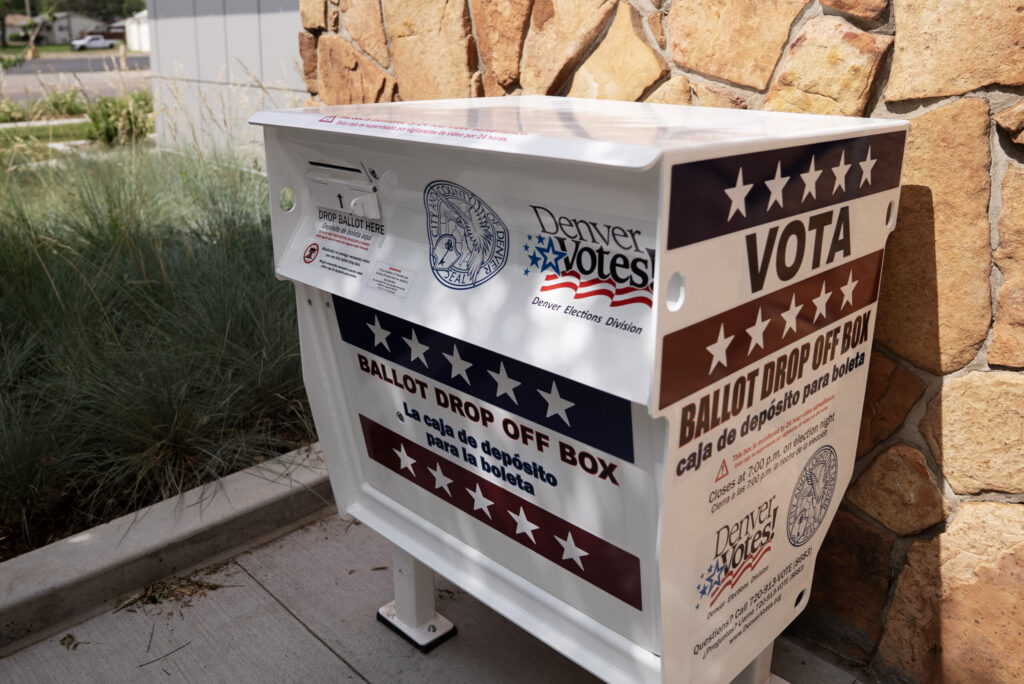
Primary ballots hit mailboxes in high-stakes election year in Colorado
Thelma Grimes
thelma.grimes@coloradopolitics.com
Updated 5 days ago
County clerks began mailing primary ballots to voters on Monday, as Colorado wades deeper into a crowded election year. Voters will face a long list of choices in both the June 30 primary and the November general election. Every major...