

Mayor Mike Johnston’s tweet about the illegal immigration crisis and Denver’s ‘Newcomer Playbook’ gets ratio’d
Mayor Mike Johnston is proud of his administration’s “Newcomer Playbook” — Denver’s how-to guide, offered to other jurisdictions, for “successfully integrating” immigrants.
Johnston’s followers on the social media platform X were not exactly thrilled.
“Denver is actually writing the book on welcoming newcomers,” Johnston said in the post. “We’ve changed, adapted and found models that work, and now we’ve even open-sourced those strategies for use in other cities across the country.”
Denver is actually writing the book on welcoming newcomers. We’ve changed, adapted and found models that work, and now we’ve even open-sourced those strategies for use in other cities across the country. pic.twitter.com/WPlORtQPlt
— Mayor Mike Johnston (@MikeJohnstonCO) May 17, 2024
The mayor’s tweet was quickly ratio’d. For those unfamiliar with the term, a tweet is considered to be “ratio’d” when it gets far more replies than “likes” or “shares.” In this case, within three hours, Johnston’s post had 320 replies to only 36 RTs and 89 likes.
Many of the replies had nearly as many likes as the mayor’s original tweet.
“Denver has the worst homeless problem I’ve seen in a major city,” replied user @JohnnyNomadic.
“Throwing dollars at a problem, achieving limited results, then claiming victory. The ultimate politician,” replied user @WillLuden.
And many of the respondents took issue with the mayor’s “newcomer” term.
“Do not under any circumstances accept the euphemism ‘newcomers,'” replied user @juansondeluxe. “These migrants are 99% illegal aliens who should not be in the country, period. In a sane country they would be deported immediately.”
The mayor’s “playbook” says the city is using “newcomer” as “part of Denver’s welcoming approach” and in order to “(embrace) a more inclusive language.”
Johnston has routinely promoted the work his administration has done to respond to the crisis. He spoke at length earlier this month on the City Cast Denver podcast with host Bree Davies and senior producer Paul Karolyi about the strategies his administration has come up with, and why, he said, it is important to share what the city has learned.
“In the first phase of arrivals, most folks that came in part because Gov. (Jared) Polis and I and others pushed Secretary (Alejandro) Mayorkas to extend what’s called temporary protected status to Venezuelans,” Johnston said. “That meant every Venezuelan that arrived up through about October of last year could get work authorization in about 30 days. So, we built our program around that structure, where if you came in and you’d stay in a hotel for 42 days with us, that’s long enough to get situated, get your work authorization applied for, get it approved, get an apartment, get a job, and you’re up and on your own.”
Johnston said his administration has mastered that plan and aided with nearly 2,000 work authorizations in a single month. But, he said, he had to shift into a new phase as more and more immigrants began arriving without temporary protective status.
Early in the crisis, Denver officials decided the city would assume the responsibility to temporarily house, feed and transport arriving immigrants. That decision has cost the city about $68 million since December 2022 — and counting. Of that amount, the city spent $35 million just in the past four months.
More than 41,000 immigrants have arrived in Denver after illegally crossing the southern border over the last 16 months. The city recently said the crisis will cost $90 million this year. To come up with the money, the city is freezing or staggering hiring of about 160 vacant positions and pulling money from several places, including from capital funds, technology projects, services and supplies.
Denver Mayor Mike Johnston sits down with City Cast Denver host Bree Davies and Senior Producer Paul Karolyi, May 2, 2024.
“All the folks that were left were what we call asylum seekers, which means you didn’t come in at a point of entry. You just came in between the points of entry,” Johnston said. “You might have come across the Rio Grande, arrived in El Paso, and said, ‘I need asylum.’ And those are the folks that have no path to work right now under the legal structure.”
Johnston said it takes several years for asylum cases to be heard, but Denver has figured out a way to get asylum seekers work authorization within six months.
“So, we’ve now found a way to solve this problem, which is we can proactively apply for asylum for them today. Instead of waiting six years for the court case, we can apply today. It’s very labor intensive,” Johnston said. “It takes like 20 to 30 hours per case. So, most cities don’t do it.”
Johnston said because of the six-month wait for work authorization, Denver had to build a plan for asylum seekers stuck without income. The plan included a workforce training program, English language skills, financial and digital literacy skills, a pathway to identify potential careers, and certification programs for things like OSHA or CPR, Johnston said.
“And so now we think for other cities, we want to show them this is not a crisis, this is an opportunity,” Johnston said. “Like you have folks here who want to work, you can give them a path to work. Whether you have folks with temporary protective status or CBP One or asylum, there’s literally a playbook to serve any of the three groups. And we wanted to share that playbook so other cities could do the same.”
Denver is surrounded by counties and cities that have deliberately avoided being tagged with a “sanctuary status.” Worried about getting saddled with the costs after seeing what’s unfolding in Denver, they are trying to deter immigrants from coming into their territories.
At a recent town hall, Douglas County commissioner Abe Laydon said Denver’s “sanctuary city” designation, along with the services it is offering to the immigrants, is a draw.
Likening the situation to a growing leak, Laydon said, “I appreciate (Denver) spending $180 million to clean the wet floors in the bathroom, but you just need to turn off the faucet. Denver needs to reverse its policy of being a sanctuary city.”
Laydon was referring to the Johnston administration’s initial estimate, calculated when between 4,000 and 5,000 immigrants were at city shelters, that the crisis could cost the city up to $180 million. The city has since revised that figure down.


House will vote to denounce socialism
Lauren Green
lauren-green@coloradopolitics.com
Updated 2 hours ago
The House of Representatives is set to vote next week when lawmakers return to condemn and denounce “socialism in all its forms,” specifically pointing to the growing Democratic Socialists of America organization. The House voted to condemn socialism last year,...

Healthcare freefall: Economic ripple effects grow as Colorado hospitals face financial strain
Thelma Grimes
thelma.grimes@coloradopolitics.com
Updated 45 minutes ago
Colorado’s hospital systems aren’t just a network of clinics and emergency rooms — they are also one of the state’s largest economic engines. So some 10 hospitals identified at any given time as vulnerable to closure, the alarm extends far...
Healthcare freefall: UNC’s new medical school aims to tackle Colorado’s rural doctor shortage
Hap Fry, Special to The Gazette
hap-fry@gazette.com
Updated 2 days ago
Editor’s Note: Colorado’s healthcare system is entering a period of accelerating instability — a “tsunami,” as multiple leaders describe it — driven by collapsing hospital finances, shrinking Medicaid reimbursements, disappearing services and a political fight over who is responsible for...
Colorado’s hunting and fishing traditions rest on science, conservation and a proven heritage | IN RESPONSE
Colorado Politics
colorado-politics@coloradopolitics.com
Updated 11 hours ago
By John Howard Eric Washburn’s recent column warns Coloradans the right to hunt and fish amendment is a Trojan horse designed to resurrect “cruel” practices voters have already banned and to elevate killing above every other form of wildlife management....
Why does Colorado limit who can safeguard taxpayer dollars? | GUEST COLUMN
Colorado Politics
colorado-politics@coloradopolitics.com
Updated 11 hours ago
By Devin Camacho Recently, PNC Bank announced its purchase of FirstBank Colorado. Not only did Colorado lose a local banking option, but nearly 1,000 people lost jobs, with more job losses coming as the big bank now closes branches too....
Gubernatorial candidates Phil Weiser, Greg Lopez spar, as Marx skips debate
Deborah Grigsby
deborah.smith@denvergazette.com
Updated 3 hours ago
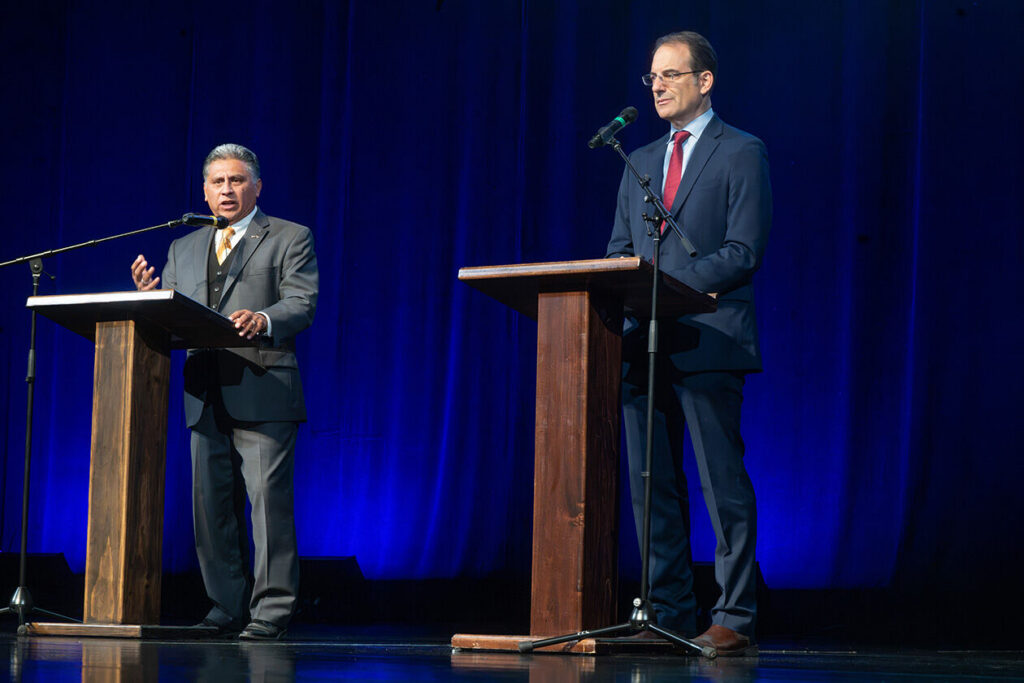
Two of the candidates for Colorado governor squared off in a televised debate on Thursday night, when Attorney General Phil Weiser, the Democratic nominee, and former U.S. Rep. Greg Lopez, an unaffiliated candidate, delved into issues of affordability, data center...
Troops, taxes, war dominate Colorado’s 5th CD debate between Jeff Crank, Jessica Killin
Deborah Grigsby
deborah.smith@denvergazette.com
Updated 3 hours ago
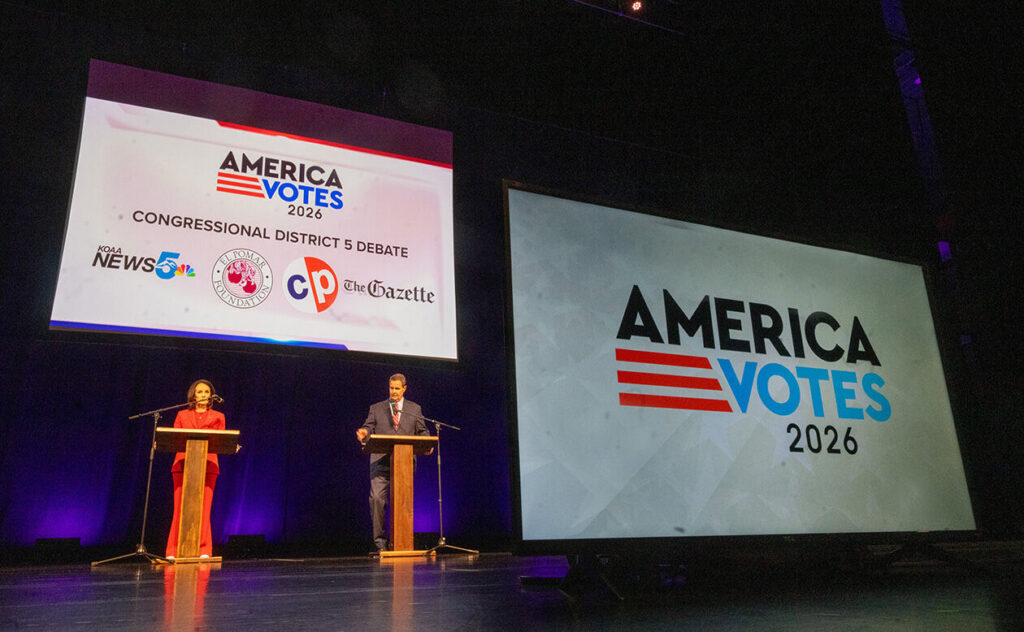
Republican U.S. Rep. Jeff Crank and Democratic challenger Jessica Killin on Thursday night clashed over the war in Iran, the federal budget and healthcare when they took the stage in Colorado Springs for a sold-out debate in the race to...

5th Congressional debate watchers hope for civility, truthfulness
Cleo Westin
cleo-westin@coloradopolitics.com
Updated 3 hours ago
A few hundred people watched Rep. Jeff Crank and veteran Jessica Killin square off in a debate for the 5th Congressional District at the Pikes Peak Center for the Performing Arts on Thursday evening. Many of them sported campaign insignia...
WATCH: Republican US Rep. Jeff Crank, Democratic challenger Jessica Killin debate in Colorado’s 5th CD
Ernest Luning
ernest.luning@coloradopolitics.com
Updated 18 hours ago
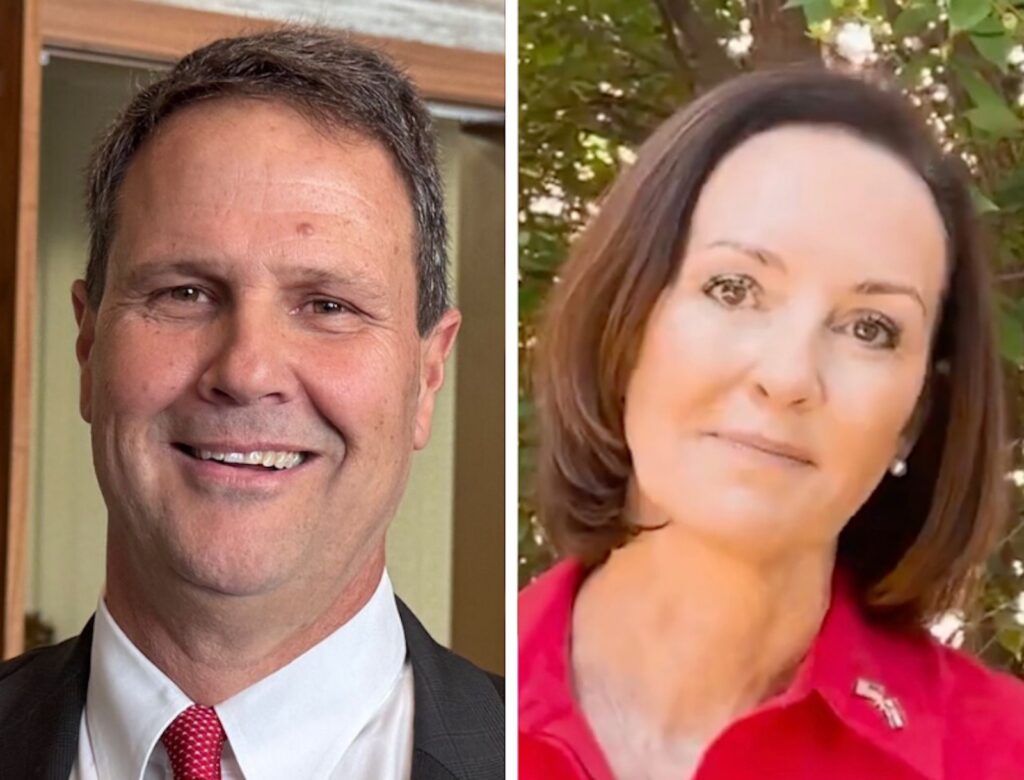
Republican U.S. Rep. Jeff Crank and Jessica Killin, his Democratic challenger, are scheduled to meet for a televised debate in the race to represent Colorado’s 5th Congressional District on Thursday night. The candidates are set to take the stage at...

Colorado gubernatorial candidates Phil Weiser, Greg Lopez to face off Thursday in televised debate
Ernest Luning
ernest.luning@coloradopolitics.com
Updated 3 hours ago
Two of the candidates for governor of Colorado are set to square off in a televised debate for the first time Thursday night, when Attorney General Phil Weiser, the Democratic nominee, and former U.S. Rep. Greg Lopez, an unaffiliated candidate,...