

‘Pretty shocking’: Colorado justices review case where defendant’s lawyer was also being prosecuted
Members of the Colorado Supreme Court appeared hesitant last week to endorse automatic reversal of an El Paso County defendant’s convictions because he was seemingly unaware his lawyer was simultaneously being prosecuted by the same district attorney’s office.
However, some justices agreed the system failed to adequately protect the rights of Matthew Rodolfo Vansant Lopez from his lawyer’s conflict of interest.
“The facts of this case are, I’m gonna say, pretty shocking,” said Justice Melissa Hart at the May 8 oral arguments. “This man feels like he was treated poorly by his lawyer and by the court.”
Lopez’s appeal revolved around the question of whether he needed to prove the criminal cases of his now-disbarred attorney, Dennis Hartley, negatively affected him. Previously, the state’s Court of Appeals rejected that idea, believing it would be too high a burden for defendants asserting their right to conflict-free representation.
Hartley was facing multiple drunk driving and vehicular charges even before he began representing Lopez. Days before Lopez’s trial, Hartley resolved four pending sets of charges with the Fourth Judicial District Attorney’s Office, resulting in a sentence of home detention and probation.
At one point in Lopez’s case, District Court Judge David A. Gilbert asked if Lopez was aware of “current circumstances,” without elaborating what those were, and if Lopez was fine with Hartley representing him. Yes, Lopez replied.
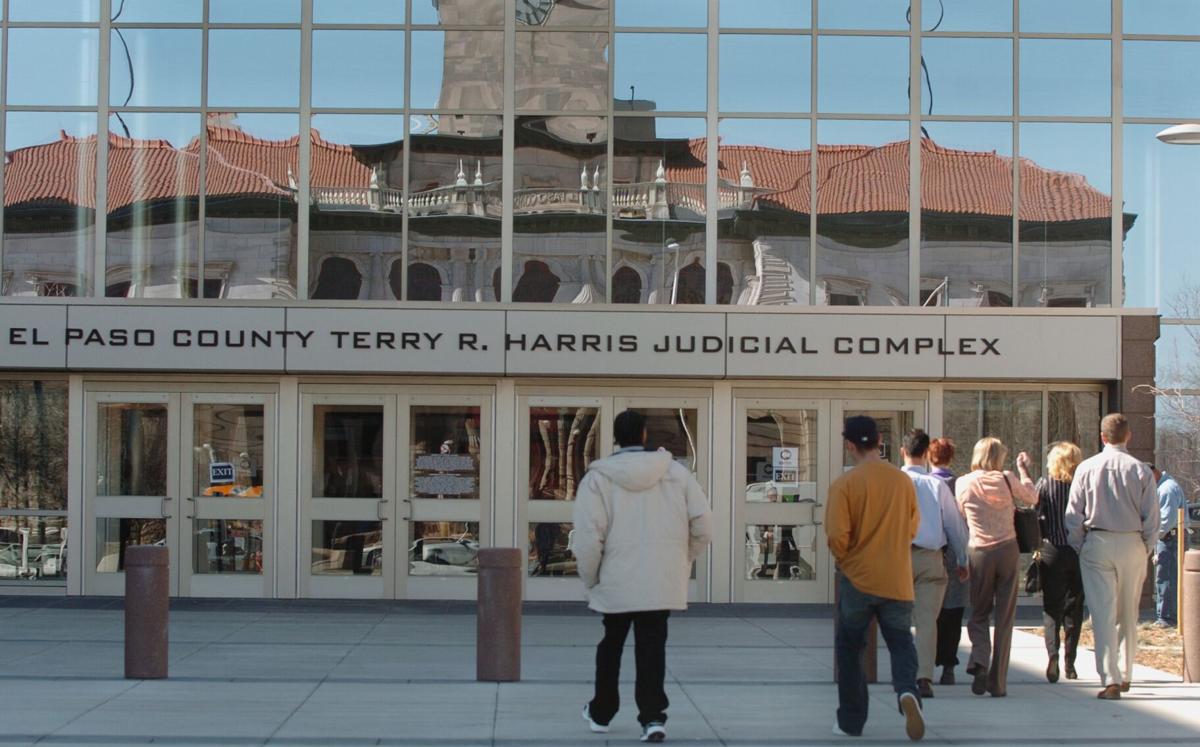
The entrance of the El Paso County Terry R. Harris Judicial Complex on Tejon Street in Colorado Springs.
The Gazette file

The entrance of the El Paso County Terry R. Harris Judicial Complex on Tejon Street in Colorado Springs.
On the second day of trial, the prosecutor approached Gilbert to say then-District Attorney Dan May wanted to be sure Lopez knew Hartley was serving a probationary sentence in the same jurisdiction where Lopez was on trial, and the same DA’s office would be involved in prosecuting Hartley for any violation. Without speaking to Lopez directly, Gilbert asked Hartley if Lopez had any concerns
“No, none whatsoever,” Hartley responded.
A jury convicted Lopez for multiple sexual assault-related offenses. Soon after, Colorado’s presiding disciplinary judge disbarred Hartley for, among other things, failing to “diligently pursue clients’ interests,” disobeying a prior suspension order and misleading a client about his suspension.
A three-judge panel for the state’s Court of Appeals subsequently reversed Lopez’s convictions. It reasoned Hartley had an actual conflict of interest while representing Lopez and a laywer in that position would have the incentive to curry favor with the DA’s office to help his own criminal case.
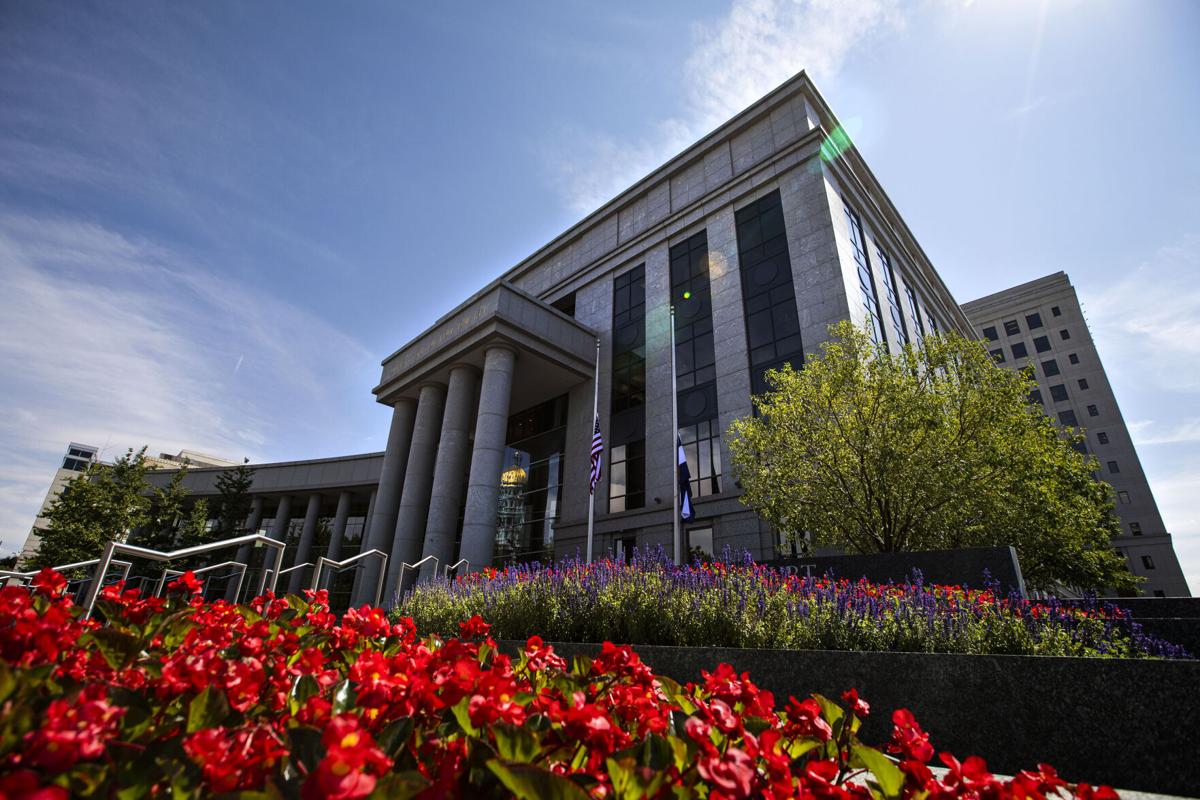
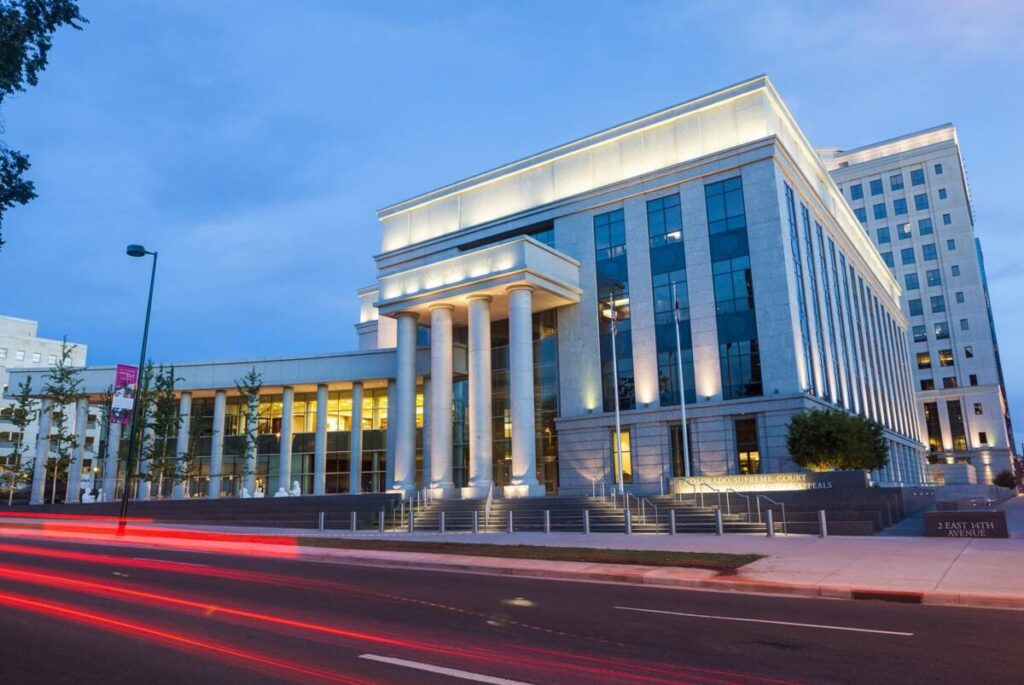
The Ralph L. Carr Colorado Judicial Center, on Tuesday, Sept. 13, 2022, in Denver, Colo. (Timothy Hurst/The Denver Gazette)
Timothy Hurst

The Ralph L. Carr Colorado Judicial Center, on Tuesday, Sept. 13, 2022, in Denver, Colo. (Timothy Hurst/The Denver Gazette)
Moreover, Gilbert had a duty to ensure Lopez knew he was giving up his right to conflict-free counsel. But “nothing in the record indicates that Lopez was informed of the nature and potential consequences of the conflict beforehand,” wrote retired Supreme Court Justice Alex J. Martinez, who sat on the appellate panel at the chief justice’s assignment.
On appeal to the Supreme Court, the government maintained Hartley only had a “potential” conflict, and Lopez needed to prove Hartley’s choices in Lopez’s case negatively affected him.
“For me, I don’t know that the dispute is whether there’s an actual conflict. I think there’s an acutal conflict here,” said Justice Richard L. Gabriel.
From Lopez’s point of view, “everybody in the room knew what was going on except him. And what was going on was not OK,” Hart said.

FILE PHOTO: Colorado Supreme Court justice Richard L. Gabriel asks a question during oral arguments of the Arnold R. Martinez v The People of the State of Colorado case during Courts in the Community on Thursday, Oct. 26, 2023, at Gateway High School in Aurora, Colo. (Timothy Hurst/Denver Gazette)
Timothy Hurst/Denver Gazette
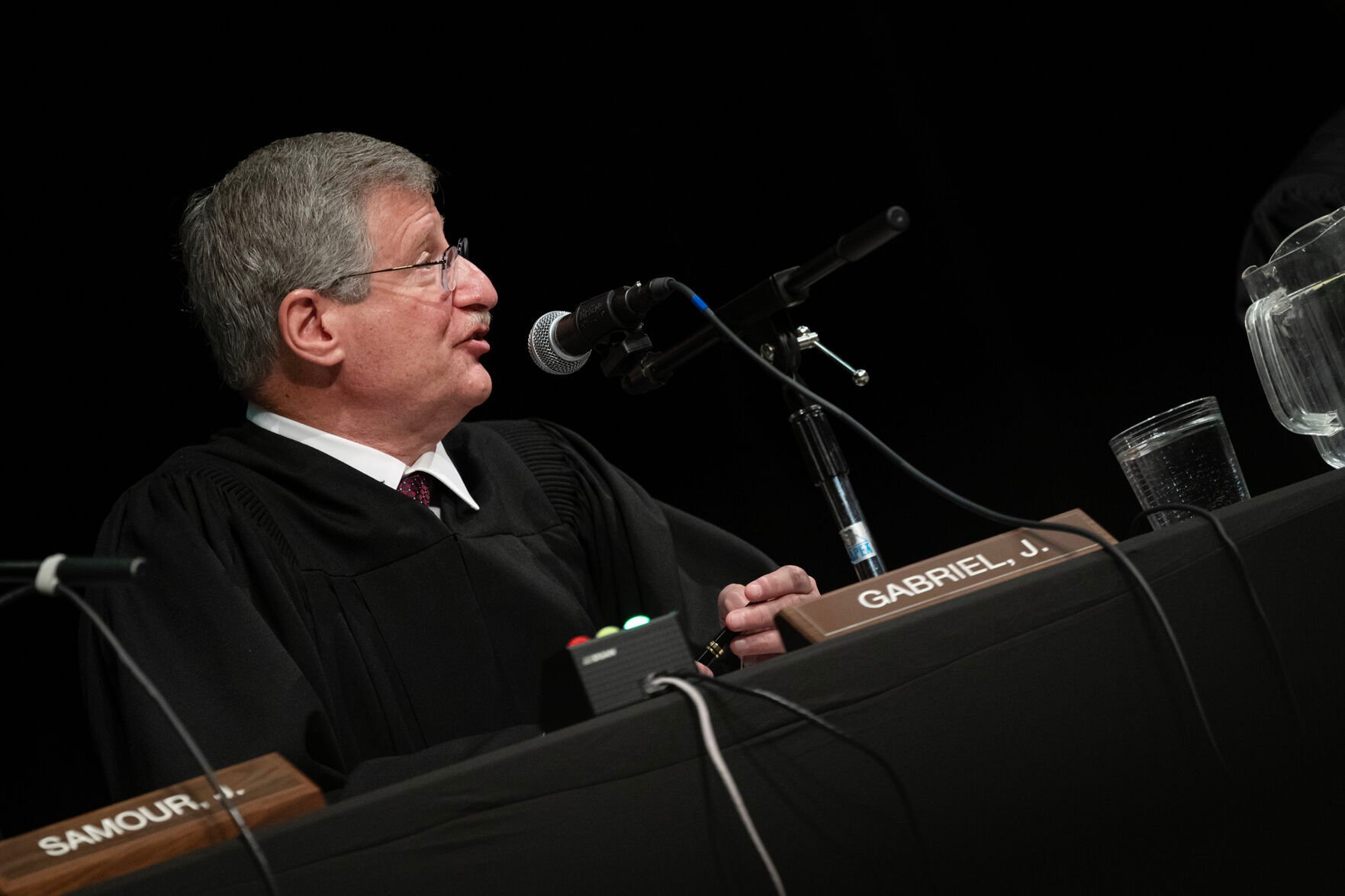
FILE PHOTO: Colorado Supreme Court justice Richard L. Gabriel asks a question during oral arguments of the Arnold R. Martinez v The People of the State of Colorado case during Courts in the Community on Thursday, Oct. 26, 2023, at Gateway High School in Aurora, Colo. (Timothy Hurst/Denver Gazette)
Elizabeth A. McClintock, representing Lopez, argued there was a “cloak of protection” around Hartley’s criminal cases such that Lopez did not know what was happening with his lawyer. She cited statistics showing that only 0.22% of Colorado attorneys were the targets of criminal complaints in 2022, meaning conflicts similar to Hartley’s are rare.
“The problem is that you have defense counsel basically putting their own interests above their client’s interest,” she said.
“Or you just can’t tell. You don’t know,” added Justice Maria E. Berkenkotter.

Colorado Supreme Court justice Maria E. Berkenkotter asks a question during oral arguments of the Arnold R. Martinez v The People of the State of Colorado case during Courts in the Community on Thursday, Oct. 26, 2023, at Gateway High School in Aurora, Colo. (Timothy Hurst/Denver Gazette)
Timothy Hurst

Colorado Supreme Court justice Maria E. Berkenkotter asks a question during oral arguments of the Arnold R. Martinez v The People of the State of Colorado case during Courts in the Community on Thursday, Oct. 26, 2023, at Gateway High School in Aurora, Colo. (Timothy Hurst/Denver Gazette)
McClintock agreed with the Court of Appeals’ reasoning that a lawyer’s conflict from his own prosecution is difficult to measure and, therefore, it would be unreasonable to require defendants to show how the conflict disadvantaged their case.
“Your point is that it’s so pervasive that it becomes hard throughout the course of the representation to know exactly when the attorney might be pulling his punches,” observed Justice William W. Hood III.
Chief Justice Brian D. Boatright noted there are other situations in which defendants must show they were harmed by specific decisions or pieces of evidence before a court will reverse their convictions.
“Why is this situation so remarkably different?” he wondered.
Because, said McClintock, a conflicted lawyer cannot operate effectively “from the get-go” when his own charges are hanging over his head.
“The defendant is put in such a situation that he’ll never know what could be different if his attorney was not in a situation where he’s beholden potentially to two masters,” she said.
The case is People v. Lopez.

Federal judge directs plaintiff to revise complaint alleging Denver officers’ constitutional violations
Michael Karlik
michael.karlik@coloradopolitics.com
Updated 41 minutes ago
A federal judge directed a defendant to revise his allegations on Wednesday to more precisely state what two Denver officers and the city itself allegedly did to violate his constitutional rights by facilitating his prosecution for murder until prosecutors dropped...
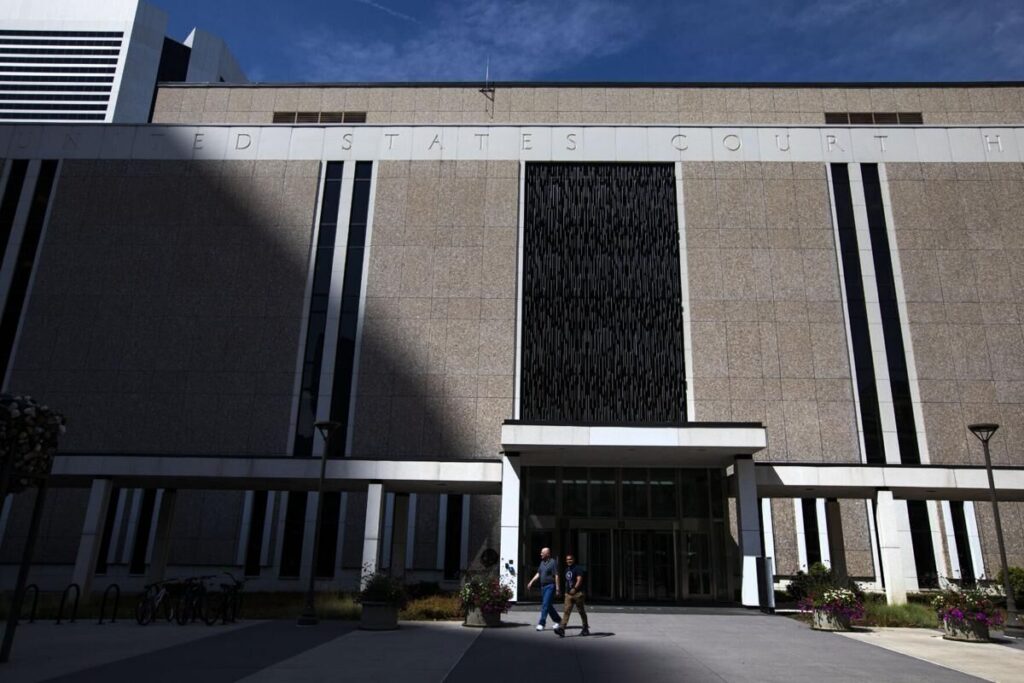
Federal judge explores new sanctions against ex-Colorado judicial discipline director
Michael Karlik
michael.karlik@coloradopolitics.com
Updated 2 hours ago
A federal judge on Wednesday directed Colorado’s former judicial discipline director, for the third time this year, to explain why she should not sanction him for his latest conduct in his litigation against the state’s judiciary. Christopher S.P. Gregory, who served...
Colorado joins lawsuit challenging changes to Endangered Species Act
Marissa Ventrelli
marissa.ventrelli@coloradopolitics.com
Updated 1 hour ago
Colorado once more joined a coalition of states challenging the Trump administration — this time on proposed rules regarding the Endangered Species Act. The pair of lawsuits challenge new rules made under Interior Secretary Doug Burgum, who earlier said the...

10th Circuit orders second look at immunity for Kiowa County deputy over fatal vehicle crash
Michael Karlik
michael.karlik@coloradopolitics.com
Updated 1 hour ago
The Denver-based federal appeals court directed a trial judge on Tuesday to further analyze whether a Kiowa County deputy and the sheriff’s office may be sued for a fatal vehicle collision. The Colorado Governmental Immunity Act generally shields government entities and public...
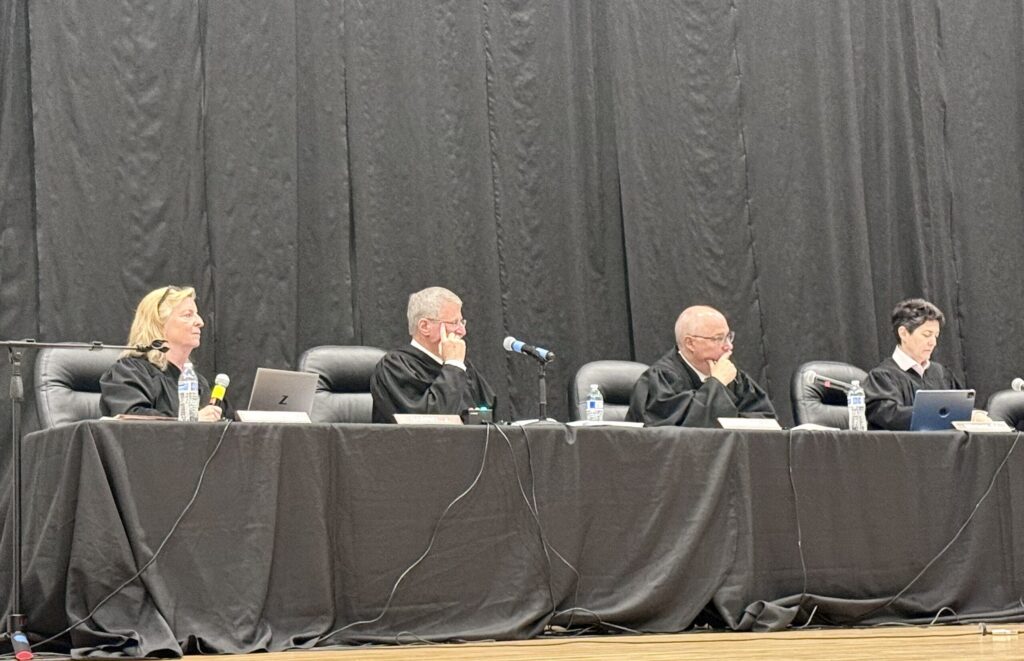
Colorado justices to hear appeal in Kendrick Castillo death lawsuit, ‘fugitive’ rule
Michael Karlik
michael.karlik@coloradopolitics.com
Updated 24 hours ago
The Colorado Supreme Court announced on Tuesday that it will decide whether it was proper to dismiss a lawsuit over the 2019 shooting death of Kendrick Castillo after the defendants paid the maximum amount of damages available to Castillo’s parents,...
Federal judge dismisses Douglas County’s challenge to collective bargaining law
Nicholas Fogleman
nicholas.fogleman@denvergazette.com
Updated 9 hours ago
A federal judge dismissed claims brought by the Douglas County Board of Commissioners alleging that a state law granting county employees the right to organize and join labor unions violates free speech protections and conflicts with federal labor law. Douglas...
Arapahoe County judge’s frustration with defense lawyer not grounds for new trial
Michael Karlik
michael.karlik@coloradopolitics.com
Updated 1 day ago
Colorado’s second-highest court decided last week that an Arapahoe County judge’s repeated rebukes of a defense attorney and orders to “be quiet” did not rise to the level of bias or a violation of the defendant’s due process rights. A...
Divided appeals court upholds vehicle theft conviction despite unclear origin of car’s value
Michael Karlik
michael.karlik@coloradopolitics.com
Updated 22 hours ago
Colorado’s second-highest court upheld a defendant’s conviction for aggravated motor vehicle theft last week, even though it was unclear how the Thornton Police Department estimated the value of the stolen car. Officer Marc Faivre encountered Ashley Shelee Gibbens-Martinez in a...
Disgraced ex-CBI analyst Missy Woods sentenced to prison in DNA scandal
Jenny Deam
jenny.deam@gazette.com
Updated 1 day ago
A Jefferson County district court judge on Tuesday sentenced a disgraced former Colorado Bureau of Investigation DNA analyst to a decade in prison for altering and deleting data in scores of criminal cases over several years. Jefferson County District Judge...

Parenting from prison: Inmates hope to be present in their children’s lives, while physically absent
Marianne Goodland
marianne.goodland@coloradopolitics.com
Updated 1 day ago
The room was decorated with balloons, the tables sparking bright with colors as the smell of pizza and cake wafted through the air. As did music. This was, after all, a father-daughter dance. Except this was not a typical father-daughter...