

BLM picking winners, losers leads to bureaucratic black hole | GABEL
Rachel Gabel

Rachel Gabel
The Biden administration is making it rather simple for anti-agriculture groups to weaponize the Bureau of Land Management. While the wild swings in public lands policy from one administration to the next don’t offer one iota of the predictability and consistency needed by all users of public lands, the current state of affairs is precarious.
The National Environmental Policy Act (NEPA) was enacted by Congress in 1969 and signed by then-President Richard Nixon in 1970. According to the Council on Environmental Quality, NEPA seeks to “encourage productive and enjoyable harmony” between humans and the environment, recognizing the “profound impact” of human activity and the “critical importance of restoring and maintaining environmental quality” to the overall welfare of humankind; to promote efforts to prevent or eliminate damage to the environment and biosphere and stimulate the health and welfare of people, making it the continuing policy of the federal government to use all practicable means and measures to create and maintain conditions under which humans and nature can exist in productive harmony and fulfill the social, economic, and other requirements of present and future generations of Americans; and also recognizes that each person should have the opportunity to enjoy a healthy environment and has a responsibility to contribute to the preservation and enhancement of the environment.
Stay up to speed: Sign up for daily opinion in your inbox Monday-Friday
To this end, federal agencies are required to prepare environmental impact statements (EISs) for “every recommendation or report on proposals for legislation and other major Federal actions significantly affecting the quality of the human environment” and, in doing so, provide opportunities for public participation to help inform agency decision making.
The CEQ serves the White House and though it was designed to be nonpartisan, it has become less so. The current chair has a long history leading the Environmental Protection Agency (EPA) and her biography is filled with references to environmental justice and climate change and she was at the forefront of former President Barack Obama’s 2016 NEPA GHG rules. During the Trump administration, those NEPA rules were reversed.
With the passage of the Fiscal Responsibility Act, some guardrails were put in place for CEQ to keep NEPA on the straight and narrow. It required a clear target and limitations on reasonable alternatives, reasonable potential impacts and reasonable depth and length of the actual NEPA analysis. This environmental impact statement (EIS), which is cumbersome at it’s very best, is required of federal agencies for “every recommendation or report on proposals for legislation and other major Federal actions significantly affecting the quality of the human environment” and, in doing so, provide opportunities for public participation to help inform agency decision making.
Following the passage of the Fiscal Responsibility Act, the EIS portion of NEPA was amended to include discussion of reasonably foreseeable environmental effects of the proposed action, reasonably foreseeable adverse environmental effects that cannot be avoided and a reasonable range of alternatives to the proposed action.
Reasonable.
Even with these boundaries in place, the CEQ appears to have ignored the direction of the FRA with the final Phase 2 rule amending the National Environmental Policy Act (NEPA) that will make the process even more burdensome for livestock producers. The final rule, which goes into place on July 1, directs agencies to assign weight to which climate change effects what they think can be mitigated sufficiently. It is not the role of agencies — like the Bureau of Land Management — to choose winners and losers.
The largest looming concerns of this final rule are threefold. First, EIS must now include analysis of climate change — and all potential future impacts; the rule removes limitations on a “reasonable number” of alternatives, which was always supposed to have some clear sideboards on the length/depth of NEPA analysis to make sure it’s targeted; and it leans in on mitigation requirements, and creates a weighted role for effects that may be mitigated — but may not influence the final action, this according to Kaitlynn Glover, executive of the Public Lands Council.
This final rule makes the federal permitting process, the one used by ranchers to secure grazing permits to manage public lands resources through one of the greatest forms of conservation all while injecting value into local economies, a black hole. Gone is any reasonable limit on potential impacts and ranchers are left with federal agencies deciding which multiple uses of public lands are the most conducive to their agendas.
The bright spot, if there is one, is the public rule making process the agencies like the BLM will undergo during the next year that require input from stakeholders. Ranchers, of course, are affected, but everyone who benefits from the good management of public lands and the multi-billion dollar livestock industry in Colorado all stand to lose if this rule becomes a weapon in the hands of radical anti-ag groups.
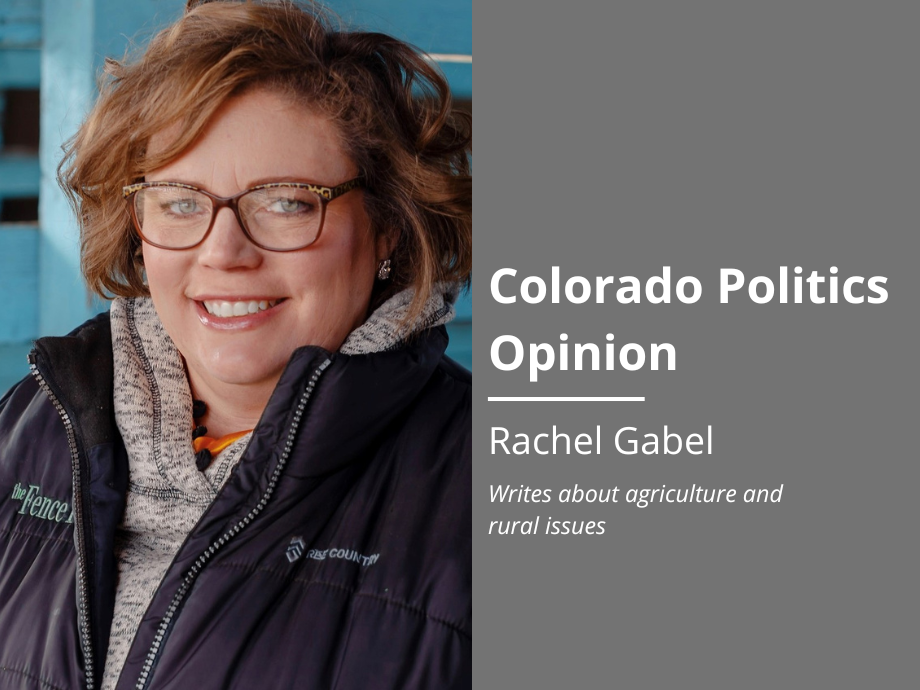
Rachel Gabel writes about agriculture and rural issues. She is assistant editor of The Fence Post Magazine, the region’s preeminent agriculture publication. Gabel is a daughter of the state’s oil and gas industry and a member of one of the state’s 12,000 cattle-raising families, and she has authored children’s books used in hundreds of classrooms to teach students about agriculture.

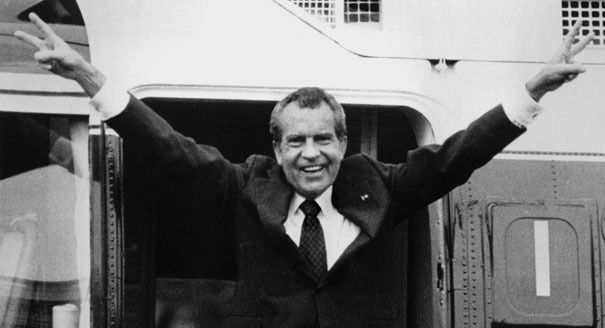
The relevance of Watergate more than a half-century later | SONDERMANN
By Eric Sondermann
by-eric-sondermann@coloradopolitics.com
Updated 3 days ago
It was the scandal for which all other scandals are now named. In June 1972, a small group of Cuban burglars with high-level connections broke into the headquarters of the Democratic National Committee. Those headquarters were located in the Watergate...
Colorado must continue finding common ground on wildfire policy | GUEST COLUMN
Colorado Politics
colorado-politics@coloradopolitics.com
Updated 2 days ago
By John Herrick Colorado has never lacked for opinions about wildfire policy. We debate forest management, climate change, prescribed burns, land use, air quality and budgets. Those debates are familiar territory, but a new discussion is beginning to happen around...

Proposition NN is the best investment for Colorado’s students and schools | GUEST COLUMN
Colorado Politics
colorado-politics@coloradopolitics.com
Updated 2 days ago
By Justin Ogden Colorado families know what it means to make difficult budget decisions. Inflation has driven up the cost of groceries, housing, utilities and just about everything else. Families like mine work hard to stretch every dollar while still...
Were the primaries a preview for consequential general election? | Paula Noonan
Paula Noonan
paula-noonan@coloradopolitics.com
Updated 3 days ago
Colorado’s political future will go the way of this election. Historically, the state has not had both chambers controlled by a supermajority. This election may change that. The primaries suggest how the general election may play out. Democrats had solid...
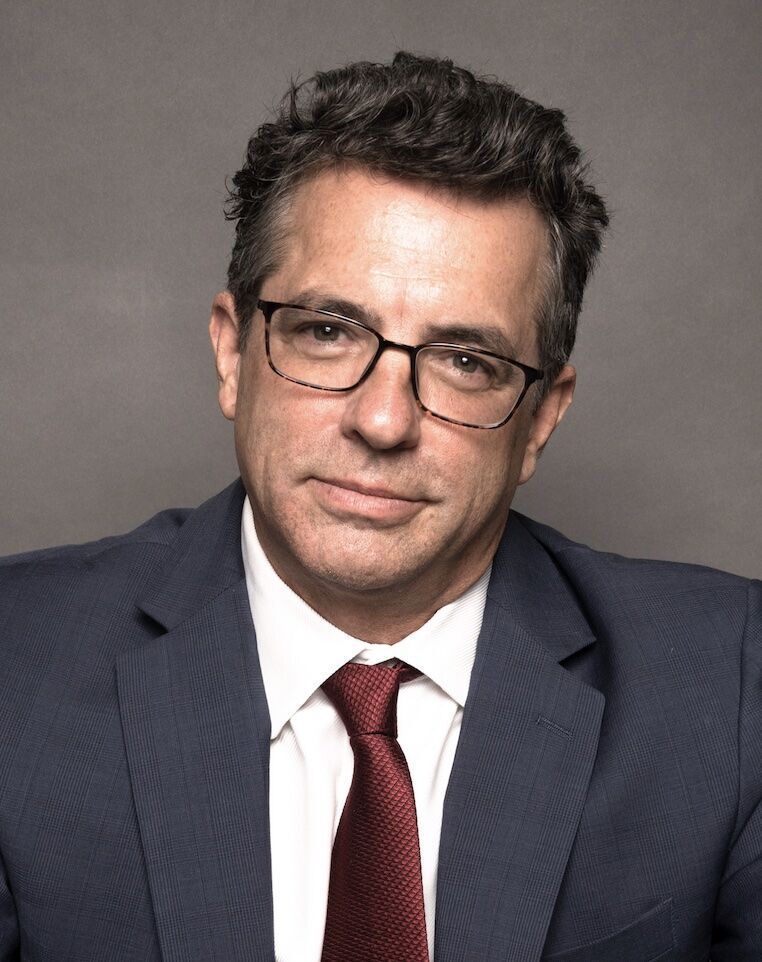
Disagreement doesn’t have to mean disrespect | GUEST COLUMN
Colorado Politics
colorado-politics@coloradopolitics.com
Updated 3 days ago
By Vincent Atchity These days, it doesn’t take long to feel overwhelmed by politics. Turn on the news, scroll through social media or read the comments on almost any political post and you’ll find anger, outrage and personal attacks. For...

Keeping Colorado’s kids’ trust online | PODIUM
Colorado Politics
colorado-politics@coloradopolitics.com
Updated 4 days ago
By Stuart Jenkins Almost every day, the kids and teens we serve across Colorado are introduced to new generative artificial intelligence and other emerging technology, including conversational AI systems designed to simulate human conversation. These tools are no longer a...
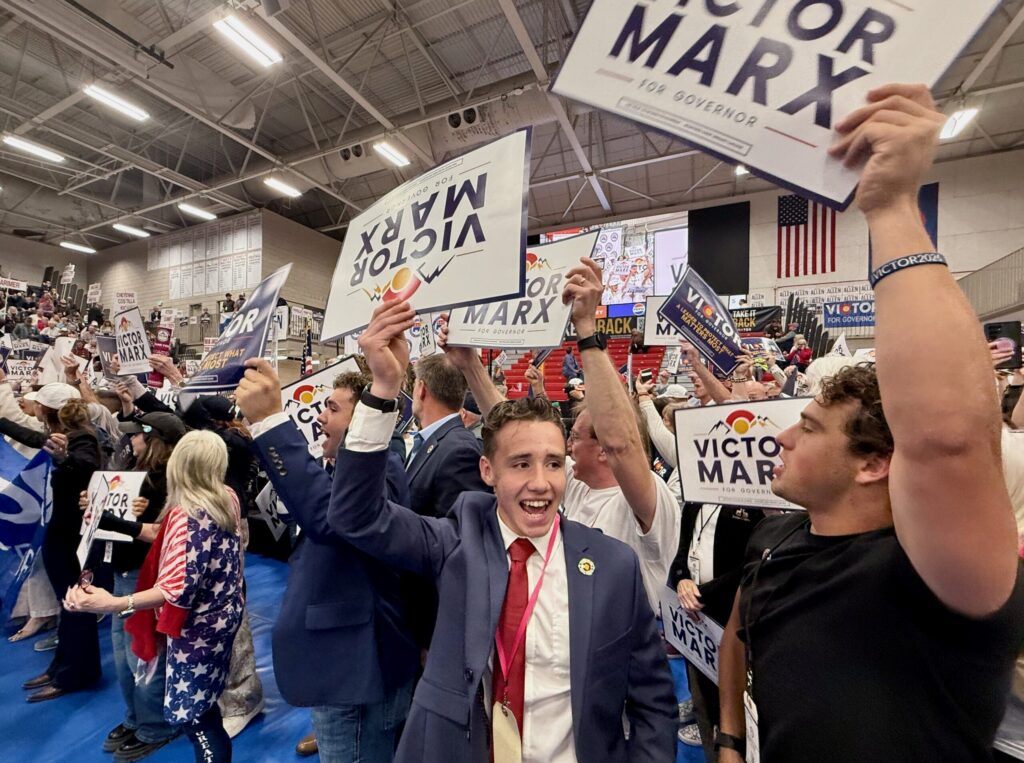
Marx’s ‘through line’ predates Trump, connects to Maes | FEEDBACK
Colorado Politics
colorado-politics@coloradopolitics.com
Updated 4 days ago
Eric Sondermann is of course correct Victor Marx is an unserious, unelectable, embarrassing Republican nominee for governor of Colorado. But I respectfully submit that the “through line,” as Mr. Sondermann describes it, is not from Trump to Marx, despite their...

Cedric Pride’s blueprint for opportunity through the trades | The OpEdge Podcast
Tony Olivero
tony.olivero@gazette.com
Updated 4 days ago
Cedric Pride, CEO of the nonprofit Pride Initiative in Denver, joins The OpEdge with a blueprint for workforce development, skilled trades, and economic opportunity. Pride tells host and investigative columnist Jimmy Sengenberger why he believes the trades offer a path...

Colorado’s No. 1 education ranking should raise our ambition | GUEST COLUMN
Colorado Politics
colorado-politics@coloradopolitics.com
Updated 4 days ago
By Scott Laband Colorado has earned the right to celebrate its new No. 1 ranking in education from U.S. News & World Report. Gov. Jared Polis called it “one of the proudest moments” of his time in office and shared the...

Colorado’s No. 1 education ranking reflects the power of school choice | GUEST COLUMN
Colorado Politics
colorado-politics@coloradopolitics.com
Updated 5 days ago
By Peter Mason Colorado is now the No. 1 state in the nation for education, according to the 2026 U.S. News & World Report Best States rankings. That is a distinction worth celebrating. It is also a distinction worth understanding....