

Rounding up the Roundup | BIDLACK
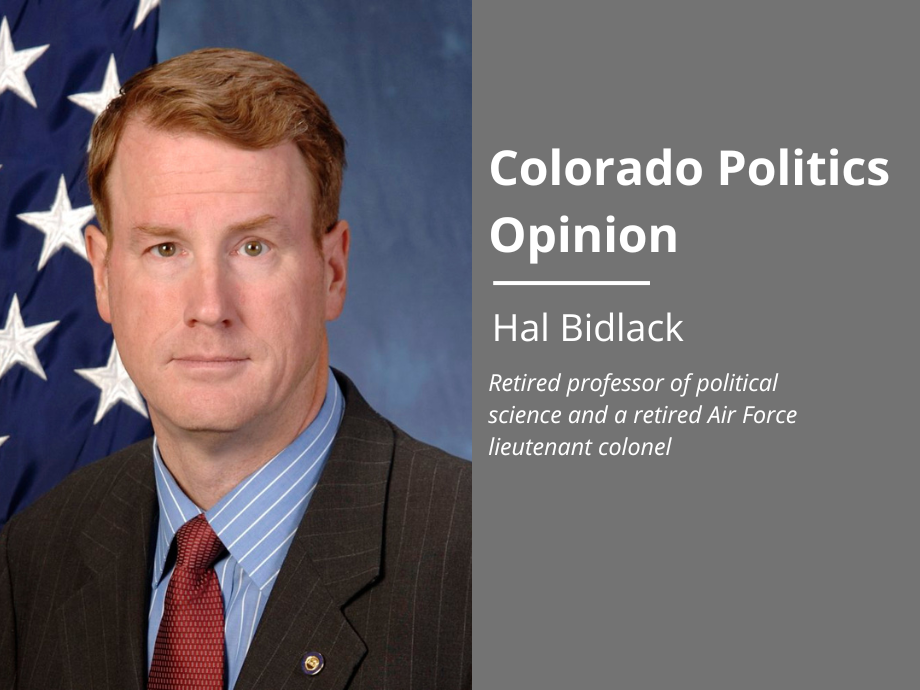
Hal Bidlack

Hal Bidlack
I’ve oft remarked one of my favorite sections of Colorado Politics is the Out West Roundup. That regular column is great for keeping informed on various acts of governance around the western United States.
This week’s column overflows with interesting stories and several of those have echoes in Colorado. I want to draw your attention to three different stories about important subjects that likely wouldn’t make the front page of most newspapers, but which are important.
First off, a story about additional federal support for the beleaguered sage-grouse population across the western states. Experts tell us back in the day upward of 16 million of these critters roamed the plains and high deserts of Canada and 13 U.S. states. But they have long been in decline. The current population estimates of the sage-grouse are a tiny fraction of that once large total, with perhaps 200,000 up to perhaps 500,000 birds alive — roughly 2% of the previous total.
Despite those crashing numbers, the Environmental Protection Agency has failed to list them as endangered on no less than five different occasions. They are currently listed as “near threatened” with a declining population. I’m not sure how a reduction of 98% isn’t a crisis.
Stay up to speed: Sign up for daily opinion in your inbox Monday-Friday
Now, if you live in a city, like I do, or even if you are from a rural area, you might ask, what’s the big deal? Does it really matter if the sage-grouse dies out? Well, there are a couple of answers. First off, the sage-grouse is a lovely bird, and they are a “canary in the coal mine” type of critter. Their presence is an indication of an overall healthy ecosystem. If you’ve got sage-grouse, you likely have a healthy local environment. And the same protections I hope will soon be in place for the sage-grouse will also benefit other songbirds and pronghorns.
So, what is happening to the population? It’s a few things. Wildland fires are a very direct threat, as is loss of habitat due to human expansion, and invasive species, specifically a plant known as “cheatgrass,” that should be in Europe and southwest Asia and northern Africa. It is called “cheatgrass” because it, well, kind of cheats. It is usually the first to germinate in the spring, giving it a head start on the native grasses, and sucks up the water native grasses then don’t get. And though there are critters that eat the stuff, the grass chokes out the native grasses, and that’s bad news for the sage-grouse.
Why? Well, it turns out the sage-grouse eats (hint: it’s in the name) sage. And after the first frost kills the bugs they also eat, the sage-grouse pretty much only eats sage through the winter. Wipe out a critical food supply for a species and you wipe out things that species can eat to survive. So, sage-grouse are important bellwethers of environmental health, and we should protect them more vigorously.
Now I want to switch from sage-grouse to GOP grousing in Arizona. You may recall after the 2020 election some on the radical right claimed massive voter fraud. They demanded a recount by “their people” to prove the shenanigans, and when those MAGA folks got done with their recount, the Biden margin of victory actually went up. So, what do mature and thoughtful people do in the face of such evidence? Do they announce they were wrong, and Joe Biden actually won?
Ha! Not so much.
And just last week, a united U.S. Supreme Court refused to take up the appeal of Arizona ultra-MAGA nut Kari Lake (spoiler: on former President Donald Trump’s short list for vice president) and another delusional fellow. They had taken their demand that no electronic voting machines could ever be used in Arizona, because they somehow cheat (additional spoiler: they don’t).
And Lake hasn’t, as far as we know, murdered any puppies lately, so Trump may like her willingness to be rabidly loyal and deny facts.
Now, at the Supreme Court, the informal “rule of four” is a fundamental operating rule by which the court has lived for decades. It simply means while in conference, reviewing what cases to accept, if any four justices want to take up a case, the court does so.
Lake’s bogus anti-voting machines case was not only rejected (as all the lower courts had also done), apparently not a single justice, even the Trump triplets, voted to hear the case. That is quite a slap down, and I’m sure Lake will take the news with quiet dignity and acceptance.
Nah, I’m kidding, she’ll go bananas and will wonder how the “deep state” took over the SCOTUS.
Finally, a story out of Oklahoma that should upset, well, everyone. It seems the state’s highest court is reviewing a case that would allow the state to create the nation’s first publicly funded Catholic charter school. Now one of the fundamental ideas of many of the key founders, John Adams and Thomas Jefferson in particular, was that religion should stay out of government. Certainly that must include not having any level of our government use tax dollars to support a particular faith. Jefferson said it better: “I contemplate with sovereign reverence that act of the whole American people which declared that their legislature should ‘make no law respecting an establishment of religion, or prohibiting the free exercise thereof,’ thus building a wall of separation between Church & State.”
And if you remain unconvinced a government picking a favorite faith is a bad idea, ask yourself if you would be as unperturbed if, say, Colorado were to pass a law allowing your tax dollars to fund a different church school? Even if you are OK with a Catholic school getting tax dollars, are you equally OK with, say, the Church of Atheism? Satan? Walmart?
I posit people will only be OK with governmental funding of faiths they are comfortable with, and likely not so much on churches they believe to be, well, wrong, I guess. The only safe path is the one where the government is agnostic about religion.
So how about we keep an eye out for sage-grouse, don’t take nonsensical cases to the Supreme Court, and keep our schools’ secular?
Stay tuned.
Hal Bidlack is a retired professor of political science and a retired Air Force lieutenant colonel who taught more than 17 years at the U.S. Air Force Academy in Colorado Springs.


A daring and fearless rescuer — is afraid of a debate | Dick Wadhams
Dick Wadhams
dick-wadhams@coloradopolitics.com
Updated 2 days ago
Victor Marx, the Republican nominee for governor who says he can exorcize demons and who claimed he has fearlessly rescued 45,000 women and children during 150 “high-risk” missions around the world, appears to be intimidated by the notion of debating...

Proposed EPA changes could save truckers billions | Rachel Gabel
Rachel Gabel
rachel-gabel@coloradopolitics.com
Updated 2 days ago
Agriculture is in distress across nearly every segment across much of the nation, and certainly to a more dire degree in the western United States. If it were not a historic drought, some pressures could be eased. Others can be...

Colorado Democrats, your time is coming | Jon Caldara
Jon Caldara
jon-caldara@coloradopolitics.com
Updated 2 days ago
Hey, Colorado Democrats! All the fun you’ve had watching Republican dysfunction in Colorado for the last 20 years was just a preview of what is about to happen to you. The Colorado Republican Party no longer exists as a competitive...
The relevance of Watergate more than a half-century later | SONDERMANN
By Eric Sondermann
by-eric-sondermann@coloradopolitics.com
Updated 5 days ago
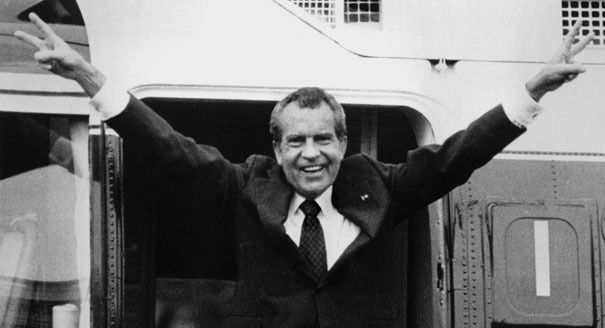
It was the scandal for which all other scandals are now named. In June 1972, a small group of Cuban burglars with high-level connections broke into the headquarters of the Democratic National Committee. Those headquarters were located in the Watergate...
Colorado must continue finding common ground on wildfire policy | GUEST COLUMN
Colorado Politics
colorado-politics@coloradopolitics.com
Updated 4 days ago
By John Herrick Colorado has never lacked for opinions about wildfire policy. We debate forest management, climate change, prescribed burns, land use, air quality and budgets. Those debates are familiar territory, but a new discussion is beginning to happen around...

Proposition NN is the best investment for Colorado’s students and schools | GUEST COLUMN
Colorado Politics
colorado-politics@coloradopolitics.com
Updated 4 days ago
By Justin Ogden Colorado families know what it means to make difficult budget decisions. Inflation has driven up the cost of groceries, housing, utilities and just about everything else. Families like mine work hard to stretch every dollar while still...
Were the primaries a preview for consequential general election? | Paula Noonan
Paula Noonan
paula-noonan@coloradopolitics.com
Updated 5 days ago
Colorado’s political future will go the way of this election. Historically, the state has not had both chambers controlled by a supermajority. This election may change that. The primaries suggest how the general election may play out. Democrats had solid...
Disagreement doesn’t have to mean disrespect | GUEST COLUMN
Colorado Politics
colorado-politics@coloradopolitics.com
Updated 5 days ago
By Vincent Atchity These days, it doesn’t take long to feel overwhelmed by politics. Turn on the news, scroll through social media or read the comments on almost any political post and you’ll find anger, outrage and personal attacks. For...

Keeping Colorado’s kids’ trust online | PODIUM
Colorado Politics
colorado-politics@coloradopolitics.com
Updated 5 days ago
By Stuart Jenkins Almost every day, the kids and teens we serve across Colorado are introduced to new generative artificial intelligence and other emerging technology, including conversational AI systems designed to simulate human conversation. These tools are no longer a...

Marx’s ‘through line’ predates Trump, connects to Maes | FEEDBACK
Colorado Politics
colorado-politics@coloradopolitics.com
Updated 5 days ago
Eric Sondermann is of course correct Victor Marx is an unserious, unelectable, embarrassing Republican nominee for governor of Colorado. But I respectfully submit that the “through line,” as Mr. Sondermann describes it, is not from Trump to Marx, despite their...