

Let Colorado communities chart their own course | Colorado Springs Gazette
An endorsement by Denver’s mayor late last week of a controversial state proposal to force new land-use rules on local governments certainly stirred the pot. But it’s unlikely to change minds in the many other Colorado communities adamantly opposed to such meddling by the state.
Their opposition is wholly justified. Zoning policies historically are a strictly local prerogative, and for good reason. As The Gazette’s editorial board noted here just last week, one size doesn’t fit all. Not only are no two Colorado municipalities or counties alike, but many are in fact widely divergent in their lifestyles, landscapes, economies and overall public sensibilities.
How many unrelated people should be able to split the rent and live in a household? Where do multifamily housing and single-family residences make the most, or least, sense? How tall should buildings be in a given locale? Should residential development be clustered around transit hubs? Those and many other considerations are likely to evoke different responses from one community to the next. Which is why such matters are best left to local governments, which are nearest the people.
Stay up to speed: Sign up for daily opinion in your inbox Monday-Friday
Accordingly, House Bill 24-1313’s “density goals” might work in some of the Colorado locales targeted by the legislation, but not necessarily in others. The bill would, among other things, make local governments cluster more housing around public transit hubs and workplaces.
It could wind up pounding a square peg into a round hole — to say nothing of traipsing on the right of local governments to enact policies that work best for their citizens.
HB 24-1313 already has passed the state House of Representatives and is scheduled to face its first committee hearing in the Senate today. The bill pushes local governments in Colorado’s largest urban corridors to implement the state-approved housing density goals using public subsidies, “inclusionary” zoning ordinances and deed restrictions on land use. Among other provisions, the legislation would require the use of limits on maximum rents or sale prices for some housing near public transit. It’s all pretty heavy-handed.
To help local governments impose those policies, the legislation establishes a state-funded grant program and offers local governments technical assistance. But for those municipalities that balk, the proposed law would withhold their state allocation of transportation funding from the Highway Users Tax Fund. Holdout local governments also could face a court injunction.
As reported by The Gazette, Denver Mayor Mike Johnston and City Council President Jamie Torres have publicly announced their support for the measure, saying its incentives to build housing near transit and workplace centers makes it attractive for Denver. So, the legislation synchs with Denver City Hall’s priorities.
But how about the land-use priorities of Fort Collins? Or Pueblo? Or Grand Junction? Or, Colorado Springs? Or numerous local entities covered by the bill?
As The Gazette reported, 90 cities and towns beg to differ with Denver. On March 28, their governments sent a letter to lawmakers pleading that they work together, not against one another. Many legislators, including some who otherwise support the bill’s goals in concept, are understandably opposed to the provision in HB-1313 that penalizes noncompliant municipalities by forfeiting money allocated to them under the State Highway Users Tax Fund. Same goes for the bill’s provision allowing for a court order compelling local communities to toe the new state line of the law is enacted.
A similar measure stalled and died in the Legislature last year. As currently drafted, HB-1313 is fundamentally as intrusive, presumptuous and overreaching — and warrants the same fate.
Colorado Springs Gazette Editorial Board


Processing plants are an important piece of the ag puzzle | Rachel Gabel
Rachel Gabel
rachel-gabel@coloradopolitics.com
Updated 16 hours ago
Concrete barricades blocked the entrance to the Cargill beef plant in Ft. Morgan, Colo., on May 20. About 1,700 workers had been locked out by the company after months of contract negotiations ended with workers voting to reject the company’s...

As AI advances, are the accompanying AI advances for the better? | Miller Hudson
Miller Hudson
miller-hudson@coloradopolitics.com
Updated 16 hours ago
You may have noted Elon Musk was in court suing Sam Altman of OpenAI. If you were praying there was a way both of these greed bros could lose, you nearly got your wish. Emails exchanged between the parties reflect...

Too much Tina | Jon Caldara
Jon Caldara
jon-caldara@coloradopolitics.com
Updated 4 days ago
Really? This much hullabaloo over Tina Peters? We enjoy being distracted by the silliest things, don’t we? Our governor’s commutation of Peters’ sentence is just that — a silly thing. Just as it was nonsensical for the “Free Tina Peters”...
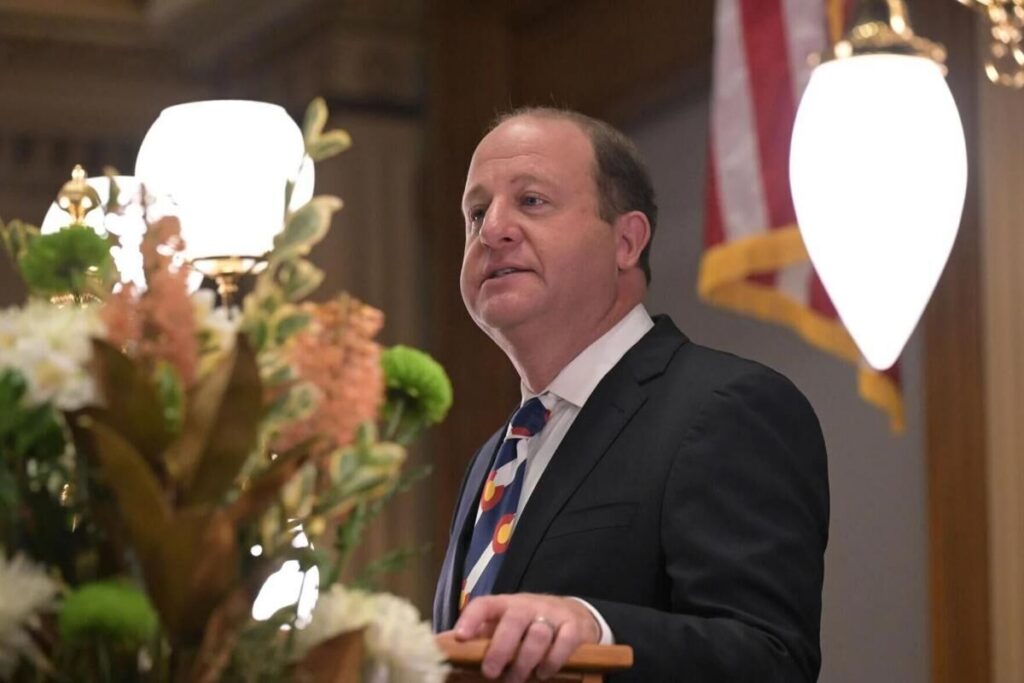
A mistaken commutation and an over-the-top reaction | SONDERMANN
By Eric Sondermann
by-eric-sondermann@coloradopolitics.com
Updated 4 days ago
It seemed an itch that Gov. Jared Polis just had to scratch. After months of hints and speculation, Polis put his signature on a commutation of the prison sentence of Colorado’s election-denying queen, former Mesa County Clerk Tina Peters. True,...

Colorado is too wealthy to keep cutting basic services | GUEST COLUMN
Colorado Politics
colorado-politics@coloradopolitics.com
Updated 4 days ago
By Kathy White and Lydia McCoy Colorado is a wealthy state. It may be hard to believe right now because so many of us are feeling the strain. Costs are high. Many families are struggling to keep up. There is...
Polis’ — and the replacement candidates’ — positions on Colorado’s most contested 2026 legislation | Paula Noonan
Paula Noonan
paula-noonan@coloradopolitics.com
Updated 4 days ago
The knock on the word “assume” is it can make an “a**” out of “(yo)u” and “me.” Let’s nevertheless assume the 2026 General Assembly addressed big problems facing the state. Let’s further assume the current governor can move on these...
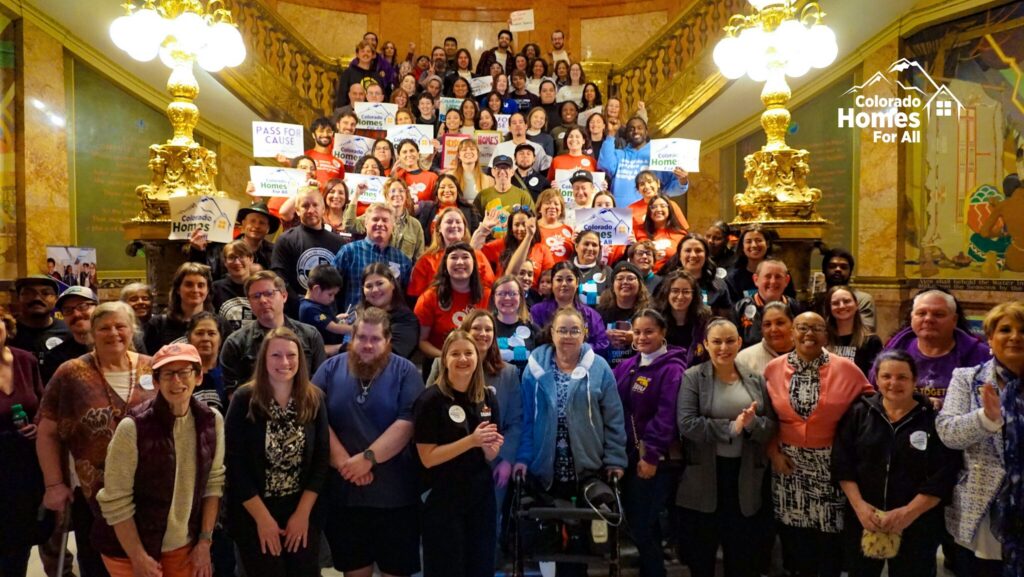
SPONSORED: What you’re missing about housing — an open letter to all of Colorado’s candidates for governor
Colorado Politics
colorado-politics@coloradopolitics.com
Updated 5 days ago
By Colorado Homes For All You say affordable housing, we say housing we can actually afford. As working-class people from across the state who are renters, we are struggling to keep up with our housing costs and we are being...

Colorado’s prisons are underfunded, not overcrowded | PODIUM
Colorado Politics
colorado-politics@coloradopolitics.com
Updated 5 days ago
By John Kellner The state does not have a “prison crowding” problem. It has a prison under-capacity problem. This is a crucial distinction for lawmakers and the public to understand. If it is not properly understood, the state risks falling...

DJ Summers dives into the costlier state of Colorado | The OpEdge Podcast
Tony Olivero
tony.olivero@gazette.com
Updated 6 days ago
Common Sense Institute’s Director of Communications & Research Operations DJ Summers dives deep with The OpEdge Podcast host and investigative columnist Jimmy Sengenberger regarding Colorado’s drop in the institute’s Free Enterprise Competitive Index. Summers shares shrewd insights regarding Colorado’s curious,...

Sorry, Governor — you are wrong on this one | Hal Bidlack
Hal Bidlack
hal-bidlack@coloradopolitics.com
Updated 7 days ago
If you have read even a handful of my several hundred columns during the past few years, you likely ran across me saying nice things about Gov. Jared Polis. I genuinely like the guy, whom I met during our mutual...