

Gov. Jared Polis signs bill eliminating residential occupancy limits for unrelated individuals
Gov. Jared Polis has signed a measure that eliminates residential occupancy limits for unrelated individuals, though the new law still allows local government regulation tied to health, safety or welfare.
House Bill 1007 prohibits local governments from enacting of enforcing occupancy limits based on familial relationships, provided that health and safety standards, as well as local building and fire codes, are adhered to.
Supporters of the bill say it will increase access to affordable housing, an issue the state has been grappling with for years. It is just one of the housing-related bills the legislature is considering this session.
Critics said it chips away at local control, arguing municipalities — not the state — know how best to regulate housing issues.
“I am thrilled to take this bold step today to cut red tape and get the government out of the business of telling people who they can live with,” Polis said. “This is one of many comprehensive steps Colorado is taking to ensure Coloradans can live in the communities they choose, near jobs and transit hubs. I thank the sponsors for their work on this legislation to create more housing options Coloradans can afford.”
The bill was sponsored by Reps. Manny Rutinel, D-Commerce City and Javier Mabrey, D-Denver, and Sens. Julie Gonzales, D-Denver, and Tony Exum, D-Colorado Springs.
“Occupancy limits that are not based on health and safety concerns worsen our housing shortage, making it even more difficult for Coloradans to find housing,” said Mabrey. “Our new law will expand housing options for all Coloradans so they can choose a living situation that works for their budget and keeps them close to their community.”
“Strict occupancy limits can reduce housing options and push folks out of their communities,” added Exum. “Prohibiting occupancy limits would give residents the freedom to choose their living situations and who they live with. This new law will allow families to live in a structure that’s best for them — without the interference of occupancy limits.”
The bill takes effect on July 1.
Back in February, Aurora Councilmember Francoise Bergan said the city should officially oppose the bill, arguing the local government knows its housing situation better than the state does.
“We should be making those decisions as our own jurisdiction not mandated by the state that doesn’t know our particulars in our different neighborhoods,” Bergan said.
Mayor Mike Coffman agreed, saying it’s not about a single change but, rather, about the overall chipping away at the city’s ability to determine its own housing regulations.
Other councilmembers disagreed. If the city opposes the bill simply because it slowly chips away at the city’s ability to make decisions, then councilmembers should oppose every bill, because in some way or another, many of them impact Aurora, Councilmember Curtis Gardner argued.


Comey says seashells post was political speech – not a threat – as he presses to dismiss charges
The Associated Press
the-associated-press@coloradopolitics.com
Updated 1 hour ago
WASHINGTON (AP) — Former FBI Director James Comey urged a judge on Monday to throw out federal charges against him, arguing that a photo of seashells arranged on a beach he posted on social media was not a call to...

Fauci’s private COVID-19 diaries: Six takeaways on fame, prize money and the lab leak debate
The Washington Examiner
the-washington-examiner@coloradopolitics.com
Updated 2 hours ago
Anthony Fauci’s private writings from 2020 and beyond portray a public health official who was fixated on his growing celebrity while privately grappling with a pandemic response he believed was chaotic, leaderless and consumed by internal rivalries. The writings of...
The outrages mount | Hal Bidlack
Hal Bidlack
hal-bidlack@coloradopolitics.com
Updated 2 hours ago
My kindly and forgiving editors understand that, from time to time, I can’t help myself from leaping atop my rickety soapbox to vent. And, like many other political commentators have already done, I could easily fill this entire missive with...

Rural Colorado deserves a tax holiday | GUEST COLUMN
Eric Mulder
jstooksberry@gmail.com
Updated 13 hours ago
Spend enough time in Colorado’s Eastern Plains, the San Luis Valley, or the Western Slope, and you’ll see boarded-up storefronts, schools consolidating classrooms, and small rural communities stretching every dollar to keep basic services afloat. Once the backbone of Colorado’s...

Denver City Council sends Xcel franchise deal to voters
Deborah Grigsby
deborah.smith@denvergazette.com
Updated 1 hour ago
This November, Denver voters will decide whether to renew the city’s longstanding franchise agreement with Xcel Energy. Members of the Denver City Council approved on Monday sending a proposed 20-year franchise agreement with Xcel that would deliver more than $180...

Denver weighs permanent restriction on low-level traffic stops
Deborah Grigsby
deborah.smith@denvergazette.com
Updated 1 hour ago
A Denver City Council committee is considering permanently limiting certain types of low-level traffic stops used to investigate unrelated crimes and requiring better public reporting about why such stops happen. Members of the Budget and Policy Committee on Monday were...

Fort Carson soldiers develop app to plan convoys as part of Next Generation Command and Control
Mary Shinn
mary-shinn@coloradopolitics.com
Updated 1 hour ago
Planning the details of a military convoy with numerous vehicles, personnel, weapons, radios and other details can take a platoon leader three days. In addition to plotting a safe route, leaders need to map out checkpoints to track the convoy’s...
Penley fire near Sedalia reaches 75% containment
Nicholas Fogleman
nicholas.fogleman@denvergazette.com
Updated 1 hour ago
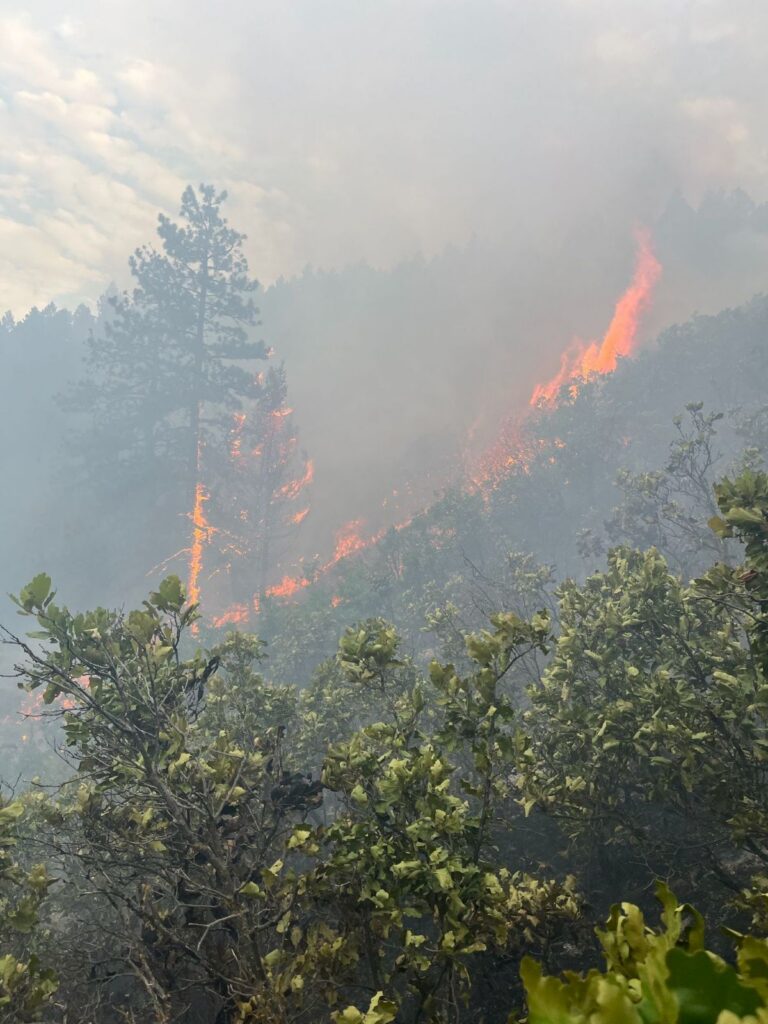
Fire crews battling the Penley fire west of Sedalia made significant progress overnight, holding the wildfire at about 3 acres and reaching 75% containment Monday, according to Douglas County officials. The fire, which sparked Sunday west of Sedalia, prompted evacuation...
Colorado board permits state to appeal injunction against arthritis drug price cap
Marissa Ventrelli
marissa.ventrelli@coloradopolitics.com
Updated 50 minutes ago
A Colorado board voted Friday to allow the Attorney General’s Office to fight an injunction against a price cap on a drug that treats arthritis. A U.S. district court judge had granted the company Amgen a preliminary injunction, temporarily blocking...

Federal judge rejects constitutional claims, ‘expressions of hatred’ by Club Q defendant
Michael Karlik
michael.karlik@coloradopolitics.com
Updated 16 hours ago
A federal judge rejected a defendant’s claims that he received constitutionally ineffective assistance of counsel while facing federal hate crime and firearms charges for murdering five people at a Colorado Springs LGBTQ nightclub in 2022. Anderson Lee Aldrich is serving...