

Colorado legislators seek to increase transparency, protect consumers in online ticket sales

Gone are the days of buying a ticket for a concert or sports event at the box office; online ticket retailers reign supreme, to many a consumer’s dismay.
Companies like Ticketmaster and Stubhub have been criticized for their lack of transparency when it comes to ticket prices, often springing hidden fees on customers just before they check out. A study conducted by the University of California Berkeley found that this tactic, known as “drip-pricing” can increase the price of tickets by over 20%.
Colorado legislators are hoping to increase accountability for both primary and secondary ticket sellers with a new piece of legislation they say differs significantly from last year’s Senate Bill 060, which also took aim at the ticketing industry and was ultimately vetoed by Gov. Jared Polis.
Representative William Lindstedt, D- Broomfield, is a sponsor of this year’s legislation, HB 1378, which he believes to be more consumer-focused than SB23-060.
“This is a new bill. I actually did not support last year’s bill because I thought it should be more consumer-oriented, and this bill is more focused on consumers,” he said. “We’ve worked on it with consumer groups, venues, and ticket sellers, both primary and secondary, to try to set some basic rules: if a concert gets canceled, you get a refund. Prices need to be clear and transparent. You can’t use deceptive URLs to make people think they’re buying tickets from venues.”
The bill also prohibits venues from denying entry to patrons if their ticket was purchased through a reseller and expands upon the actions that constitute deceptive trade practices under Colorado statute.
Lindstedt said he hopes the bill will make the ticket-buying process less of a headache for Coloradans. “Right now, buying tickets is a rough experience, I think, for most people,” he said.
Unlike SB23-060, this year’s measure does not include a ban on speculative ticketing, which is the practice of reselling a ticket before the seller actually possesses it. Lindstedt compared the practice to the once-commonplace custom of paying someone to stand in line for you to purchase tickets at a box office. He said imposing an outright ban on the practice would be difficult for the state to regulate.
I don’t think it should be illegal to pay someone to stand in line,” he said. “I think having transparency so consumers know what they’re actually paying for is better for everyone and is a better approach that will benefit consumers.”
Another stark contrast between the two bills is that HB 1378 has the support of consumer advocacy groups, Lindstedt said. While he believed venues and primary ticket sellers like Ticketmaster remain neutral to the bill, he expressed hope that it could serve as a potential starting point for establishing some common ground among all parties involved.
“I think the odds of this bill passing are very good,” he said. “We have been working since last year, trying to take a different approach. I think there’s things in here that both sides of this debate would want to have included.”
Failure to adhere to the bill’s provisions will be considered a deceptive trade practice punishable by the attorney general.
Lindstedt admitted that the ticketing industry is challenging to regulate because there are so many parties involved. “You have artists come into venues and they have certain rules, and then venues have certain rules and contracts, so it gets to be really complex,” he said. I think some of this might require some thoughtful conversations with folks in the industry to make sure we get it right and so that [the bill] is implementable. But overall, I think everybody agrees there’s a problem, and we’re here to protect consumers at the end of the day.”
Lindstedt said, “It’s gonna really help protect consumers. It’s a great piece of legislation, and I think everybody wanted more and gave a lot to actually pass something in a collaborative fashion this year.”
While similar legislation has been proposed in Congress by Sen. Richard Blumenthal, D- Connecticut, no action has been taken on it since September. Lindstedt said transparency in the ticketing industry is especially important to Coloradans, who access to some of the best concert and sports venues in the nation.
“Our entertainment industry in the state is one of the reasons people move here,” he said. “It’s one of the reasons we have such a young, growing, fast-paced metro area with some of the best venues in the country. I think for Colorado to move into the future, we need to make sure that that industry is as accessible and transparent as it can be for those consumers so that we can keep moving in the right direction as a state.”
The bill will go before the House Business Affairs and Labor Committee on April 11. It is co-sponsored in the House by Rep. Alex Valdez, D- Denver and in the Senate by Senators Tom Sullivan, D- Aurora and Bob Gardner, R- Colorado Springs.



Ikon Pass company Alterra to move into former Denver Post building, create downtown ‘outdoor hub’
Bernadette Berdychowski
bernadette.berdychowski@denvergazette.com
Updated 1 week ago
What was once the home of two of Colorado’s longest-running daily newspapers could soon become a central location for the state’s ski resort and outdoor companies, city and state leaders said Thursday. Alterra Mountain Co. is moving its headquarters to...

Amazon buys 70 acres in Aurora
Bernadette Berdychowski
bernadette.berdychowski@denvergazette.com
Updated 2 weeks ago
Amazon purchased 70 acres of land in Aurora with plans to build a distribution center, according to city and county records. The e-commerce giant bought a parcel at 825 N. Lisbon St. from a company tied to Northpoint Development for...
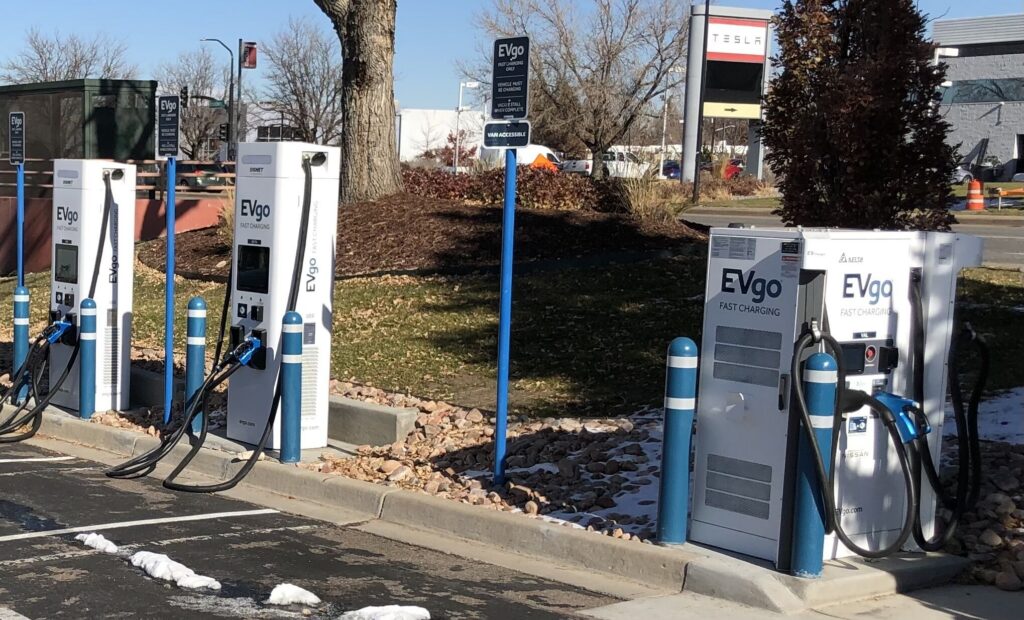
Colorado’s EV charging map nearly complete, state says
Scott Weiser
scott.weiser@gazette.com
Updated 7 days ago
Gov. Jared Polis and the Colorado Department of Transportation released a statement calling the state’s public fast-charging network nearly built out. The Aug. 27 news release reports there are now 486 DC fast-charging locations and 83% of the state highway...
PUC adds weekly comment after killing private talks
Scott Weiser
scott.weiser@gazette.com
Updated 2 weeks ago
The Colorado Public Utilities Commission will take public comment at the start of every commissioner’s weekly meeting beginning Sept. 9 as part of its new transparency mandate, the commission announced, expanding a slot previously limited to the second Wednesday of...

Healthcare freefall: Economic ripple effects grow as Colorado hospitals face financial strain
Thelma Grimes
thelma.grimes@coloradopolitics.com
Updated 2 weeks ago
Colorado’s hospital systems aren’t just a network of clinics and emergency rooms — they are also one of the state’s largest economic engines. So some 10 hospitals identified at any given time as vulnerable to closure, the alarm extends far...

Colorado quantum company gets another $20M from NASA to send tech to space
Bernadette Berdychowski
bernadette.berdychowski@denvergazette.com
Updated 2 weeks ago
NASA is ready to take the next step in sending a Colorado company’s quantum technology into space. The federal space agency awarded Infleqtion another $20 million to develop its Quantum Gravity Gradiometer Pathfinder, bringing the total to $40 million, Infleqtion...

Federal science agency gives CU Boulder $37.5M to supercharge its quantum studies
Bernadette Berdychowski
bernadette.berdychowski@denvergazette.com
Updated 2 weeks ago
The University of Colorado Boulder was awarded $37.5 million from a federal research agency to propel its quantum research, the U.S. National Science Foundation announced Tuesday. The school was one of eight academic institutions to receive a total of $290...

Colorado’s Ursa Major to go public in $2.3B deal as demand for missiles skyrockets
Bernadette Berdychowski
bernadette.berdychowski@denvergazette.com
Updated 2 weeks ago
Ursa Major Technologies, one of Colorado’s biggest aerospace and defense companies, is undergoing a period of major growth. Following on the heels of solidifying the creation of more than a thousand jobs for the state, Ursa Major now plans to...

Trump reaches deal to halt tariffs on beef for 90 days in bid to lower prices
Rena Rowe
rena.rowe@washingtonexaminer.com
Updated 3 weeks ago
President Donald Trump announced Friday that he had reached a deal to temporarily ease tariffs on beef imports, saying the move would help lower prices for families as the United States faces a severe cattle shortage and record-high beef prices....

Ikon Pass company cuts jobs in Denver and beyond amid several changes
Bernadette Berdychowski
bernadette.berdychowski@denvergazette.com
Updated 4 weeks ago
As the ski resort company behind the Ikon Pass and the operator of Steamboat Springs, Arapahoe Basin and Winter Park Resort is going through a phase of changes, the Denver-based company is now cutting jobs. Alterra Mountain Co. has laid...
PREV
PREVIOUS

House Republicans propose renaming DC airport after Trump
A group of House Republicans introduced a bill on Tuesday to rename Washington, D.C.’s main international airport after former President Donald Trump. The legislation, being led by House Chief Deputy Whip Guy Reschenthaler, R-PA, would change the name of Washington Dulles International Airport to the Donald J. Trump International Airport. It would require the name […]
Colorado Senate tackles $40.6 billion state budget
The Colorado Senate on Thursday reviewed the state’s $40.6 billion budget that will fund the state’s operations in the next fiscal year. It started off with a “clean,” un-amended bill — the work of the Senate Appropriations Committee on Wednesday — and delved into dozens of proposed changes, ranging from funding for rural schools to […]