

Lakewood City Council rejects proposal to remove low-level crimes
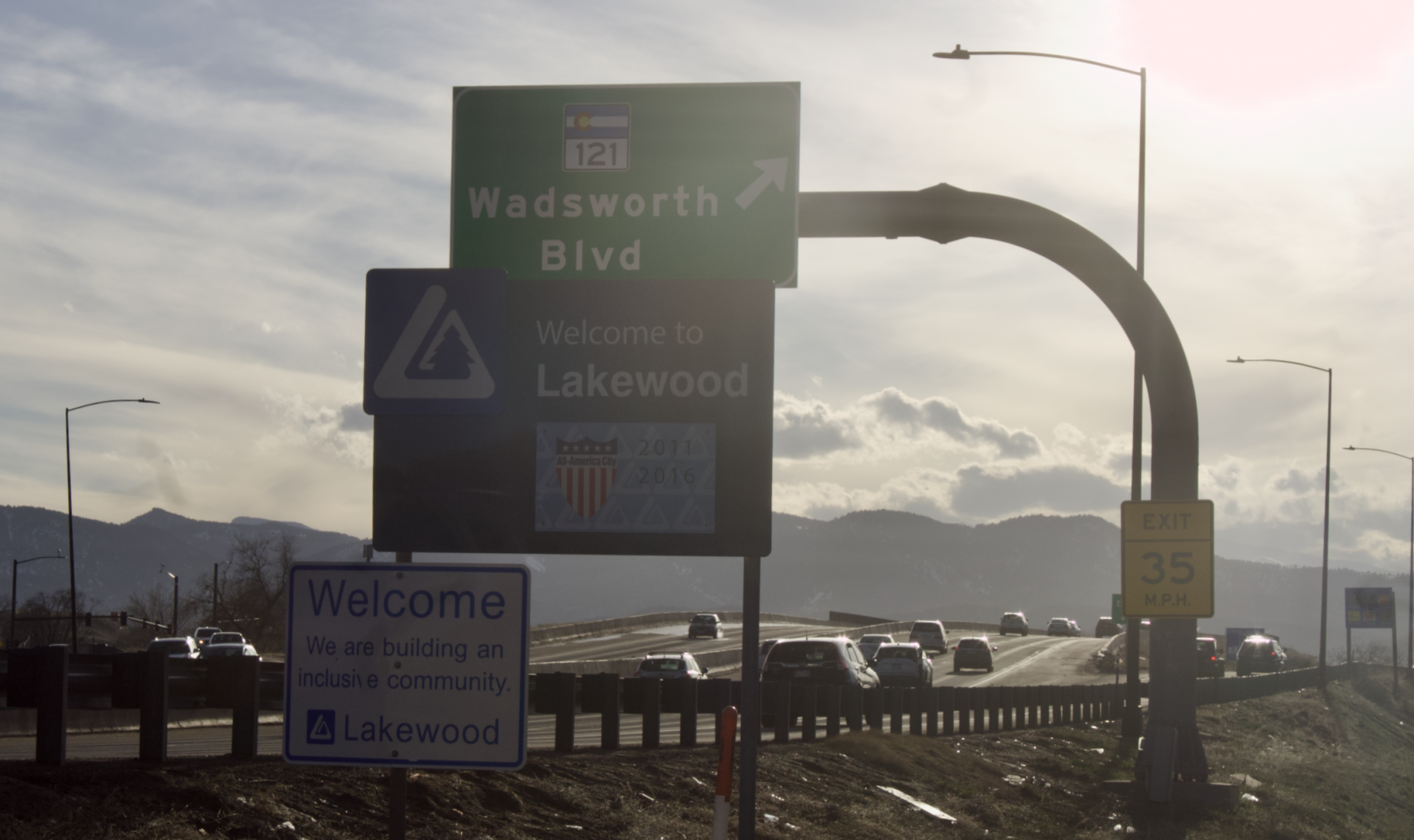
The Lakewood City Council on Monday flatly rejected the idea of removing “low-level” crimes, such as trespassing and public urination, particularly when committed by homeless people.
The city’s civic awareness subcommittee, which raised the idea, had asked the council to approve researching the effects of eliminating what it called “crimes of being homeless” or “survival crimes.”
Lakewood’s councilmembers turned the proposal down, 10-1.
“I can’t imagine telling a voter that we said we are going to be getting rid of the consequences to crime,” said Lakewood Mayor Wendi Strom.
Another councilmember described the proposal as a “whole bunch of cognitive dissonance and contradictions.”
In its request to the council, the civic awareness subcommittee, which is comprised of volunteers, said researching the effects of eliminating ordinances on camping, trespassing, public urination, littering and loitering could “save time and money from enforcement activities that could be diverted to other community resources.”
“For example, Lakewood currently ‘clears’ or forgives almost 100% of failure to appear violations and most of the low-level violations that brought the person to court,” the subcommittee said. “Therefore, the proposed system of ordinance elimination is already effectively in place. In most cases, the alleged offenders are diverted into other resource programs to provide assistance.”
The idea of eliminating “low-level” offenses is not new. The Colorado Coalition for the Homeless, for example, described some ordinances across metro Denver as “anti-homeless,” adding that the “criminalization of marginalized Coloradans is costly, ineffective, and unconstitutional.”
The group said homeless people are “11 times more likely to be arrested than people with housing, often for behaviors that would be legal if they were housed.”
Among the best expressions of this philosophical viewpoint is Oregon’s decriminalization experiment. In 2020, the state passed a measure that gave those found possessing hard drugs a $100 citation or a health assessment. The law became effective in 2021, under which drug offenses may only be punished by a fine – no jail, supervision or any other criminal penalty.
Behind the measure is the belief that a “health-based approach to addiction and overdose is more effective, humane and cost-effective than criminal punishments.” State data later showed that few opted for health assessments and paid the fine. More consequently, overdose deaths skyrocketed in Oregon – from 472 in 2020 to 738 in 2021, the year decriminalization law took effect.
By 2022, the state saw 956 overdose deaths. Last year, Oregon recorded 628 deaths by June, which means 1,250 people are on track to die from overdoses, assuming the trend holds.
Oregon’s lawmakers – some of whom recounted having family members who have died of overdoses, have since decided to recriminalize drugs.
Across the philosophical aisle is the belief that tolerating low-level crimes means perpetuating disorder, which ultimately leads to more serious offenses. The “broken windows” theory argues that this disorder creates fear among residents, who then view an area as unsafe, ultimately weakening social controls and launching a process that feeds itself.
New York’s policing experiment in the 1990s is the most prominent expression of the “broken windows” approach.
Denver also tried it. In the mid-2000s, the city adopted the “broken windows” policing strategy, which, in practice, translated to cracking down on nuisance and disorder crimes with the intention to help prevent more serious ones.
Notably, Denver used the Westwood neighborhood as a pilot for its broken-windows strategy after gang members attacked a group of young women and stabbed a man who tried to defend them as they left soccer practice at a church. The girls advocated for then-Mayor John Hickenlooper to implement the strategy.
Reports in 2006 said crime in Westwood declined 21.5% in the first five months of the year over the same period in 2005.
Karen Morgan, a member of the Lakewood subcommittee who wrote the proposal, could not be reached for comment. Fred Clifford, chair of Lakewood’s civic awareness committee who presented the proposal on Morgan’s behalf to councilmembers on Monday, said, “Criminalizing homelessness does not solve homelessness.”
He said the subcommittee sought “a better way to help the individual and still preserve rule of law.” Eliminating certain ordinances could remove “the fear of breaking the law for those that need to,” he added.
He cited Lakewood’s window washing ordinance, which prohibits soliciting business from vehicles.
Clifford said that ordinance isn’t being enforced “due to free speech concerns,” and if laws aren’t being enforced, then that also means a lack of enforcement.
The councilmembers were unconvinced, and some said the subcommittee didn’t really show its true intentions.
“Members of your committee really want to highlight the lack of enforcement,” Ward 1 Councilmember and Mayor Pro Tem Jeslin Shahrezaei told Clifford. “I think the point of what you all are trying to accomplish is to really highlight some ways that our law enforcement maybe lacks the capacity to do all the things we hope for them to do.”
“To be frank,” she said, “I’m disappointed that we would take this option to have that conversation.”
Some described the proposal as “disingenuous,” including Ward 3 Councilmember Rebekkah Stweart, who said it “feels just like a whole bunch of cognitive dissonance and contradictions.”
“It does not make a ton of sense to me to propose a project that says, ‘People are breaking the law and we are not enforcing it well enough, so let’s get rid of the law,'” she said, adding there is “no real hypothesis in this proposal.”
Ward 5 Councilmember Jacob LaBure, who worked with the Lakewood Police Department for seven years, said more ordinances and city codes “gives police more tools in their tool box to be more effective in their jobs.”
“I would oppose this today,” he said. “But that doesn’t mean as a body we shouldn’t be thinking about new strategies and ways to be more effective in policing.”
“Getting rid of some of these low level offenses is not necessarily the right approach,” added Ward 3 Councilmember Roger Low, adding the city should focus on how to reduce crime and homelessness, instead of eliminating the laws.
Ward 5 Councilmember Jacob LaBure, the only ‘yes’ vote, said he disagrees with getting rid of laws but added that the subcommittee’s proposal seemed well intentioned and that policymakers should research other policing strategies.
“Something needs to change,” LaBure said.
A majority of Lakewood residents who commented on the proposal on the city’s website also sharply criticized it.
“Laws are in place so citizens feel safe when you remove the feeling of safety and security from a neighborhood, park, rec center, or city then people and families move away,” one resident wrote on the city’s agenda page. “I want my nieces and nephews and future grandchildren to be able to feel safe in Lakewood. I want them to play in my backyard without having to say, ‘Don’t bother the man sleeping under our tree, the 2024 city council made a decision he has the right to be there and you don’t.’
“We see how much once great cities have deteriorated once they adopt policies that eliminate these violations as crimes. Crime escalates, as does drug addiction,” said another. “You don’t have to look far. Denver is one.”

noah.festenstein@denvergazette.com

Colorado Supreme Court says intimate messages irrelevant to assault case
Michael Karlik
michael.karlik@coloradopolitics.com
Updated 2 hours ago
The Colorado Supreme Court decided on Tuesday that a Douglas County judge acted reasonably by blocking evidence of a defendant’s BDSM-related conversations with the victim in his trial for assault and false imprisonment. While the Court of Appeals believed that...

Postmaster general spars with Senate Democrats over mail-in ballot restrictions
Molly Parks
molly.parks@washingtonexaminer.com
Updated 2 hours ago
Senate Democrats sparred with Postmaster General David Steiner on Wednesday over the U.S. Postal Service’s move to stop delivering mail-in ballots in states that don’t hand over their voter rolls to the federal government. Steiner, who has stayed out of...
Sans seniors, what does Colorado’s uninterested early turnout say about our disengaged electorate? | Paula Noonan
Paula Noonan
paula-noonan@coloradopolitics.com
Updated 19 hours ago
This primary election is poorly attended. Evidence is in the numbers. About 10% of active registered voters are deciding this year’s primaries with seven days to go. If that number triples by June 30, only 30% of voters will decide...

Who gets to decide Colorado’s economic future? | GUEST COLUMN
Colorado Politics
colorado-politics@coloradopolitics.com
Updated 19 hours ago
By Sarah Blackhurst Colorado’s prosperity depends on industries that grow our food, build our future and power our homes. But today, these sectors face an invisible threat from 5,000 miles away: the European Union’s Corporate Sustainability Due Diligence Directive (CS3D)....
Trump’s 10th Circuit nominee declines to name 2020 election winner, defends immigration decisions
Michael Karlik
michael.karlik@coloradopolitics.com
Updated 2 hours ago
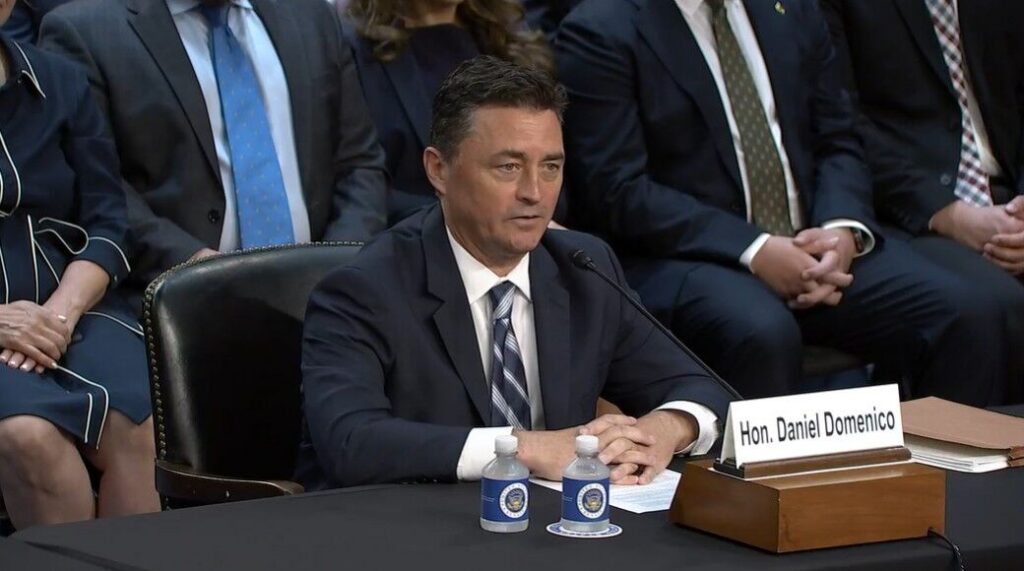
President Donald Trump’s nominee to the Denver-based federal appeals court declined to say who won the 2020 presidential election during his appearance before the U.S. Senate Judiciary Committee on Wednesday, and defended his recent rulings in immigration detention cases. U.S....
Colorado repeals attorney immigration attestation law after one year
Nico Brambila
nico.brambila@denvergazette.com
Updated 18 hours ago
One year and 12 days. That’s how long a Colorado law requiring attorneys to certify they would not use court data for federal immigration enforcement remained on the books before lawmakers repealed it. Gov. Jared Polis signed the initial legislation,...
Colorado’s ‘right to natural gas’ measure submits signatures to qualify for November ballot
Marissa Ventrelli
marissa.ventrelli@coloradopolitics.com
Updated 21 hours ago
A natural-gas rights initiative backed by Advance Colorado is likely headed to the November ballot, triggering a parallel campaign by environmental groups seeking to impose new liabilities on oil and gas operators. Petitions for Initiative No. 177 were turned in...

Economists: Colorado budget improves slightly, but deficits still loom
Marianne Goodland
marianne.goodland@coloradopolitics.com
Updated 22 hours ago
State economists reported a stronger-than-expected bump in general fund revenue driven largely by higher individual income tax collections, yet warned that Colorado remains on track to begin the next fiscal year with a sizable shortfall. State economists upgraded “significantly” the...

Colorado law allowing lawsuits against ‘conversion therapy’ providers takes effect July 1
Marissa Ventrelli
marissa.ventrelli@coloradopolitics.com
Updated 21 hours ago
With a new law taking effect July 1, Colorado is creating a legal pathway for people to sue licensed providers of “conversion therapy,” even as debate over the practice’s constitutionality continues in the wake of a recent U.S. Supreme Court...
Colorado justices expand ability for civil defendants to avoid participating, win after trial
Michael Karlik
michael.karlik@coloradopolitics.com
Updated 6 hours ago
The Colorado Supreme Court decided on Tuesday that a civil defendant, whose non-participation in the case meant that he legally admitted to the sexual assault allegations against him, could nonetheless prevail after he showed up to testify at trial. A...