

Colorado lawmakers push for funeral industry regulations after string of scandals
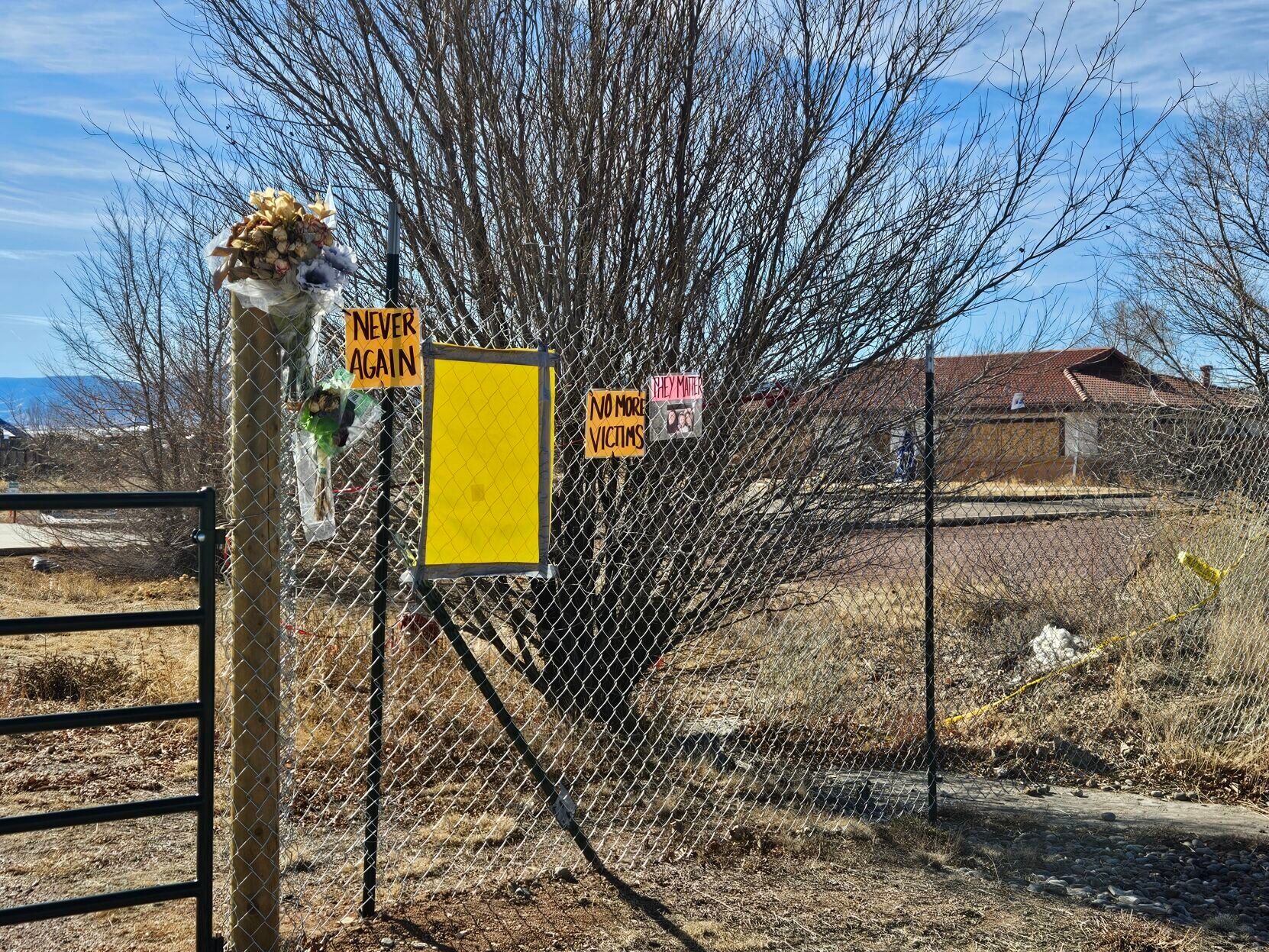
As she spread her son David’s ashes in Utah, Crystina Page was struck by the extraordinary beauty of the landscape.
She was also struck by the memory of being there before – having done the same thing.
The ashes she spread last time, however, belonged to a stranger, whom she sardonically calls “grandma Fido” – because she’s not completely sure whether they belong to a human or an animal.
All she knows is that when she received them, the funeral home told her they belonged to her son.
In reality, however, David’s body had been left to rot in a neglected building in Penrose.
David Page, 20, was killed by Monument police officers in 2019.
His mother said she was forced to relive the trauma of her son’s death four years later when she was informed that the ashes she believed to be his actually belonged to someone else. She learned his body was one of the 189 found in the Penrose building where the owners of the Return to Nature Funeral Home had stored them at room temperature, allowing them to decompose to such a degree that the stench prompted neighbors to alert authorities.
“My son was 180 pounds and 6’3,” Page said. “Four years later, he was 74 pounds at his proper cremation. He lost 106 pounds as he laid naked, uncovered and exposed, rotting in the corner of an inoperable refrigerator, while rats, maggots and bugs ate his face.”
Colorado lawmakers under pressure to regulate funeral industry after urns, body found in Denver home
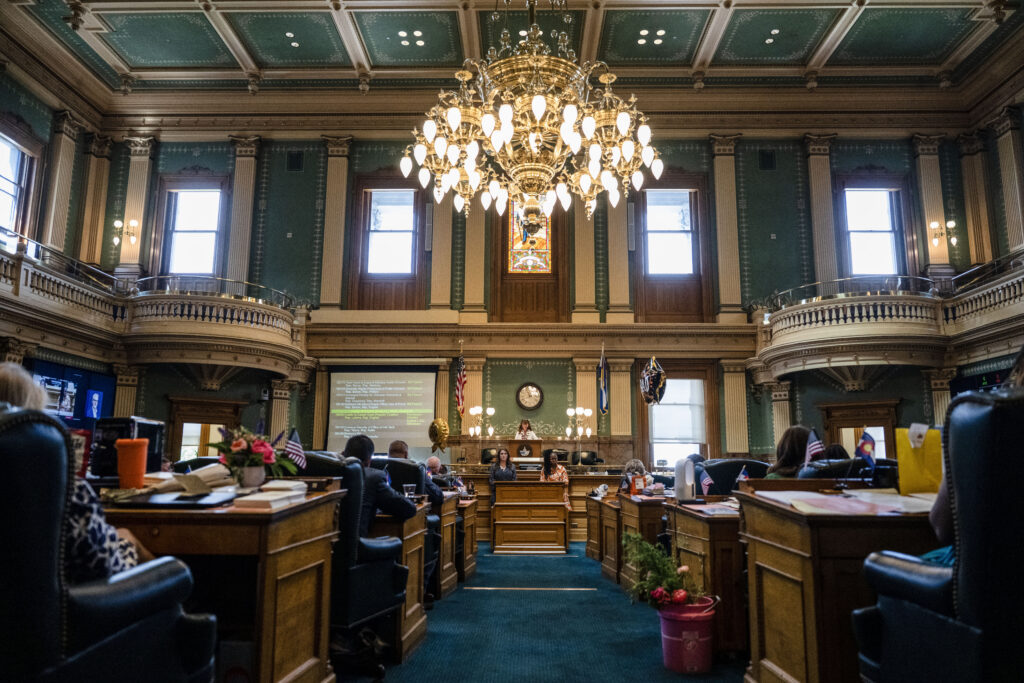
Page was one of several people who testified at the state Capitol in favor of tightly regulating the funeral industry. To her and others who back the bill, the scandals that have erupted just in recent months wouldn’t have occurred with stricter regulations.
Others, however, worry about proposed regulations’ effect on the industry’s workforce and argued that they would saddle rural communities.
Colorado is the only state in the nation that does not regulate mortuary science professionals, such as funeral directors, cremationists and embalmers. Sponsors said Senate Bill 173 would address that gap by imposing regulations on the industry, including educational prerequisites and licensing standards to ensure competence and accountability within the industry.
Lawmakers adopted several amendments, including reducing the number of hours required to obtain provisional licenses to 4,000 – from 6,500 – and carving out an exception for employees who work in funeral homes and similar businesses but do not interact with bodies.
The bill, which passed unanimously through the Senate Business, Labor & Technology Committee, was referred to the finance committee.
Bill sponsor Sen. Dylan Roberts, D-Frisco, said funeral homes in Colorado have received a lot of media attention in recent years for disturbing reasons.
Incidents like those in Penrose and the Sunset Mesa Funeral Home in Montrose, in addition to cases in Silverthorne, Gypsum, and, more recently, in Denver, have put a national spotlight on the state’s lack of oversight for mortuary science professionals.
“We’ve really reached a breaking point here in Colorado, and we simply cannot remain the only state in the nation that does not license funeral professionals,” Roberts said. “What this bill is about, frankly, is to finally say in Colorado that enough is enough with tragedies stemming from funeral homes and businesses in our state.”
Patty Salazar of the Department of Regulatory Affairs – which would be responsible for regulating the industry if the bill passes – Colorado’s funeral home industry was deregulated in the early 1980s.
Then in 2022, the governor signed Senate Bill 1073 into law, authorizing the Division of Professions and Occupations to conduct inspections on funeral homes.
Salazar said SB 173 was created in response to DORA’s sunset report, which recommended imposing additional regulations on funeral homes and licensure for mortuary science professionals.
“The lack of oversight of funeral home professionals has clearly failed Colorado,” she said. “Regardless of where you are in the state, every family has the right to their loved one being cared for with dignity in their final disposition.”
“No one should ever have to go through this”
Sheila Canfield Jones lost her daughter in 2019. Four years later, she received a call from the FBI telling her the ashes she had received were not hers and that her daughter’s body was found in Penrose.
Along with the horror she felt upon receiving that phone call, Canfield Jones said she was also confused.
“There’s something wrong that this was allowed to happen,” she said. “I started looking at the legislation that we have currently and the laws that we have for mortuaries and it was appalling. Absolutely appalling to think that this could get by, and this has been happening for 40-something years.
“These people have been preying on people. They’ve been preying on you – the ashes you have, are they real? You don’t know. Nobody knows, that’s the problem,” Canfield Jones added. “No one should ever have to go through this, and it is up to you, the legislators and the people who vote for these laws, to make sure this doesn’t happen again.”
Regulations are necessary for mortuary science professionals not only to prevent tragedies inflicted upon grieving families by bad actors, Canfield Jones said, but also to further establish the credibility of the vast majority of professionals who abide by the rules.
“There are people in this industry who are good,” she said. “There are people in this industry who need accountability. They need to be trusted again.”
‘Forever mixed with Quikrete’
When Samantha Naranjo’s grandmother Dorothy passed away in 2022, her family had her body cremated and stored her ashes with those of her husband and son, who had both passed before her.
The following year, Naranjo’s family learned that Dorothy’s body had not been cremated, but was, in fact, discovered among the bodies in Penrose.
Naranjo mentioned a complaint that had been filed against Return to Nature in 2021, which she said was never acted upon due to lack of oversight authority.
“I truly believe if DORA was regulating these employees in this industry, that the complaints made against the funeral home directors in 2021 would have prevented my grandmother’s decomposing body from soaking up bodily fluids from other rotting bodies as her body gained 25 pounds before she was properly put to rest one year and two months after she passed away,” she said.
“This bill would have prevented those funeral home directors from giving us cement that I am forced to hold dearly for the rest of my life as my grandmother’s husband and son are forever mixed with Quikrete.”
The Death Broker: A Colorado funeral director’s façade falls, revealing grisly practices
Naranjo asserted that her family dog, who passed away several months after her grandmother, was treated with more dignity than her grandmother had been.
“My son questioned the remains of our beloved dog. For me to reassure that our dog was treated with more respect than my grandmother is absolutely devastating to say the least,” she said. “We are not just a national embarrassment, we are a world-wide disgrace.”
She added: “This state need to do more and do better.”
‘A crucial step’
Aaron Kucharik did everything right, he said. He received his mortuary science degree from Kansas City Kansas Community College, completed the state’s the licensing process in, participated in an apprenticeship program, and passed all of the exams necessary to become a funeral director in Kansas.
However, when he moved west to Colorado, he immediately noticed disparities in the standards for professionals within his field, he said.
After being told by his management team that his education and license “didn’t matter” and that he could be replaced by “anyone off the street”, Kucharik said he made the difficult decision to leave the profession last summer.
He said he believes that, if Colorado imposed regulations consistent with those enforced in the other 49 states, it would standardize best practices among professionals and ensure greater consistency statewide.
“This is not just a matter of regulation and bureaucracy, it’s a crucial step towards the highest standards of care and professionalism in an industry that deals with one of the most sensitive and critical aspects of life, which is death,” he said.
Blanca Eberhardt, a licensed funeral director and embalmer from Fremont County, which includes Penrose, said she witnessed “atrocious” acts committed by her colleagues, many of whom had no prior experience in mortuary sciences, during her time as a deputy coroner.
“I witnessed atrocious, atrocious things that I should not have ever witnessed,” she said. She estimates she has sent about 300 emails to Roberts, the lawmaker, regarding the issue because she “wanted somebody to know what was going on behind the scenes.”
Eberhardt said that when she tried to warn her colleagues that their actions could get them in trouble, she was ignored. She spoke of her disappointment with the state’s decision to deregulate the industry.
“I was nine years old when the Colorado Funeral Directors Association president Mr. (Michael) Blackburn told this Colorado Assembly in 1983 that if you dismantle the board and you deregulate, you will be sitting here doing this again,” she said. “And here we are.”
Concerns with future workforce
Nick Hodgdon’s funeral businesses are estimated to be involved in about 70% of all deaths in Colorado. While he doesn’t have any kind of formal licensure himself, he said he supports industry regulation.
But he also expressed worries with the future of the workforce. He noted that Arapahoe Community College is the only school in the state that offers a degree in mortuary science, which would be a requirement for certain professions under the bill.
According to Hodgdon, Arapahoe Community College only graduates about 30 students from its mortuary science program each year.
“This leaves the entire state competing to hire out of a pool of possibly 30 candidates,” he said.
Hodgdon also asserted the regulations would saddle rural communities with additional strain due to staffing shortages.
Former Denver funeral director’s criminal case moves forward
He advocated for a reduction in the number of work hours required for individuals to obtain provisional licenses and for ensuring reciprocity for professionals licensed in other states.
Additionally, he proposed an amendment permitting apprenticeships for individuals planning to pursue an undergraduate program in mortuary sciences within the year, even if they haven’t started school yet.

Colorado House Democrats’ caucus finances under scrutiny as ethics case against leader advances
Marianne Goodland
marianne.goodland@coloradopolitics.com
Updated 2 days ago
Democratic lawmakers told a legislative ethics panel that a leader’s management of caucus finances left them with unanswered questions, disputed reimbursements and a breakdown in communication that ultimately triggered a formal complaint. The House Ethics Committee is examining a complaint...

Colorado shifts vaccine authority to state as Trump administration revises childhood framework
Marissa Ventrelli
marissa.ventrelli@coloradopolitics.com
Updated 2 weeks ago
As the Trump administration rolls out a revised childhood vaccine framework, Colorado’s law allowing the state to set its own immunization schedule has now taken effect. Issued Monday, President Donald Trump’s executive order separates childhood and adolescent vaccines into three...

Colorado NRA chapter seeks injunction against new gun‑training requirement
Marissa Ventrelli
marissa.ventrelli@coloradopolitics.com
Updated 2 weeks ago
The Colorado chapter of the National Rifle Association is seeking an injunction to stop the state from enforcing a new law that took effect earlier this month. The new law requires anyone buying or selling certain firearms to first complete...
Hunter shot Colorado wolf after mistaking it for a coyote, wildlife office says
Marianne Goodland
marianne.goodland@coloradopolitics.com
Updated 2 weeks ago
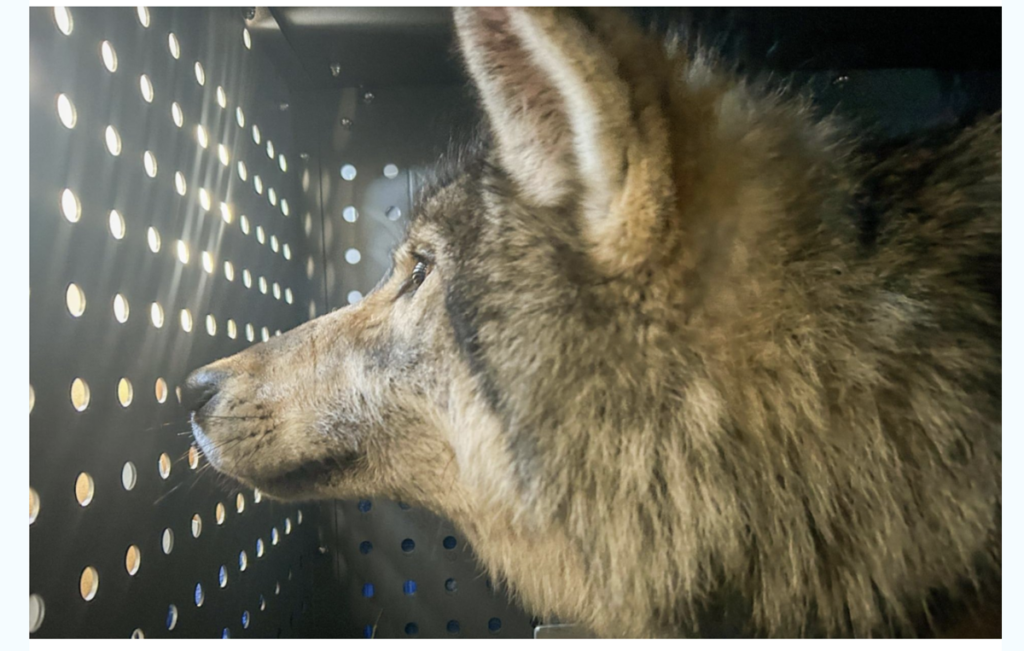
Colorado Parks and Wildlife said Monday that a female wolf from British Columbia that died in January was shot by a hunter who mistook her for a coyote. The wolf, identified as 2504‑BC, was one of 17 wolves relocated since...

Colorado’s troubled guardianship office pursues ‘cultural reset’
Marianne Goodland
marianne.goodland@coloradopolitics.com
Updated 2 weeks ago
Colorado’s guardianship program, long criticized for mismanagement and high staff attrition, is undergoing a “cultural reset,” as its new director works to repair partnerships and prepare for a major expansion under recent legislation. Created by lawmakers in 2017, the Office...
Judge dismisses lawsuit seeking records from Colorado Democratic group
Marianne Goodland
marianne.goodland@coloradopolitics.com
Updated 2 weeks ago
A lawsuit seeking to obtain records from Democratic lawmakers affiliated with a caucus has been thrown out by a Denver District Court judge. On July 17, Judge Ericka Englert dismissed the April lawsuit filed by progressive activist Derrick Blanton, who...
What happens if voters pass Colorado’s two competing income tax measures?
Marianne Goodland
marianne.goodland@coloradopolitics.com
Updated 3 weeks ago
The battle between two competing ballot measures — one seeking to cap Colorado’s income tax rate, the other pushing for a tiered system depending on income levels — might come down to whichever ballot proposal gets one more vote. The...

New Colorado laws going into effect cover AI disclosures, medical marijuana access and gambling limits
Marissa Ventrelli
marissa.ventrelli@coloradopolitics.com
Updated 3 weeks ago
More than 100 new Colorado laws take effect Aug. 12, bringing changes to chatbot safety rules, psychedelic research, campus wellness checks and sports betting restrictions. Here is a look at some of those laws set to take effect. The law:...

Colorado background checks surge ahead of new semiautomatic gun requirement
Marissa Ventrelli
marissa.ventrelli@coloradopolitics.com
Updated 3 weeks ago
The Colorado Bureau of Investigation processed a record number of firearm background checks in July, which the agency attributes to a new state requirement before guns can be purchased that went into effect on Aug. 1. In total, CBI performed...

Colorado to implement new laws on jail standards, safe haven rules, and agricultural labeling
Marissa Ventrelli
marissa.ventrelli@coloradopolitics.com
Updated 2 weeks ago
In mid-August every year, a slew of recently passed laws in Colorado go into effect 90 days after the end of the legislative session. This year, all bills without a specified effective date or safety clause — a provision stating...
PREV
PREVIOUS

Arapahoe County domestic violence conviction reversed for constitutional violation
An Arapahoe County judge improperly limited a defendant’s constitutional right to confront her victim, prompting Colorado’s second-highest court to reverse her conviction last month. Jurors found Richel Lee Gurule guilty in 2022 of assaulting her romantic partner at the time. Each woman said the other was the aggressor. Before trial, the judge permitted the defense […]

Biden expected to rake in $25 million with star-studded fundraiser featuring Obama and Clinton
President Joe Biden‘s reelection campaign is expected to end the day with another $25 million after an all-star fundraiser featuring former Presidents Barack Obama and Bill Clinton. More than 5,000 people will attend the Thursday event, hosted by Mindy Kaling at New York City’s Radio City Music Hall, for performances by Queen Latifah, Lizzo, Ben […]