

Will Gov. Jared Polis sign bill exempting lawmakers from open meetings law? Colorado lawmakers eye dating apps regulation | WHAT YOU NEED TO KNOW
Today is March 12, 2024, and here’s what you need to know:
Bill exempting Colorado lawmakers from open meeting laws heads to governor's desk
Despite a last-ditch effort by some House lawmakers on Monday, a bill that will exempt the Colorado General Assembly from following parts of the open meetings law established in 1972 is now in the hands of Gov. Jared Polis.
What Polis thinks of the measure, which the House passed on a 39-22 vote, remains unknown.
The state’s 1972 Sunshine Law declares that it is a “matter of statewide concern and the policy of this state that the formation of public policy is public business and may not be conducted in secret.”
But lawmakers at the state Capitol, who complain the law hinders their ability to have private conversations about public policy and bills, including through text or email with their colleagues, seek to rewrite the law.
Colorado lawmakers eye regulation of dating apps to prevent assault, rape
The number of couples who have met on a dating app or website has skyrocketed since online dating services first debuted over two decades ago. While many find happy and healthy relationships through the online services, others looking for love have not been so lucky.
Currently, Colorado is ranked as the fifth-most dangerous state for online dating, pushing legislators to propose a comprehensive bill that will provide its citizens some peace of mind. The ranking took into account data, including cybercrime stats, rates of romantic fraud, and violent crime stemming from online interactions.
Wading into issue, Senate Bill 011 requires online dating services to create and publish safety policies, including information on whether and when they conduct background checks on users, if convicted criminals are allowed to use the service, the service’s definition of misconduct, and what actions are taken when it receives reports of a user’s misconduct.
Property tax commission narrowing in on proposals that differ from ballot initiatives
In this article, Ed Sealover, Editor, The Sum & Substance, explores property tax approaches that a commission is considering:
Members of a commission tasked with developing a long-term solution to Colorado’s spiking property-tax values heard from proponents of competing ballot measures on the subject this month — and indicated that they’d prefer a solution different from what is being offered.
Legislators approved creation of the Commission on Property Tax during a November special session after voters rejected Proposition HH, an initiative that would have offered property-tax breaks in exchange for a raising of the Taxpayer’s Bill of Rights revenue cap. But while they are debating what might allow for less fluctuation than the 19% to 25% spikes in residential property-tax bills expected this year, a pair of ballot measures coming from different points on the ideological spectrum could blunt any efforts from the state.
Advance Colorado and Colorado Concern have submitted three versions of an initiative to reset property values to 2020 levels, permit maximum 4% annual increases in property taxes until a property is sold and lower residential and commercial assessment rates. The three proposals offer varying levels of state backfill to local governments to offset revenue lost by the property-tax caps and require the legislature to determine how to pay for that.
Meanwhile, the Bell Policy Center has submitted a pair of counterproposals designed to prevent what President Scott Wasserman warned could be “Ballot Armageddon” if the property-tax-cap measure were to pass. One would require local governments to have to opt into any property-tax change taking place statewide for it to take effect within its jurisdictions, while the other, which soon will be submitted, would create a new tax on luxury residential properties worth at least $5 million to be given to local governments.
Colorado Supreme Court, 4-3, makes it easier for late-filed home insurance claims to proceed
The Colorado Supreme Court made it easier on Monday for homeowners to file damage claims with their insurance companies outside the deadline in their policies.
By 4-3, the justices applied a rule they had previously extended to limited circumstances requiring insurers to show their ability to investigate and defend against a homeowner claim is harmed by the policyholder’s late filing. If insurance companies cannot do so, the homeowner’s claim may proceed.
“Those who obtain homeowners’ insurance to cover the cost to repair unforeseen damage to their homes, typically for which the insureds bear no fault, should be compensated according to that insurance coverage,” wrote Justice Richard L. Gabriel in the March 11 opinion.
Jefferson County's $273 million project — part of Peaks to Plains Trail — sparks excitement, push back
An ambitious trail to connect the Continental Divide to the Denver metro is dividing the residents of Jefferson County, with some balking at the $273 million cost and others excited at the prospect of better access to the “truly quintessential Colorado experience.”
When completed, the 65-mile Peaks to Plains Trail will connect the Continental Divide at Loveland Pass to the South Platte River Trail in Denver. Fourteen miles of the trail will be in Jefferson County, including a six-mile stretch through Clear Creek Canyon.
The county’s segment alone — 13.75 miles to be exact, with nine trailheads — will cost an estimated $273 million. About 83% of the cost will be paid for by the country’s Open Space tax funds, and about 17% will be covered by grants and awards that have been raised over a stretch of nearly two decades.


Democrat Michael Bennet turns in petitions for Colorado’s gubernatorial primary, plans to skip caucuses
Ernest Luning
ernest.luning@coloradopolitics.com
Updated 1 hour ago
U.S. Sen. Michael Bennet, a Democratic candidate for governor, submitted nominating petitions for Colorado’s June primary ballot on Friday, his campaign and the Colorado Secretary of State’s Office said. Bennet plans to rely on his petitions to get on the...

Israeli officials say Iran’s Supreme Leader Khamenei is dead. No word from US or Iran
Aamer Madhani
aamer.madhani@associatedpress.com
Updated 4 hours ago
DUBAI, United Arab Emirates (AP) — Supreme Leader Ayatollah Ali Khamenei has died in a major attack on Iran launched by Israel and the United States, Israeli officials told The Associated Press on Saturday. There was no immediate comment from...

Colorado Reps. Jason Crow, Gabe Evans clash over Trump’s Iran military operation
Thelma Grimes
thelma.grimes@coloradopolitics.com
Updated 5 hours ago
Colorado’s congressional delegation split sharply along party lines Saturday after the U.S. and Israel attacked Iran, triggering fresh debate in America over presidential war powers. Republicans, notably U.S. Rep. Gabe Evans, called the strikes a necessary move to counter Iran’s...

What to know about U.S.-Israel attacks on Iran
The Associated Press
the-associated-press@coloradopolitics.com
Updated 3 hours ago
The attack The U.S. and Israel attacked Iran on Saturday in what President Donald Trump said was a massive operation to destroy the country’s military capabilities and eliminate the threat of it creating a nuclear weapon. Iran’s Foreign Ministry said it would...

World leaders react cautiously to US and Israeli strikes on Iran
The Associated Press
the-associated-press@coloradopolitics.com
Updated 3 hours ago
BRUSSELS • World leaders reacted warily to U.S. and Israeli strikes on Iran on Saturday that triggered worries of a broader conflict. European leaders held emergency meetings and took measures to protect their citizens in the Middle East, with key leaders calling...

US and Israel launch a major attack on Iran and Trump urges Iranians to ‘take over your government’
The Associated
the-associated@gazette.com
Updated 11 hours ago
The U.S. and Israel launched a major attack on Iran on Saturday, and President Donald Trump called on the Iranian public to “seize control of your destiny” by rising up against the Islamic leadership that has ruled the nation since 1979. Some of the first...
Additional thoughts on State of the Union address/rally | Cronin and Loevy
Tom Cronin Bob Loevy
tom-cronin-bob-loevy@coloradopolitics.com
Updated 11 hours ago
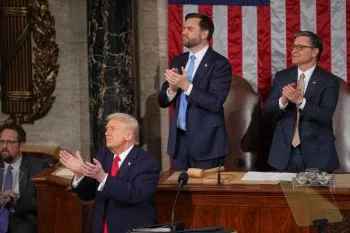
The U.S. Constitution’s Article II states that “He (the president) shall from time to time give to the Congress Information of the State of the Union, and recommend to their Consideration such Measures as he shall judge necessary and expedient...

Colorado Politics Calendar Mar. 2-9
Rachael Wright, Special to Colorado Politics
rachael.wright@coloradopolitics.com
Updated 3 days ago
CoPo’s weekly political calendar will help you find political and public-policy events throughout Colorado. It includes candidate and issue campaign events, public policy meetings, court hearings, state and local party conventions, assemblies, debates, rallies, parades, speaking engagements, traveling dignitary appearances,...

First reapportionment commission meeting held after passage of Amendment 9 | A LOOK BACK
Rachael Wright, Special to Colorado Politics
rachael.wright@coloradopolitics.com
Updated 3 days ago
Forty-Five Years Ago This Week: 1981 marked the first year, following the passage of Amendment 9 years earlier, that the newly formed reapportionment commission would meet. According to the amendment, the commission had to hold its first meeting no later...
A cynical import Colorado doesn’t need | SONDERMANN
By Eric Sondermann
by-eric-sondermann@coloradopolitics.com
Updated 9 hours ago
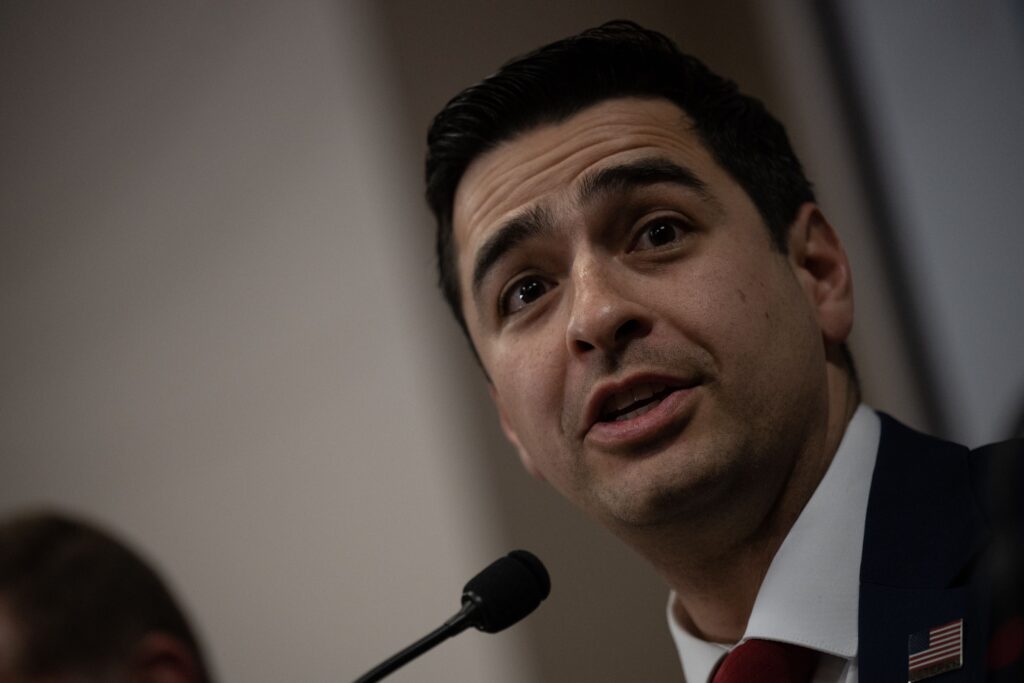
“But mommy, he started it.” Every parent, definitely those with more than one kid, has heard this instinctively defensive reaction to the point of exhaustion. It is the ultimate deflection or shifting of the blame. A similar rationale, often about...
PREV
PREVIOUS

Will Gov. Jared Polis sign bill exempting lawmakers from open meetings law? Colorado lawmakers eye dating apps regulation | WHAT YOU NEED TO KNOW
Today is March 12, 2024, and here’s what you need to know: Despite a last-ditch effort by some House lawmakers on Monday, a bill that will exempt the Colorado General Assembly from following parts of the open meetings law established in 1972 is now in the hands of Gov. Jared Polis. What Polis thinks of […]

SCOTUS puts end to Trump disqualification effort, state Supreme Court returns for arguments | COURT CRAWL
Welcome to Court Crawl, Colorado Politics’ roundup of news from the third branch of government. The U.S. Supreme Court clarified that Colorado and other states may not disqualify insurrectionist candidates for federal office using their elections procedures, and the state Supreme Court is back today to hold oral arguments. SCOTUS puts states in their place […]