

Unintended health consequences resonate in Idaho | BIDLACK
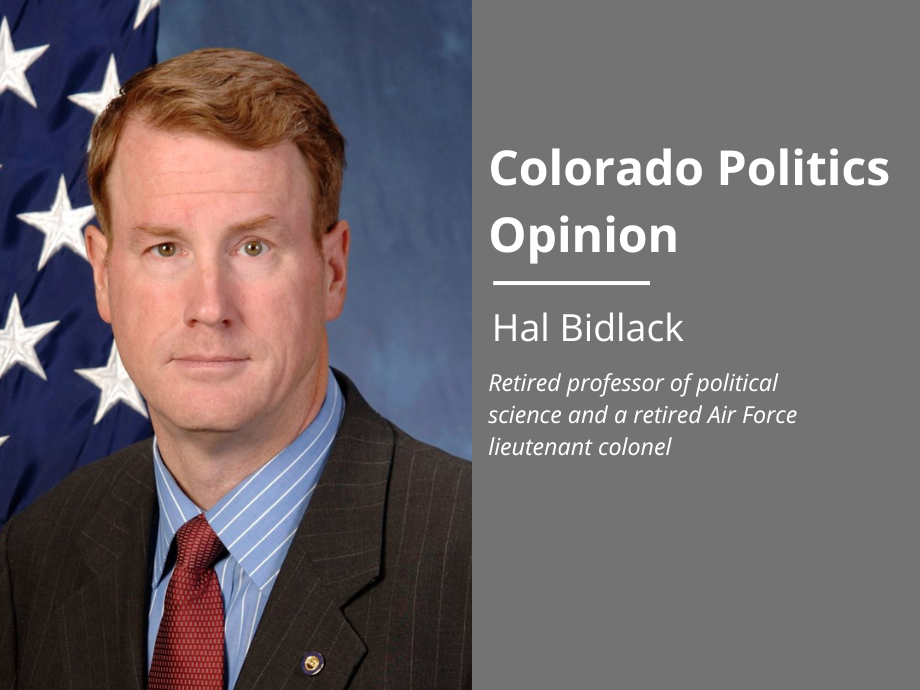
Back in the 1980s, my three kids were born in military hospitals. The first two entered the world at the base hospital on FE Warren Air Force Base in Wyoming, where I was first stationed as a “finger-on-the-button” ICBM launch officer and then later as an instructor in the same business. I remember particularly when my second child was born, the OB/GYN doctor was one of two such specialists on staff. And because of the stunning rise in malpractice insurance rates in Wyoming at that time, those two doctors represented nearly 100% of the actually available OB/GYN doctors in the state. Other OB/GYNs had either retired or moved away.
As a result, our military doctors ended up performing a number of procedures for expectant mothers from around the state, as otherwise those women would not have received the specialized care they needed. I’ve argued in the past the Department of Defense is, among other things, the nation’s largest social welfare agency, but I’ll leave that for another discussion.
I thought of those long ago days as I read the recent Out West Roundup in Colorado Politics.
This week, the article that caught my eye had to do with OB/GYN doctors in Idaho. It reminded me of the long-ago OB/GYN situation in Wyoming I outlined above, and of the effect of unintended consequences.
Stay up to speed: Sign up for daily opinion in your inbox Monday-Friday
As my regular reader (Hi, Jeff!) is currently vacationing in Africa, I’ll just have to ask the rest of you to recall my often-mentioned concern with unintended consequences of legislation. Few, if any, new laws function exactly as imagined without any unintended consequences.
Now, Idaho is a very red state, and in the wake of the U.S. Supreme Court’s highly activist decision to overturn Roe (activism isn’t about left or right, it’s about abandoning decades-old legal precedents and decisions), Idaho, the Gem State (I had to look that up, I didn’t know that was Idaho’s nickname), saw its legislature pass and then the governor sign a near-total abortion ban in the state that took effect last summer.
The intended consequence, of course, is the complete elimination of abortion in Idaho. The so-called “Defense of Life Act” criminalizes “every person who performs or attempts to perform an abortion,” even when the health of the mother is at stake. The only exception under Idaho law is if it is clear the mother will actually die without an abortion. The lawmakers begrudgingly allowed an exception to save a woman’s life.
As noted, this is among the most strict of the new batch of abortion laws quickly passed by red states after the Dobbs case was handed down. And how was Roe struck down? Well, I’m sure even my conservative friends are as outraged as I am that the three Trump appointees to the Supreme Court, well, lied when they stated, in so many words, Roe was settled law and they would not actively seek to overturn it. That’s dishonest at best, and perjury at the worst, and is certainly grounds for impeachment. But for some reason, I’m thinking the modern Trump-owned GOP doesn’t mind this particular breed of hypocrisy.
But I digress…
We’ve all seen the effect of unintended consequences in our lives. In my own doctoral dissertation, I noted quite a few U.S. military bases, having been locked away from the public for national security reasons for decades, inadvertently turned into ad hoc wildlife refuges where many endangered species are able to flourish. Heck, the giant Vandenburg AFB (now a Space Force Base), at the time I did my research in the mid 1990s, was home to no less than eight highly endangered critters, protected by the security demanded in a cold war. In the medical world, aspirin was created as a pain reliever, but was soon discovered to have the unintended consequence of also serving as an anticoagulant, with a resulting benefit to our health, especially our heart health.
Some unintended impacts are good, as noted in my examples above. But not all are positive. A direct result of the extreme Idaho law appears to be the state is hemorrhaging OB/GYN doctors. In a relatively sparsely populated state, with under 2 million residents, the medical community lost more than 50 obstetricians since the law kicked in last August.
And equally important to the ongoing loss, Idaho only saw two OB/GYNs move into the state since the law took effect. Some doctors retired, some moved and some just stopped practicing obstetrics regarding a variety of concerns. If, for example, a pregnant woman had a crisis and arrived at an Idaho ER while miscarrying, the doctor on duty would need to worry whether, if she did in fact miscarry, the local sheriff would show up and call the act of helping a woman miscarry safely to be “attempting” to perform an abortion? Practicing medicine is difficult enough without the need to always look over one’s shoulder, apprehensive about what a local prosecutor might say if a baby is lost.
Ironically, these unintended consequences of the radical right abortion law might result in more death, not less, as women in crisis will be increasingly unable to quickly find the OB/GYN care they need. When religious zealotry, as this bill appears to be, is allowed to become the law of a state, rights are threatened. Idaho will have to live with the consequences of their radically far-right legislature, though I suspect the Republican super majority there will rarely, if ever, stop to think deeply about the unintended consequences of their radical agenda.
And that’s a pity.
Hal Bidlack is a retired professor of political science and a retired Air Force lieutenant colonel who taught more than 17 years at the U.S. Air Force Academy in Colorado Springs.


Jena Griswold’s record: corruption, incompetence | Dick Wadhams
Dick Wadhams
dick-wadhams@coloradopolitics.com
Updated 2 days ago
There is no statewide elected official going back decades who is as breathtakingly corrupt and incompetent as Secretary of State Jena Griswold, who is now running for attorney general of all things. And compliant ruling Democrats know it. Their silence...

Kiros exudes why Colorado’s political times are a-changin’ at annual Denver Dems gala | Miller Hudson
Miller Hudson
miller-hudson@coloradopolitics.com
Updated 2 days ago
Among Colorado’s few remaining bipartisan rituals are county and state party dinners. I was particularly intrigued by last week’s Denver Democratic Party’s 2026 Annual Gala, a “New Deal for a New Era.” Their glossy program featured an artist’s Technicolor rendering...

Livestock grazing regulations need flexible updates | Rachel Gabel
Rachel Gabel
rachel-gabel@coloradopolitics.com
Updated 2 days ago
The Bureau of Land Management last updated their livestock grazing regulations the year I graduated from high school. I am 49. Assessing rangeland health can’t be done once and not revisited. This year is a prime example that managers must...

Taxpayers donate to tax increase campaign | Jon Caldara
Jon Caldara
jon-caldara@coloradopolitics.com
Updated 3 days ago
Give the man his due. President Donald Trump has undeniable talents. Colorado politicians are learning. Chief among The Don’s skills is taking the self-serving, ethically dubious behavior of previous politicians and putting it on steroids. Or, to borrow from the...
A summertime all-you-can-eat political buffet | SONDERMANN
Eric Sondermann
eric-sondermann@coloradopolitics.com
Updated 5 days ago
We find ourselves in the doldrums of August with a complete dearth of political news. Yeah, right. These days, that train never stops moving. It is a 24/7/365 express amplified by 24/7/365 media. Let me respond with one of my...
State money diversion scheme the unsurprising downfall of ERBOCES scam | Paula Noonan
Paula Noonan
paula-noonan@coloradopolitics.com
Updated 3 days ago
Falcon School District 49, aka El Paso County School District 49, has finally cut bait, thrown the fishing pole into the lake and sunk the canoe. The longtime enabler of the Education Reenvisioned BOCES’ (ERBOCES) schemes to fund private Christian...

Steve Schuck on the ‘magic’ of school choice | The OpEdge Podcast
Tony Olivero
tony.olivero@gazette.com
Updated 4 days ago
Parents Challenge co-founder and longtime school choice advocate Steve Schuck joins The OpEdge to discuss expanding educational opportunities and ensuring parents are in charge of their kids’ education. Schuck tells investigative columnist and host Jimmy Sengenberger why he believes Colorado...

Do lobbyists add value to policymaking? | PODIUM
Colorado Politics
colorado-politics@coloradopolitics.com
Updated 4 days ago
By Corky Kyle I was recently asked a straightforward question: are lobbyists a valuable component in the development of public policy? After more than four decades working with the Colorado General Assembly, state agencies, local governments, associations and businesses, my...
Ain’t Polis’ Peters commutation a pity? | Hal Bidlack
Hal Bidlack
hal-bidlack@coloradopolitics.com
Updated 6 days ago
I am hoping that, yet again, my long-suffering and very forgiving editor will pardon my rambling thoughts today, as there are too many open tabs on my computer that deal with issues I want to talk about (Ed: pretty used...

Colorado lieutenant governor candidate Markert says early discipline and key mentors set his course
Marianne Goodland
marianne.goodland@coloradopolitics.com
Updated 7 days ago
Editor’s note: This is the first installment in a three-part series examining Colorado’s candidates for lieutenant governor. In this piece, Colorado Politics speaks with George Markert, the Republican running mate to gubernatorial candidate Victor Marx. Marx is competing against Democrat...