

Denver’s presiding juvenile judge steps down amid misconduct investigation
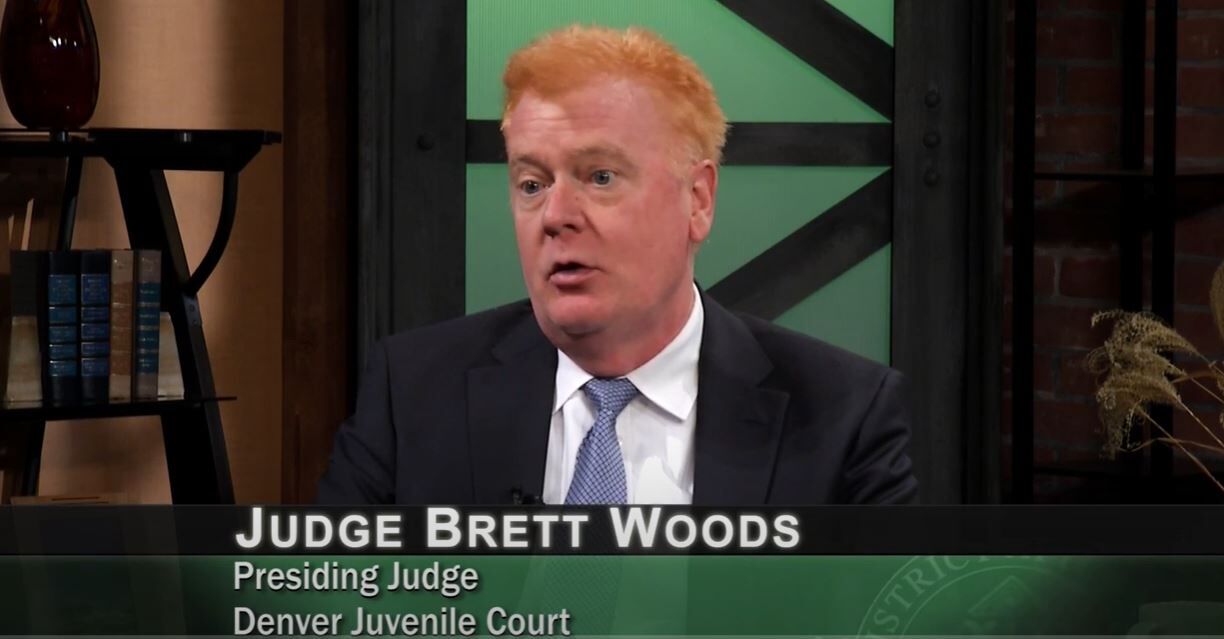
The longtime presiding judge of the Denver Juvenile Court, D. Brett Woods, retired from the bench on Friday amid a misconduct investigation whose details are still unclear.
“I am proud of my work in the area of juvenile justice,” Woods wrote in a Feb. 8 letter to Chief Justice Brian D. Boatright. “I will cherish my time on the bench.”
Colorado Politics reported last month that the state Supreme Court issued a Dec. 21 order suspending Woods and directing to explain why he should be allowed to remain on the bench while the Colorado Commission on Judicial Discipline completed its investigation into him. In January, the court issued another order reiterating that Woods remained on paid suspension until further notice.
Few details were immediately available about the nature of Woods’ alleged misconduct. On Jan. 29, the juvenile court’s executive, Abigail Young, sent an email to staff and attorneys indicating there was still no update about Woods’ future.
“We fully understand and appreciate how confusing and frustrating any given day can be right now. The uncertainty of where your cases will be heard can only surely add to the anxiety your clients already feel navigating their own court process,” she wrote. “If and when we are given any information to share, we are committed to providing clear and open communication with you all.”
On Feb. 9, the day after Woods submitted his letter announcing he would step down, Interim Presiding Judge Laurie A. Clark emailed court leadership to inform them of the news. She indicated Judge Elizabeth Joan McCarthy, who the governor appointed in early January to fill a vacancy, has volunteered to be the new presiding judge on the three-judge court.
The chief justice “has expressed his understanding that Denver Juvenile Court needs clarity in leadership as soon as possible,” Clark wrote. “We are looking forward to being fully staffed and stable by the end of March as we continue the great work we do for the community.”
The Judicial Department announced on Monday that applications for Woods’ seat are due by Feb. 26.
The clerk of the Supreme Court said there are no new publicly available filings in Woods’ disciplinary proceedings since mid-January. The judicial discipline commission did not immediately respond to a message inquiring about further documentation.
In the last fiscal year, the Denver Juvenile Court saw approximately 2,000 case filings on matters that included adoption, child neglect and juvenile delinquency – the equivalent of criminal proceedings for children.
Woods was appointed to the court in 2007 and he became presiding judge in 2014. Denver voters retained him for another term in 2022 by a margin of more than 2-1. The citizen-led performance commission that evaluated his work found surveys from lawyers and non-lawyers had rated Woods “substantially below the average” compared with other judges, but the commission nonetheless believed he maintained “compassion and respect for the parties in often difficult circumstances.”
Colorado’s judicial discipline system largely keeps the details of an investigation confidential. Only after the commission makes a recommendation for public discipline to the state Supreme Court does the information become public. In dozens of cases spanning decades, judges who were under investigation for alleged misconduct have resigned rather than face further inquiry. The outcome may mean the continued confidentiality of relevant details.
Colorado voters in November will be asked to change the discipline process to a more open system where inquiries into judges, and the details surrounding them, will be more accessible to the public.
Also last month, the judicial discipline commission placed its executive director, Christopher Gregory, on leave for undisclosed reasons.
Editor’s note: This article has been updated. Reporter David Migoya contributed to the article.

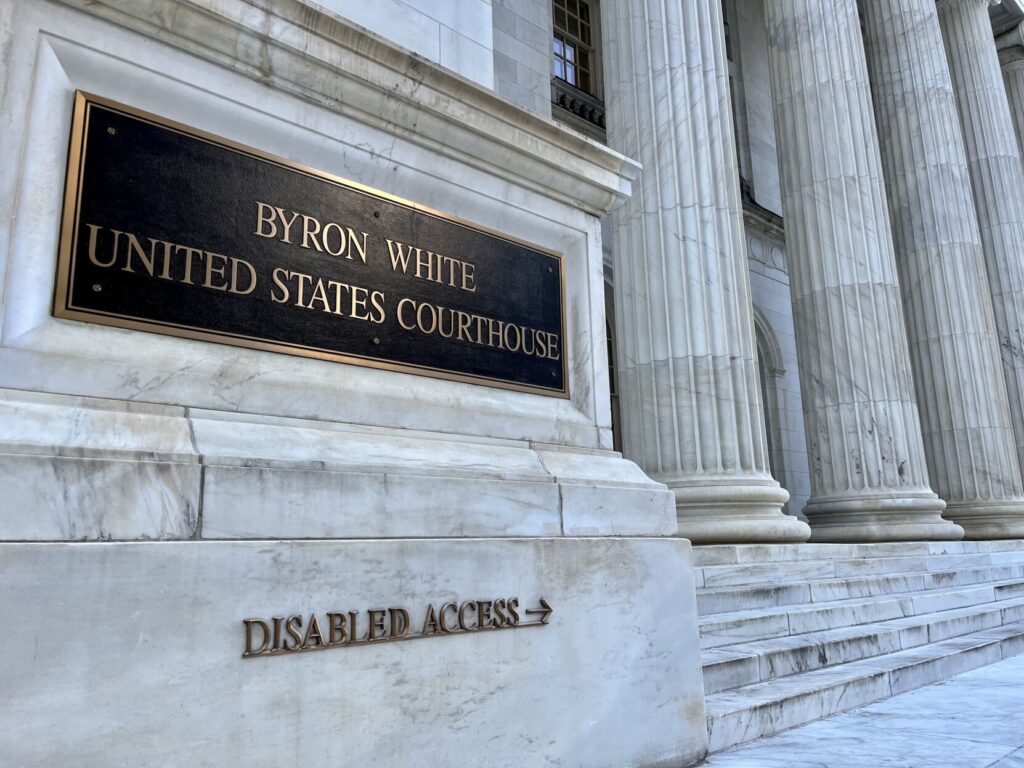
10th Circuit dismisses woman’s lawsuit following 10-year attempt to undo restraining order
Michael Karlik
michael.karlik@coloradopolitics.com
Updated 11 hours ago
The Denver-based federal appeals court rejected a woman’s challenge on Friday to a restraining order imposed on her more than a decade ago, finding that she cannot credibly claim she will be prosecuted for violating the restraining order through her...
10th Circuit dismisses woman’s lawsuit following 10-year attempt to undo restraining order
Michael Karlik
michael.karlik@coloradopolitics.com
Updated 13 hours ago
The Denver-based federal appeals court rejected a woman’s challenge on Friday to a restraining order imposed on her more than a decade ago, finding that she cannot credibly claim she will be prosecuted for violating the restraining order through her...
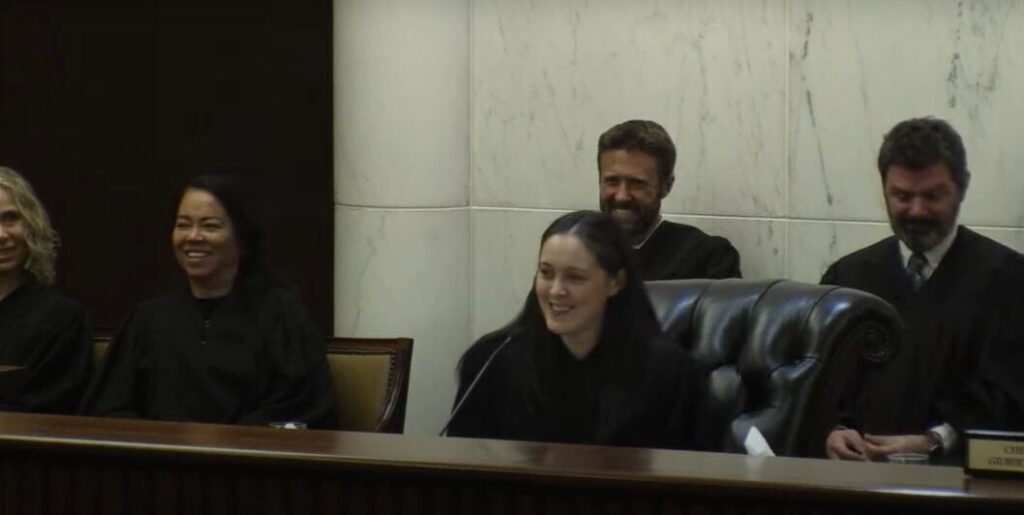
Colorado equal pay law does not require plaintiffs to allege gender-based retaliation, appeals court finds
Michael Karlik
michael.karlik@coloradopolitics.com
Updated 12 hours ago
The 2019 Colorado law aimed at rooting out pay discrimination on the basis of sex does not require a plaintiff to allege their employer retaliated against them for sex- or gender-related reasons, the state’s second-highest court decided on Thursday. Lawmakers...
Hudson faces lawsuit over ICE detention facility
Nicole C. Brambila
nicole-c-brambila@coloradopolitics.com
Updated 20 hours ago
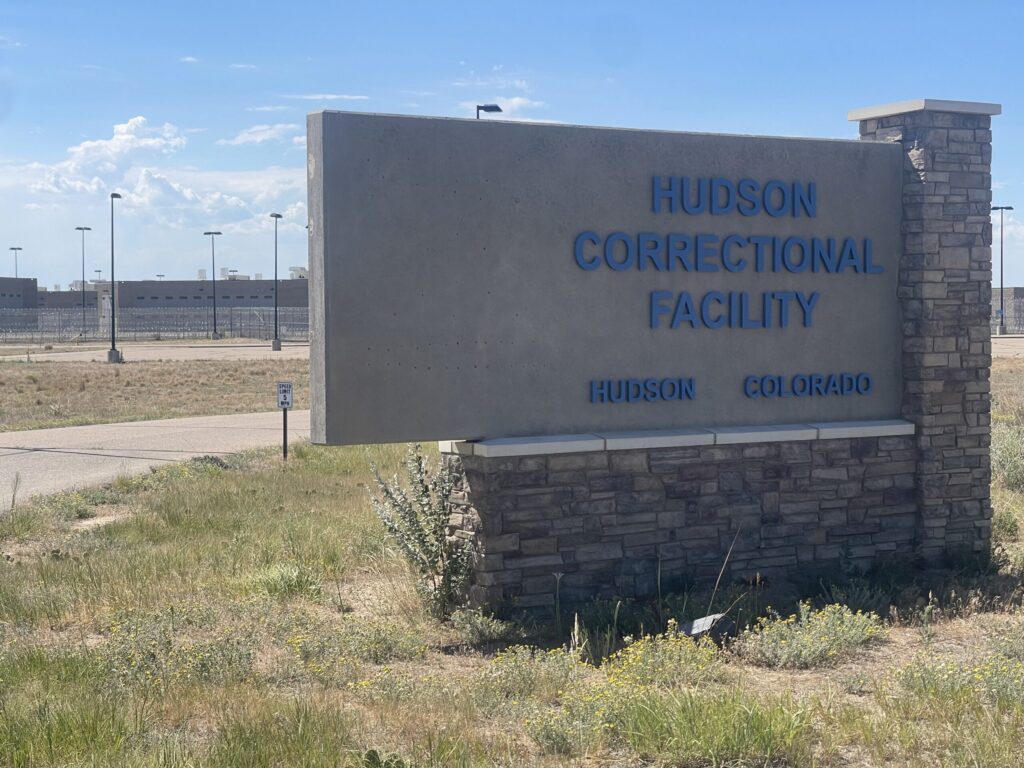
A nonprofit organization filed a lawsuit against the Town of Hudson Wednesday, challenging plans to reopen a former federal prison in the town as a U.S. Immigration and Customs Enforcement detention facility. Together Colorado, along with Janet E. Carlson, filed...
Senate committee advances Trump’s 10th Circuit nominee, as Domenico responds to questions about delays
Michael Karlik
michael.karlik@coloradopolitics.com
Updated 19 hours ago
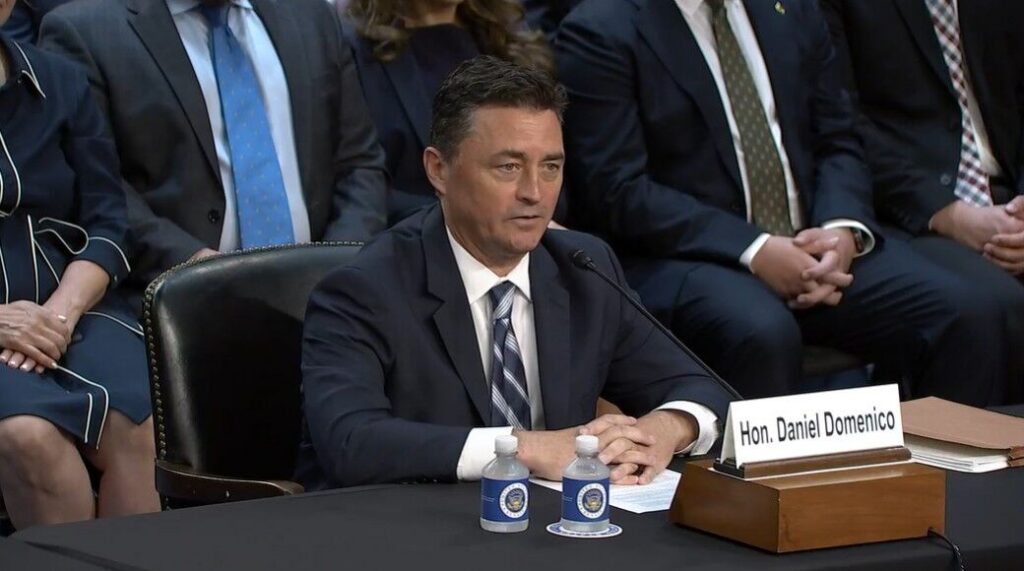
The U.S. Senate Judiciary Committee advanced President Donald Trump’s nominee to the Denver-based federal appeals court on Thursday by a party-line vote of 12-10. U.S. District Court Judge Daniel D. Domenico, who was Trump’s first-term appointee to Colorado’s federal trial...
Colorado justices to hear embryonic donation dispute
Michael Karlik
michael.karlik@coloradopolitics.com
Updated 1 day ago
The Colorado Supreme Court announced on Monday that it will decide whether lower court judges properly applied its framework for adjudicating disputes over the fate of pre-embryos, in which one person wants to use them to become a parent and...
Isolation, emotion, persona: Colorado judicial programming prepares people for life on the bench
Michael Karlik
michael.karlik@coloradopolitics.com
Updated 1 day ago
As a trial judge and now as a member of the Colorado Supreme Court, Justice Carlos A. Samour Jr. has heard the view that being a judge is isolating. “In neither court have I felt isolated. I’ve always interacted a...

Federal judge dismisses Colorado county sheriff’s challenge to law limiting immigration cooperation
Michael Karlik
michael.karlik@coloradopolitics.com
Updated 3 days ago
A federal judge dismissed a challenge from Mesa County Sheriff’s Office leaders last week to a Colorado law limiting public employees’ cooperation with immigration authorities, concluding that the plaintiffs did not allege they engage in any conduct that the law...

10th Circuit raises bar for fraud victims to sue debt collectors over inaccurate information
Michael Karlik
michael.karlik@coloradopolitics.com
Updated 2 days ago
The Denver-based federal appeals court wiped away a jury’s $500,000 award to a fraud victim on Monday and made it more difficult for consumers to hold companies liable for disseminating inaccurate credit information. The Fair Credit Reporting Act regulates credit...

Montezuma County judge’s censure, suspension approved by discipline panel
Michael Karlik
michael.karlik@coloradopolitics.com
Updated 2 days ago
A three-member disciplinary panel accepted, on Monday, an agreement between a Montezuma County judge and the Colorado Commission on Judicial Discipline that specifies he will receive a censure, a suspension, and additional education for his admitted instances of misconduct. Under...
PREV
PREVIOUS

Colorado Senate considers bill to track 'suspicious' gun and ammo purchases
A bill being proposed in the state Senate would allow credit card companies to assign codes to the purchase of firearms and ammunition. Sponsors of the bill say such tracking would allow law enforcement to track “suspicious activity” that could lead to crime. Senate Bill 066 was discussed last week by the Senate Business, Labor and […]

Are you in the right occupational field in Colorado? Tool offers insights into future workforce gaps
A new report suggests a “misalignment” between higher education graduates and what the job market would need in just a few years. Notably, Colorado’s schools are producing graduates in some fields at rates that are “far greater” than the job market’s projected need by 2031, according to a new report from the Common Sense Institute. […]