

Colorado Supreme Court to review limits on negligence claims in case over Denver restaurant fire
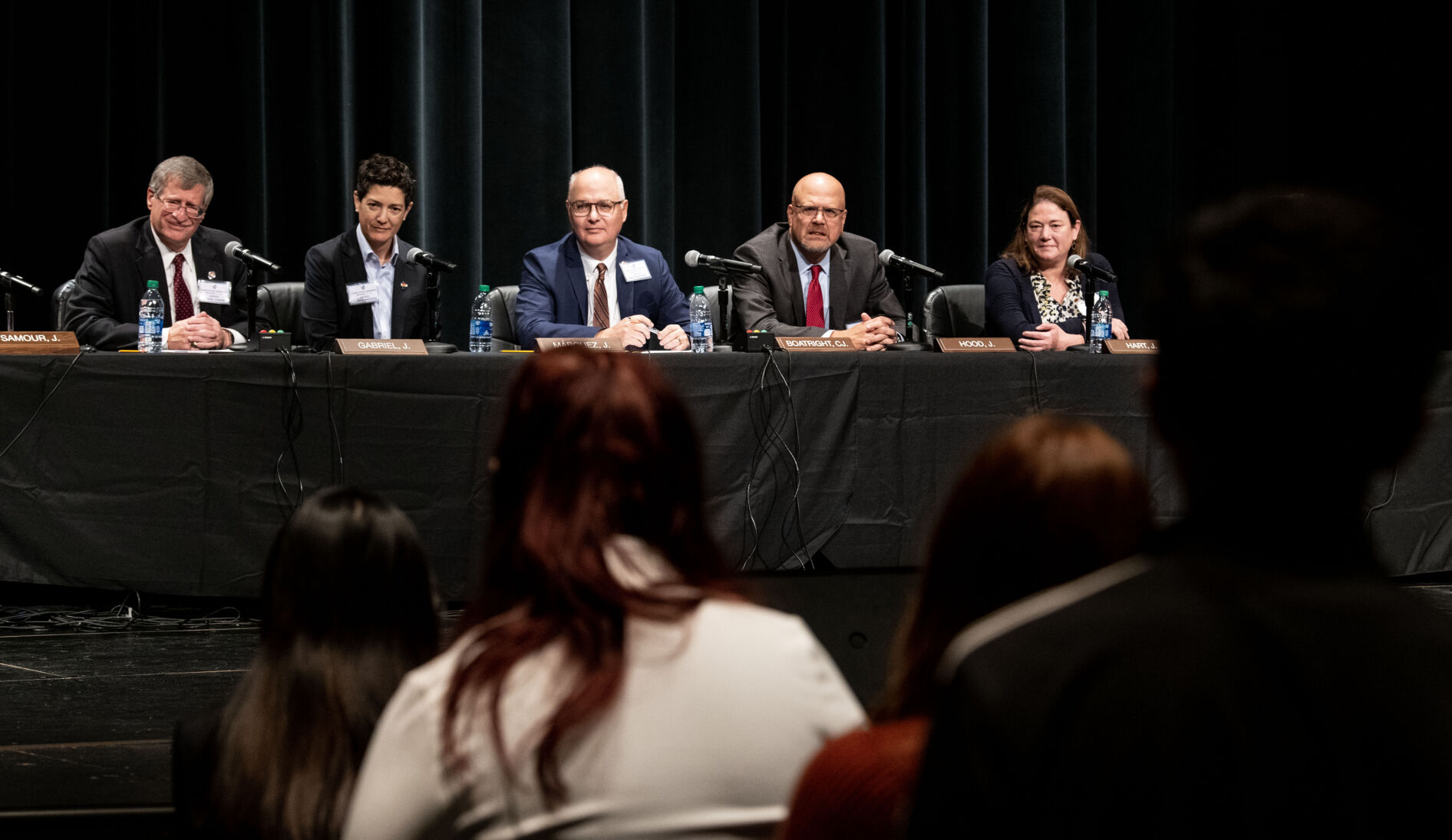
The Colorado Supreme Court announced on Monday that it will review whether a judicially created rule barring certain types of negligence claims applies when a defendant acts recklessly to cause an injury.
At least three of the court’s seven members must agree to take up an appeal.
The justices also signaled they may intervene in an ongoing civil case in Jefferson County, in which a judge has ordered the disclosure of communications between plaintiffs and their attorneys detailing their potential exposure to toxic chemicals.
Finally, the Supreme Court narrowly turned down an appeal out of Pueblo County involving an error in a criminal case that the state’s appeals court nonetheless excused as not “obvious.”
Economic loss rule
In April 2017, a fire damaged Masterpiece Kitchen in Denver’s Lowry neighborhood. During a recent renovation, the contractor, HIVE Construction, Inc., had substituted combustible material into a wall next to the kitchen. The material caught fire from a broiler placed too close to the wall.
The restaurant received a $483,000 payout from its insurer, Mid-Century Insurance Company, which then went after HIVE. Mid-Century alleged the contractor was negligent in constructing the wall with combustible material. A Denver jury sided with Mid-Century in 2021, finding HIVE’s conduct was “willful and wanton.”
During trial, HIVE moved for a verdict in its favor, citing the judicial doctrine known as the “economic loss rule.” The rule prohibits plaintiffs from seeking money on a claim like negligence when their injury instead stems from a breach of contract. District Court Judge Andrew P. McCallin denied the request, believing the rule did not apply to willful and wanton behavior.
A three-judge panel for the Court of Appeals disagreed. Although she acknowledged some prior court decisions contained language appearing to justify McCallin’s decision, Judge Jaclyn Casey Brown brushed it aside as non-binding.
“The parties agree that the relief Mid-Century sought under its negligence claim was identical to the relief it could have sought under a breach of contract claim — purely economic damages,” she wrote.
Mid-Century appealed to the Supreme Court, insisting the economic loss rule should not shield intentionally or recklessly harmful behavior, as the jury found HIVE’s to be. HIVE urged the Supreme Court to reject the appeal, noting Mid-Century could have simply sued for breach of contract, but it chose not to.
The justices agreed to review whether the economic loss rule does, in fact, bar negligence claims when the conduct is willful.
The case is Mid-Century Insurance Company v. HIVE Construction, Inc.

Attorney-client privilege
A dozen people who lived or worked near the Terumo BCT medical sterilization plant in Lakewood sued the company, alleging its elevated emissions of ethylene oxide gave them cancer. During the course of the litigation, the plaintiffs disclosed to their attorneys the locations where they lived and worked. The laywers, in turn, compiled the information and gave it to an expert so he could model the plaintiffs’ chemical exposure.
Terumo then sought the “underlying factual information” behind the expert’s analysis, alleging the plaintiffs were shielding the data under the guise of attorney-client privilege and making it “impossible for Terumo (or anyone else) to verify this information was accurate.”
The plaintiffs countered they never sent their expert any attorney-client communications, and they provided Terumo with declarations about their locations and estimated timeframes of exposure.
Jefferson County District Court Judge Lindsay VanGilder, in an October order, concluded that because the plaintiffs’ attorneys were “involved in the data collection process,” they needed to disclose “any underlying facts and data in any communication between individual plaintiffs and their counsel.”
After the plaintiffs asked VanGilder to reconsider, she stood by her ruling. She reasoned Terumo needed to be able to analyze whether the plaintiffs ever changed what they told their attorneys about their chemical exposure, or see whether the plaintiffs’ attorneys sent more information to their expert than they disclosed. VanGilder noted nothing prevented the plaintiffs’ lawyers from redacting certain details involving attorney-client communication.
The plaintiffs immediately appealed to the Supreme Court, arguing VanGilder had ordered them to turn over far more to Terumo than was necessary to defend against the expert’s model.
“Consider a hypothetical: in a lawsuit over an auto accident, a client tells her lawyer, ‘I ran the red light.’ The ‘underlying’ fact is whether she actually ran the red light. She cannot refuse to testify about her recollection that she ran the red light just because she discussed that topic with her lawyer,” the attorneys wrote. “But her discussion of that topic with her lawyer is privileged, even though it is about a fact. Facilitating these conversations between clients and their lawyers is the point of the privilege.”
They elaborated that Terumo is free to cross-examine the plaintiffs about the details of their exposure or try to paint the expert’s report as unreliable.
But VanGilder’s order “required disclosure of client e-mails and interview notes so that Defendants could question Petitioners on inconsistencies in statements that Petitioners made to their own lawyers,” they added. “That order compels Petitioners to answer the forbidden question: What did you say or write to your attorney?”
The Supreme Court has ordered Terumo and VanGilder to explain why her order should stand.
The case is Jordan et al. v. Terumo BCT, Inc. et al.
Court of Appeals gone rogue?
Finally, the Supreme Court narrowly passed on a criminal appeal out of Pueblo County. The attorneys for defendant Chad Ray Hovet believed their client’s case was an opportunity for the justices to correct an alleged misunderstanding in the Court of Appeals about when a trial error should be deemed “obvious.”
Jurors convicted Hovet in 2019 of a string of bank robberies, for which he is serving a 40-year prison sentence. At trial, the jury heard that the vehicles found at Hovet’s house were similar to ones used in the robberies, that Hovet’s clothing matched the robber’s and that Hovet deposited large sums of money around the time the robberies happened.
A detective also testified that he received a spreadsheet from Google with GPS coordinates from Hovet’s cell phone during the bank robberies. He plotted the data on Google Earth, which another law enforcement officer used to juxtapose Hovet’s location with each robbery. Although the defense did not object at trial, Hovet on appeal argued the spreadsheet was hearsay — an out-of-court statement intended to prove the truth.

A three-judge panel for the Court of Appeals noted the longstanding principle that information created by a machine without human input is not hearsay. In Hovet’s case, however, it was unclear how Google produced the spreadsheet, meaning it was hearsay after all.
Nonetheless, wrote Judge Sueanna P. Johnson, the un-objected-to error was not obvious because no prior decisions addressed how trial judges should treat GPS data under the circumstances.
Because the location data “was just a small piece of the overwhelming evidence presented by the prosecution,” she explained, it did not affect the outcome.
Hovet appealed, arguing an obvious error is one that violates a well-settled legal principle. The Court of Appeals allegedly narrowed its focus too much, looking only for cases that specifically addressed GPS data rather than applying the obvious rule on hearsay.
“This standard follows a troubling line of cases from the court of appeals requiring the ‘specific issue’ to have been addressed previously for an error to be ‘obvious,'” Hovet’s lawyers wrote.
Justices Richard L. Gabriel and Melissa Hart indicated they would have granted Hovet’s appeal. They would have answered whether the Court of Appeals correctly defined obviousness, and also reviewed whether the GPS evidence reasonably affected the jury’s verdict.
The case is Hovet v. People.

Federal judge upholds constitutionality of Colorado campaign contribution limits
Michael Karlik
michael.karlik@coloradopolitics.com
Updated 2 days ago
A federal judge upheld Colorado’s individual campaign contribution limits as constitutional on Thursday, finding that three Republican plaintiffs failed to prove the campaign finance framework violates their First Amendment rights. U.S. District Court Senior Judge John L. Kane recognized that...

Appeals court rejects theory that existing tax revenue undermines need for new fees
Michael Karlik
michael.karlik@coloradopolitics.com
Updated 2 days ago
Colorado’s second-highest court rejected a plaintiff’s claim on Thursday that the tax revenue generated by an existing activity should prevent local governments from imposing new fees aimed at regulating the activity. The question stemmed from Colorado’s unique constraints on taxation...
Appeals court finds no illegal sentence when defendants forfeit time-served credit
Michael Karlik
michael.karlik@coloradopolitics.com
Updated 15 hours ago
Colorado’s second-highest court ruled on Thursday that criminal defendants may agree to relinquish the credits they earned while incarcerated pending trial, despite a state law guaranteeing that such time “shall be deducted” from a person’s sentence. Kerry Ellis Endsley pleaded...
Appeals court reinstates Garfield County arson charge
Michael Karlik
michael.karlik@coloradopolitics.com
Updated 3 days ago
Colorado’s second-highest court reinstated a Garfield County defendant’s arson charge on Thursday, concluding a trial judge improperly credited a witness’s claim that she alone was responsible for starting the fire. A sheriff’s deputy responded to a brush fire near Parachute...
Federal judges rebuke ex-Colorado judicial discipline director for conduct in lawsuit
Michael Karlik
michael.karlik@coloradopolitics.com
Updated 3 days ago
A pair of federal judges expressed a desire on Thursday to break the logjam on a lawsuit by Colorado’s former judicial discipline director against the state Supreme Court and related entities, while simultaneously showing little tolerance for the plaintiff’s scorched-earth...

Democratic bill would let recipients of ‘conversion therapy’ sue Colorado providers with no statute of limitations
Marissa Ventrelli
marissa.ventrelli@coloradopolitics.com
Updated 3 days ago
Colorado lawmakers have advanced a proposal that would allow people who underwent conversion therapy to sue licensed providers for damages, moving the measure forward on a party-line vote in the House Judiciary Committee. House Bill 1322, proposed by Democratic Reps....
Federal judge refuses to authorize immediate appeal in World Cup trafficking lawsuit
Michael Karlik
michael.karlik@coloradopolitics.com
Updated 4 days ago
A federal judge declined to authorize an immediate appeal last week of a prior decision allowing companies operating out of Colorado to be sued for allegedly participating in a human trafficking venture involving Filipino laborers who constructed facilities for the...
Federal judge considers second round of sanctions against ex-Colorado judicial discipline director
Michael Karlik
michael.karlik@coloradopolitics.com
Updated 4 days ago
A federal judge ordered Colorado’s former judicial discipline director on Tuesday to explain why she should not sanction him a second time for filing documents for improper purposes, such as harassment or delay. U.S. District Court Senior Judge Kathryn H....

Colorado justices agree to review insurance question that has divided federal judges
Michael Karlik
michael.karlik@coloradopolitics.com
Updated 4 days ago
The Colorado Supreme Court granted a federal judge’s request on Friday to address an issue that has produced conflicting answers in policyholders’ lawsuits against insurance companies over unpaid benefits. “Parties (and judges) regularly spend undue time and money fighting in...

Federal judge dismisses background screeners’ challenge to Colorado law
Michael Karlik
michael.karlik@coloradopolitics.com
Updated 20 hours ago
A federal judge dismissed a challenge on Friday to a portion of Colorado law that prohibits certain information from being included in consumer reports, in what seemed to be a conflict with federal law. Congress originally enacted the Fair Credit...
PREV
PREVIOUS

Trump disqualification case at SCOTUS, GOP primary remains open to unaffiliateds | COURT CRAWL
Welcome to Court Crawl, Colorado Politics’ roundup of news from the third branch of government. This week, the U.S. Supreme Court will hear an unprecedented case out of Colorado involving a presidential candidate’s disqualification from the ballot, and a federal judge recently rejected an attempt to exclude unaffiliated voters from Colorado’s Republican primary. 14th Amendment […]

Colorado justices agree Jeffco not immune from parking garage slip-and-fall suit
The Colorado Supreme Court agreed on Monday that a parking garage owned by Jefferson County qualified as a “public building” and a resurfacing project that created a hazard amounted to “maintenance,” which, in combination, meant the county is not immune from liability for a woman’s slip-and-fall. The case implicated the Colorado Governmental Immunity Act, which […]