

As border crossings go down in El Paso, Denver sees immigrant arrivals decrease | Border Crossroads
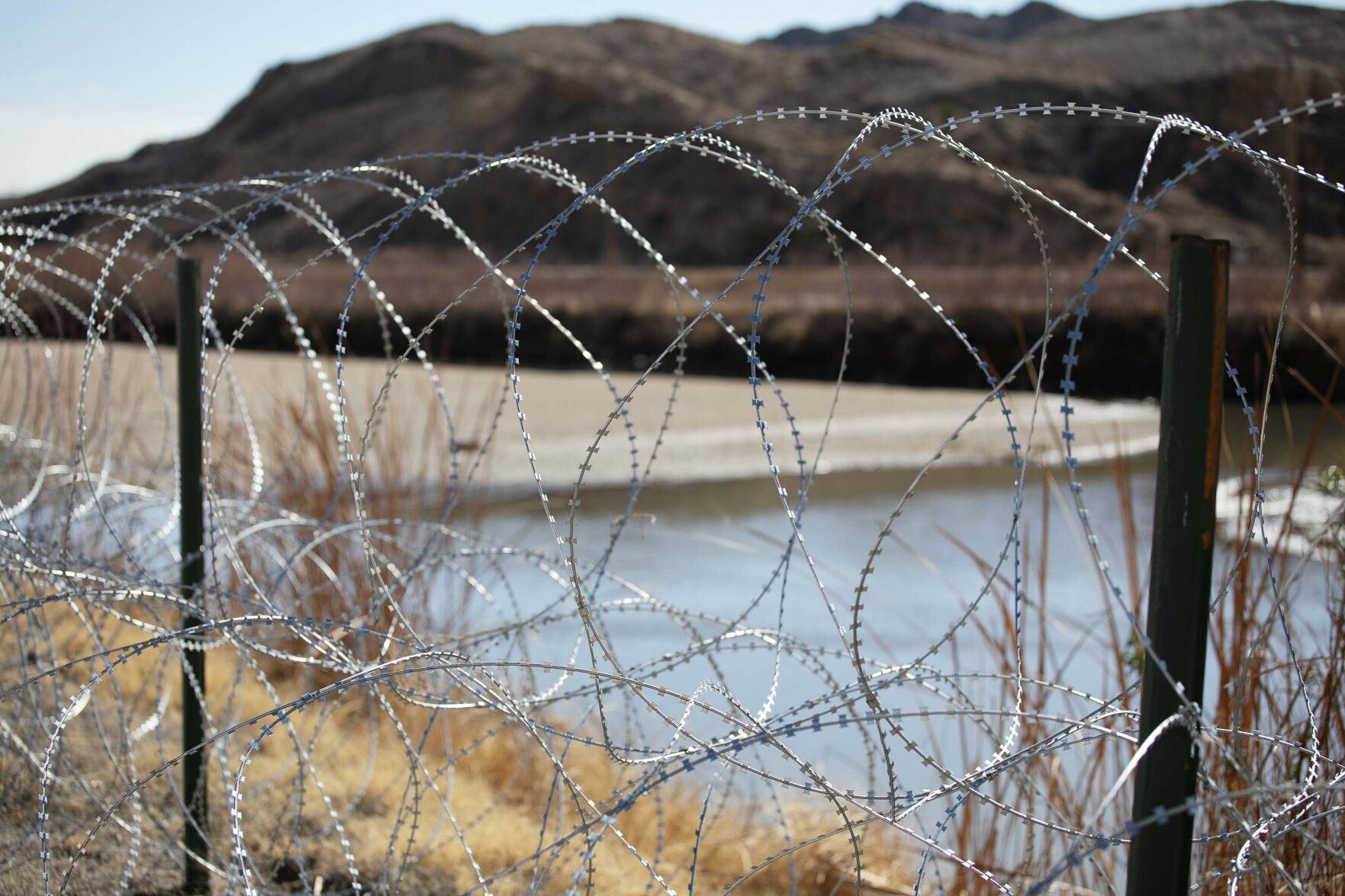
Editor’s note: Welcome to Border Crossroads, a series of dispatches from America’s southern border, where reporter Nico Brambila and multimedia producer Tom Hellauer are chronicling the crisis that is spilling over into Denver and other interior cities.

EL PASO, TEXAS — Border crossings in El Paso, Texas are down, but officials in this west Texas town do not expect the reprieve to last.
While Denver officials are unsure how many of the more than 38,000 immigrants from Central and South America who crossed the border illegally came through El Paso, one thing appears clear — the surges in this border town can be felt 600 miles away in Colorado’s most populous city.
Officials here in El Paso are bracing for more arrivals.
Releases by U.S. Customs and Border Protection (CBP) in El Paso correspond to the waves of arriving immigrants to Denver.
Just 181 immigrants were released in El Paso Monday, according to the city’s dashboard.
Denver saw just 42 new arrivals.
That’s a far cry from the 2,000 El Paso had been seeing daily, which translated to 100- to 200-plus immigrants arriving overnight in Denver.
“Arrivals are down at the moment, but I wouldn’t be surprised if they came back up again soon,” said Jon Ewing, a Denver Human Services spokesperson.
Denver Human Services has managed the humanitarian response since the city lifted its emergency declarations.
Ewing does not know how many of the 38,186 immigrants who have come to Denver over the past 13 months illegally crossed the U.S. border into El Paso, the busiest and closest port of entry to Colorado.
To qualify for emergency shelter in El Paso — as well as in Denver — immigrants must have been processed and released by CBP.
While they are allowed to stay in the U.S. for a specific period, pending their asylum case, they do so without the ability to work legally — something for which Denver Mayor Mike Johnston has been advocating.
The streets in El Paso on Monday had none of the telltale signs Denver residents have grown accustomed — a city bursting at the seams with immigrants.

There are no popup encampments with tents and trash and homeless immigrants loitering the streets.
No immigrants carrying signs looking for work.
But that hasn’t always been the case.
In the weeks leading up to Title 42 sunsetting last May, hundreds of immigrants — many who had crossed the border illegally — had begun camping in the streets downtown near Sacred Heart Church. (Title 42 was the Trump administration policy to curb the spread of COVID-19 that allowed the U.S. to quickly expel immigrants at the southern border.)
The church has acted as a refuge for immigrants since El Paso began experiencing an unprecedented surge in border crossings in December 2022, which coincides with the influx in Denver.
Officials in El Paso estimated that about 70% of these new arrivals started their journey to the United States in Venezuela, a country of about 33.7 million people on the northern coast of South America.
The country has descended into economic, humanitarian and political chaos since Venezuela President Nicolás Maduro assumed power in 2013. Maduro has jailed and banned political leaders, used food distribution as a means of social control and viciously punished his political opponents.
More than 7.7 million Venezuelans have fled, according to the United Nations.
The roughly 3,000-mile trek necessitates passing through one of the most dangerous migration routes in the world, the Darien Gap, which is the only land-based path connecting South and Central America. The roughly 60-mile hike through the Gap requires crossing rivers through a mountainous rainforest inhabited by criminal gangs.

“These folks came from very precarious situations and traveled thousands of miles to get here,” said El Paso County Commissioner David Stout. “The last thing they need is hatred and vitriol and people who are not compassionate.”
Most, however, won’t stay in El Paso.
“They don’t want to be here,” said Irene Gutiérrez, executive director of El Paso County Community Services. “The closer they are to the border they think it’s easier for CBP or ICE (U.S. Immigration and Customs Enforcement) to deport them. They’re afraid to stay here.”
And so many have pushed into America’s major cities, where their arrival has strained resources and compelled local leaders to press for federal action.
Both Democrats and Republicans alike agree that the crisis is unsustainable, particularly for cities that are diverting fiscal resources in order to feed, house and transport immigrants.
“Healthcare, transportation, and housing are not free in Colorado — unless you’re an immigrant,” U.S. Rep. Ken Buck, a Republican from Colorado, recently lamented on X, the social media platform.
“Taxpaying Coloradans cannot continue to shoulder the costs of Biden’s border crisis while the tax burden and cost of living in America continues to skyrocket,” he added.
“We are also a city right now that is facing a humanitarian crisis and a fiscal crisis unlike anything we’ve seen in the last 25 years,” said Johnston from across the partisan aisle, offering a different set of prescriptions that include work authorization and infusion of federal cash into Denver and other cities. “And that is the result of what we know is the ongoing influx of migrant arrivals who are seeking asylum in America and the system that is not adequately helping them to succeed.”
As the sixth most populous city in The Lone Star State, El Paso sits directly across from Ciudad Juárez in west Texas along the Rio Grande River, which serves as a natural boundary between the U.S. and Mexico.

These immigrants — who often forge friendships on their trek to the U.S. — have developed a savvy communications network using social media to pass along vital information about work, shelter and transportation. (The 90 immigrants left to wander downtown in the cold a year ago had used social media to organize and travel to Denver, officials have said.)
They also know — Gutiérrez and others have said — which immigration courts will be more friendly for their asylum case.
“They fear staying on the border and they know they’re not going to get asylum,” Gutiérrez said. “There are more sympathetic judges in the interior of the country than they are here in El Paso.”
And that makes Denver an attractive alternative.


Overdose deaths from opioids dip in America — but not in Colorado, study says
Jacob Mauk
jacob.mauk@denvergazette.com
Updated 12 hours ago
Overdose deaths from opioids rose in Colorado, diverging from the national trend, which has been decreasing, according to a new study from a think tank. In its new report, the Common Sense Institute said synthetic opioid overdose deaths in Colorado...
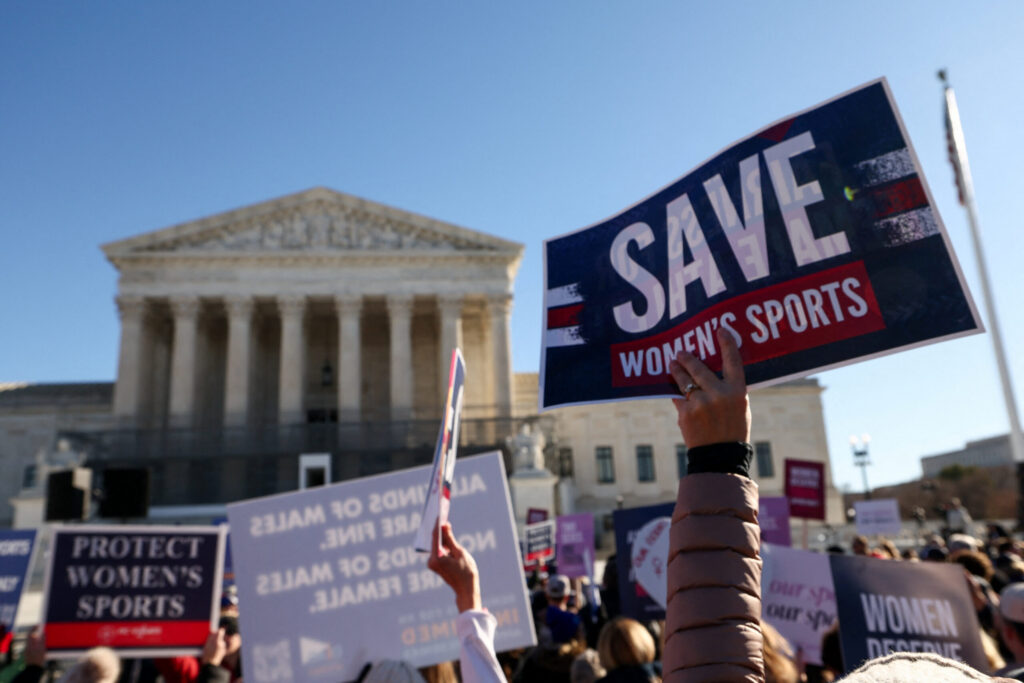
Colorado voters will decide whether transgender students can join girls’ sports
Marissa Ventrelli
marissa.ventrelli@coloradopolitics.com
Updated 14 hours ago
A ballot initiative that would require student athletes to only join sports teams that correspond to their biological sex has qualified for the November ballot, the latest development in the culture war being waged in school districts, in the courts...
Error-prone Douglas County judge triggers another reversal of criminal convictions
Michael Karlik
michael.karlik@coloradopolitics.com
Updated 17 hours ago
Colorado’s second-highest court overturned a defendant’s Douglas County convictions on Thursday due to the error of a judge whose actions have triggered a disproportionate number of reversals to convictions and sentences in recent years. Since 2021, the Court of Appeals...
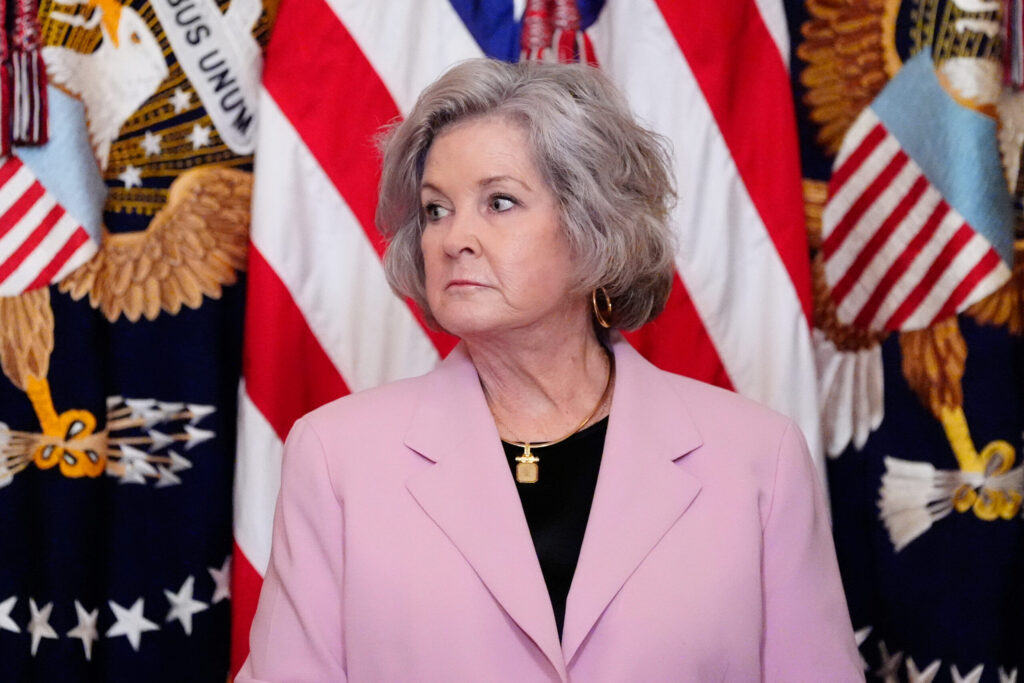
Susie Wiles diagnosed with ‘early stage’ breast cancer: Trump
David Zimmermann Washington Examiner
davidzimmermannwashingtonexaminer@wpstage.coloradopolitics.com
Updated 18 hours ago
President Donald Trump announced White House chief of staff Susie Wiles has been diagnosed with “early stage” breast cancer and that she decided to take on the illness immediately. Wiles will not step down from her administrative role at this...
Hacked crosswalks in Denver sound anti-Trump messages
Deborah Grigsby
deborah.smith@denvergazette.com
Updated 13 hours ago
Denver pedestrians got a surprise this weekend when the audio messages from push-button speakers on some crosswalks were mysteriously replaced with anti-President Donald Trump messages. “The walk signal is on, Trump … (reference to the Iran school that was bombed),”...

Federal judge formalizes injunction blocking USDA’s ‘pilot project’ for Colorado food assistance
Michael Karlik
michael.karlik@coloradopolitics.com
Updated 17 hours ago
A federal judge formalized his order on Monday to prevent the U.S. Department of Agriculture from requiring Colorado to participate in a food assistance “pilot project,” finding that it violates the law, the U.S. Constitution, and “the bounds of reasoned...

Colorado justices speak about inner workings of court, analysis of appellate opinions | COURT CRAWL
Michael Karlik
michael.karlik@coloradopolitics.com
Updated 21 hours ago
Welcome to Court Crawl, Colorado Politics’ roundup of news from the third branch of government. Members of the state Supreme Court provided an inside look at the workings of their institution, and a Colorado Politics analysis found that some appellate...
Appeals court finds no requirement for different judge to handle attorney-client conflict hearings
Michael Karlik
michael.karlik@coloradopolitics.com
Updated 22 hours ago
Colorado’s second-highest court rejected a defendant’s argument on Thursday that a judge improperly heard about a potential conflict between himself and his lawyer right before sentencing, and the man’s reaction could have “tainted” the sentencing decision. In September 2023, Anthony...
3,800 Colorado workers are on strike at JBS, one of the largest meatpacking plants in the US
Brittany Peterson
brittany.peterson@associatedpress.com
Updated 15 hours ago
GREELEY, Colo. (AP) — About 3,800 workers at one of the nation’s largest meatpacking plants went on strike Monday in Colorado in what union representatives said was the first walkout at a U.S. beef slaughterhouse in four decades. Hundreds of...
The influencers? Some Colorado appeals judges outpace colleagues in setting legal precedent
Michael Karlik
michael.karlik@coloradopolitics.com
Updated 22 hours ago
A handful of judges on Colorado’s second-highest court are producing substantially more precedent-setting opinions than their colleagues, which create binding interpretations of the law that reach beyond individual cases. The Court of Appeals issues approximately 1,700 opinions each year. A...
PREV
PREVIOUS

We sent reporters to America's southern border — follow their work here
Two of our reporters – Nico Brambila and Tom Hellauer – are in El Paso, Texas, where they are chronicling the illegal immigration crisis that is spilling over into America’s interior cities, such as Denver. Why? To see first hand what the situation is like on the border. We want to talk to El Paso officials, residents, […]

Denver City Council narrowly approves banning homeless camp sweeps below 32 degrees
Denver can no longer force homeless people to move from outside living situations during freezing temperatures, at least for the time being. The Denver City Council on Monday narrowly approved an ordinance to ban homeless encampment sweeps when temperatures fall below 32 degrees. The 7-6 vote in favor of the proposed ordinance was the closest […]