

Watch Lauren Boebert, CD4 candidates debate, Republicans pick Rose Pugliese as House leader | WHAT YOU NEED TO KNOW
Today is Jan. 26, 2024, and here’s what you need to know:
More than a dozen Republicans seeking the nomination in two of Colorado’s most competitive congressional primaries faced off for the first time Thursday night in Fort Lupton.
House Republicans on Thursday chose Assistant Minority Leader Rose Pugliese of Colorado Springs as the caucus’ next minority leader.
She will immediately assume the post.
Pugliese was chosen via a secret ballot, winning 11 out of 19 votes on the second round.
Rep. Don Wilson of Monument made the nomination for Pugliese, with Rep. Rick Taggart of Grand Junction providing the second.
Two initiatives seeking diametrically opposed outcomes on abortion rights in Colorado may be appearing on the election ballot in November.
One measure wants to ask voters to identify a fertilized egg as human at the moment of conception. Another measure seeks to put the right to an abortion in the state constitution.
The proposal, which carries the title “Protections for a Living Child,” defines a “living human child” as a human from the moment of conception, rendering all abortion illegal. The ban does not include exceptions for cases of rape, incest or risks to a mother.
“It is not necessary to intentionally cause the death of a child,” the ballot measure states. “Medical personnel shall not purposefully destroy lives. Living children must not be dismembered, scalded, poisoned, or caused fatal harm through inhumane treatment.”
In 2022, a similar initiative did not make the official ballot after failing to meet state signature requirements.
A Senate bill that would have defined nuclear energy as clean energy died along party lines in committee Thursday.
Introduced by Sen. Larry Liston, R-Colorado Springs, SB24-039 would have included nuclear energy in the statutory definition of clean energy sources, thus rendering it eligible for clean energy project funding. During discussion, opponents said such a designation would have a negative impact on the environment, while proponents listed the benefits of using nuclear energy.
After length discussion, the Senate Committee of Transportation and Energy voted 4-3 to kill the measure.
Colorado’s second-highest court addressed for the first time earlier this month how judges should determine if an incarcerated plaintiff has shown he is in “imminent danger,” which would allow him to proceed with his lawsuit without paying the upfront fees typically required.
Under state law, prisoners are not prohibited from pursuing civil lawsuits if they are too poor to pay the initial filing fee. Instead, they may seek to proceed with partial payments, unless they have previously brought three or more frivolous or meritless lawsuits complaining about their prison conditions. That prohibition is known as the “three strikes rule.”
In an exception to the three strikes rule, however, a plaintiff may nonetheless proceed without the upfront fees if a judge determines the lawsuit warns of “imminent danger of serious physical injury.” No court cases in Colorado had previously answered how judges are supposed to gauge when an allegation crosses the threshold of “imminent danger.”


Trump plans to move Forest Service headquarters to Utah, shutter research sites | OUT WEST ROUNDUP
The Associated Press
the-associated-press@coloradopolitics.com
Updated 3 days ago
UTAH Forest Service bound for Salt Lake City SALT LAKE CITY — President Donald Trump’s administration will move the U.S. Forest Service headquarters out of the nation’s capital to Salt Lake City as part of an organizational overhaul that involves...

Pastors Scott Bottoms, Victor Marx win spots in Colorado GOP’s gubernatorial primary at party assembly
Ernest Luning
ernest.luning@coloradopolitics.com
Updated 8 hours ago
Two pastors from Colorado Springs qualified Saturday for the Republican gubernatorial primary ballot at the Colorado GOP’s state assembly in Pueblo in a party meeting that dragged late into the night. State Rep. Scott Bottoms, who is known as one...

Colorado House finishes work on 2026-27 state budget, finally
Marianne Goodland
marianne.goodland@coloradopolitics.com
Updated 14 hours ago
The House on Saturday, after four days of work – it usually takes two – finished up their work and voted on the $46.8 billion 2026-27 state budget, as contained in House Bill 1410 and 64 accompanying measures designed to...

Home rule has protected Colorado cities for over 125 years | Cronin and Loevy
Tom Cronin Bob Loevy
tom-cronin-bob-loevy@coloradopolitics.com
Updated 15 hours ago
Colorado is currently gripped by a political struggle between the governor plus the legislature in Denver and populous home-rule city governments, mainly on the Front Range, such as Colorado Springs. In the past few years, the legislature has been passing bills that applied to city government policies, which...

Colorado Politics calendar Apr. 13-19
Rachael Wright, Special to Colorado Politics
rachael.wright@coloradopolitics.com
Updated 4 days ago
CoPo’s weekly political calendar will help you find political and public-policy events throughout Colorado. It includes candidate and issue campaign events, public policy meetings, court hearings, state and local party conventions, assemblies, debates, rallies, parades, speaking engagements, traveling dignitary appearances,...
Minority Leader Peña argues against oil and gas bill | A LOOK BACK
Rachael Wright, Special to Colorado Politics
rachael.wright@coloradopolitics.com
Updated 4 days ago
Forty-Five Years Ago This Week: “The Colorado House of Representatives had just given its final approval to House Bill 81-1152, which created $9 million in tax relief to oil and gas companies. But this came “at the expense of local...

A longshot, upset bid and a few quick takes | SONDERMANN
By Eric Sondermann
by-eric-sondermann@coloradopolitics.com
Updated 3 days ago
It is hard to keep up these days. The flow of news often seems overwhelming. Let’s focus today on an unusual congressional race before moving on to a few quick, supplementary observations. Since its creation 54 years ago, Congressional District...

An “-“ends tribute in a week full of “odds” | Capitol M | Week of April 11, 2026
Marianne Goodland
marianne.goodland@coloradopolitics.com
Updated 3 days ago
The lighter side of the Capitol, usually… The decision to read the budget bill — the long bill, which spans 661 pages this year — put a damper on the House’s already less‑than‑festive mood. So Capitol M decided to catch...
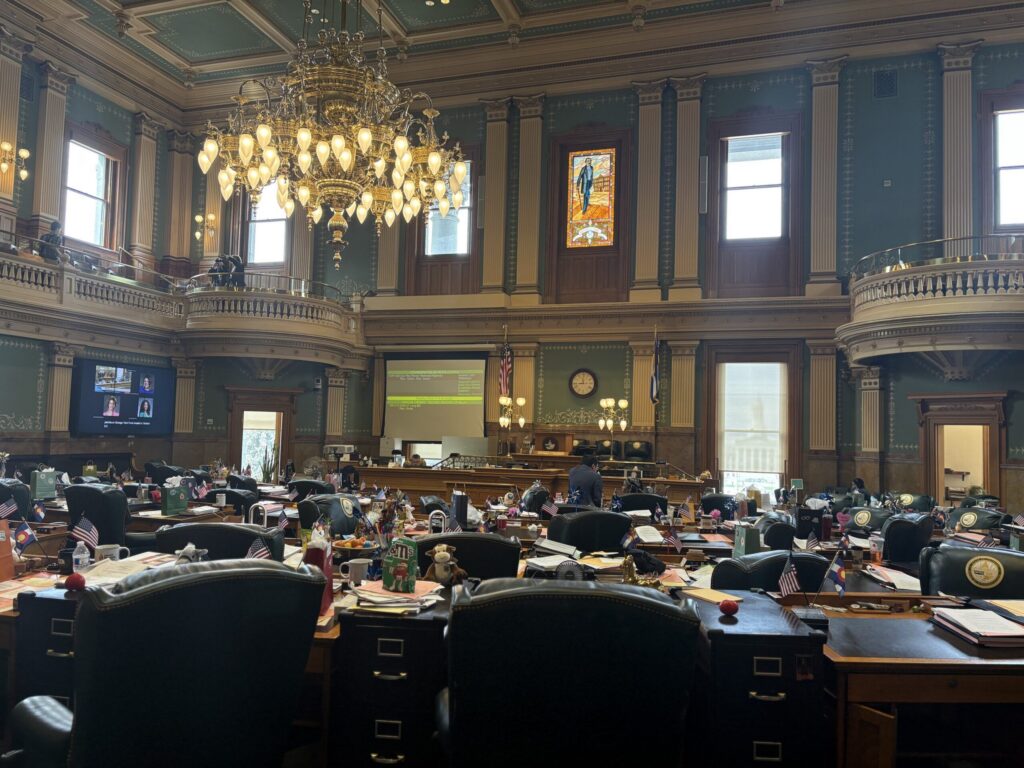
What you need to know about the Colorado legislature reading a 661-page bill aloud
Marianne Goodland
marianne.goodland@coloradopolitics.com
Updated 15 hours ago
A rarely used procedural move by a Republican legislator threw the Colorado House into an extended slowdown, after she invoked her right to have a nearly 700-page state budget bill read aloud in full. Once Rep. Brandi Bradley, R‑Roxborough Park,...
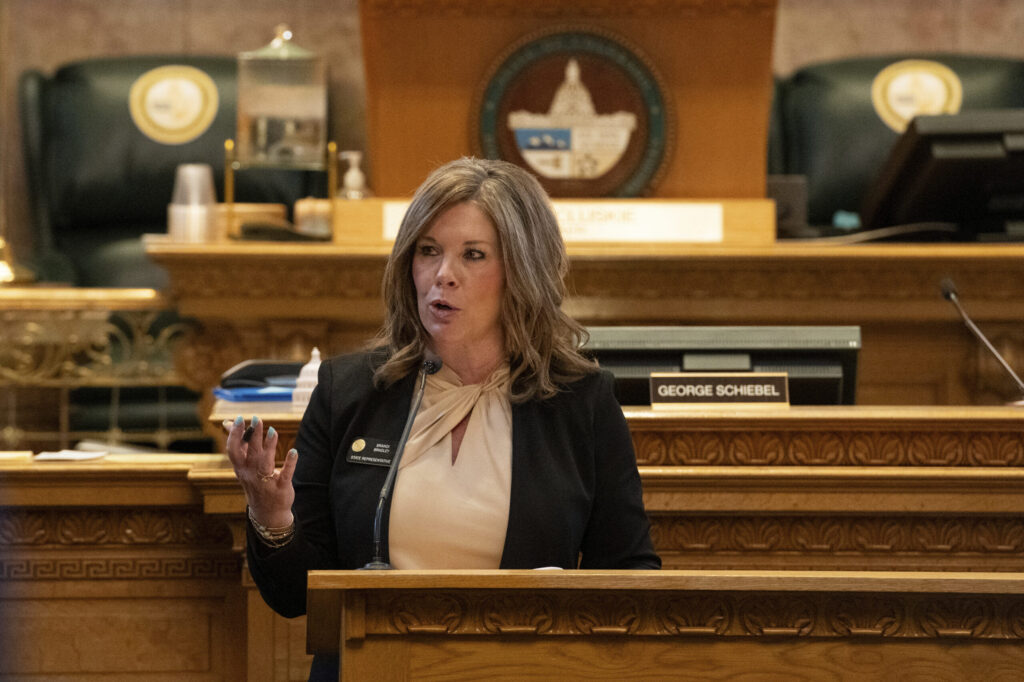
Literal reading of budget bill complicates Colorado legislators’ plans for GOP assembly
Marianne Goodland
marianne.goodland@coloradopolitics.com
Updated 21 hours ago
Republican Rep. Brandi Bradley’s decision to force the full reading of the state budget — called the “long bill” for its obvious length — has not only slowed House business to a crawl but also disrupted her colleagues’ plans for...
PREV
PREVIOUS

'A matter of survival': Charlotte Sweeney explains judges' attempts to stay ahead of workload at federal court
U.S. District Court Judge Charlotte N. Sweeney told an audience of lawyers on Wednesday about the reasons judicial decisions may take a long time, what she is doing to fix that, and how Colorado’s federal trial court may respond in the future to bad behavior among some practitioners. Sweeney also disclosed that further personnel changes […]

Colorado House Republicans pick Ty Winter as assistant leader
House Republicans on Friday picked Rep. Ty Winter of Trinidad as the new assistant minority leader. His election was uncontested. The caucus picked Winter to replace Rep. Rose Pugliese of Colorado Springs, who was promoted to serve as the House minority leader earlier this week. Pugliese was elected via secret ballot after days of chaos […]