

Three openings in Republican districts; what will the GOP make of it? | SONDERMANN

Those of you who a couple of months ago predicted that all three Republican members of Congress from Colorado would announce plans to give up their seats, please step forward.
Liars.
The truth is that no one, no matter how wired in, expected or anticipated this.
The exodus started with Ken Buck’s announcement that he would not seek reelection to his District 4 seat, including Douglas County, parts of the northern Front Range and the vast eastern prairie. This one qualified as only a mild surprise, as Buck had made periodic noises that he was nearing the end of his congressional stint.
Then two days after Christmas, amidst a week of presumed political quiet, Lauren Boebert, Colorado’s perpetual golf club in a lightning storm, put out word that she is leaving behind her Pueblo and Western Slope District 3 in favor of running in Buck’s district.
As political moves go, that one was a complete shocker and stunner. I have yet to talk to a single person, even the most insider Republican, who saw this one coming.
A week later, as if an exclamation point was needed on the departure fever, Doug Lamborn, the long-serving representative for long-suffering Colorado Springs, informed us of his intention to call it a career. His bulletin lacked the dramatics of Boebert’s move, but still offered an unforeseen political jolt.
Boebert’s ploy was clearly borne of political opportunism. Which is a nicer word for desperation. She will do anything to remain a part of the swamp.
For Buck and Lamborn, they can’t get away quickly enough. If only the Glassdoor website included congressional service as a job for which employee reviews are shared, one wonders what the inmates would say about the asylum.
Via cable news, Americans were able to observe the dysfunction in real time as exemplified by the majority party’s contortions in finding and retaining a speaker. How miserable must it feel to be on the inside?
Lamborn gets the benefit of being taken at face value in declaring it is time to pass the torch after 18 years. Buck is a complicated sort and the suspicion is that his motives are multiple. A television gig is rumored to be part of the equation. Whatever the impetus, Buck’s most recent months have been his finest, as he has repeatedly spoken uncomfortable truths to the MAGA contingent that dominates his caucus.
Bear in mind that these three seats are the sum total of Republican holdings of consequence in Colorado. Democrats occupy the other five congressional offices, both Senate seats, the governor’s chair, all other elected statewide executive posts, and control both legislative chambers by sizeable margins.
The course Republicans take in these three districts over coming months will speak volumes as to whether they are a serious political enterprise with designs on getting back in the game or whether they will continue to explore the fringes of decreasingly relevant lunacy.
In District 3, Republican Jeff Hurd was positioned to defeat Boebert in a primary. She did not run away from a position of strength, but one of profound weakness. If the party nominates Hurd with his substantial intellect, he will hold that seat for a good, long time.
Conversely, if Republicans again indulge their delusions, and put forth the likes of Ron Hanks, Democrat Adam Frisch will walk off with the seat, no matter the GOP’s nine-point advantage.
Shifting to District 4, the spectacle that accompanies Boebert will be central to the Republican contest. Between her gross indiscretions at the Beetlejuice performance and week-old reports of a physical altercation with her ex-husband – the police have since cleared her – she is giving off the signals of someone not just in political crisis but in a personal one, as well.
While residency in a congressional district is not a legal requirement, the look of carpetbagging and district shopping is not an attractive one.
Color me dubious that Boebert could beat Mike Lynch or Deborah Flora or Jerry Sonnenberg in a one-on-one primary. However, her prospects improve if this becomes a multi-candidate, low-turnout primary that could be won with as little as a quarter of the vote.
Flash back to 1998 when Tom Tancredo’s 25.7% of the vote in a five-way Republican primary was all he needed to secure a ten-year stay in Congress.
Now we turn south to District 5 and a bevy of Republicans suddenly looking to succeed Lamborn. My word count is insufficient to run the full list of names in speculation.
Here, the situation is much the same as in Boebert’s old District 3. If Republicans nominate the likes of a Bob Gardner, Paul Lundeen, Eli Bremer or Mark Waller, the seat will be in decent hands and remain secure for the GOP.
But then there is the entry of nominal State Republican Chair Dave Williams. No love is lost between Williams and Lamborn. When unsuccessfully challenging Lamborn in a 2022 primary, Williams was shot down in his attempt to have his moniker of “Let’s Go Brandon” appear on the ballot. Perhaps this time the authorities will allow him to run as Dave “I Really, Really Need a Paycheck” Williams.
Again here, there is the potential for Williams to prevail in a fractured field of too many GOP candidates. If that comes to pass, do not dismiss the chance of a Democrat emerging as a viable possibility. A Democrat, you ask, in Colorado Springs?
Yes, even this conservative bastion is fast changing with that pace accelerated by extreme excesses on the hard right. Witness the electoral success of Mayor Yemi Mobolade, though a political independent.
These three districts, ranging from the Utah border to the Kansas line and including the state’s second largest city, will tell us much about whether Colorado Republicans are of serious mind intent on regaining real footing or if they are further sinking to some deep, unknown, subterranean bottom.
Eric Sondermann is a Colorado-based independent political commentator. He writes regularly for Colorado Politics and the Gazette newspapers. Reach him at EWS@EricSondermann.com; follow him at @EricSondermann





Colorado Democrats pass union fee bill, even after Polis signals another veto
Marissa Ventrelli
marissa.ventrelli@coloradopolitics.com
Updated 2 hours ago
The Colorado House on Monday advanced along party lines legislation repealing a longstanding labor law governing a requirement before a unionized workplace can collect fees on all workers, regardless of whether they are union members. The House voted, 42-22, to...
Colorado’s outdoor economy slowing down
Bernadette Berdychowski
bernadette.berdychowski@denvergazette.com
Updated 1 day ago
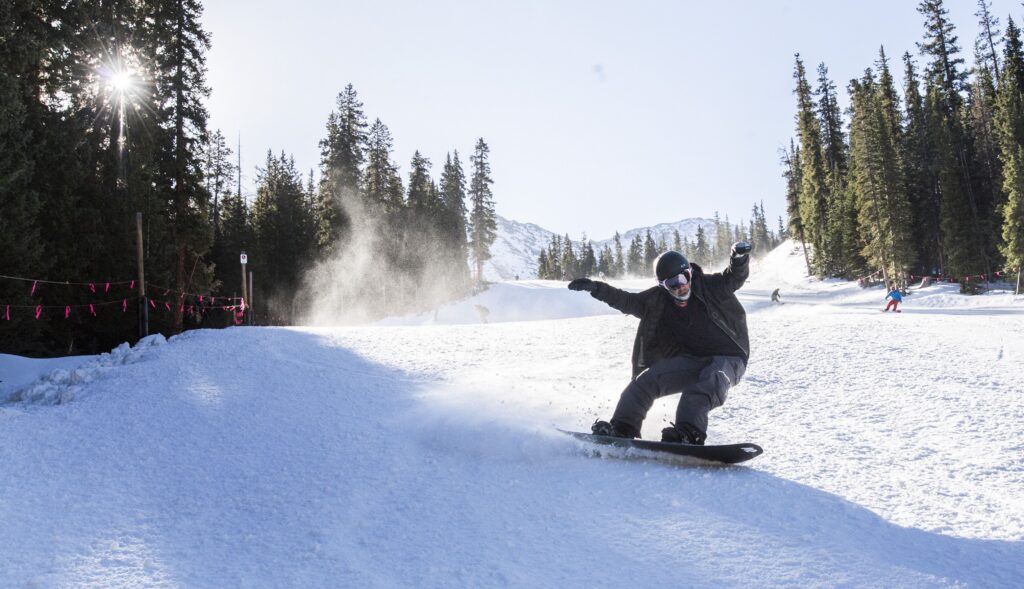
The post-pandemic boom in the outdoor recreation world appears to have slowed, according to new federal data. The industry is still growing nationwide, but it’s been slower than in past years. The trend is evident in Colorado, as well, though...

Protecting satellites in space, on the ground a priority for Colorado companies
Alexander Edwards
alexander-edwards@coloradopolitics.com
Updated 2 weeks ago
As the Department of Defense moves toward utilizing more commercial partnerships, building a resilient space-based commercial field is contingent on several factors, according to industry leaders at the annual Warfare Symposium in Aurora. The symposium features businesses of all sizes...
Colorado lawmakers mull competing bills on data centers
Scott Weiser
scott.weiser@gazette.com
Updated 2 weeks ago
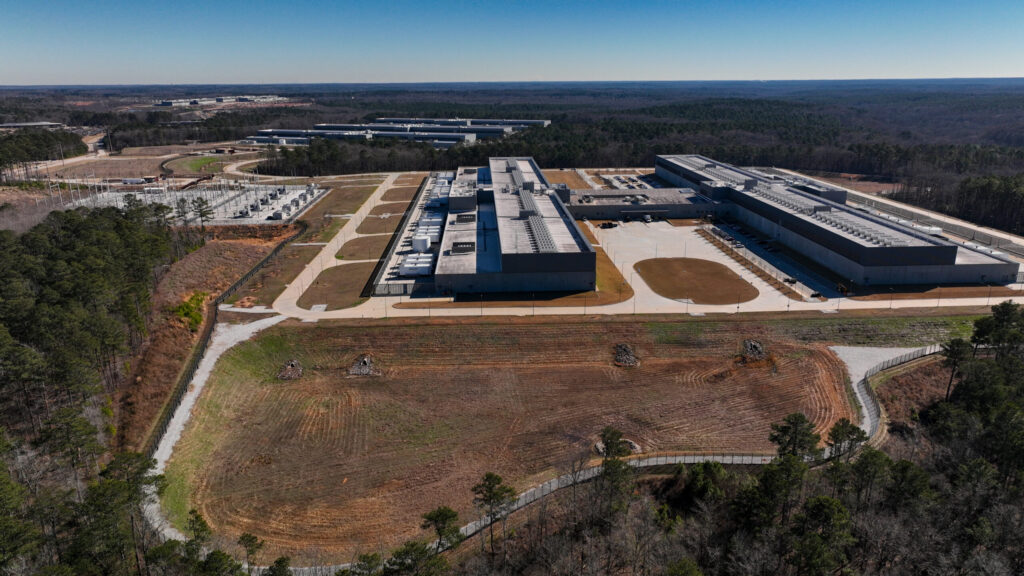
A Colorado coalition of data center developers and operators is urging lawmakers to pass a proposal that offers tax breaks to attract large facilities, while calling a competing bill a major obstacle to new investment. Meanwhile, proponents of the latter...

CU Boulder, state launch economic research in coal-transition areas
Scott Weiser
scott.weiser@gazette.com
Updated 4 weeks ago
Communities in northwest Colorado built on coal mining and power plants are losing hundreds of high-paying jobs and a major share of their tax revenue as operations wind down. In a yearlong effort, the University of Colorado Boulder is teaming...

Colorado joins lawsuit against Trump energy emergency order
Scott Weiser
scott.weiser@gazette.com
Updated 1 month ago
Colorado Attorney General Phil Weiser joined a multistate lawsuit challenging an executive order invoking the National Emergencies Act that President Donald Trump issued on the day of his inauguration. The order fast-tracks fossil fuel projects by bypassing or shortening environmental...

More people are now leaving Colorado than moving here from other states | Vince Bzdek
Vince Bzdek
vince.bzdek@gazette.com
Updated 1 month ago
By Vince Bzdek It’s finally happened. Buried in all the self-congratulatory reports about Colorado reaching the 6 million mark in population last year was news that should be keeping our political leaders up at night. For the first time in...
Xcel gets an earful from public for power shutoffs in Colorado
Scott Weiser
scott.weiser@gazette.com
Updated 1 month ago
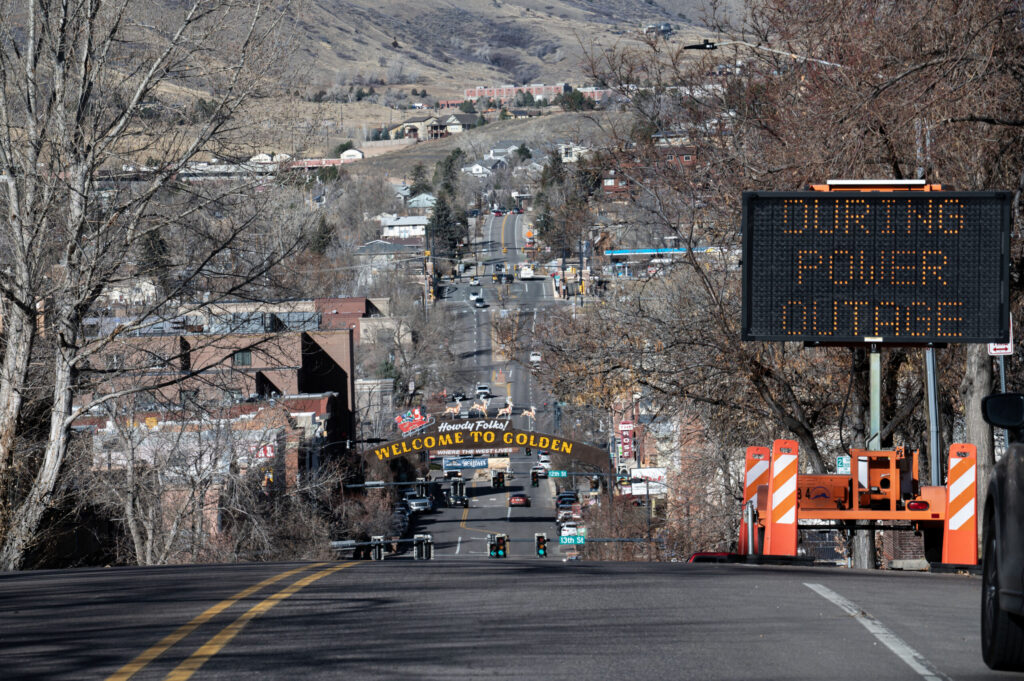
Residents, business owners and local officials gave Xcel Energy an earful during a hearing convened by Colorado’s utility regulators on Wednesday, accusing the power company of using power shutoffs as a liability dodge that burdens communities. Xcel’s ability to trigger...

Colorado hit a population milestone in 2025; numbers ‘don’t lie,’ but what do they say?
Stephanie Earls
stephanie-earls@coloradopolitics.com
Updated 1 month ago
Colorado is: full Standing room only How ‘bout, More crowded than it was but less crowded than we thought? Local takeaways from the U.S. Census Bureau’s most recent data drop are too complex for bumper sticker treatment, but here’s the...
Gov. Polis highlights Colorado’s business climate and affordability during annual gathering
Marissa Ventrelli
marissa.ventrelli@coloradopolitics.com
Updated 1 month ago
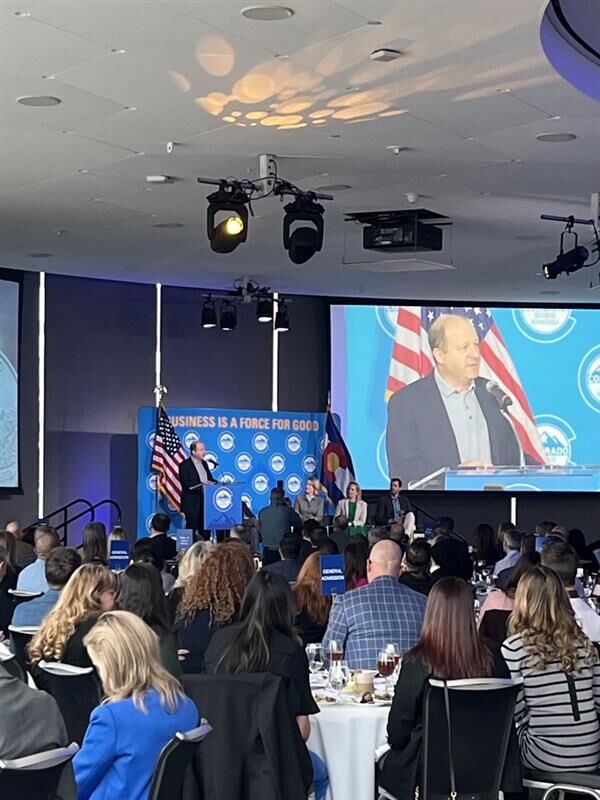
Gov. Jared Polis used his annual meeting with Colorado business leaders on Wednesday to take stock of his time in office, highlighting the state’s pandemic response, ongoing challenges facing downtown economies, and what he described as continued efforts to balance...
PREV
PREVIOUS
Challenge begins to take shape for Denver Rep. Charlie Brown | A LOOK BACK
Forty Years Ago This Week: Following what he said were in-depth conversations with staffers at both the Colorado Republican Party and Denver GOP headquarters, Gil Stockton said he was seriously considering entering the House District 11 race to unseat Rep. Charles Brown, Jr., D-Denver. “I’ve talked to a lot of people and I will probably […]

New Mexico governor proposes 10% spending increase amid windfall from oil production | OUT WEST ROUNDUP
NEW MEXICO Governor proposes 10% spending boost amid oil windfall SANTA FE – New Mexico’s governor is proposing a nearly 10% general fund spending increase for the coming fiscal year to shore up housing opportunities, childhood literacy and health care access, with additional payouts for electric vehicles purchases. Democratic Gov. Michelle Lujan Grisham on Jan. […]