

Gov. Jared Polis’ 2024 State of the State address | ANNOTATED
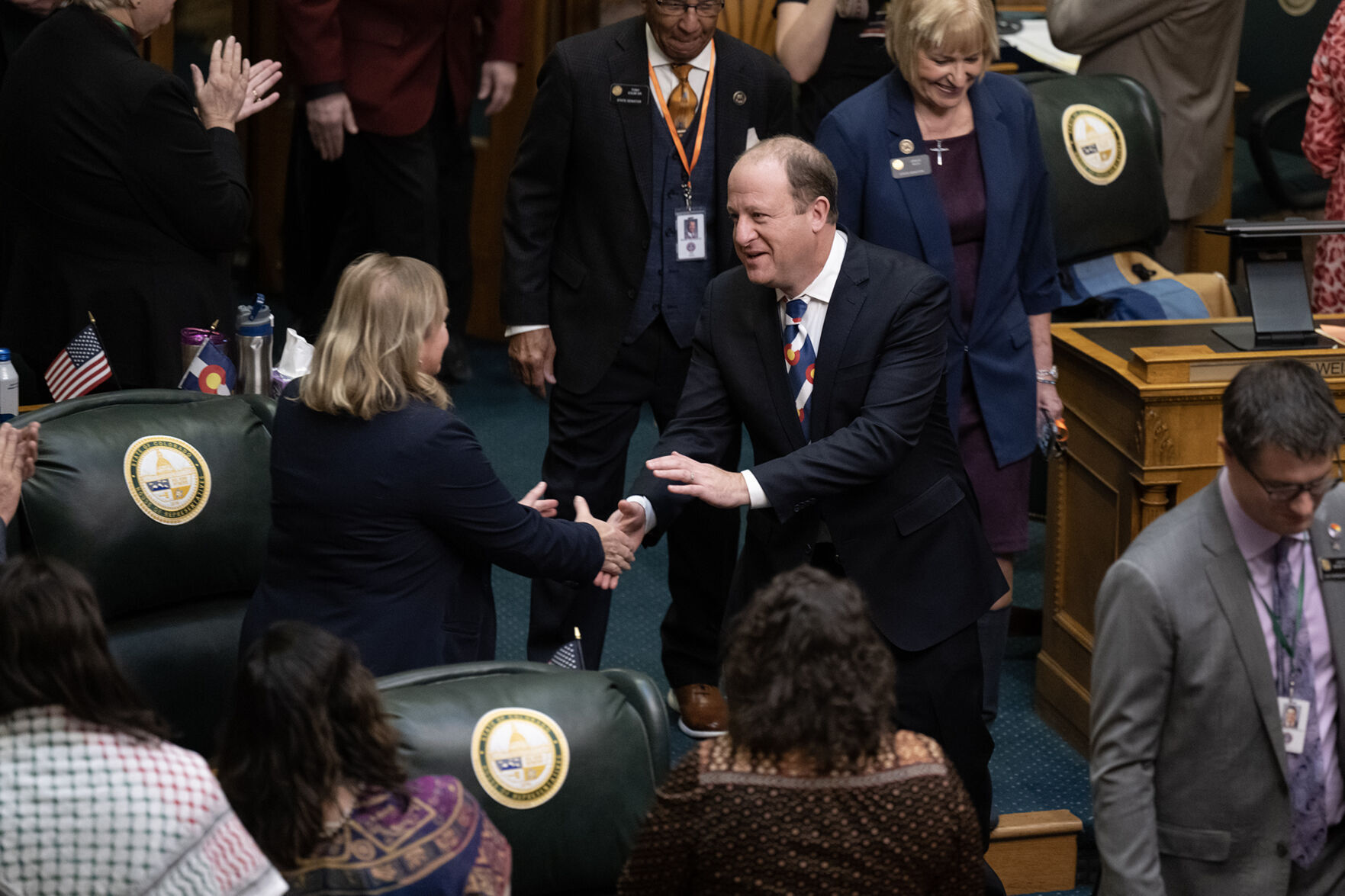
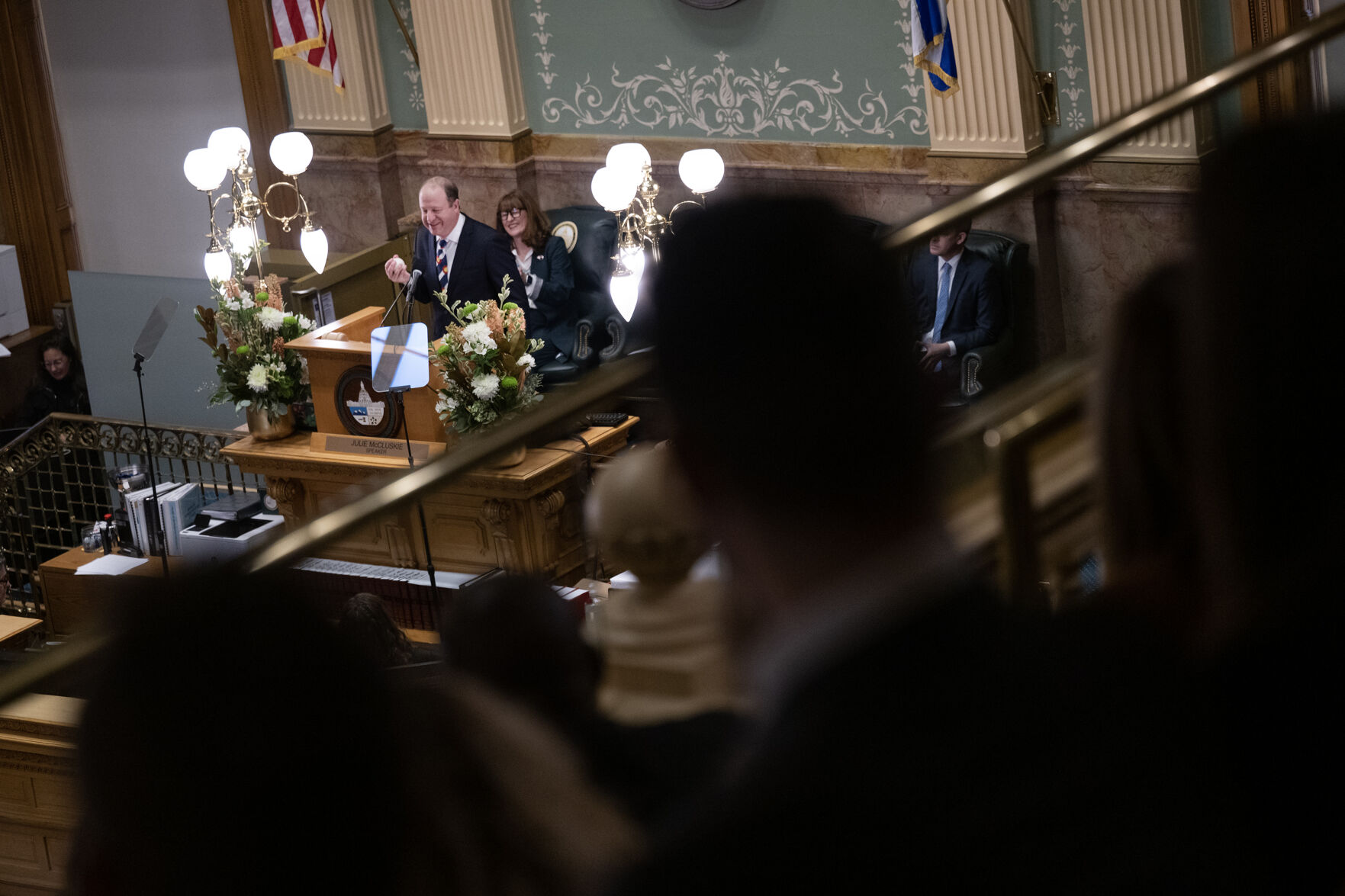
Gov. Jared Polis on Tuesday offered a diagnosis of the problems facing the state – housing, public safety, education, among others – and proposed a set of prescriptions, urging lawmakers to draw from what he described as Colorado’s history of “blazing new trails, turning our dreams into reality.”
We’ve annotated excerpts from his speech.
Gov. Jared Polis: “At long last, Colorado is the rightful permanent home of U.S. Space Command, ensuring our national security in the increasingly important space domain.”
Annotation: The Air Force in July announced that it has decided that U.S. Space Command’s permanent headquarters will remain in Colorado Springs, instead of moving to Huntsville, Ala. The long-awaited decision caps more than two years of wrangling by officials from both Colorado and Alabama after former President Donald Trump announced in the final days of his administration that the command’s headquarters would move to Alabama.
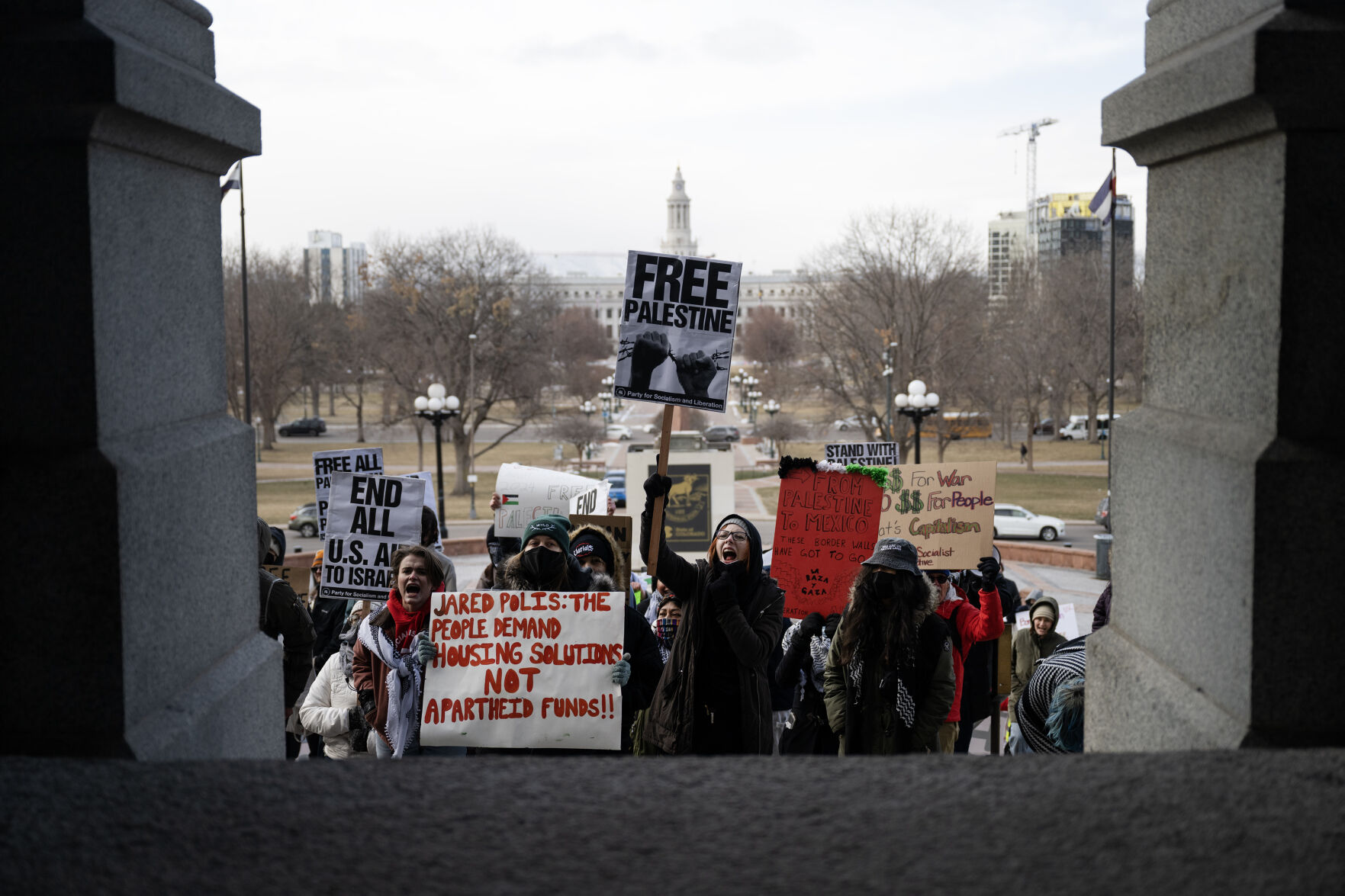
Polis: “There is a real sense of hopelessness and despair in our state around housing that’s on par, in many ways, with how people feel about the divisiveness of our national politics.”
Annotation: One study says Colorado lacks at least 100,000 housing units, and that 80% of Coloradans live in a county with an aggregate housing supply shortage. The study adds that over the years, Colorado has become one of the most unaffordable states for renters in the entire country.
Polis: “As you might be able to tell, housing policy that creates more affordable choices for Coloradans is my Roman Empire. If you don’t get that joke, feel free to ask someone from Gen Z.”
Annotation: This a trend in TikTok in which online users, mostly women, ask their spouses how often they think about the Roman Empire.
Polis: “Thanks to Senate Bill 260 from 2021, which supercharged transportation funding for the state, and significant Federal funding, roads are finally getting better across the state of Colorado, but we’re not done yet. We have the planes, and we have the automobiles, we just need the trains.”
Annotation: Senate Bill 21-260 established four state enterprises and modified a fifth to pay for transportation projects. The measure, which Gov. Jared Polis signed into law, is a $5.4 billion, 10-year plan to build out roads and bridges, create electric vehicle charging stations, boost mass transit and mitigate air pollution.
Polis: “So. let’s actually deliver on the housing and transit solutions that Coloradans are demanding. As Yoda would say, ‘Do or Do Not, there is no try.’
Annotation: The governor, a big of fan of science fiction, has repeatedly quoted Yoda in all kinds of settings. In 2021, Polis took time between bill signings to share a favorite one-liner, which also showed off his love of science fiction: “Why did the ‘Star Wars’ movies come out in the sequence: 4,5,6,1,2,3,7,8,9? Because, in charge of the order Yoda was.”
Polis: “Sadly, in the last few months, there’s been a dramatic increase in horrific acts of hate across the world, including here at home. Between October 7 and January 7, the Anti Defamation League recorded a 360 percent increase in antisemitic incidents nationwide. The rise in antisemitism, Islamophobia, and hate in all forms is unacceptable in Colorado.”
Annotation: In November, Polis unequivocally called on Coloradans – and, by extension, Americans – to stand behind Israel, which is at war with Hamas following the latter’s attack that killed 1,200 Israelis. “Our greatest strength is our ability to stand together to support the people of Israel in their time of need to be an example of hope and light that others can follow and to stand against hate,” the governor said during the Jewish National Fund-USA conference in Denver. The governor said Colorado is “known for standing shoulder to shoulder against hate,” a theme he stuck to in his speech. “We must fight all forms of hatred with relentless courage and steadfast determination so that one day our children and their children can make a world without this pain and suffering,” Polis said.
Polis: “We are proposing additional investments to prevent convicted felons from illegally purchasing firearms. Each year, thousands of people who are prohibited from purchasing a firearm try to do so illegally.”
Annotation: This year’s Senate Bill 3 would provide over $1.69 million to the Colorado Bureau of Investigation to investigate illegal activity involving firearms, including illegal transfers and attempts to illegally obtain guns. The bill is sponsored by Democratic Sen. Tom Sullivan of Centennial and Rep. Meg Froelich of Greenwood Village.
Polis: “I’m also proud that just a few months ago, Colorado voters passed Proposition II, which dedicates an additional $23.7 Million to preschool, expanding hours for Colorado children and making preschool even better next year. We are so excited that in its very first year nearly 40,000 children are enrolled in preschool, saving each family more than $6,000 per year.”
Annotation: The expanded access came after Colorado voters approved funding in 2020 for a “mixed-delivery” system of private and public providers, a step toward one of Polis’ key campaign promises. Enrollment issues and funding uncertainties have arisen with the rollout of the universal pre-kindergarten program, which is also under litigation. Last week, a federal judge heard arguments and testimony beginning on Tuesday over whether the program unconstitutionally forces a pair of Catholic preschools to violate their religious beliefs about sexual orientation and gender identity in order to participate as providers. In August, the Archdiocese of Denver and other plaintiffs brought suit against the state, arguing the preschools under the archdiocese’s control wished to participate in the publicly funded pre-K program but could not do so as long as they are prohibited from discriminating on the basis of LGBTQ status.
Polis: “This year, thanks to the leadership of the people in this room, after more than a decade we are finally eliminating the Budget Stabilization Factor.”
Annotation: Lawmakers this year vow to make the final payoff of $1 billion-plus debt to K-12 education, known as the budget stabilization factor. Lawmakers have earmarked money to pay that amount over the years. The BS factor, originally known as the “negative factor,” started in 2009 as a debt to K-12, with the funds used by lawmakers to balance the state budget in the wake of the 2008 Great Recession. The original debt started at $130 million, but, by 2012, it had ballooned to $1.011 billion. By 2020-21, the debt was down to $572.4 million, but, fearing another recession, lawmakers bumped it back up to its highest level ever – at $1.052 billion. Polis, in his budget presentation to the Joint Budget Committee in November, pledged to pay off the last of the debt, which now stands at $141.2 million.
Polis: “Right now there are about two job openings for every unemployed Coloradan. We want every person in Colorado to be able to build a good life and a good career on their own terms, and we are creating many different ways to do that – from dual and concurrent enrollment to low-cost credentialing.”
Annotation: Last year, The Denver Gazette fact-checked this claim and there are, indeed, two jobs available for every unemployed individual in Colorado. Ryan Gedney, principal economist for the state labor department, said they are looking at the data based on the Job Openings and Labor Turnover Survey, or JOLTS program, from the U.S. Bureau of Labor Statistics and comparing it to the number of unemployed individuals in a given month. In November 2022, there were 231,000 job openings and 113,622 unemployed individuals, equal to 2.03 openings per unemployed person, according to Gedney.
Polis: “This has led to historic successes including Reinsurance and the Colorado Option, both of which have been cost-saving game-changers for people accessing healthcare in our state. Since its creation, reinsurance has saved thousands of dollars for families all across our state.”
Annotation: Polis administration officials have perennially pointed to the state insurance program – and their own actions – as reasons for the savings they insisted residents will see in the coming year. But a trade group of insurance companies isn’t buying the official line, arguing that insurance carriers already actively negotiate with hospitals to keep costs low. Indeed, while a majority of health insurers are poised to reduce premiums this year, that doesn’t mean insurance costs are going down. In fact, those who buy their health insurance on the individual market will pay about 9.7% more in 2024, according to the state Division of Insurance, which finalized its rate review for health insurance premiums for 2024. In the small group market, which applies to businesses with fewer than 100 employees, premiums are expected to increase by 8%.
Polis: “We’ve also capped the cost of insulin and, last session, thanks to the leadership of Senator Roberts and Representatives Mabrey and Representative Jodeh, EpiPens, as well.”
Annotation: In June, Gov. Jared Polis signed a Democratic-backed measure aimed at countering the rising prices of epinephrine auto-injectors, which can save the lives of people undergoing a severe allergic reaction. During the legislative session, lawmakers heard that, while EpiPens cost around $8 to manufacture, the price for uninsured consumers may balloon to upwards of $690. Last month, a federal declined to block the new Colorado law that also requires manufacturers to reimburse or resupply pharmacies with the devices in certain circumstances. While U.S. District Court Judge Daniel D. Domenico turned down the request for a preliminary injunction, he also rejected Colorado’s motion to dismiss the case outright. EpiPen manufacturer Teva Pharmaceuticals USA, Inc. had shown the state will likely violate its constitutional rights by taking its property without adequate compensation.
Polis: “We are already on track to exceed our goal of 80% clean electricity by 2030 – just six years from now. We have one of the most ambitious strategies in the country to reduce local air pollution from the oil, gas, and transportation industries, including achieving electric vehicle sales that are six times higher than when I took office.”
Annotation: The governor’s $3.1 billion mandate to upgrade energy efficiency in large buildings takes effect in October. So do civil penalties of up to $5,000 per month for buildings not in compliance with Air Quality Control Commission Rule 28, which mandates building energy efficiency upgrades for some 8,000 buildings larger than 50,000 square feet. Owners will be required to reduce energy use by 7% by 2026 and 20% by 2030, below 2021 energy use levels. Critics said the rule is unprecedented, and, in some cases, may be unachievable. Some also argued that the authority the state is exercising to come up and implement the rule exceeds constitutional norms. Proponents said the new regulations will improve air quality, upgrade the quality of buildings in Colorado, and must be done all at once to make any substantial effect. State commissioners maintained that passing the rule is both necessary and mandated by the enabling statute. The law’s authors said buildings represent a “significant source of greenhouse gas pollution” in Colorado.
Polis: “We are strengthening native biodiversity and restoring balance to our ecosystems by bringing back native species like the Canada Lynx, the Black-Footed Ferret, and as of mid-December, we successfully met the voter mandated deadline for reintroduction of Gray Wolves. We also need to protect that progress by continuing to invest in non-lethal conflict minimization to help our farmers and ranchers thrive.”
Annotation: Colorado wildlife officials captured 10 wolves from Oregon and released them in Grand County in December, the culmination of a reintroduction program that voters narrowly approved in 2020. Suburbs and cities along Colorado’s Front Range, which includes Denver, carried the vote, despite strong opposition across less-densely populated counties where the wolves would be released. More releases are planned over the next several years. To help mitigate the anticipated costs of the expected conflict, Colorado is getting about $2 million out of more than $22 million in U.S. Department of Agriculture funds recently allocated by the Regional Conservation Partnership Program for five western states. Ranchers and livestock growers, who filed a lawsuit but failed to delay their reintroduction, fear attacks will worsen, adding to a spate of perceived assaults on western Colorado’s rural communities as the state’s Democratic leaders embrace clean energy and tourism, eclipsing economic mainstays such as fossil fuel extraction and agriculture. Two of the first five wolves released came from a pack that Oregon officials said preyed on livestock in the last two years.
Polis: “As demonstrated by our healthy surplus in Colorado, taxes are simply too high: income taxes, property taxes, and the state sales tax.”
Annotation: The governor has repeatedly expressed support for cutting taxes. In a debate over Proposition HH in October, the governor said, “I think it’s better not to tax money from people in the first place rather than over-collect and refund via TABOR. It’s better to simply cut taxes on the outset. This cuts the rates and saves people money.” Colorado voters have favored tax cuts. In 2020, voters took down Colorado’s income tax rate from 4.63% to 4.55%. And in 2022, Coloradans further slashed that rate to 4.4%.
Polis: “We are working closely with the IRS and are steadfast in our commitment to help Coloradans keep more of their hard-earned money.”
Annotation: Colorado taxpayers can breathe a sigh of relief after U.S. Sen. Michael Bennet confirmed on Tuesday that the Internal Revenue Service won’t treat refunds issued under the state’s Taxpayer’s Bill of Rights as taxable income this year. An aide to the Colorado Democrat said the lawmaker secured the commitment in a meeting with the IRS and Gov. Jared Polis. Members of the state’s congressional delegation and Polis last summer called on the IRS to “resolve the current ambiguity” that resulted from proposed agency rules that left the status of TABOR refunds unclear for the 2023 tax year.
Polis: “Let me be clear: this isn’t just some feel good initiative or hollow exercise. Our very democracy depends on people being able to disagree with one another – passionately, emphatically – and still being able to work together with mutual respect and dignity. When that is no longer possible, when policy arguments become personal attacks, and when people start to paint the other side not as colleagues who disagree, but as enemies, we are entering dangerous territory.”
Annotation: Polis and Gov. Spencer Cox of Utah have embarked on a project to rescue American politics from what they believe is a path that will lead, at its worst, to the destruction of democratic institutions. Their pitch? Disagree better. The way the two governors put it, to “disagree better” doesn’t translate to being “nice” or giving up one’s principles. It means engagement in the political discourse with a sense of humility – that perhaps one does not hold all the answers and, therefore, listening to the other side is not only laudable but ultimately necessary.
(Editor’s note: The Associated Press contributed to this annotation).

Gov. Jared Polis’ 2024 State of the State AddressLuige Del Puerto
luige.delpuerto@coloradopolitics.com LuigeDel PuertoEditor
luige.delpuerto@gazette.com
https://secure.gravatar.com/avatar/766fd31de2cd272e966b7901a72100e4?s=100&d=mm&r=g






Democratic gubernatorial candidate Phil Weiser promises to appoint rural outreach director, water adviser
Marianne Goodland
marianne.goodland@coloradopolitics.com
Updated 4 hours ago
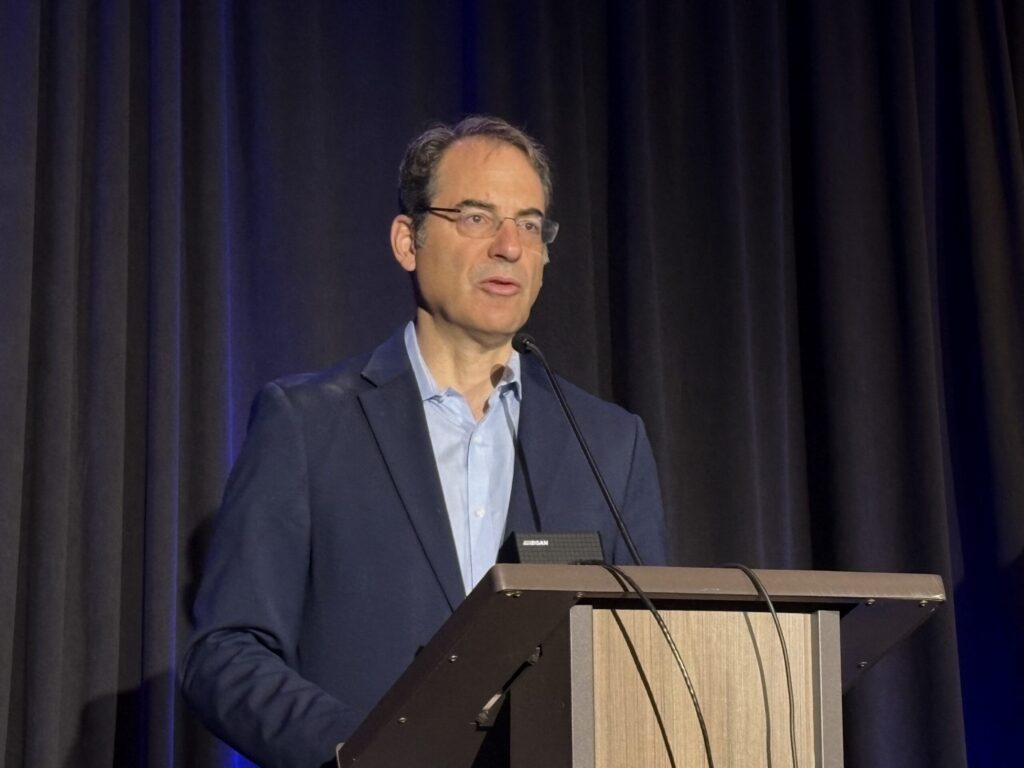
Democratic gubernatorial candidate and current Attorney General Phil Weiser told the Colorado Water Congress Thursday he intends to appoint a rural outreach director and a water policy adviser should he win the election in November. Weiser’s speech at the Steamboat...
Attorney General candidates present priorities at Colorado Water Congress
Marianne Goodland
marianne.goodland@coloradopolitics.com
Updated 5 hours ago
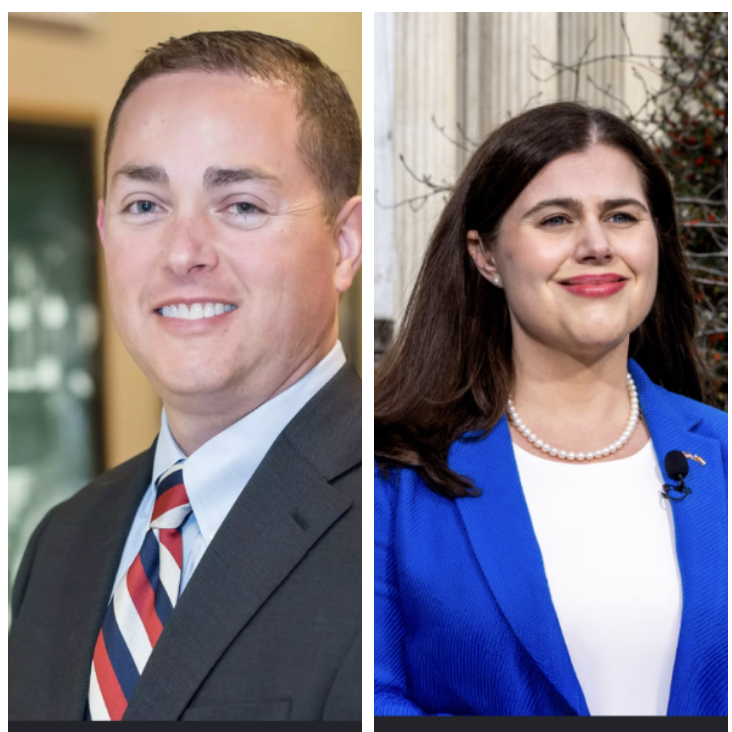
The two major-party candidates for attorney general — Republican Michael Allen, the district attorney for Teller and El Paso counties, and Democratic Secretary of State Jena Griswold — on Thursday outlined their priorities at the Colorado Water Congress. Griswold attended...

Denver named finalist for 2028 Democratic Convention site
Thelma Grimes
thelma.grimes@coloradopolitics.com
Updated 4 hours ago
The Mile High City competes with Boston and Philadelphia The list of cities being considered to host the 2028 Democratic National Convention has narrowed even further, with Denver making the cut as one of the final three, along with Boston...
GOP gubernatorial candidate Victor Marx pushes aggressive water-storage expansion at Colorado Water Congress
Marianne Goodland
marianne.goodland@coloradopolitics.com
Updated 13 hours ago
Victor Marx, the Republican nominee for governor, took the spotlight Wednesday during the opening day of the Colorado Water Congress, laying out how he says the state should approach its water future. Marx told the standing-room-only audience in Steamboat Springs...
U.S. Rep. Lauren Boebert stresses storage, forest health and Upper Basin rights at Colorado Water Congress
Marianne Goodland
marianne.goodland@coloradopolitics.com
Updated 4 hours ago
Republican U.S. Rep. Lauren Boebert used her brief Wednesday appearance at Colorado Water Congress to tout her record on delivering water projects for the state and her district. Boebert, who is running for her second term representing the 4th Congressional...
Colorado House Democrats’ caucus finances under scrutiny as ethics case against leader advances
Marianne Goodland
marianne.goodland@coloradopolitics.com
Updated 2 days ago
Democratic lawmakers told a legislative ethics panel that a leader’s management of caucus finances left them with unanswered questions, disputed reimbursements and a breakdown in communication that ultimately triggered a formal complaint. The House Ethics Committee is examining a complaint...

Colorado lieutenant governor candidate Markert says early discipline and key mentors set his course
Marianne Goodland
marianne.goodland@coloradopolitics.com
Updated 3 days ago
Editor’s note: This is the first installment in a three-part series examining Colorado’s candidates for lieutenant governor. In this piece, Colorado Politics speaks with George Markert, the Republican running mate to gubernatorial candidate Victor Marx. Marx is competing against Democrat...
Jeff Crank, Jessica Killin set to face off in 2 debates in Colorado’s 5th Congressional District
Ernest Luning
ernest.luning@coloradopolitics.com
Updated 6 days ago
Republican U.S. Rep. Jeff Crank and Jessica Killin, his Democratic challenger, have agreed to debate twice in the weeks leading up to the general election in Colorado’s 5th Congressional District, their campaigns have said. Crank is seeking a second term...
CSI study reviews impacts of Colorado’s mandatory sex‑trafficking sentencing measure
Marissa Ventrelli
marissa.ventrelli@coloradopolitics.com
Updated 3 days ago
A new report by the think-tank Common Sense Institute examines what could happen if Colorado voters approve Initiative No. 108, which establishes mandatory life sentences for offenders convicted of sexual trafficking of a minor. The measure is backed by Protect...
‘Ticked off’: Third-party U.S. Senate candidate in Colorado launches $1.3 million TV ad campaign
Ernest Luning
ernest.luning@coloradopolitics.com
Updated 1 week ago
Bob Chew, the Forward Party nominee for U.S. Senate in Colorado, sends household objects flying in a TV ad set to run statewide through September, backed by $1.3 million in ad reservations across multiple platforms, his campaign told Colorado Politics....
PREV
PREVIOUS

Proposal allowing Colorado counties to ban flavored tobacco, nicotine products introduced
A bill introduced by the Senate will allow Colorado counties to regulate or prohibit the sale and distribution of flavored cigarettes, tobacco and nicotine products. Senate Bill 24-022 defines flavored nicotine and tobacco products as anything with a scent or flavor other than tobacco itself, including products that induce a cooling or numbing sensation. Citing […]

Gov. Jared Polis homes in on Colorado's housing woes in state address
Gov. Jared Polis on Thursday outlined the challenges ahead and his priorities for the new legislative session, and while he began with an upbeat note about how Colorado blazed new trails, the governor warned of the “hopelessness and despair” permeating housing. Colorado lacks at least 100,000 housing units, says a study, which also notes that […]