

Colorado’s ‘construction defects’ law explained
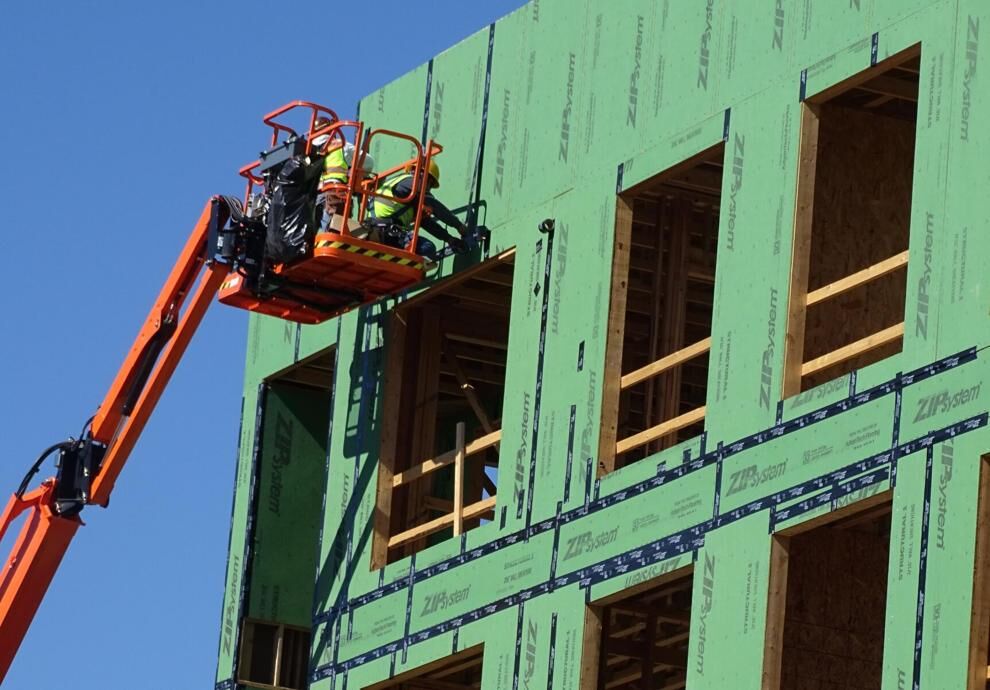
Ask just about any Colorado legislator, regardless of party, what they believe to be one of the biggest issues facing the state and there’s a high likelihood they will say housing. More specifically, state lawmakers are grappling with the lack of affordable units for first-time homebuyers due in part to the Construction Defect Reform Act, which has left developers vulnerable to costly lawsuits and the state with fewer housing options.
While current members of the Colorado General Assembly work to find a solution, one thing is certain, for the last two decades, construction on housing, such as condominiums, prime real estate for first-time home buyers, has decreased significantly, adding to a growing problem of affordability and accessibility. Condo construction has plummeted since 2003, as developers have opted to avoid building them altogether.
Passed in 2001, the Construction Defect Reform Act was meant to decrease the number of construction defect-related lawsuits. But what exactly are construction defects, and what is so controversial about this law?
Colorado Politics breaks it all down.
What are ‘construction defects’?
According to the Colorado Common Interest Ownership Act, “construction defects” are defined as deficiencies in the design, construction or repair of the common elements of a common interest community, including condos and apartment complexes. So called construction defects can mean a wide ranging of major issues, such cracks in the foundation or HVAC problems. It can also cover smaller issues, such as defective cabinetry and leaks, that can mean a developer has failed to meet applicable standards or enforced codes.
What is the Construction Defect Action Reform Act?
Colorado’s Construction Defect Action Reform Act, or CDARA, was signed into law in 2003 in an effort to encourage the resolution of construction defect-related disputes outside the courtroom. The law contains several provisions, including:
Notice of Claim and Opportunity to Repair:
In order for property owners to proceed with litigation against a construction company, they must first provide the company with a written notice detailing the claim. This allows the company to complete an inspection and potentially make repairs before litigation is necessary.
Majority Consent:
Under CDARA, a majority of homeowners must consent before a homeowner’s association can pursue legal action for construction defects.
Right to Repair and Offer to Settle:
Builders have the right to repair construction defects, and homeowners have the right to accept or deny those repair offers.
Alternative Dispute Resolution:
Homeowners and builders are encouraged to use alternative dispute resolution methods for construction defects, such as mediation or arbitration.
Statute of Repose and Limitation:
Construction defect claims can only be filed up to six years after construction on a home that has been substantially completed. There is the possibility for a two-year extension on the statute if the defect is discovered within the first four years.
Arguments in favor of CDARA
-
Consumer protection: Homeowners have the option to seek legal remedies if their homes have construction defects that leave them unsafe or not up to codes and standards.
-
Encourages high-quality construction: Proponents of CDARA argue that builders wishing to avoid the threat of legal action will construct the highest-quality homes and apartments they can.
-
Market stability: Dispute resolution is streamlined through CDARA, preventing prolonged legal disputes that could disrupt the housing market.
-
Insurance Availability: CDARA establishes clear guidelines for construction defect claims resolution, which could enhance liability insurers’ confidence in the market and make liability coverage accessible and available to builders, encouraging more projects.
Arguments against CDARA?
-
Impact on affordable housing: Opponents of CDARA argue the law increases the cost of construction insurance, which in turn raises the cost of construction projects and ultimately the homes themselves.
-
Stifles development: While proponents of CDARA consider the fear of litigation a motivator to builders, opponents assert that it can inhibit housing development as builders decide to construct homes in other states.
-
Takes accountability away from homeowners: Some fear that with legal action on the table, the responsibility bestowed upon homeowners to choose a reputable builder is diminished.
-
Legal complexity: Lawsuits over construction defects can lead to lengthy and expensive court battles.
Lawmakers to tackle construction defects this year
The Homeownership Opportunity Alliance, a bipartisan coalition composed of homeowners, builders, and construction groups, is pushing a two-tiered proposal it believes will reduce the frequency of lawsuits targeting newly constructed condos. The proposal is backed by several Democratic legislators, including Sen. Rachel Zenzinger, D-Arvada, and Rep. Shannon Bird, D-Westminster. The bill would reverse a current law that holds general contractors and all subcontractors responsible for construction defects, even if a specific subcontractor didn’t cause the defect. Zenzinger and Bird are pushing for this reversal, saying the current law has resulted in expensive all-encompassing “wrap-up” insurance policies. Because these policies can cost up to 800% more than general liability policies, builders often choose to construct rental apartments or single-family homes rather than condominiums, they said.
The proposed bill would also introduce a “right to remedy” option, in which condo owners and the contractors involved in the construction defects claim would bring in a neutral third party to resolve the matter before it has to be taken to court. This new provision aims to decrease the number of lawsuits against projects, potentially leading to lower insurance premiums.
“We have received good bipartisan feedback so far and look forward to working with legislators to address construction litigation reform to help bring down the cost of housing and enable more opportunities to build wealth through homeownership,” said Ted Leighty, CEO of the Colorado Association of Home Builders. “Ultimately, we’re looking to lessen insurance costs by reducing the magnitude and frequency of claims, provide other means to resolve disputes faster for homeowners, and obligate those whose work is the subject of the claims to be part of the process. If accomplished, we anticipate building more entry-level, attainably priced condos for Coloradans.”


Grand Canyon flooding threatens economy that’s still recovering from a fire | OUT WEST ROUNDUP
Ernest Luning
ernest.luning@coloradopolitics.com
Updated 3 days ago
ARIZONA Flooding slams park’s economy Deadly flooding at the Grand Canyon is damaging the area’s economy, with a washed-out pipeline severing the South Rim’s water supply and shutting down lodging at the popular tourist vista for an indefinite period. The...

Immigration reporting measure fuels debate over Colorado’s role with ICE
Marissa Ventrelli
marissa.ventrelli@coloradopolitics.com
Updated 13 hours ago
A coalition of advocacy groups and several district attorneys rallied outside the Colorado Capitol on Thursday to oppose a ballot measure that, if approved by voters in November, would require state and local law enforcement to cooperate with federal immigration...

Colorado Politics Calendar Sept. 14-20
Rachael Wright, Special to Colorado Politics
rachael.wright@coloradopolitics.com
Updated 4 days ago
CoPo’s weekly political calendar will help you find political and public-policy events throughout Colorado. It includes candidate and issue campaign events, public policy meetings, court hearings, state and local party conventions, assemblies, debates, rallies, parades, speaking engagements, traveling dignitary appearances,...
The African roots of three Colorado leaders | SONDERMANN
Eric Sondermann
eric-sondermann@coloradopolitics.com
Updated 3 days ago
Colorado’s political transformation is measured in many ways. A once reliably red state (with asterisks) became purple and is now a rather deep blue. For better or worse, probably the latter, power is ever more consolidated along the Front Range...
Federal judge green-lights civil trial against ex-Fort Collins DUI officer
Michael Karlik
michael.karlik@coloradopolitics.com
Updated 2 days ago
A federal judge ruled on Thursday that Fort Collins’ former “DUI officer” will face a civil trial for allegedly investigating a motorist for impaired driving without any reasonable suspicion to do so. In recent years, several people arrested by Officer...

Denver police reopen 13 sex assault cases after retesting Missy Woods’ CBI work
Jenny Deam
jenny.deam@gazette.com
Updated 1 day ago
Thirteen previously closed Denver sexual assault cases have been reopened after the city’s crime lab retested DNA evidence once analyzed by former Colorado Bureau of Investigation forensic analyst Yvonne Woods. A police spokesperson told The Denver Gazette the once-closed cases...

Ballot measure aims to shift Colorado sporting goods tax revenue to land, water and wildfire projects
Marissa Ventrelli
marissa.ventrelli@coloradopolitics.com
Updated 13 hours ago
Colorado voters this November will decide whether to direct a share of sales tax revenue from sporting goods — including bicycles and skiing equipment — toward land and water conservation, wildfire prevention and expanding outdoor recreation. Supporters say the measure...

Colorado Supreme Court suspends Mesa County judge pending misconduct investigation
Michael Karlik
michael.karlik@coloradopolitics.com
Updated 15 hours ago
The Colorado Supreme Court suspended Mesa County Court Judge Michael J. Grattan on Thursday amid a misconduct investigation. The court’s Sept. 10 order gave Grattan 21 days to explain why his paid suspension should not continue through the end of...

Trump honors the fallen of the 9/11 terrorist attacks during Pentagon speech
Mabinty Quarshie
mabinty-quarshie@coloradopolitics.com
Updated 2 days ago
President Donald Trump and first lady Melania Trump honored the roughly 3,000 Americans killed during the Sept. 11, 2001, terrorist attacks during a ceremony at the Pentagon. The event marking the 25th anniversary of the deadliest attack on American soil...
Colorado Supreme Court changes course, dismisses case about special district bonds
Michael Karlik
michael.karlik@coloradopolitics.com
Updated 15 hours ago
The Colorado Supreme Court declined on Friday to decide a dispute between a large-scale Commerce City development and the various districts financing it, after initially showing interest in the ongoing case. Colorado has roughly 2,800 special districts, which are local...
PREV
PREVIOUS

Republican Jeff Crank jumps in Colorado's 5th CD primary to replace retiring US Rep. Doug Lamborn
The race to replace retiring Republican U.S. Rep. Doug Lamborn of Colorado Springs is getting crowded. Conservative podcast host and political strategist Jeff Crank threw his hat in the GOP’s 5th Congressional District primary on Wednesday, joining the state’s Republican Party chairman and a long-serving state lawmaker, with more likely to emerge in coming weeks. […]

Watch pro-Palestinian protesters disrupt Colorado House proceedings, check out first bills of session, Jeff Crank jumps into 5th CD race | WHAT YOU NEED TO KNOW
Today is Jan. 11, 2024, and here’s what you need to know: Colorado Politics reporters covered the opening ceremonies of the second regular session of the 74th General Assembly yesterday. Here’s the recap. The Colorado General Assembly immediately got off to a troubled start on Wednesday, when multiple groups of pro-Palestinian protesters shouted from the […]